

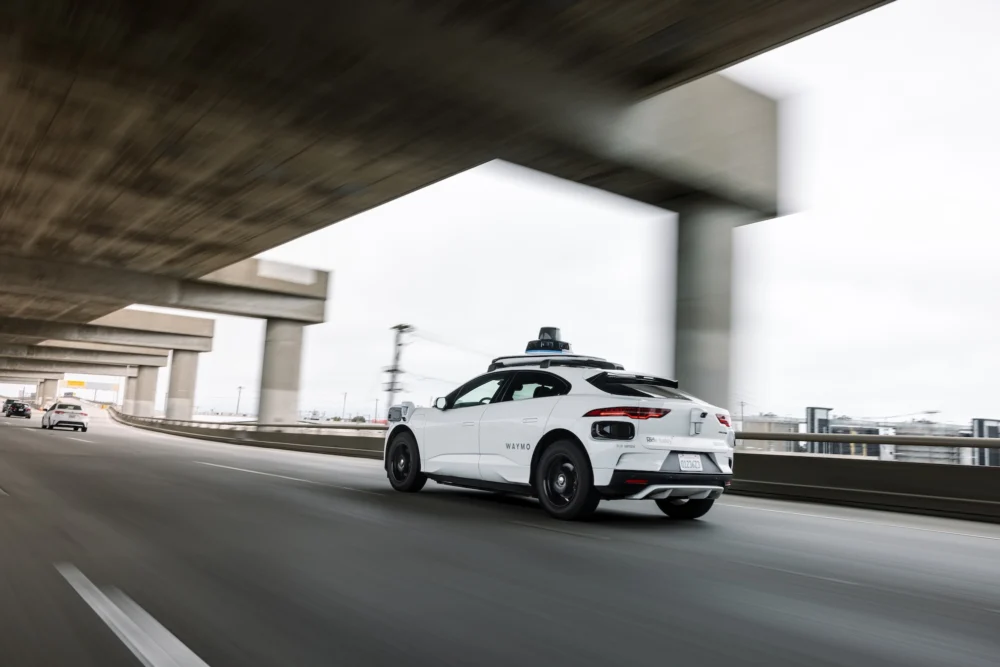
The autonomous vehicle sector, long characterized by prodigious capital expenditure and measured, incremental deployment, appears poised for a dramatic financial inflection point. Confidential reports indicate that Waymo, the flagship self-driving technology subsidiary of Alphabet, is on the cusp of finalizing a staggering $16 billion funding round, catapulting its post-money valuation to an unprecedented $110 billion. This colossal financial milestone—a more than doubling of its previous valuation achieved just over a year prior—does not merely reflect confidence in Waymo’s technological leadership; it signifies a decisive declaration regarding the impending commercial viability and scale of the robotaxi market.
This impending transaction is notable not only for its magnitude but also for its structure. A substantial portion of the capital injection—reportedly exceeding three-quarters of the total $16 billion—is slated to originate from Alphabet itself. This internal commitment underscores the parent corporation’s deep-seated conviction in Waymo’s long-term strategic importance and its necessity to secure the resources required for a global deployment strategy that demands intensive scaling of infrastructure, vehicle fleets, and operational territories. Waymo’s genesis within Alphabet’s “moonshot factory,” X, established it as a high-risk, high-reward endeavor; the current financial backing confirms its transition from experimental project to a core pillar of Alphabet’s future revenue diversification.
The involvement of external, top-tier institutional investors further validates the narrative of Waymo’s market dominance. The new funding syndicate reportedly includes influential participants such as Dragoneer, Sequoia Capital, and DST Global, injecting fresh external capital and expertise. Crucially, the round also sees continued participation from existing high-profile backers, including Andreessen Horowitz (a16z) and the Abu Dhabi sovereign wealth fund, Mubadala. The willingness of such established venture capital and state-backed funds to commit billions signals that the perception of autonomous driving has shifted from a speculative, decade-long bet to a near-term, high-growth investment opportunity, despite the inherently complex technical and regulatory hurdles remaining.
Contextualizing the Valuation Leap
The reported $110 billion valuation represents one of the largest private valuations ever assigned to a technology firm, placing Waymo among the most highly valued privately held entities globally. This valuation is particularly striking when juxtaposed against its last major funding event in 2024, when the company secured a $5.6 billion Series C round, which then placed its value at approximately $45 billion. Achieving a 144% increase in valuation in roughly 18 months demands a fundamental belief in exponential growth potential and the imminent realization of a total addressable market (TAM) that encompasses personal mobility, logistics, and potentially even defense applications.
While the financial metrics fueling this valuation remain private, the company has released compelling operational data points that justify the aggressive appraisal. Waymo recently surpassed the threshold of 20 million completed commercial trips, a critical metric demonstrating both reliability and accumulated real-world driving data. Furthermore, internal reports suggest the company has achieved over $350 million in annual recurring revenue (ARR).
In traditional software or mobility-as-a-service models, a $110 billion valuation against $350 million in ARR would suggest an astronomically high revenue multiple, typically reserved for businesses projecting hockey-stick growth in completely unconstrained markets. For Waymo, this multiple is justified by the unique nature of its intellectual property—the Waymo Driver system—and the massive operating leverage that will kick in once the high fixed costs of sensor deployment, mapping, and AI training are overcome. The investors are not valuing the current revenue; they are valuing the future monopoly on autonomous operational data and the ability to capture a significant share of the global transportation expenditure currently reliant on human drivers.
Industry Implications: The Capital Sink and Consolidation
This mega-round has profound implications for the broader autonomous vehicle landscape, reinforcing a dynamic often referred to as the "capital sink" problem. Developing and safely deploying true Level 4 (L4) autonomy—where the vehicle operates entirely without human intervention under specific conditions—is perhaps the most capital-intensive technological challenge of the 21st century. It requires massive parallel investments in custom silicon, high-definition mapping, proprietary sensor arrays (LiDAR, radar, thermal cameras), and colossal computational resources for machine learning model training.
Waymo’s access to $16 billion, substantially underwritten by the virtually limitless resources of Alphabet, solidifies its position as the undisputed financial leader in the sector. This level of funding raises the barrier to entry so significantly that it likely accelerates the consolidation of the industry. Competitors lacking comparable financial backing will struggle to maintain the necessary pace of technological iteration and geographic expansion.
For rivals, particularly those not backed by a major automotive OEM or a technology behemoth, the pressure intensifies. While entities like Cruise (backed by General Motors) and Zoox (acquired by Amazon) maintain strong financial footing, Waymo’s current war chest suggests it possesses the resources necessary to survive regulatory delays, weather public trust challenges, and maintain a competitive edge in hardware development—a sector where iterative improvements are mandatory and expensive. The implicit message of the $110 billion valuation is that the market believes Waymo will be one of the few, if not the dominant, platform for autonomous ride-hailing globally.
Operational Excellence vs. Real-World Friction
Waymo’s strategy has always hinged on a methodical, safety-first approach to deployment, prioritizing depth of service area over rapid, superficial expansion. The operational milestones, such as the 20 million completed trips, testify to the efficacy of this strategy. However, the path to ubiquitous robotaxi service is not without significant friction, particularly as the service expands into denser, more complex urban environments.

The company’s recent operational expansion into new territories, such as the public launch in Miami, demonstrates its intent to rapidly scale beyond its established strongholds of Phoenix and San Francisco. While growth is essential for validating the high valuation, it introduces new variables. Different cities present unique micro-climates, regulatory environments, and driver behaviors that stress-test the Waymo Driver system.
Moreover, the real-world operational challenges facing autonomous fleets have been highly publicized. An incident in San Francisco, where a widespread power blackout caused a number of robotaxis to stall and halt traffic flow, highlighted the vulnerability of L4 systems to unanticipated infrastructure failures. While the company quickly provided technical explanations for the vehicles defaulting to a safe, stopped state in the absence of traffic signal data, such incidents erode public trust and provide ammunition for regulatory scrutiny. This $16 billion capital raise must be partially earmarked for building in greater redundancy, advanced edge-case handling, and enhanced infrastructure communication capabilities to mitigate these real-world systemic risks.
Strategic Deployment of the Capital: The Path to L5
The $16 billion capital injection will be deployed across several critical strategic vectors necessary to bridge the gap between L4 operation and the eventual goal of widespread L5 autonomy (full autonomy under all conditions).
Firstly, a significant portion will finance fleet expansion and vehicle acquisition. Waymo relies on customized vehicle platforms, and scaling service in multiple cities necessitates purchasing thousands of specialized vehicles equipped with the latest generation of its sensor suite. This capital will accelerate the procurement process and potentially fund the development of next-generation, purpose-built autonomous vehicles designed for ride-hailing efficiency, rather than merely retrofitting existing passenger cars.
Secondly, the funding is crucial for maintaining Waymo’s technological moat, specifically in the domains of artificial intelligence and machine learning. The sheer volume of data generated by 20 million trips requires vast computational infrastructure for processing, simulation, and model refinement. This investment will ensure Waymo can continue to outpace competitors in improving the "long tail" of driving—those rare, unpredictable scenarios that currently prevent full L5 deployment. This includes optimizing perception systems for adverse weather, night driving, and navigating complex human interactions (e.g., construction workers directing traffic).
Finally, the capital will fuel aggressive geographic expansion and regulatory lobbying efforts. Launching a new robotaxi service in a major metropolitan area requires significant investment in hyper-accurate local mapping, regulatory approvals, and public education campaigns. The $16 billion provides the sustained financial runway necessary to navigate the often-slow and complex process of securing permits from state and municipal authorities, particularly in regions hesitant about introducing driverless technology.
The Future of Mobility Monetization
Looking ahead, the successful deployment and monetization of Waymo’s technology are predicted to follow several pathways, transforming global mobility.
The core business remains Ride-Hailing (Robotaxi). As Waymo scales, the economic advantages become overwhelming. Removing the human driver—the single largest operational cost in traditional ride-hailing—transforms unit economics. This capital ensures Waymo can reach a density of operations where marginal costs drop precipitously, allowing it to undercut traditional ride-hailing services while maintaining high profitability.
Beyond passenger transport, the funding will likely accelerate Waymo’s efforts in Autonomous Logistics (Waymo Via). Integrating self-driving technology into trucking and last-mile delivery represents an enormous, potentially even larger, market opportunity than robotaxis. Deploying autonomous long-haul trucks on major highway corridors could revolutionize supply chain efficiency and drastically reduce labor costs in logistics.
The $110 billion valuation is ultimately a massive vote of confidence in the inevitability of this autonomous future. It solidifies Waymo’s position as the established market leader, armed with the technological depth and financial resources required to execute a global vision. While the transition from R&D expense to a self-sustaining, profitable enterprise remains a multi-year effort, this staggering capital raise suggests that investors, both internal and external, believe the long-awaited autonomous revolution is now entering its critical commercial deployment phase. The race is no longer about proving the technology works, but about proving who can scale it most effectively and safely across the world’s diverse and challenging road networks.
