

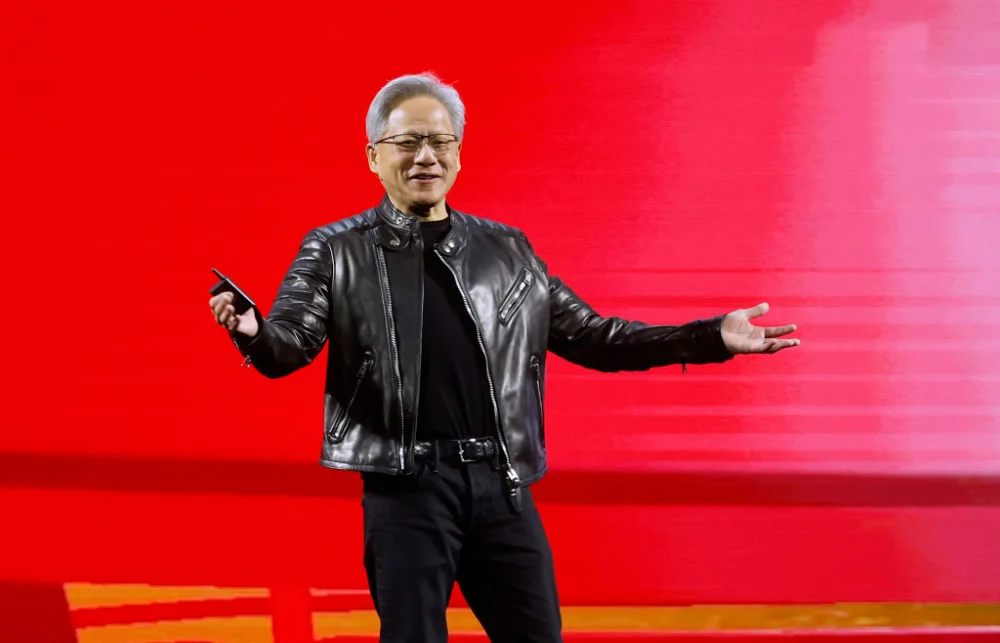
The swirling speculation regarding a potential cooling of the unprecedented partnership between chip behemoth Nvidia and generative AI pioneer OpenAI was met with a decisive and sharp rebuttal from Nvidia CEO Jensen Huang. Speaking publicly during a trip to Taipei, Huang dismissed the recent claims of friction and scaled-back investment as "nonsense," reaffirming his company’s deep commitment to funding and powering one of the most consequential entities in modern technology. This forceful denial serves as a critical stabilization measure in the volatile, high-stakes relationship that defines the global artificial intelligence landscape.
The foundation of this relationship was laid in September when the two technology titans announced an ambitious, epoch-making plan. This blueprint envisioned Nvidia potentially investing up to $100 billion into OpenAI, an arrangement intertwined with the monumental task of constructing an estimated 10 gigawatts of cutting-edge computing infrastructure specifically tailored for the AI company’s accelerating needs. To grasp the scale, 10 gigawatts represents a quantum leap in dedicated compute power—a commitment that rivals the energy output of small nations and demands the construction of dozens of hyperscale data centers optimized purely for high-performance GPU clusters. For Nvidia, the world’s singular leader in AI hardware, this was not merely a financial investment; it was a strategic maneuver to cement its dominance over the underlying architecture of future artificial general intelligence (AGI).
However, the cohesion of this megadeal was recently questioned by prominent financial publications, which suggested that Nvidia was seeking to recalibrate its investment magnitude. Reports indicated that Huang had privately begun stressing the nonbinding nature of the original September agreement, simultaneously expressing reservations regarding OpenAI’s long-term operational and business strategy. Furthermore, these sources suggested that Huang held specific anxieties regarding the rapid rise and competitive threat posed by rivals such as Anthropic and Google DeepMind, companies that are also significant purchasers of Nvidia hardware. The friction, according to these accounts, centered on a perceived need to shift the investment focus away from the staggering $100 billion infrastructure commitment toward a smaller, though still substantial, equity stake potentially in the "tens of billions" range.
In responding to these allegations of strategic retreat, Huang was unequivocal. He confirmed that Nvidia would "definitely participate" in OpenAI’s latest funding round, emphatically justifying the move by stating it was "such a good investment." He went on to lavish praise on the generative AI leader, declaring, "We will invest a great deal of money. I believe in OpenAI. The work that they do is incredible. They’re one of the most consequential companies of our time." While he deferred to OpenAI CEO Sam Altman regarding the precise amount to be raised—part of a highly publicized effort by OpenAI to secure $100 billion in a new round at a rumored valuation exceeding $800 billion—Huang’s vocal confidence was designed to dispel any notions of a significant rift.
Background Context: The Symbiotic Necessity
The Nvidia-OpenAI relationship is fundamentally symbiotic, rooted in the inescapable reality that sophisticated AI models require staggering amounts of parallel processing power, a domain currently monopolized by Nvidia’s Graphics Processing Units (GPUs), particularly the high-end H100 and forthcoming B200 series.
For OpenAI, the $100 billion commitment represents more than just cash; it represents guaranteed access to the scarce resource that fuels the AGI race: compute. Historically, the limiting factor for frontier AI development has been the availability of GPU clusters. By securing a commitment for 10 GW of infrastructure—a colossal energy draw that translates into potentially millions of high-end GPUs—OpenAI is attempting to insulate itself from supply chain bottlenecks and maintain a computational advantage over competitors, many of whom must compete fiercely for limited allocations of Nvidia silicon.
For Nvidia, the strategic value of this partnership is equally immense, although nuanced. Investing in OpenAI locks in future demand for its hardware at an unparalleled scale. Furthermore, it allows Nvidia engineers deep collaborative access to the cutting-edge requirements of the world’s most advanced models, enabling them to fine-tune future chip architectures (like the Blackwell platform) specifically for the demands of these industry leaders. This feedback loop is essential for maintaining Nvidia’s technical supremacy against emerging threats from bespoke hardware (like Google’s TPUs) and custom AI chips being developed by hyperscalers like Amazon and Microsoft.
Expert Analysis: Interpreting the Scale-Back Narrative
The report of potential scaling back, even if vehemently denied, highlights the inherent tensions in Nvidia’s business model. Nvidia operates as a foundational enabler for the entire AI industry. It is currently selling its GPUs to everyone—Microsoft, Google, Amazon, Meta, Anthropic, and, of course, OpenAI.
When the initial September agreement was framed as a $100 billion investment, much of that figure was understood to be capital dedicated to the construction of compute infrastructure and the purchase of hardware, rather than pure equity. The recent reports suggesting a pivot to a "tens of billions" equity investment should be analyzed not necessarily as a retraction, but possibly as a restructuring of the deal’s financial mechanisms.
Expert industry analysts suggest that for a company like Nvidia, whose market capitalization is largely driven by its hardware sales trajectory, committing $100 billion in pure cash or guaranteed infrastructure construction for a single customer—even one as pivotal as OpenAI—could raise concerns among shareholders regarding concentration risk and the potential cannibalization of its own hardware sales margins. By reducing the infrastructure component in the investment package and focusing on a significant equity stake, Nvidia mitigates some operational risk while retaining a key financial interest in OpenAI’s staggering valuation growth.
Moreover, the reported private concerns voiced by Huang about Anthropic and Google are entirely rational from a business perspective. Anthropic, backed heavily by Amazon and Google, represents a formidable competitive threat to OpenAI. If Nvidia were to dedicate a massive, exclusive, multi-year pipeline of compute resources solely to OpenAI, it risks alienating other major customers who are simultaneously driving its core revenue streams. The delicate balancing act for Nvidia is to support its star customer, OpenAI, without fundamentally undermining the competitive viability of the rest of its AI ecosystem.
Industry Implications and the Compute Arms Race
The high-profile dispute and subsequent denial underscore the intensity of the AI arms race. The potential $100 billion fundraising round being pursued by OpenAI—which has drawn interest from major players like Amazon, Microsoft, and SoftBank alongside Nvidia—is indicative of the sheer capital required to compete at the frontier of AGI development.
The pursuit of 10 gigawatts of computing power is transforming not just technology, but global energy markets and regulatory landscapes. A gigawatt is 1,000 megawatts; 10 gigawatts represents ten massive, continuously running data center complexes, demanding unprecedented levels of electrical power generation and cooling infrastructure. This level of computational hunger necessitates radical innovation in energy procurement, potentially involving direct investment in renewable energy sources or even nuclear power, just to keep the silicon running.
This compute requirement also fundamentally changes the dynamics of AI development. It shifts the competitive advantage from clever algorithm design (though still crucial) toward access to massive, sustained computational resources. This dynamic reinforces Nvidia’s position as the gatekeeper to AGI; without access to their accelerated computing platforms, achieving breakthrough scale is nearly impossible.
Future Impact and Trends
The future trajectory of the Nvidia-OpenAI relationship will define the next decade of AI advancement. If the infrastructure build-out proceeds even partially toward the scale originally envisioned, it sets a new, brutally high barrier to entry for any startup hoping to challenge the established giants.
One critical trend emerging from this saga is the blurring line between vendor and investor. Nvidia is moving beyond being just a component supplier; it is becoming a critical strategic partner and investor in its key customers. This integration strategy is a powerful defensive measure against hardware diversification efforts. By holding a substantial equity stake in OpenAI, Nvidia ensures that the continued success of the software pioneer directly translates into appreciation for Nvidia’s balance sheet, even if OpenAI eventually diversifies its compute supply to include rival chips or custom ASICs.
Furthermore, the global implications of such large-scale technology alliances are attracting increasing governmental scrutiny. Deals of this magnitude—involving hundreds of billions of dollars, critical infrastructure, and foundational technology with significant military and economic potential—are likely to draw the attention of antitrust regulators worldwide. The precise structure of the investment (equity vs. hardware commitment) may be dictated as much by financial prudence and competitive concerns as by regulatory compliance requirements aimed at preventing undue market concentration in the hands of a few interconnected giants.
In conclusion, Jensen Huang’s definitive refutation of friction suggests that while the specific financial structure of the $100 billion deal may be undergoing complex, high-level negotiation—perhaps shifting the mix between infrastructure guarantees and pure equity investment—the fundamental strategic alignment remains robust. Nvidia views OpenAI not merely as a customer, but as a crucial pillar in the ecosystem it dominates. The sustained commitment, whether measured in tens or hundreds of billions, signals that the era of massive, dedicated compute partnerships is only just beginning, solidifying the infrastructure race as the definitive battleground for artificial intelligence supremacy.
