

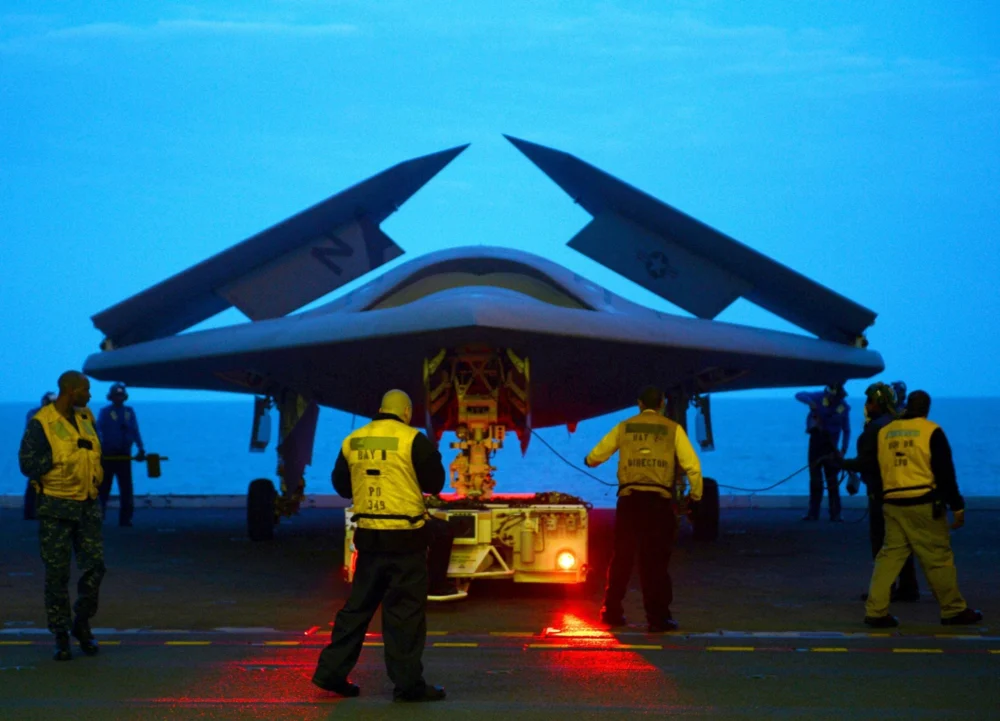
The architecture of modern warfare is undergoing a fundamental metamorphosis, shifting away from the era of singular, multi-billion-dollar platforms toward a future defined by distributed, low-cost, and highly intelligent autonomous networks. For the better part of the last two decades, unmanned systems were characterized by high-altitude, expensive assets like the Global Hawk or the X-47B—platforms that, while pilotless, still required significant logistical tails and functioned largely as isolated eyes in the sky. Today, that paradigm is being shattered by the rise of "collaborative autonomy," a technological leap that allows swarms of diverse unmanned assets to think, communicate, and execute missions as a unified organism.
This shift is not merely a technological curiosity; it is a strategic necessity driven by the realities of modern contested environments. In theaters ranging from the plains of Ukraine to the volatile waters of the Middle East and the high-stakes chess match of the Taiwan Strait, traditional military assets are increasingly vulnerable to low-cost precision threats. The emergence of autonomous drones priced between $25,000 and $50,000 has democratized lethality, allowing smaller forces to challenge superpower dominance. To maintain a competitive edge, the United States and its allies are pivoting toward an "ecosystem" approach, where the "Autonomy of Things" (AoT) provides a force multiplier that minimizes human risk while maximizing tactical impact.
At the vanguard of this revolution is HavocAI, a Rhode Island-based defense technology firm that is redefining how autonomous systems operate in the maritime, terrestrial, and aerial domains. Founded only 18 months ago by U.S. Navy veterans Paul Lwin and Joe Turner, the company has rapidly ascended the defense-tech hierarchy, recently securing an $85 million funding round led by B Capital. The investor list reads like a directory of strategic interests: In-Q-Tel (the CIA’s venture arm), Lockheed Martin Ventures, and Taiwania, a fund backed by the Taiwanese government. This coalition of capital underscores a global recognition that the next decade of security will be won or lost in the software stacks of autonomous fleets.
The core innovation driving HavocAI is the transition from individual automation to collective intelligence. While the previous generation of Intelligence, Surveillance, and Reconnaissance (ISR) assets operated independently—often requiring dedicated human operators for each unit—HavocAI’s platform enables a "collaborative autonomy" model. In this framework, multiple networked systems—Unmanned Aerial Vehicles (UAVs), Autonomous Surface Vessels (ASVs), and ground-based robots—share real-time data to make collective decisions based on a commander’s high-level intent. This allows a single human supervisor to manage a vast "swarm" of assets that can detect, classify, and engage targets at machine speed.
The practical application of this technology was recently demonstrated in a landmark trial in Troia, Portugal. In what was billed as the world’s first successful air-sea autonomy mission in a GPS-denied environment, HavocAI showcased the ability of its systems to maintain operational integrity even when traditional navigation signals are jammed or spoofed. In the trial, ASVs and UAVs coordinated through a unified command interface, utilizing alternate navigation and timing solutions to maintain mission performance. The demonstration successfully executed the full "kill chain"—from initial target detection and classification to autonomous engagement—all while fusing sensor inputs from both air and sea platforms to create a comprehensive picture of Maritime Domain Awareness.
This capability is particularly vital for nations like Ukraine, which must defend against a numerically superior and heavily mechanized adversary. By leveraging "Physical AI"—the application of artificial intelligence to the movement and interaction of physical objects—HavocAI provides a way to contest littoral and open-sea environments without relying on persistent, vulnerable communications links. The goal is to create an "unfair advantage" where autonomous assets can operate in "comm-denied" zones, sensing their environment and reacting to threats faster than any human-centric command structure could manage.
HavocAI’s current maritime fleet serves as a blueprint for this scalable, expendable warfare. Their lineup includes the Rampage, a compact ASV priced in the $100,000 range; the Kaikoa, a 42-foot vessel costing approximately $1 million; and the Atlas, a larger, multi-million-dollar platform. While these price points might seem high to a consumer, they are a fraction of the cost of a traditional manned frigate or destroyer, which can cost upwards of $1 billion and take years to construct. By outfitting commercially procured hulls with a sophisticated suite of LiDAR, radar, cameras, and edge computing, HavocAI can deploy large volumes of assets that are "attritable"—meaning they can be lost in combat without causing a strategic or financial catastrophe.

However, the future of the company lies in moving beyond retrofitting commercial craft toward "bottoms-up" autonomous design. Much like the automotive industry saw the rise of purpose-built autonomous vehicles from companies like Zoox, the maritime world is now seeing the birth of vessels designed specifically for robot-only operation. By removing the need for human life-support systems, bridges, and crew quarters, these ships can be optimized for weight, power, and payload capacity.
To achieve this at scale, HavocAI has entered into a strategic partnership with Hanwha Defense USA, a subsidiary of the South Korean industrial giant Hanwha Group. As the world’s sixth-largest shipbuilder, Hanwha brings massive manufacturing muscle to the table. The collaboration aims to develop a 200-foot ASV designed ground-up for autonomous logistics and combat. This vessel would act as a "mother ship" or a "quarterback" in a distributed naval architecture. It could transport 20-foot equivalent unit (TEU) containers filled with drones, quadcopters, and terrestrial rovers to the edge of a contested zone, then deploy them as part of a synchronized, collaborative strike or surveillance force.
The geopolitical weight of this partnership is significant. Hanwha recently acquired the Philly Shipyard in Philadelphia for $100 million, signaling a major commitment to re-shoring maritime manufacturing in the United States. While the shipyard’s initial focus includes supporting the production of nuclear-powered submarines, the long-term goal is to bring Asian shipbuilding efficiencies—where 95% of the world’s commercial ships are currently built—to the U.S. defense sector. By combining Hanwha’s industrial scale with HavocAI’s software-first approach, the alliance seeks to deliver state-of-the-art autonomous vessels at a pace and price point that traditional defense contractors struggle to match.
This "software-first" philosophy is a radical departure from the traditional defense procurement model. Historically, hardware was the primary focus, with software added as a secondary consideration. In the world of collaborative autonomy, the software is the weapon system; the hardware is merely the carrier. HavocAI’s stack has already processed over 100 billion data points to train its perception and decision-making algorithms, ensuring that its "Physical AI" can handle the chaotic variables of the open ocean or a battlefield.
Looking ahead, the implications of this technology extend far beyond the military. The "Autonomy of Things" (AoT) is a cross-pollinating field where advances in commercial sectors—such as autonomous agriculture, construction, and infrastructure monitoring—are feeding directly into defense applications. The same sensors and path-planning algorithms that allow a robotic harvester to navigate a farm are being adapted to help an ASV navigate a minefield. This dual-use nature of the technology ensures a rapid rate of iteration and a deep pool of talent and components.
The future of global security will likely be defined by these "Ecosystems of Things." We are moving away from a world of "one ship, one mission" toward a reality where a single manned "quarterback" vessel manages a cloud of hundreds of autonomous subordinates. This distributed model makes a fleet nearly impossible to decapitate with a single strike, as the intelligence of the system resides in the network rather than any individual node.
As tensions rise in the Arctic over natural resources and in the Pacific over sovereignty, the ability to deploy collaborative autonomous fleets will be the ultimate deterrent. The work being done by HavocAI and Hanwha represents more than just a new class of vehicle; it represents a new philosophy of presence. In the contested environments of tomorrow, the winner will not necessarily be the one with the biggest ships, but the one with the most intelligent, resilient, and collaborative network. The algorithmic armada has arrived, and it is fundamentally changing the calculus of power on the high seas.
