

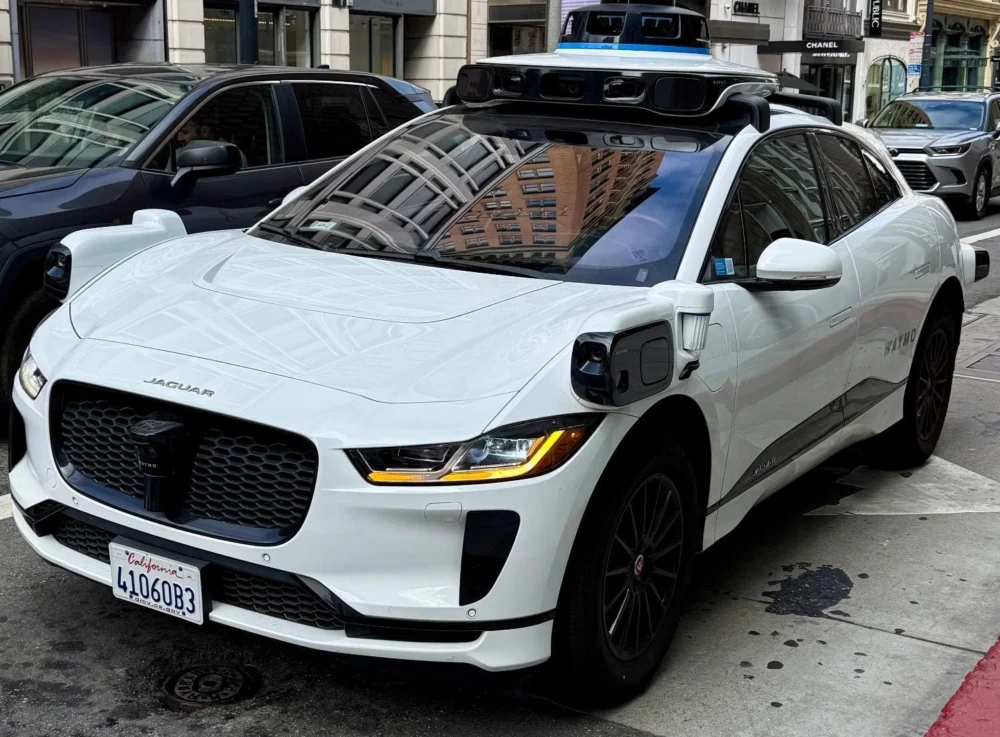
The intersection of cutting-edge artificial intelligence and the unpredictable nature of urban life reached a sobering flashpoint on Friday, January 23, in Santa Monica, California. A Waymo autonomous vehicle, part of the fleet operated by Alphabet’s self-driving subsidiary, was involved in a collision with a child near an elementary school during the morning drop-off window. While the physical injuries reported appear to be minor, the incident has sent ripples through the technology sector, prompting a formal investigation by the National Highway Traffic Safety Administration (NHTSA) and reigniting a fierce national conversation regarding the readiness of robotaxis to navigate the most sensitive environments of our civic infrastructure.
The collision occurred within two blocks of a local elementary school, a setting characterized by high-density foot traffic, double-parked vehicles, and the erratic movements of young pedestrians—the exact "edge cases" that autonomous driving developers have spent a decade trying to solve. According to preliminary data released by Waymo and corroborated by the NHTSA’s Office of Defects Investigation (ODI), the child emerged suddenly from behind a tall, double-parked SUV, darting into the roadway and directly into the path of the oncoming vehicle.
In the immediate aftermath, Waymo’s internal telemetry suggested that the onboard "Waymo Driver" system reacted with superhuman speed. The vehicle was traveling at approximately 17 mph—well within the standard speed limit for a school zone—when its sensors detected the pedestrian emerging from the visual obstruction. The system initiated an emergency braking maneuver, decelerating the multi-ton vehicle to under 6 mph before the point of impact. Waymo’s engineers have been quick to point out that a human driver, burdened by the typical 1.5-second reaction lag, would likely have struck the child at 14 mph, a speed at which the risk of serious injury or fatality increases exponentially.
Despite the technical efficiency of the car’s braking system, the fact that a collision occurred at all in a school zone has prompted the NHTSA to open investigation PE26001. This "Preliminary Evaluation" is not merely a formality; it represents a deep dive into the algorithmic decision-making of the Waymo Driver. The federal agency is specifically examining whether the vehicle exercised "appropriate caution" given its proximity to a school. The central question for regulators is no longer just whether a robot can react to a hazard, but whether it should have predicted the hazard’s likelihood and adjusted its behavior preemptively—perhaps by slowing to a crawl or increasing its following distance—before a child ever stepped off the curb.
The Santa Monica incident highlights the inherent tension between the "perfection" of machine reflexes and the "prudence" required for social integration. For years, the autonomous vehicle (AV) industry has leaned on a data-driven narrative: that because 94% of accidents are caused by human error, removing the human is the ultimate safety solution. However, as robotaxis become a common sight in cities like San Francisco, Phoenix, and Los Angeles, the public is beginning to demand a standard that exceeds "better than human." They are demanding a system that can navigate the nuances of human intuition.
In a school zone, a seasoned human driver does not just look for pedestrians; they look for the possibility of pedestrians. They see a double-parked SUV and a crossing guard and subconsciously conclude that a child might dart out at any second. This level of semantic understanding—the ability to read the "vibes" of a street—remains the final frontier for AI. While Waymo’s sensors can "see" through darkness and rain using LiDAR and radar, they are still learning to interpret the high-stakes social context of a playground or a school bus stop.

The NHTSA’s investigation will also scrutinize Waymo’s post-impact response. In this instance, the vehicle’s software functioned as intended following the collision: the car stopped, remained at the scene, and automatically alerted emergency services via a 911 call. This automated transparency is a key differentiator for Waymo, which has positioned itself as the "responsible" leader in the space, particularly following the high-profile struggles of its competitor, Cruise. Last year, Cruise saw its permits suspended in California after one of its vehicles dragged a pedestrian who had been struck by a separate, human-driven car. Waymo has avoided such catastrophic failures, but the Santa Monica incident proves that even the most advanced systems are not immune to the physics of the real world.
From an industry perspective, this event comes at a precarious time. Waymo has been aggressively expanding its service areas and increasing its ride volumes, recently surpassing 100,000 paid trips per week. To maintain this trajectory, the company must maintain the trust of municipal leaders and the public. A collision involving a child, regardless of the fault or the speed of the impact, is a PR nightmare that threatens to derail the regulatory momentum the industry has built. If the NHTSA determines that the Waymo Driver failed to adhere to the spirit of school-zone safety laws, it could lead to mandated software updates or, in the worst-case scenario, a restriction on where these vehicles are allowed to operate during school hours.
Furthermore, the legal implications of this event are significant. We are entering an era where "reasonable care" is being redefined by lines of code. If a human driver hits a child who darts out from behind a van, it is often ruled an unavoidable accident. But when an AI is involved, every millisecond of data is logged and analyzed. If the data shows the car’s sensors detected a foot or a shadow 0.1 seconds before the brakes were applied, lawyers and regulators will ask why it didn’t happen 0.2 seconds sooner. The "superhuman" capability of the AI becomes the very yardstick used to find it negligent.
Looking toward the future, the Santa Monica collision will likely serve as a foundational data point for the next generation of AV safety standards. It may accelerate the development of V2X (Vehicle-to-Everything) communication, where school zones could broadcast digital beacons to all approaching autonomous cars, forcing them into a "high-alert" mode that goes beyond standard speed limits. It may also lead to a shift in how these companies market their technology—moving away from the promise of "eliminating accidents" and toward a more honest conversation about "mitigating harm."
The resilience of the human body, particularly that of a child, is often the only thing standing between a minor incident and a tragedy. In this case, the child was able to get up and move to the sidewalk, a fortunate outcome that allows the industry to treat this as a learning moment rather than a catastrophe. However, the ghost of Elaine Herzberg—the pedestrian killed by an Uber self-driving test vehicle in 2018—continues to haunt the sector. Every time a robotaxi makes contact with a human, it serves as a reminder that the transition to an autonomous future is not a straight line, but a complex, often painful negotiation between man and machine.
As the Office of Defects Investigation continues its work, the tech world will be watching closely. The findings will likely influence the deployment of autonomous trucking, delivery bots, and personal AVs for years to come. For now, the streets of Santa Monica remain a live laboratory for one of the greatest technological experiments in history. The goal remains a world with zero traffic fatalities, but as Friday’s incident proves, the path to that "zero" is paved with incredibly difficult, high-stakes lessons that no simulation can fully replicate. The Waymo Driver may have faster reflexes than a human, but it is now being asked to develop something much harder to program: the wisdom to navigate a world where children don’t always follow the rules of the road.
