

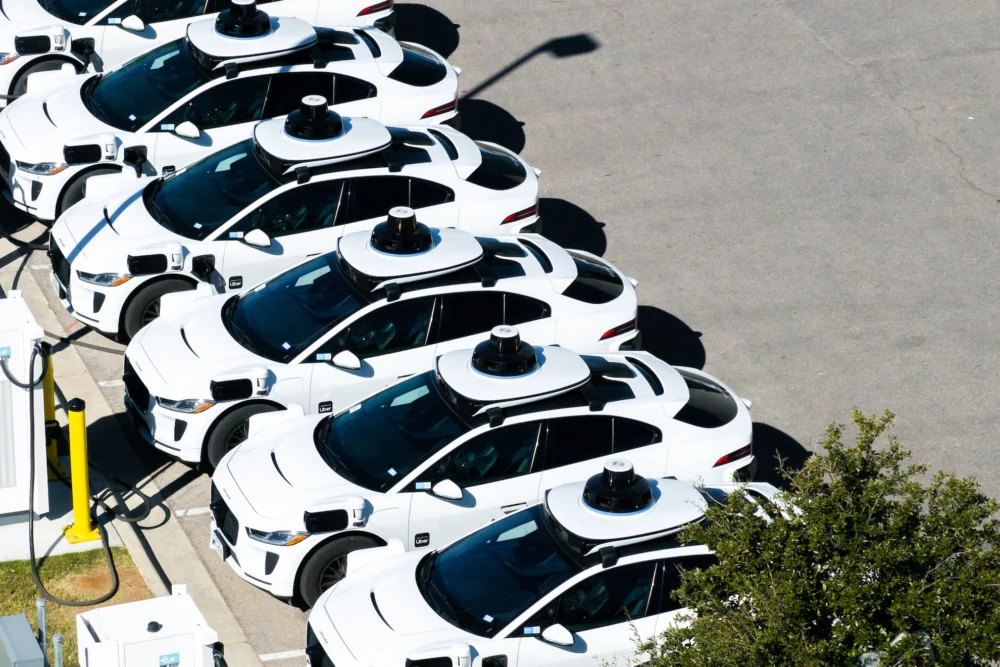
The multi-year effort to integrate fully autonomous ride-hailing services into one of the world’s most congested and complex transportation hubs has finally culminated in a commercial launch. Waymo, the autonomous vehicle (AV) subsidiary of Alphabet, has officially commenced its robotaxi operations serving the San Francisco International Airport (SFO). This strategic milestone, confirmed by the company via a corporate announcement, initially introduces the service to a limited, select group of early riders, with plans for a rapid expansion to the general public in the ensuing months. The deployment represents not just an expansion of geographic reach, but a critical validation of the economic viability model underpinning Level 4 autonomous technology.
Initial logistics dictate that all pickups and drop-offs will be facilitated at the SFO Rental Car Center. This facility, slightly removed from the immediate chaos of the terminal curbside, requires riders to utilize the airport’s automated AirTrain system for final transit to and from their flights. Waymo has indicated that this initial arrangement is temporary, underscoring a clear intent to pursue more proximal airport locations—specifically the highly coveted and traffic-dense terminal curbside zones—as operational confidence and regulatory approvals advance.
The Critical Nexus of Scale and Safety
For Waymo, securing access to SFO is more than a convenience feature; it is an existential imperative woven into the fabric of its high-volume, geographic-scale business model. Autonomous ride-hailing relies on maximizing vehicle utilization and penetrating high-demand, high-frequency corridors to achieve profitability. Airports, characterized by predictable, long-distance routes and high passenger turnover, offer a "killer application" scenario for AV deployment, ensuring fleet assets are consistently generating revenue, often mitigating the empty-mileage problem common in urban ride-hailing.
Waymo co-CEO Tekedra Mawakana highlighted this strategic importance, noting that providing service to and from SFO had been one of the most frequently requested features by the company’s existing ridership base. This commercial achievement simultaneously deepens Waymo’s operational footprint within the highly regulated and technically challenging San Francisco Bay Area, a region already serving as a primary proving ground for the industry.
This triumph, however, lands amid a burgeoning storm of regulatory scrutiny and public safety concerns that threaten to temper the enthusiasm of expansion. Even as Waymo celebrated its SFO authorization, the company was simultaneously managing multiple high-profile incidents that have drawn the attention of federal safety watchdogs. The National Highway Traffic Safety Administration (NHTSA) is actively investigating a recent January incident in Santa Monica where a Waymo robotaxi made contact with a child near an elementary school, resulting in minor injuries. Furthermore, both NHTSA and the National Transportation Safety Board (NTSB) have initiated probes into the systemic behavior of Waymo vehicles regarding their interactions with school buses, specifically focusing on reported instances of illegal or unsafe maneuvers around stopped buses displaying warning signs.
This dual reality—rapid, commercially focused expansion countered by intensified federal safety oversight—defines the current phase of autonomous mobility deployment. The industry is navigating the delicate tightrope walk between proving the technology’s profitability and maintaining the requisite level of public trust necessary for mass adoption.
The Rigors of Airport Operational Design Domains
The years of rigorous negotiation and phased testing required to achieve SFO access underscore the technical and bureaucratic complexity inherent in operating within a major international airport. An airport environment presents an Operational Design Domain (ODD) that is exponentially more challenging than standard urban street networks.
Airports are characterized by non-standardized signage, dynamic and often confusing lane configurations, the presence of unusual vehicles (shuttles, baggage carts, emergency services operating outside typical road rules), and a high concentration of distracted human drivers and pedestrians unfamiliar with the immediate surroundings. Furthermore, due to heightened security protocols, any interruption or failure of a commercial vehicle within the secure perimeter of an airport can have cascading effects on global travel schedules.
Waymo’s methodical, multi-step process for SFO deployment reflects this complexity. Initial attempts to secure a basic mapping permit were rebuffed in 2023, signaling early friction with local airport authorities who prioritize safety and operational consistency above all else. The subsequent reboot of negotiations led to a crucial permit in March 2025, which allowed for essential high-definition mapping of the airport infrastructure. Crucially, this agreement stipulated specific data-sharing requirements, reflecting the airport’s demand for increased transparency and oversight regarding autonomous vehicle performance within its boundaries—a sign of growing localized regulatory power against state-level preemption.
The progression from mapping to a full testing and operations pilot permit, secured by September 2025, gradually built the necessary operational rapport and data portfolio required for full commercial service authorization. Starting at the Rental Car Center, which acts as a controlled, high-volume staging area removed from the direct terminal curb, serves as a crucial risk mitigation step. It allows Waymo’s system to handle the high throughput of airport riders without immediately encountering the most unpredictable variables found at the departures and arrivals drop-off zones. This phased approach is likely to become the standard blueprint for AV integration into other major national transportation hubs.
Waymo’s Accelerating Geographic Conquest
The SFO achievement is the latest data point in Waymo’s aggressive, accelerating strategy of geographic expansion. Over the past year, the company has markedly increased its fleet size, entered new metropolitan areas, and significantly broadened the scope of its existing geo-fenced zones to include complex freeway segments.
Waymo’s autonomous network now covers the majority of the greater San Francisco Bay Area, extending south into the critical innovation cluster of Silicon Valley, where it already services the San Jose International Airport. Beyond California, the operational domain spans parts of Los Angeles, Austin, Miami, and Atlanta. Its most mature and extensive operation remains in Phoenix, Arizona, where the company has long offered curbside service directly to Sky Harbor Phoenix International Airport, demonstrating its capability to handle high-level airport logistics.
This multi-city, multi-airport strategy is key to achieving financial sustainability. By distributing its fleet across diverse geographies and varying regulatory climates, Waymo mitigates localized risk and builds a robust dataset that informs its centralized AI driver stack, improving performance across all operational domains simultaneously. The competition, particularly after the high-profile setbacks faced by rivals, appears to be lagging, positioning Waymo as the current leader in achieving true scale in Level 4 commercial deployment.
Expert Analysis: Economic Leverage and Regulatory Headwinds
The economic leverage gained from airport access is substantial. According to transportation analysts, airport routes typically carry a higher average fare compared to standard intra-city rides, translating directly into higher revenue per mile. Moreover, these routes often have predictable demand peaks (early morning departures, evening arrivals), enabling highly efficient fleet management and minimizing idle time.
However, the regulatory landscape remains fragmented and challenging. The core tension lies between state regulatory bodies, such as the California Public Utilities Commission (CPUC), which often favor rapid technological deployment to foster innovation, and local municipalities and airport authorities, which are primarily concerned with public safety, congestion, and maintaining essential services.
The SFO agreement, with its data-sharing clauses, exemplifies the successful pushback by local authorities to retain some measure of control. Regulators recognize that while AVs promise long-term efficiency, their current operational domains are imperfect. The ongoing investigations by NHTSA and NTSB are not mere procedural checks; they represent a fundamental challenge to the industry’s central premise: that autonomous vehicles are statistically safer than human drivers. Every incident, especially those involving vulnerable road users like children, erodes the fragile public confidence required for full societal integration.
The NTSB’s focus on school bus protocol is particularly significant because it deals with a highly standardized and predictable scenario—a stationary bus with visible signals—where AVs are expected to perform flawlessly. Failures in these standardized scenarios raise serious questions about the robustness of the perception and planning layers of the autonomous stack, potentially justifying further restrictions on ODDs or fleet size until verifiable safety improvements are demonstrated.
Future Impact and Trends in Autonomous Airport Logistics
The successful integration of autonomous passenger service into SFO sets the stage for a broader transformation of airport logistics. Beyond passenger transport, the long-term trend points toward AVs handling myriad internal airport functions. This could include automated shuttles moving employees between remote parking and terminals, autonomous vehicles transporting cargo and baggage between sorting facilities and planes, and driverless tugs handling ground support equipment.
As Waymo and its competitors continue to mature their technology, the next critical step will be the deployment of fully driverless, zero-occupant vehicles for these logistical tasks, which operate in controlled, highly geo-fenced environments. This shift would unlock massive operational efficiencies for airports, reducing labor costs and improving the velocity of ground operations.
For passengers, the SFO launch signifies a potential future where the traditional ride-hailing experience is fundamentally altered. Eventually, as fleet sizes increase and operational domains expand to include high-speed freeway driving seamlessly, passengers will be able to summon an autonomous vehicle directly from their home or office in the Bay Area, complete the 15-to-30-mile journey to SFO entirely without human intervention, and be dropped off at the terminal curb. This seamless, end-to-end autonomous journey is the ultimate goal, promising reduced travel stress and optimized transit times.
In the immediate term, Waymo must meticulously manage the balance between aggressive commercial scaling—necessary to satisfy investors and achieve unit economics—and absolute safety performance. The SFO gateway is a monumental commercial victory, but the operational realities, complicated by federal safety probes, mean that the success of this deployment will be measured not just in ridership numbers, but in the flawless execution of every single mile traveled through this complex, high-stakes environment. The trajectory of autonomous urban mobility in 2026 and beyond hinges heavily on Waymo’s ability to prove that its technology can scale safely under the intense pressure of global transport infrastructure.
