

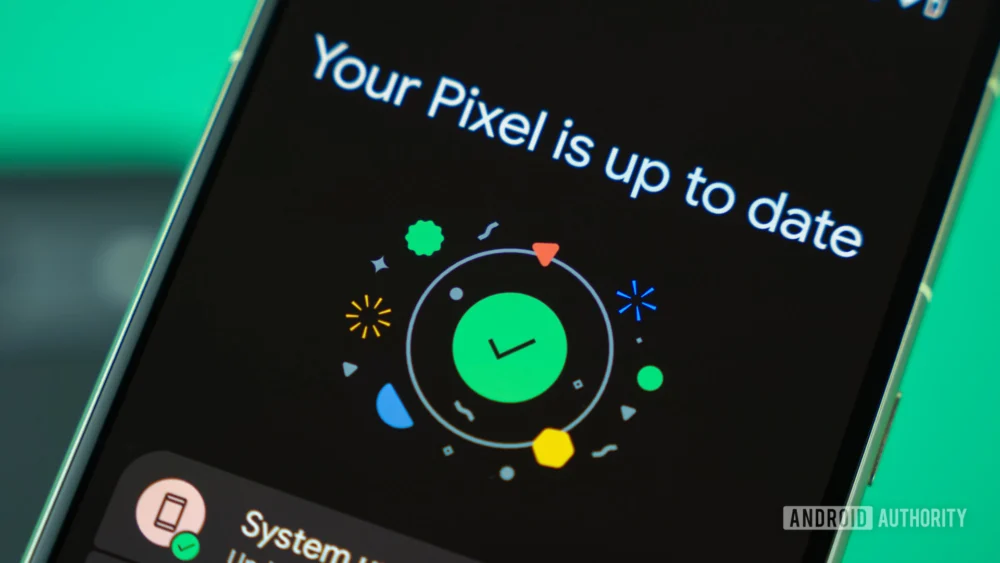
The rollout cadence for Google’s monthly software updates to its Pixel lineup, often touted as a key differentiator in the Android ecosystem, has encountered a significant and perplexing bottleneck with the January 2026 security and feature patch. Initially seeded to devices on January 12th, the distribution process has been anything but seamless, characterized by protracted delays that have left a substantial portion of the user base waiting weeks past the initial announcement. This extended lag, now confirmed by anecdotal reports across various digital forums and internal reader surveys, suggests a substantial systemic hiccup within Google’s deployment pipeline, leading to intense scrutiny regarding the reliability of its software support promises.
The Context of the Contention: A Broken Promise of Timeliness
For years, Google has leveraged the Pixel line as the vanguard of the Android experience, using it to showcase the latest features and, critically, to demonstrate industry-leading update speed. The commitment to delivering monthly security patches promptly—often within the first week or two of the month—is a core tenet of the Pixel value proposition, differentiating it from OEM partners who frequently lag by several weeks or even months. The January 2026 event, however, appears to be a stark deviation from this established norm. Reports indicate that many users only began seeing the update prompt in the final days leading up to the rollout window for the next month’s patch. This compressed timeline leaves users feeling as if they are receiving a month-old update just as the next one looms, effectively negating the benefit of timely security remediation.
Anecdotal evidence gathered from community hubs, such as the dedicated Google Pixel subreddit, paints a consistent picture of erratic distribution. Users, including those operating flagship devices like the hypothetical Pixel 10 Pro mentioned in early reports, detailed a frustrating cycle: the update notification would briefly appear, only to vanish upon refreshing the settings menu, leading to widespread speculation about whether Google had temporarily withdrawn the build due to unforeseen stability concerns. The sheer volume of user reports, numbering in the thousands across independent surveys, corroborates that this was not an isolated carrier delay but a widespread, vendor-side issue.
Technical Deep Dive: Size, Stability, and Potential Patches
Further examination of the delivered update packages reveals interesting data points. For high-end devices, the January build reportedly clocked in at a substantial 3.3GB download size. While large updates are not uncommon, especially when substantial under-the-hood changes or foundational security fixes are involved, the size raises questions about the extent of the modifications made between the initial January 12th release and the delayed rollout experienced by the majority.
Crucially, the delayed batch of users is seemingly receiving a more refined version of the update. Earlier reports surrounding the initial January release highlighted significant post-installation instability, specifically citing malfunctions related to core connectivity features such as Bluetooth and Wi-Fi performance. The fact that users now receiving the update—sometimes reappearing after an initial disappearance—are reporting a smoother experience, free from these connectivity bugs, strongly suggests that Google may have indeed pulled the initial release to implement hotfixes. This implies that the prolonged delay was a necessary evil to ensure the stability of the final, widely distributed build, rather than a simple failure in logistics. The intermittent appearance and disappearance of the update suggest a phased re-seeding process, where the corrected image was gradually pushed out only after internal validation confirmed the resolution of critical bugs affecting early adopters.
Industry Implications: Trust Erosion and the Fragmentation Challenge
This level of sustained delay in primary software delivery has broader implications for Google’s strategy and consumer trust. The Pixel line’s premium positioning hinges on a flawless software experience, positioning it as the "purest" expression of Android. When the foundational promise of timely updates falters, it creates an opening for skepticism regarding Google’s operational maturity in software lifecycle management.
In the competitive landscape, this situation provides ammunition for rivals. Samsung, for example, has aggressively expanded its own update commitment, often matching or even exceeding Google’s security patch timelines for its flagship S-series and foldables in recent years. Any perceived weakness in Google’s own delivery mechanism allows other manufacturers to argue that their commitment to long-term support is equally robust, even if their initial rollout speeds lag.
Furthermore, this incident highlights the inherent complexity of large-scale mobile software deployment. Unlike desktop operating systems, mobile updates must navigate a labyrinth of device configurations, carrier testing (though Pixels are often less beholden to carriers), and regional variations. A failure point in this chain—whether it’s a flaw in the update server infrastructure, a late discovery in pre-release QA, or a complex dependency issue within the Android build system—can cascade rapidly, affecting millions of devices globally. For Google, which controls the entire stack from hardware to OS, such persistent failures are harder to explain away than they would be for a third-party manufacturer.
Expert Analysis: Decoding the Deployment Mystery
Analyzing the pattern—an initial small release followed by a significant gap, then a slow trickle to the majority—points toward a potential issue related to the A/B partitioning system or the update validation servers. Modern Android updates often utilize seamless updates via A/B partitions, minimizing downtime. However, if the initial build deployed on January 12th triggered an unexpected error during the post-installation verification phase on a subset of devices, Google’s automated systems might have flagged the entire build for temporary suspension.
The reappearance suggests a targeted re-signing or modification of the manifest files associated with the update package, pushing a slightly altered, verified version. The sheer size (3.3GB) hints that this wasn’t just a minor security hotfix; it may have involved rebuilding large components of the system image to resolve the underlying Bluetooth/Wi-Fi conflicts. A complex fix requiring a full system image replacement rather than a simple OTA patch often necessitates a longer validation cycle, which, when combined with the initial faulty deployment, created the observed multi-week delay. It is a sophisticated digital triage operation playing out in real-time across the user base.
Future Trajectory: Raising the Bar for Software Maintenance
The fallout from this January 2026 update delay will likely influence Google’s internal processes moving forward. Expect increased emphasis on "canary" testing phases that are more robustly segmented before a general release. If Google is to maintain its lead, it must ensure that its flagship devices receive their promised patches within a defined, short window—ideally less than five days from the initial announcement, regardless of minor bugs discovered in the first wave.
The next significant trend will be the maturation of Project Mainline, which allows for updating specific OS components via the Play Store independently of the main system update. If more of the January security fixes could have been delivered via Mainline modules, the reliance on a massive, monolithic system update would decrease, reducing the surface area for catastrophic deployment failures like the one observed. As Google integrates more AI and machine learning capabilities directly into the OS core, the size and complexity of these monthly patches will only increase. Therefore, the underlying infrastructure responsible for delivering these patches must evolve beyond current capabilities to handle the increasing payload without sacrificing speed or reliability. For Pixel owners, the hope remains that this late January delivery is an anomaly, a final growing pain before the software ecosystem fully matures to meet the hardware expectations set by devices like the Pixel 10 Pro. For those who have finally received the build, the relief is palpable, though shadowed by the lingering uncertainty about next month’s schedule. Manual sideloading remains a viable, albeit technical, recourse for the impatient, requiring users to visit the developer repository, download the appropriate factory image—a process that underscores the friction Google aims to eliminate.
