


Update, March 14, 2026 (06:38 AM ET): Qualcomm Technologies has formally acknowledged the security findings, issuing a statement that provides critical insight into the vulnerability’s lifecycle and remediation efforts. A spokesperson confirmed:
"Developing technologies that endeavor to support robust security and privacy is a priority for Qualcomm Technologies. We commend the researchers from the Xiaomi ShadowBlade Security Lab for using coordinated disclosure practices. Regarding their GBL-related research, fixes were made available to our customers in early March 2026. We encourage end users to apply security updates as they become available from device makers."
This confirmation places the discovery credit with the Xiaomi ShadowBlade Security Lab and indicates that patches were distributed to Android Original Equipment Manufacturers (OEMs) at the beginning of the month. While this demonstrates an effective disclosure pipeline, Qualcomm’s concluding advice—to apply immediate security updates—simultaneously signals the patch that will inevitably close the window of opportunity for bootloader unlocking that this exploit provided. For users seeking to leverage this vulnerability, maintaining current firmware is now counterproductive.
Original Article, March 12, 2026 (12:56 PM ET): The advent of the Qualcomm Snapdragon 8 Elite Gen 5 chipset has heralded a new era for mobile processing power, solidifying its position at the core of the latest generation of premium Android devices. From the much-anticipated Xiaomi 17 series and the OnePlus 15 iteration to the latest Samsung Galaxy S26 Ultra, this System-on-a-Chip (SoC) represents the pinnacle of current mobile silicon. However, alongside this performance leap, a significant security vulnerability has surfaced this week. This flaw, detailed in a complex exploit chain, targets the foundational boot processes of Qualcomm-based devices, effectively stripping away stringent manufacturer-imposed barriers and granting users the coveted ability to unlock the bootloader on hardware previously deemed highly resistant to modification.
The Crux of the Vulnerability: Mismanagement of the Generic Bootloader Library (GBL)
The technical underpinning of this critical security lapse has been dubbed the "Qualcomm GBL Exploit," publicly demonstrated via proof-of-concept code circulating online. While the precise sequence of discovery remains subject to debate among security communities, the core issue exploits a critical oversight in the execution flow of the Generic Bootloader Library (GBL) on modern Android devices utilizing the Android 16 operating system base and Qualcomm silicon.
For context, the Android Bootloader (ABL) is the initial software layer executed upon device startup, responsible for initializing hardware and verifying the integrity of the subsequent operating system components. Qualcomm implements a vendor-specific ABL to manage this process. With the shift to Android 16, the integration of the GBL—a standardized library designed to streamline bootloader functions—is initiated by the Qualcomm ABL. The vulnerability resides in how this GBL is loaded from the designated efisp partition.
Instead of performing a rigorous cryptographic verification to ensure the GBL’s authenticity and integrity, the Qualcomm ABL is reportedly only performing a superficial check—merely confirming the presence of a valid UEFI application structure within the efisp partition. This relaxed validation mechanism creates a critical attack vector: an attacker can inject custom, entirely unsigned code masquerading as the GBL onto this partition. Once loaded, this malicious code executes with the highest level of privilege, bypassing the standard chain of trust established during the device’s initial power-on sequence.
The Multi-Stage Attack: Chaining Vulnerabilities for Privilege Escalation
The ability to write arbitrary code to the efisp partition is not immediately achievable. Standard security protocols, particularly Security-Enhanced Linux (SELinux) operating in its default Enforcing mode, strictly prohibit unauthorized write operations to sensitive boot partitions. To modify these areas, the system must typically be running in Permissive SELinux mode, a state that usually requires existing root access or the successful execution of a pre-boot exploit—a classic catch-22 scenario for those attempting to gain initial control.
This necessity for pre-root access is precisely where the second, equally crucial vulnerability enters the chain. The Qualcomm ABL includes several OEM-specific fastboot commands intended for diagnostic or manufacturing purposes. One such command, fastboot oem set-gpu-preemption, is designed to toggle a specific GPU resource management setting, accepting only binary values like ‘0’ or ‘1’ as legitimate arguments.

The exploit leverages a severe input sanitization failure within the ABL’s handling of this command. The vulnerable implementation fails to validate or strip subsequent, unexpected parameters appended to the command line. By exploiting this lack of bounds checking, researchers have successfully appended the kernel boot parameter androidboot.selinux=permissive directly onto the command string executed by the ABL.
The sequence is surprisingly simple yet devastatingly effective:
fastboot set-gpu-preemption 0 androidboot.selinux=permissiveUpon execution of this meticulously crafted command while the device is in the fastboot state, the Qualcomm ABL incorrectly processes the appended string, interprets it as a valid instruction for the kernel initialization process, and consequently transitions SELinux from its secure Enforcing state to the significantly less restrictive Permissive mode upon the next reboot. This single, non-standard command effectively dismantles the primary defense mechanism preventing unauthorized partition writes.
Achieving Root and Unlocking the Bootloader
With SELinux now operating in Permissive mode, the path to modifying the bootloader status becomes clear. The first vulnerability—the GBL loading flaw—can now be weaponized without encountering permission denials.
- Injection: The attacker writes their custom UEFI application (the malicious GBL payload) onto the
efisppartition. Since SELinux is permissive, this write operation succeeds. - Execution: Upon rebooting the device into the bootloader interface, the Qualcomm ABL proceeds to load the GBL from
efisp. Lacking proper cryptographic verification, it loads and executes the injected, unsigned code. - Final Payload: The custom UEFI application executes its intended function: directly manipulating the non-volatile memory flags that control the device’s lock state. Specifically, it sets the critical bootloader status flags, typically represented as
is_unlockedandis_unlocked_critical, to the value ‘1’.
This final step precisely mimics the intended outcome of the standard, manufacturer-approved fastboot oem unlock command, achieving a fully unlocked bootloader state without triggering mandatory waiting periods, user confirmation screens, or device-specific unlock codes—a major circumvention of OEM security policies.
The Case Study: Impact on the Xiaomi Ecosystem
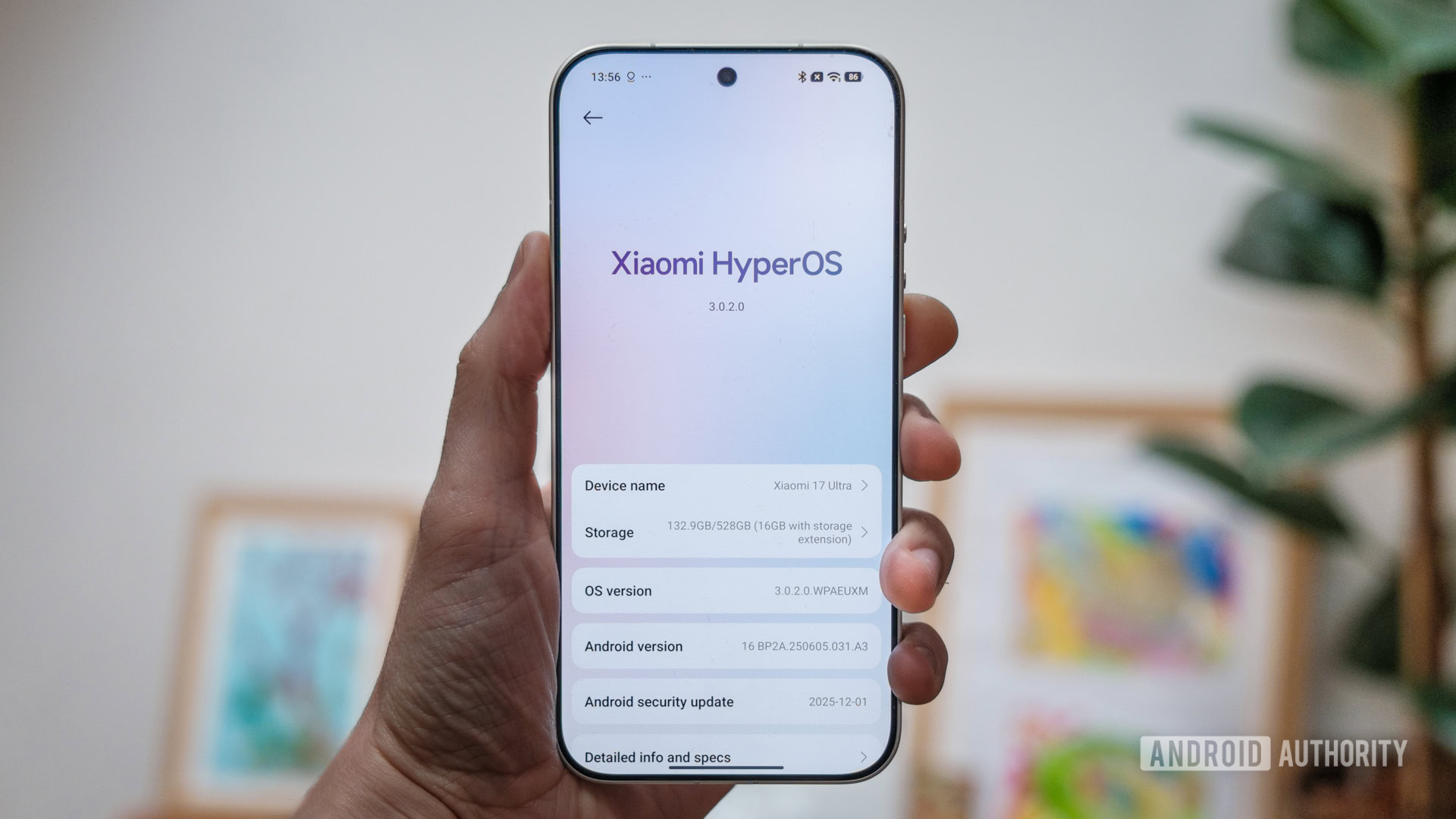
The immediate and most visible impact of this exploit chain has been observed within the user base of the Xiaomi 17 series, which prominently features the Snapdragon 8 Elite Gen 5. Xiaomi, particularly for its mainland Chinese market devices, has historically enforced some of the most draconian bootloader locking mechanisms in the industry. These policies often involve multi-day waiting periods, mandatory submissions of personal data via questionnaires, and strict hardware limitations, leading to significant community frustration.
The GBL exploit chain offers a near-instantaneous bypass for these complex hurdles. Reports circulating in developer communities indicate that users leveraging this technique have successfully installed custom recoveries and third-party operating systems on devices previously considered permanently locked down.
However, this window of freedom appears narrow. Concurrent reports suggest that Xiaomi is rapidly moving to neutralize this threat. Evidence points toward the rollout of HyperOS build 3.0.304.0 in China, which is rumored to contain specific patches addressing the mechanism exploited by the researchers. This has led to urgent advisories within the modding community, instructing potential exploit users to immediately isolate their devices from the internet and refrain from any system updates to preserve the vulnerable firmware state.
Industry Implications and the Security Architecture of Android
This vulnerability chain exposes fundamental weaknesses not just in Qualcomm’s implementation but in the broader architecture of secure boot for modern Android devices, particularly those adopting the new standards introduced with Android 16.
The GBL Standardization Dilemma: The Generic Bootloader Library (GBL) was introduced to foster greater consistency across diverse hardware platforms, simplifying the development path for OEMs and Google alike. However, this vulnerability demonstrates that standardization, without universally enforced verification protocols at the hardware abstraction layer (HAL), merely provides a standardized entry point for attackers. If the ABL across various vendors fails to enforce strict signature verification on GBL components, any flaw in the GBL specification itself becomes immediately cross-platform critical.
The Fastboot Interface as a Weak Link: The exploitation of the fastboot oem set-gpu-preemption command highlights the persistent risk associated with exposing complex, poorly sanitized command interpreters in the pre-OS environment. Fastboot is intended as a low-level debugging and flashing utility. When vendor-specific commands within this interface permit arbitrary string injection that can alter critical security states (like SELinux policy), the integrity of the entire device security posture is jeopardized before the OS even loads. This underscores the need for rigorous fuzz testing and immutable command parsing within all bootloader-level interfaces.
OEM Divergence and Patch Propagation: The exploit chain, while rooted in Qualcomm silicon, will manifest differently across OEMs. While Samsung’s use of its proprietary S-Boot bypasses the Qualcomm ABL reliance, other manufacturers relying on the standard Qualcomm implementation are susceptible. The subsequent patch deployment timeline introduces fragmentation risk. While Qualcomm may fix the underlying ABL issue, the ultimate deployment relies on OEMs integrating the fix into their specific firmware builds, testing them, and pushing them over the air—a process that can take weeks or months, leaving devices exposed long after the vendor patch is technically available.
Expert Analysis: The Future of Bootloader Security
From a security architecture perspective, this event serves as a stark reminder of the difficulty in maintaining an unbroken chain of trust from hardware root-of-trust up to the application layer. The successful bypass relies on three distinct, sequential failures:
- Failure of Trust Anchor: The ABL failing to verify the GBL signature.
- Failure of Input Validation: The fastboot interface allowing injection of kernel boot parameters.
- Failure of Isolation: The permissive SELinux state allowing subsequent partition modification.
The fact that the exploit requires chaining two separate weaknesses—one in execution logic and one in command parsing—suggests a high degree of sophistication in vulnerability discovery. However, the relative simplicity of the final SELinux toggle command is a major concern for future security audits.
Moving forward, the industry must focus on hardening the pre-OS environment:
- Immutable Bootloader State: Future bootloader implementations should utilize hardware-backed security features (like fuses or one-time programmable memory) to ensure that critical security settings, such as SELinux mode and bootloader lock status, can only be altered via explicitly signed, manufacturer-approved transactions, rather than being modifiable via runtime parameters passed during the fastboot sequence.
- GBL Signing Enforcement: Qualcomm must mandate and enforce robust, hardware-assisted cryptographic signing for the GBL, ensuring that the ABL rejects any GBL image lacking a verifiable signature from a trusted vendor key.
- Deprecation of Overly Permissive Commands: Vendor-specific fastboot commands that allow modification of boot parameters or partition write permissions should be reviewed, restricted, or entirely removed from production firmware builds.
Qualcomm’s Response and Forward Trajectory
Qualcomm’s published statement confirms that patches addressing the vulnerability in the fastboot oem set-gpu-preemption command were made available to their customers (the OEMs) in early March 2026. This proactive step addresses the second vulnerability in the chain. The company also noted that the research was disclosed through coordinated channels, suggesting responsible engagement from the discovering entity, the Xiaomi ShadowBlade Security Lab.
The critical unknown remains the status of the base GBL loading vulnerability. While the SELinux escape is patched, if the ABL continues to accept unsigned GBLs, a different, though perhaps more difficult, attack vector might still exist. Until Qualcomm or OEMs confirm the hardening of the GBL loading process itself, the ecosystem remains theoretically vulnerable to alternative exploitation methods targeting the same partition.
For developers and enthusiasts eager to explore the limits of their new Snapdragon 8 Elite Gen 5 devices, the race is now on. They must utilize the exploit before receiving an over-the-air (OTA) update pushes the patched firmware. This incident underscores the perpetual tension in the mobile technology space: the drive for cutting-edge performance inevitably clashes with the necessity of impenetrable security, a balance that the introduction of new standards like GBL can sometimes temporarily disrupt.