

The professional wrestling world is currently navigating a transformative period, characterized by a fusion of nostalgic brand revivals and forward-thinking talent integration. As the industry marches toward the 2026 Royal Rumble, all eyes are fixed on the Bell Centre in Montréal for the latest iteration of Saturday Night’s Main Event (SNME). This legendary franchise, once a staple of the 1980s wrestling boom, has been repurposed in the modern era as a high-stakes bridge between monthly Premium Live Events (PLEs). Scheduled for January 24, 2026, the upcoming broadcast on Peacock represents more than just a television special; it is a strategic pivot point that will dictate the creative trajectory for World Wrestling Entertainment (WWE) as it enters its most lucrative season.
The current card, though lean with only three officially sanctioned matches, suggests a "quality over quantity" approach. In an era where audiences often suffer from content fatigue, the decision to focus on three massive, multi-layered narratives allows for extended match times and significant in-ring storytelling. This structure mirrors the classic SNME format where the "big fight feel" took precedence over a crowded undercard. For the Montréal faithful, the stakes could not be higher, as the results of these bouts will reverberate through the Royal Rumble and ultimately shape the marquee matchups for WrestleMania.
The Fatal Four-Way: A Chess Match for Championship Contention
The centerpiece of the evening is arguably the Undisputed WWE Championship No. 1 Contender Fatal Four-Way match. Featuring Randy Orton, Damian Priest, Trick Williams, and Sami Zayn, this contest is a microcosm of the current WWE roster’s diversity. It pits a tenured legend against a former world champion, a rising star from the developmental system, and an emotional hometown hero.
From a tactical perspective, the inclusion of Sami Zayn in Montréal is a masterstroke of regional matchmaking. Zayn’s connection with the Quebec audience is legendary, often eliciting reactions that rival the greatest icons in the sport’s history. For Zayn, this match represents a long-overdue formalization of his world title aspirations. However, professional wrestling thrives on the "near-miss" narrative. There is a strong analytical argument to be made that WWE may delay Zayn’s crowning moment to maximize the emotional payoff at a later date, perhaps even WrestleMania.
On the other end of the spectrum is Randy Orton. As the "Apex Predator," Orton remains one of the most reliable assets in the company’s portfolio. An Orton victory would signal a return to a traditional powerhouse rivalry, potentially setting up a high-profile showdown with the current champion. Meanwhile, Damian Priest is looking to reclaim the momentum he lost after his recent title reign, and Trick Williams represents the "NXT Generation" breaking through the glass ceiling. The presence of Williams in this match is particularly noteworthy; it signals the company’s confidence in its developmental pipeline and its willingness to test younger stars in high-pressure environments.
The Redemption of Cody Rhodes and the Rise of Jacob Fatu
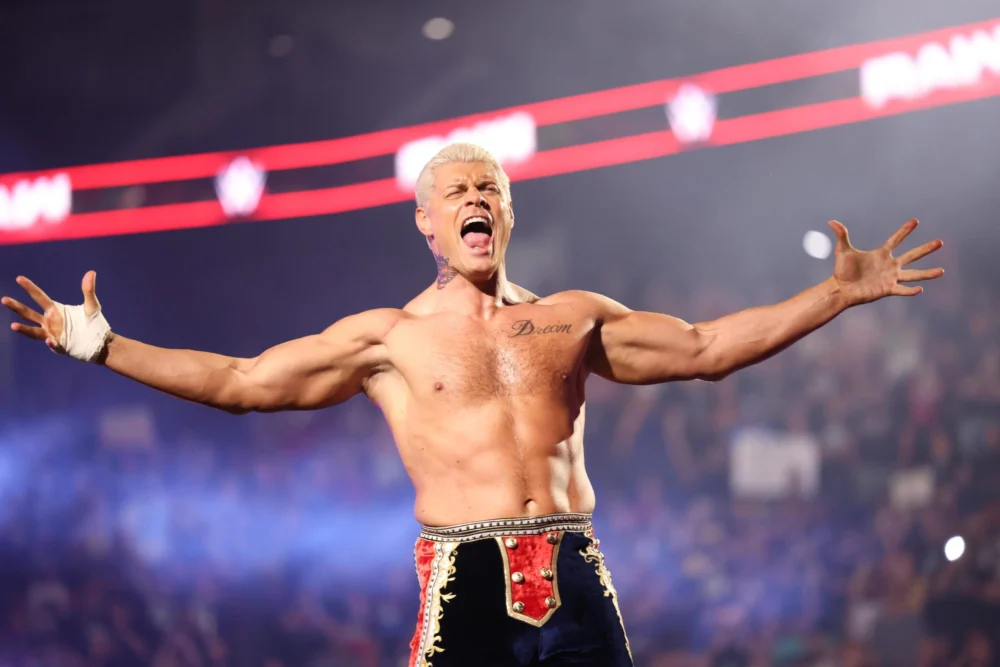
Perhaps the most visceral match on the card is the "Grudge Match" between Cody Rhodes and Jacob Fatu. This encounter is steeped in the fallout of Rhodes’ shocking title loss to Drew McIntyre. For over a year, Cody Rhodes was the undisputed face of the company, the "American Nightmare" who finished his story and carried the weight of the promotion. Now, for the first time in recent memory, Rhodes is operating without the gold, making him more vulnerable—and perhaps more dangerous—than ever.
Jacob Fatu, a member of the legendary Anoa’i wrestling dynasty, has quickly established himself as a chaotic force of nature. Fatu’s style is a blend of high-flying athleticism and raw, uninhibited violence, making him a unique threat to a technical specialist like Rhodes. The industry implication here is significant: if Fatu can secure a decisive victory over Rhodes, he instantly vaults into the upper echelon of the main event scene.
There is also a swirling cloud of narrative ambiguity surrounding this match. Rumors within the wrestling community suggest that Rhodes may have had a hand in a prior attack on Fatu, a twist that would add a layer of psychological complexity to Rhodes’ character. If Rhodes is revealed to be adopting a "win at all costs" mentality, it would mark a significant shift in his presentation, transitioning him from a pure babyface to a more nuanced, desperate protagonist. This match is not just about a personal rivalry; it is about determining whether Rhodes can maintain his status as the company’s franchise player in the absence of a championship.

Elevating the Women’s Tag Team Division
The WWE Women’s Tag Team Championship match between the defending champions, Rhea Ripley and IYO SKY, and the challengers, Liv Morgan and Roxanne Perez, serves as a testament to the depth of the women’s division. Historically, the tag team titles have struggled to find a consistent narrative identity. However, by placing them on "super-teams" comprised of former world champions and top-tier singles competitors, the company has successfully elevated the prestige of the belts.
Rhea Ripley and IYO SKY are, on paper, an unstoppable duo. Their combination of brute strength and unmatched aerial agility makes them a formidable force. A successful defense in Montréal would solidify their status as a "power team," potentially leading to a long-term dominance of the division. Conversely, the pairing of Liv Morgan and Roxanne Perez is an intriguing "odd couple" dynamic. Morgan has been on a career-defining run on Monday Night Raw, leaning into a more manipulative and aggressive persona. Perez, much like Trick Williams, represents the vanguard of the NXT call-ups. A win for this duo would not only shock the system but would also validate Perez’s transition to the main roster, proving she can compete at the highest level alongside established veterans.
Industry Implications: The TKO Era and Media Strategy
The scheduling of Saturday Night’s Main Event is a clear indicator of the strategic direction under TKO Group Holdings. The objective is to create "destination television" that mimics the atmosphere of a pay-per-view without the financial barrier of a standalone purchase. By airing on Peacock, WWE is maximizing its reach and providing high-value content to its streaming partners.
Furthermore, the choice of Montréal as a host city reflects a broader trend of international and regional expansion. WWE has recognized that global markets—and traditional strongholds like Canada—provide a level of crowd energy that translates exceptionally well to television. This energy is a crucial component of the "product" in 2026, where the audience’s reaction is often as important as the action inside the ring.
The integration of NXT talent into these specials also highlights a shift in the corporate philosophy regarding talent development. The "walls" between the brands are becoming increasingly porous. By featuring Roxanne Perez and Trick Williams on a Saturday Night’s Main Event card, WWE is conditioning its audience to view these stars as equals to the main roster stalwarts. This "cross-pollination" ensures that when a talent eventually moves full-time to Raw or SmackDown, they already possess the "star rub" necessary to succeed.
Future Outlook: The Road to WrestleMania 42
As the dust settles in the Bell Centre, the focus will immediately shift to the Royal Rumble and the subsequent "Road to WrestleMania." The winner of the Fatal Four-Way will likely walk into the Rumble with a guaranteed title shot, or perhaps use the momentum to win the Rumble match itself. The outcome of Rhodes vs. Fatu will dictate whether the "American Nightmare" regains his path to the main event of WrestleMania or if a new monster has been unleashed to terrorize the roster for the remainder of the year.
In the women’s division, the tag team titles may serve as a catalyst for a massive singles feud. It is a common trope in professional wrestling for tag team partners to eventually turn on one another, and with personalities as volatile as Ripley, SKY, and Morgan, the potential for a high-profile betrayal is high.
Saturday Night’s Main Event in Montréal is more than just a three-match card; it is a meticulously crafted narrative junction. In the modern era of professional wrestling, where long-term storytelling and "cinema" have become the gold standard, every move made on January 24 will have a ripple effect. Whether it is the crowning of a new contender, the fall of a hero, or the rise of a new generation, the events at the Bell Centre will serve as the foundation for the most important months in the wrestling calendar. For the fans in attendance and the millions watching at home, it promises to be a night where the past, present, and future of the industry collide in spectacular fashion.