

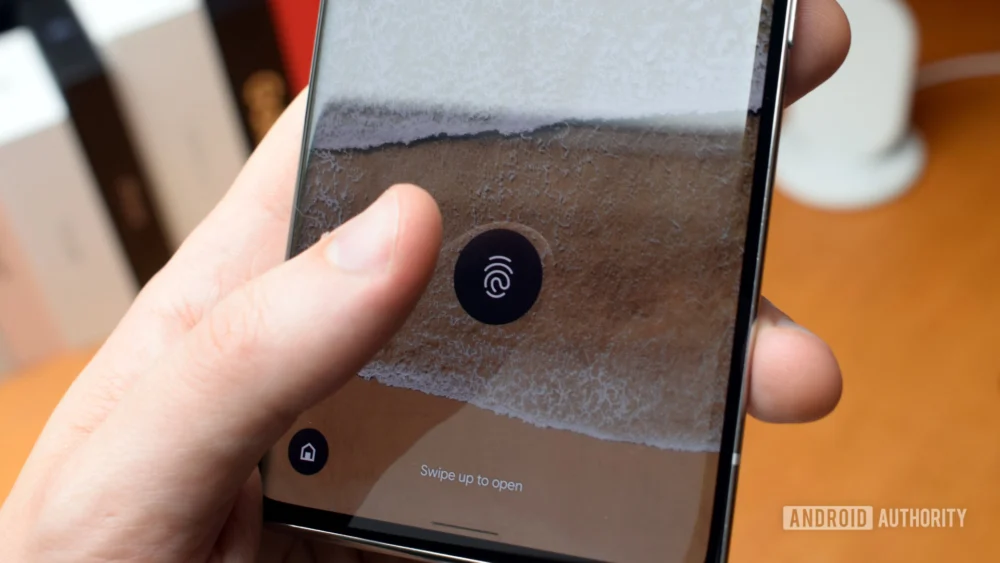
The recent introduction of enhanced biometric convenience on Google’s latest Pixel smartphones—specifically the ability to unlock the device using the in-display fingerprint sensor without first activating the screen—has illuminated a significant schism in user experience across the Pixel ecosystem. This functionality, integrated via the Android 16 QPR2 update, represents a nuanced but critical refinement in mobile security and accessibility. For owners of the Pixel 9 and the subsequent Pixel 10 series, this means the friction point of waking the display solely to authenticate a fingerprint scan is eliminated. The scanner area becomes immediately responsive, even when the ambient Always-On Display (AoD) is deliberately disabled, offering a near-instantaneous authentication that mirrors the immediacy of older, physical capacitive sensors.
This seemingly minor technological iteration has profound implications for workflow efficiency. In high-frequency use cases, such as frequently checking notifications or accessing the device when wearing a companion smartwatch that manages temporary unlocks, shaving off the extra tap or gesture required to illuminate the display translates into meaningful time savings over the course of a day. The seamless transition from a dormant state to full access elevates the perceived quality of the under-display biometric implementation, aligning it more closely with the speed consumers expect from premium mobile hardware.
However, Google’s decision to confine this specific screen-off unlock capability exclusively to its newest hardware—the Pixel 9 and Pixel 10 lines—has ignited considerable debate among the broader Pixel user community. This exclusivity is widely presumed to stem from a fundamental hardware difference: the newer devices utilize advanced ultrasonic fingerprint scanners, whereas their predecessors, stretching back to the Pixel 6 series, rely on optical in-display sensors. While optical sensors have improved significantly, their reliance on visible light to map the fingerprint contours often necessitates a baseline level of screen illumination to establish the necessary capture environment, a constraint ultrasonic technology largely circumvents.
To gauge the depth of user desire for this feature parity, an informal but telling survey was conducted among the installed base of older Pixel owners. The results were overwhelmingly clear: a substantial majority—exceeding 71% of respondents—explicitly voiced their preference for seeing this screen-off unlock functionality ported to their Pixel 8, Pixel 7, and even older models. This magnitude of demand suggests that users perceive the feature less as a hardware-dependent luxury and more as a software-level optimization that should be universally available across the platform, provided it can be made to function reliably. As one engaged reader articulated, for users employing secondary unlock methods like wearable device integration, the feature transforms the authentication process into a single, instantaneous touch event, bypassing unnecessary screen cycles entirely.
Further segmentation of the feedback revealed nuanced priorities among the remaining user base. Approximately 16% expressed interest, contingent upon assurances that the feature’s implementation would not introduce significant battery drain comparable to maintaining a permanently active AoD. For these users, the trade-off between convenience and power consumption remains a critical calculation. Conversely, a smaller subset indicated that the convenience factor was negligible, as they already rely on the AoD, which inherently provides the necessary screen-on state for their existing optical fingerprint readers to function instantly.
The technical divergence between optical and ultrasonic sensors forms the core justification for Google’s current segmentation. Ultrasonic sensors operate by emitting high-frequency sound waves that map the 3D topography of the finger, a process effective even through minimal screen obstruction or in low-power states. Optical sensors, conversely, capture a 2D image of the print, requiring the display to emit light onto the finger, which is then reflected back to the sensor array. In theory, this optical requirement mandates the screen wake-up.
Yet, the very existence of community-driven workarounds utilizing tools like Android Debug Bridge (ADB) suggests that the hardware limitations might not be as absolute as the manufacturer implies. These sophisticated user modifications, while often unstable, temporary, or incompatible across subsequent software builds, indicate that the system logic controlling the sensor activation threshold can, under certain conditions, be manipulated to bypass the screen-on requirement. This fuels the perception among many users that the restriction is primarily a deliberate product decision aimed at driving hardware upgrades rather than an immutable technical barrier.
The ramifications of this software stratification extend beyond mere user satisfaction; they touch upon Google’s long-term strategy for maintaining user loyalty within the Pixel ecosystem. Historically, the fingerprint scanner performance on the Pixel 6 through Pixel 8 series has been a persistent source of user frustration, marked by inconsistent recognition rates and slower performance compared to competitors utilizing ultrasonic technology. This history of biometric inconsistency means that when Google finally delivers a demonstrably superior biometric experience—even if initially limited—the goodwill generated is tempered by the perceived exclusion of current, paying customers who endured the previous iterations.
For Google, the dilemma is delicate. On one hand, incentivizing migration to newer hardware tiers (Pixel 9 and 10) is a crucial business objective. Restricting premium quality-of-life features to the latest devices reinforces the value proposition of the newer models. On the other hand, alienating the existing user base—devices that are typically supported with software updates for several years beyond their EOL date—risks eroding the brand’s reputation for offering a clean, premium Android experience. A failure to address widespread user requests regarding fundamental usability features can foster resentment, pushing technically savvy users toward custom ROMs or alternative hardware ecosystems that offer greater flexibility and longevity in feature implementation.
The implications for the broader mobile industry are also significant. As under-display fingerprint scanning becomes the de facto standard in the premium segment, the expectation for seamless integration, irrespective of screen state, will inevitably rise. Competitors who can implement screen-off unlocking across a wider range of their own devices, perhaps through optimized firmware updates leveraging existing optical sensor capabilities, could gain a significant competitive edge based purely on perceived user service. The industry is moving toward "ambient computing," where interactions should occur with minimal deliberate input; locking essential security functions behind an unnecessary screen activation contradicts this trend.
Looking toward future trends, the integration of biometrics will likely merge further with contextual awareness. Future iterations might leverage advancements in display technology to improve optical scanning efficiency or integrate secondary, low-power proximity sensors specifically designed to detect a fingerprint placement attempt, activating only the necessary scanner components without fully waking the main display. If Google can engineer a solution that works reliably on optical sensors without substantial battery penalties—perhaps by employing a very low-power scan mode that only illuminates a minimal area beneath the sensor—the backlash against the current limitation will dissipate rapidly.
Until such a universal solution arrives, the community remains vocal. The strong polling data serves as a direct appeal to Google’s engineering and product teams: the perceived utility of screen-off fingerprint access outweighs the perceived hardware hurdles or the strategic desire for hardware differentiation. For a company that champions the "pure" Android experience, software limitations imposed on capable, though older, hardware stand out as incongruous. The demand isn’t for revolutionary new hardware, but for the unlocking of existing potential already present in the software stack for millions of users still actively using devices like the Pixel 8 series. The coming months will reveal whether Google prioritizes customer satisfaction and feature parity, or adheres strictly to a hardware-gated release strategy for core usability enhancements. The longevity of the Pixel platform’s appeal may well depend on how it addresses this demonstrable yearning for simple, screen-off biometric freedom.