

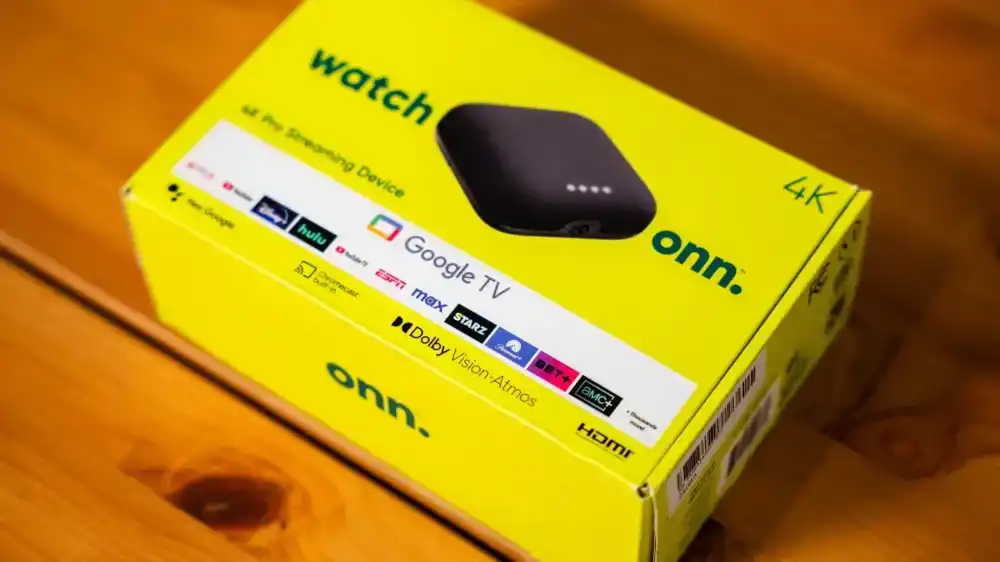
The landscape of affordable home entertainment has long been dominated by a fierce battle between proprietary ecosystems and the open-source flexibility of Google’s Android TV/Google TV platform. Within this competitive arena, Walmart’s in-house Onn brand has carved out a remarkable niche, consistently delivering 4K streaming devices that punch well above their modest price points. The Onn 4K Pro, launched relatively recently in April 2024, quickly established itself as a benchmark for budget-conscious consumers demanding high-fidelity features like Dolby Vision and robust connectivity. However, signs of an imminent evolution are already surfacing, suggesting that the retailer is not content to rest on its current success, potentially preparing a second iteration of its flagship budget streamer, internally designated as the Onn 4K Pro (v2).
This emergent information, gleaned from deeper dives into certification trails and firmware registrations, points toward a strategic hardware pivot for Walmart’s media hardware division. The device, reportedly bearing the codename JS620K4, signals a calculated effort to leapfrog current component limitations and standardize the internal architecture across its higher-tier offerings. The key indicator of this impending update lies squarely within the System-on-a-Chip (SoC) selection: the planned inclusion of the Amlogic S905X5M.
To fully appreciate the significance of this rumored upgrade, one must contextualize the preceding models. The current generation Onn 4K Pro utilized the Amlogic S905X4, a competent 12nm chipset that served as the workhorse for many mid-range Android TV devices throughout 2023 and early 2024. While the S905X4 offered necessary 4K capabilities, including AV1 decoding support—a crucial modern standard—it represented the prior generation of mobile silicon design. The rumored S905X5M, conversely, is built on a more efficient 6nm fabrication process. This move to a smaller node is not merely incremental; it translates directly into improved power efficiency, reduced thermal output under sustained load (critical for smooth streaming during extended viewing sessions), and potentially higher sustained clock speeds for a snappier user experience.
The rumored specifications accompanying the S905X5M further solidify the "Pro" designation. The expectation is a quad-core CPU utilizing ARM Cortex-A55 cores, boosted to a maximum frequency of 2.5GHz, paired with an ARM Mali-G310 v2 GPU. Furthermore, the memory configuration is slated for an upgrade, boasting 3GB of RAM alongside 32GB of onboard storage. This 3GB RAM ceiling is becoming the de facto standard for premium budget Android TV devices, offering the necessary headroom to manage the complexities of the Google TV interface, multitasking between demanding applications, and ensuring background processes do not degrade foreground performance—a common stumbling block for cheaper 2GB alternatives.
The feature parity with the existing model suggests continuity in the user-facing experience, which is vital for brand loyalty. The v2 is expected to maintain the desirable software ecosystem: Google TV, ensuring access to the latest updates, user interface enhancements, and the expansive application library. Crucially, the necessary video and audio standards are preserved, including full support for AV1, VP9, H.264, and H.265 (HEVC) codecs, alongside the critical High Dynamic Range (HDR) formats: Dolby Vision, HDR10, and HDR10+. Connectivity appears set to advance, with the inclusion of Wi-Fi 6, offering lower latency and better throughput in congested wireless environments. Additional modern amenities such as Google Cast functionality, Dolby Atmos support, and the integration of far-field microphones for enhanced voice assistant interaction are also anticipated. The speculative inclusion of "AI-SR" (AI-based Super Resolution) hints at potential software optimizations leveraging the newer SoC’s capabilities to intelligently upscale lower-resolution content closer to the native resolution of a 4K display, a feature typically reserved for higher-end processing units.
Industry Implications: The Standardization Strategy
The most compelling aspect of this potential refresh is the apparent standardization effort. The Amlogic S905X5M is already documented as the engine driving the recent Onn 4K Plus. By migrating the top-tier "Pro" model to the same core silicon, Walmart appears to be streamlining its supply chain and development cycle.
In the fragmented world of white-box streaming hardware, consistency is a powerful, yet often overlooked, advantage. Utilizing a single, powerful SoC across multiple product tiers simplifies firmware maintenance, reduces the complexity of driver development, and allows Walmart to negotiate better volume pricing with Amlogic. For the consumer, this means that the experience gap between the "Plus" and "Pro" tiers might narrow in terms of raw processing power, forcing Walmart to differentiate the "Pro" model primarily through peripheral features—perhaps enhanced storage speed (UFS vs. eMMC), superior remote control quality, or advanced networking capabilities beyond the base Wi-Fi 6.
This move reflects a broader trend in the retail-brand streaming sector: moving beyond simply being "cheap" to establishing themselves as credible, reliable alternatives to established giants like Roku and Amazon Fire TV. The original Onn 4K Pro was a statement of intent; the v2, built on a newer, more efficient chipset, would be a statement of commitment to maintaining technological parity with mid-range competitors.
The Chipset Evolution: Amlogic’s Role
Amlogic has become the undisputed heavyweight champion in the Android TV dongle and box market, largely due to its competitive pricing and rapid adoption of new multimedia standards. The jump from the S905X4 (12nm) to the S905X5M (6nm) is characteristic of the aggressive roadmap required to stay relevant against competing SoCs from Rockchip or even increasingly powerful solutions from MediaTek used in other Android-based devices.
The 6nm process node is significant. For context, this places the rumored Onn box firmly in the same manufacturing generation as many contemporary mid-range smartphones, offering a substantial improvement in transistor density over the 12nm generation. This efficiency gain is crucial because streaming boxes are "always-on" devices, often idling but ready to spring into action. Lower power consumption not only appeals to environmentally conscious consumers but also reduces the necessary cooling apparatus, allowing the device to maintain a smaller physical footprint and lower manufacturing cost—hallmarks of the Onn brand ethos.
The GPU upgrade, even if minor in generational terms (Mali-G310 v2), is vital for navigating the increasingly complex Google TV interface, which relies heavily on hardware acceleration for smooth transitions and graphical overlays. While this device is not intended for heavy gaming, a robust GPU ensures that the user interface remains responsive, preventing the frustrating lag that often plagues underpowered budget streamers after several months of use.
User Experience and Feature Analysis: Beyond the Specs Sheet
While the SoC upgrade is the headline, the rumored inclusion of AI-SR warrants deeper scrutiny. If implemented effectively, AI-based Super Resolution is one of the most transformative features currently trickling down from high-end smart TVs into external streaming devices. Traditional upscaling relies on interpolation; AI-SR uses machine learning models, often trained on vast datasets of high-resolution imagery, to intelligently reconstruct missing pixel data when displaying 1080p or even 720p content on a 4K panel.
For Walmart’s audience, many of whom may still subscribe to services or possess physical media libraries that predate ubiquitous 4K streaming saturation, AI-SR offers tangible visual benefits. It could effectively bridge the gap between legacy content quality and modern display capabilities without requiring the user to purchase a significantly more expensive, high-end streaming stick (like those from Nvidia or premium tier Fire TV devices). This feature, if executed well, transforms the Onn 4K Pro v2 from a mere content pass-through device into a content enhancer.
The integration of far-field microphones suggests an enhanced commitment to Google Assistant functionality. Current Onn remotes typically rely on line-of-sight voice commands. Far-field microphones embedded directly in the box allow users to issue commands ("Hey Google, pause the movie") from across the room, mimicking the functionality of dedicated smart speakers. This further embeds the streaming box into the broader smart home ecosystem, increasing its utility beyond passive media consumption.
Market Positioning and Competitive Threat
Walmart’s strategy with the Onn line has always been disruptive. They target the sweet spot where consumers decide between an integrated Smart TV OS (like Tizen or webOS) and a dedicated external streamer. By offering near-premium feature sets—Dolby Vision, Wi-Fi 6, high RAM—at aggressive price points, they undercut established players.
If the Onn 4K Pro v2 launches with the S905X5M, it positions itself ahead of many existing, current-generation Roku Ultra or mid-tier Amazon Fire TV devices in terms of raw processing architecture. The threat to competitors is twofold:
- Price Erosion: Walmart has the leverage to price this new, superior hardware very aggressively, perhaps even matching the launch price of the initial Pro model, putting immense margin pressure on brands like Chromecast with Google TV, which often command a higher premium for similar performance metrics.
- Feature Normalization: By baking features like Wi-Fi 6 and 3GB RAM into a budget box, Walmart accelerates the consumer expectation curve. Features that were considered "premium" six months ago become baseline requirements for the next generation of budget hardware.
The current scarcity of the existing Onn 4K Pro mentioned by consumers is often a precursor to a product lifecycle transition. Retailers frequently thin inventory of the older model to clear shelf space and logistics channels ahead of a major hardware refresh, allowing for a cleaner launch of the successor.
The Future Trajectory of Retailer-Branded Media Hardware
The persistence and apparent technological advancement of the Onn line underscore a significant shift in the streaming hardware market: major retailers are moving from opportunistic resellers to genuine hardware developers influencing the component ecosystem.
In the near future, expect this trend to intensify:
- Adoption of Latest Standards: Future iterations will rapidly adopt new video codecs (potentially even 8K support, though less immediately necessary), faster memory standards (LPDDR5), and the next generation of Wi-Fi (Wi-Fi 7).
- Software Integration: Walmart may look to integrate its own ecosystem services more deeply, leveraging the device for Walmart+ benefits, proprietary shopping interfaces, or exclusive streaming content access, further justifying the hardware investment.
- The Console Convergence: As SoC capabilities increase, the line between a streaming box and a light gaming console blurs. Features like the Mali-G310 v2 GPU suggest that cloud gaming services (like Xbox Cloud Gaming or GeForce NOW) will become increasingly viable on these budget platforms, adding substantial value proposition beyond simple video playback.
While Walmart has remained characteristically silent regarding any official announcement for the Onn 4K Pro (v2), the leaked specifications paint a clear picture: the retailer is preparing a device engineered for efficiency, performance consistency, and feature density. The JS620K4 is poised to reinforce Walmart’s position as a disruptive force, compelling the wider streaming hardware industry to continuously lower prices while simultaneously elevating expected baseline performance. Consumers awaiting an upgrade to the already impressive Onn 4K Pro may soon be rewarded with a substantial, efficiency-driven leap forward.