

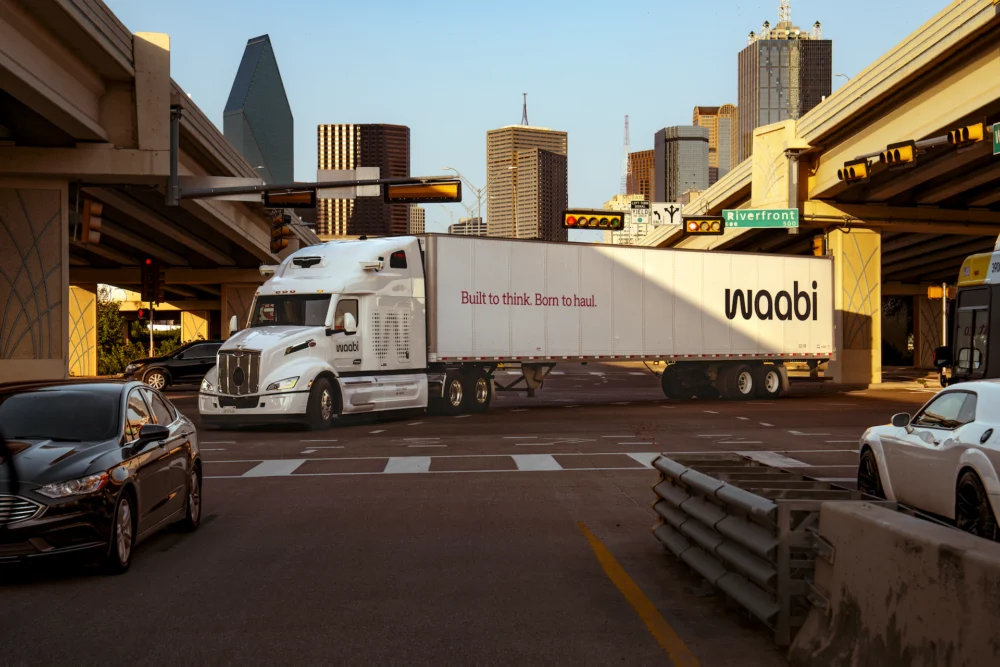
The autonomous vehicle (AV) sector, long characterized by intense capital expenditure and siloed development, is witnessing a paradigm shift following a monumental announcement from Waabi. The Toronto-based startup, previously focused exclusively on autonomous heavy-duty trucking, has successfully closed an oversubscribed funding round totaling $1 billion, simultaneously unveiling a massive strategic partnership with Uber to deploy self-driving passenger vehicles on the ride-hailing giant’s platform. This pivot marks Waabi’s first foray outside the freight logistics space and represents a potent validation of its unique, simulation-driven approach to artificial intelligence.
The sheer scale of the financial commitment underscores the market’s renewed confidence in the viability of autonomous technology, particularly models built for efficiency. The $1 billion capital injection is segmented into two primary components: a highly competitive $750 million Series C equity round, co-led by deep-tech stalwarts Khosla Ventures and G2 Venture Partners, and approximately $250 million in dedicated, milestone-based capital provided directly by Uber. This latter investment is earmarked specifically for accelerating the development and deployment of a fleet of 25,000 or more robotaxis powered by the Waabi Driver technology, which will operate exclusively on the Uber network. While definitive timelines for achieving this ambitious 25,000-vehicle target remain undisclosed, the commitment signals one of the most significant deployment mandates in the history of the AV industry, cementing a deep, strategic alignment between the two organizations.
The Generalization Thesis: Challenging Industry Orthodoxy
The most profound implication of this partnership is the direct challenge it poses to the long-held industry belief that developing self-driving technology for distinct vehicle classes—trucks versus passenger cars—requires separate, bespoke technology stacks. Historically, AV companies, including early efforts by major players like Waymo, often found the resources required to simultaneously master both highway logistics and complex urban ride-hailing environments unsustainable, leading to vertical specialization. Waymo, for instance, famously shuttered its dedicated freight program to concentrate resources on its core robotaxi operations.
Waabi founder and CEO Raquel Urtasun, however, contends that her company’s fundamental AI architecture is inherently generalizable. The Waabi Driver is designed not merely to execute predefined behaviors but to understand and reason about the environment, allowing the same core technology—the "Waabi Brain"—to be applied across different form factors and operational design domains (ODDs), from long-haul trucks on controlled access highways to passenger vehicles navigating dense urban traffic.
Urtasun articulated this vision, stating that their technology enables, "for the first time, a single solution that can do multiple verticals, and they can do them at scale. It’s not about two programs, two stacks." This single-stack deployment model promises substantial capital efficiencies, drastically reducing the redundant research, development, and data collection expenses that plague traditional AV developers. In a capital-intensive sector where competitors have collectively raised billions, Waabi’s thesis promises a shortcut to market saturation and profitability.
The Return to Uber and Strategic Synergy
The alliance carries a significant historical weight for Urtasun, who previously served as the Chief Scientist at Uber’s former autonomous vehicle research division, Uber Advanced Technologies Group (Uber ATG). That division, once a flagship endeavor for the ride-hailing company, was ultimately sold to autonomous trucking rival Aurora Innovation in 2020. The current collaboration thus represents a full-circle moment, with Urtasun re-entering the Uber ecosystem not as an internal researcher, but as the leader of a highly capitalized, external technology provider.
Furthermore, the robotaxi agreement expands upon an existing, foundational relationship between the two companies, specifically Waabi’s ongoing partnership with Uber Freight, which focuses on accelerating autonomous solutions for the supply chain. This existing synergy provides a proven operational framework that can now be leveraged to integrate passenger services seamlessly.
For Uber, this partnership solidifies its pragmatic strategy of becoming the ultimate horizontal integrator for autonomous mobility. Rather than attempting the expensive, high-risk development of its own self-driving technology—a lesson learned from the Uber ATG experience—Uber is building an open platform that aggregates the best specialized AV providers globally. Waabi now joins a distinguished roster of autonomous partners collaborating with Uber, including established leaders like Waymo, specialized delivery firms like Nuro, and international players such as WeRide, Momenta, Avride, and Wayve. This multi-partner approach mitigates risk and ensures that Uber can rapidly deploy the most robust, geo-specific autonomous solutions across its global footprint as they become commercially viable.
The Simulation Edge: Waabi World and Capital Efficiency
The technological foundation underpinning Waabi’s audacious expansion is its heavy reliance on simulation. While most first-generation AV companies (AV 1.0) required enormous fleets driving millions of physical miles to gather sufficient corner cases and training data, Waabi’s approach drastically minimizes the need for this costly and slow real-world collection.
The core of their development strategy is a proprietary, closed-loop simulator called Waabi World. This platform automatically constructs high-fidelity digital twins of the real world based on collected data, performing real-time sensor simulation to test and validate the Waabi Driver. Crucially, Waabi World specializes in manufacturing complex and hazardous scenarios—known as "hard cases"—that are too dangerous or rare to reliably encounter in physical testing. The system then autonomously stress-tests the AI and teaches the Driver to learn from its simulated mistakes without requiring human intervention, creating a highly scalable and repeatable development cycle.
Urtasun claims that this cognitive reasoning approach allows the Waabi Driver to generalize effectively, meaning it requires fewer specific examples to master new driving situations than traditional machine learning models. This is the lynchpin of the company’s capital-efficient claims.
"We don’t need the gazillion humans to develop the technology and the large fleets that AV 1.0 needs," Urtasun asserted. "We don’t need the massive data centers, energy consumption, or a gazillion latest chips."

This claim directly addresses the most significant barrier to mass AV deployment: the astronomical operational costs associated with validating safety and scaling operations. If Waabi can indeed achieve superior performance and safety validation using synthetic data and simulation, it drastically lowers the entry barrier for expansion into new markets and vehicle types, validating the rapid pivot from freight to robotaxis.
Expert Analysis: The Race to Vertical Integration
The investor base supporting the Series C round speaks volumes about the technology’s perceived potential. Beyond Khosla and G2, strategic participants include Uber, NVentures (Nvidia’s venture capital arm), Volvo Group Venture Capital, Porsche Automobil Holding SE, BlackRock, and BDC Capital’s Thrive Venture Fund.
The inclusion of major automotive manufacturers and logistics players (Volvo and Porsche) alongside technology giants (Nvidia) suggests a strong belief in Waabi’s manufacturing and deployment model. Waabi intends to follow a vertical integration strategy, similar to its autonomous trucking partnership with Volvo. Instead of retrofitting vehicles post-production, Waabi plans to build its specialized sensors, computing hardware, and software directly into the vehicle platform from the factory floor, in collaboration with an as-yet-unnamed automotive OEM partner for the robotaxi fleet.
Urtasun emphasized the necessity of this approach for safety and scale: "We believe in vertically integrating with a fully redundant platform from the OEM. That is how you really build safe and truly scalable technology."
This strategy directly contrasts with many early AV pioneers who relied heavily on third-party integration and aftermarket sensor packages. OEM integration ensures deep system redundancy, streamlined maintenance, and a higher degree of safety assurance, which is critical for obtaining regulatory approval for driverless operations at the planned scale of 25,000 units.
Competitive Dynamics and Market Context
Waabi’s cumulative funding now stands at approximately $1.28 billion, following its $200 million Series B in June 2024. While this is a substantial figure, it remains less than some long-standing competitors in the freight space. For context, Aurora Innovation has raised an estimated $3.46 billion to date, and Kodiak Robotics has secured around $448 million. However, Waabi’s comparatively lower capital requirement to achieve cross-vertical competence reinforces its claim of superior capital efficiency derived from its simulation-first model.
The current AV market is entering a crucial deployment phase. After years of testing and development, the industry is moving from pilot programs to commercial scaling. While Waabi has successfully launched commercial pilots for its trucks in Texas (albeit with human safety drivers), the planned rollout of a fully driverless truck, initially anticipated for late last year, has been postponed by a few quarters pending final validation of the purpose-built Volvo autonomous trucks.
The robotaxi partnership with Uber signals a strategic hedge and acceleration. By tackling the high-demand, high-volume ride-hailing market now, Waabi positions itself not just as a trucking specialist but as a foundational mobility platform provider. This dual focus allows Waabi to amortize its core R&D costs across two enormous, underserved markets—long-haul logistics and urban mobility—thereby accelerating the path to overall profitability.
Future Impact and Trends in Autonomous Mobility
The deployment of 25,000 robotaxis on the Uber platform—a network already saturated with global demand—would fundamentally reshape the economics of ride-hailing. The removal of the human driver constitutes the single largest operational cost saving, potentially unlocking massive margins for Uber and enabling cheaper fares for consumers, driving unprecedented adoption.
Raquel Urtasun remains optimistic about the timing, acknowledging that the robotaxi market is only beginning its ascent. "We’re still in the first innings of deployment of robotaxis," she noted. "There’s a lot more scale to come."
The immediate future will involve critical partnerships with an automotive OEM for the passenger vehicle platform and rigorous validation to ensure the Waabi Driver’s capability on surface streets matches its demonstrated proficiency on highways. The integration must be seamless, utilizing the data gathered by Uber’s newly launched AV Labs division—a unit established to aggregate crucial driving data for its external AV partners—to refine performance models and accelerate geographical expansion.
Should Waabi successfully execute its single-stack vision, delivering reliable, safe, and cost-effective autonomous services simultaneously across the freight and ride-hailing verticals, it will establish a new benchmark for AV development. This massive capital raise and strategic alliance with Uber is not just a funding announcement; it is a declaration that the era of inefficient, data-hungry AV development is concluding, replaced by a sophisticated, AI-driven model prioritizing generalization and capital discipline. The challenge now lies in translating the promise of Waabi World into the reality of 25,000 driverless vehicles operating safely and reliably on public roads.