

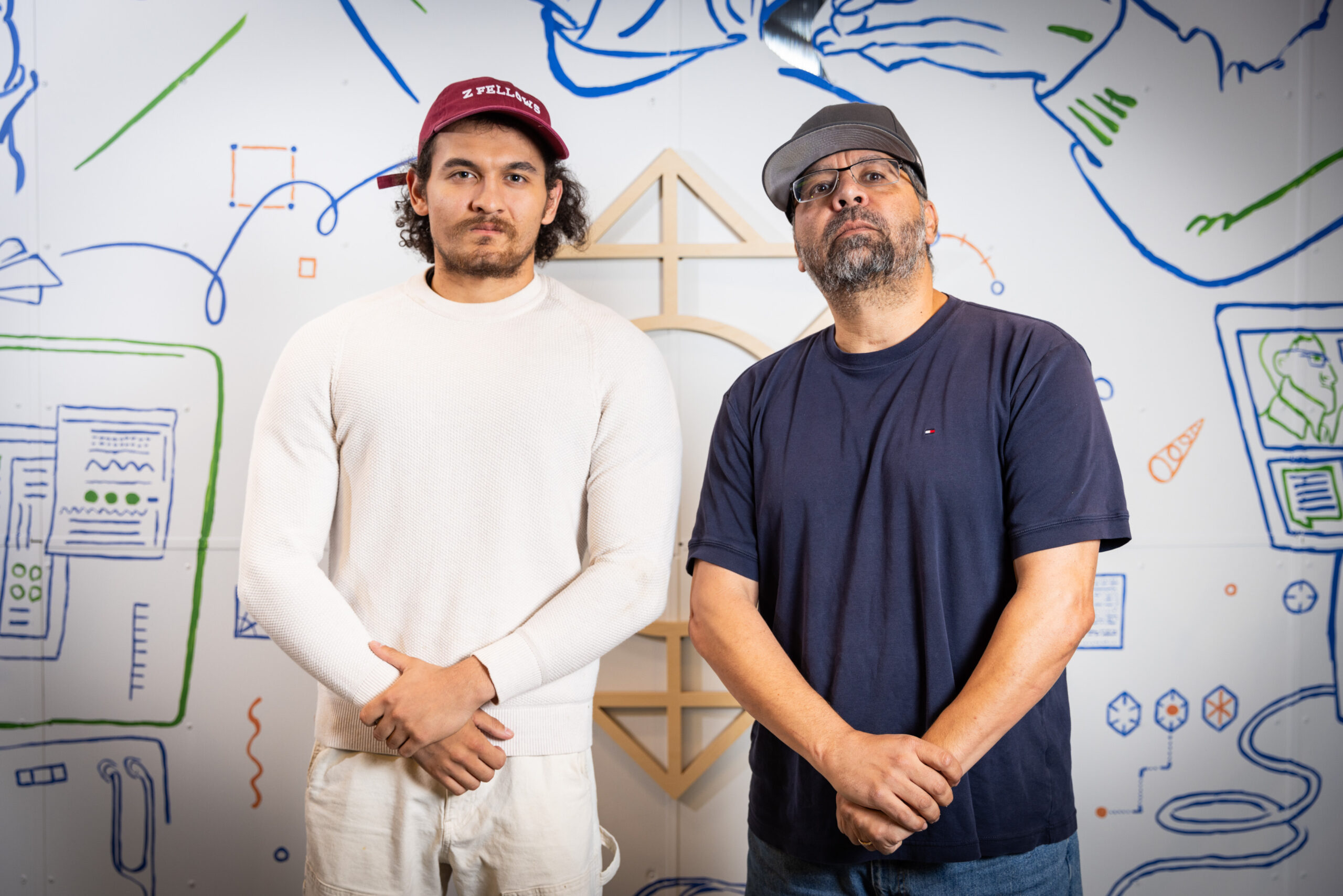
The evolution of artificial intelligence has reached a critical juncture. We have moved rapidly from the era of generative chatbots that simply synthesize information to the dawn of the "agentic" era—a period where autonomous AI agents are expected to perform complex tasks, manage schedules, and execute financial transactions on behalf of human users. However, a significant hurdle remains: while these agents possess immense computational power, they lack the nuanced, multi-dimensional context that defines human identity. This "context gap" is precisely what Nyne, a nascent startup led by a father-son founding team, aims to bridge.
As AI agents prepare to step into roles as personal concierges and procurement officers, the industry is realizing that an agent is only as effective as its understanding of the person it represents. Michael Fanous, a computer science graduate from UC Berkeley and former machine learning engineer at CareRev, recognized that modern machines suffer from a form of digital amnesia. They can process data, but they struggle to synthesize a singular, coherent identity from the fragmented trail of data points a human leaves across the internet. To rectify this, Michael joined forces with his father, Emad Fanous, a seasoned Chief Technology Officer, to launch Nyne. The startup recently emerged from stealth with a $5.3 million seed funding round, signaling a significant bet by the venture capital community on the necessity of a dedicated "intelligence layer" for the AI ecosystem.
The Fragmented Identity Problem
In the current digital landscape, a single human being exists as a collection of disparate personas. On LinkedIn, an individual presents a curated professional history; on Instagram, they share visual snippets of their lifestyle and aesthetic preferences; on Strava, they record their physical endurance and health habits; and on SoundCloud, they reveal their artistic tastes. To a human observer, it is often easy to see the threads connecting these profiles. To an algorithm, however, these are often treated as entirely separate entities.
This fragmentation poses a fundamental problem for the future of autonomous agents. If an AI agent is tasked with booking a vacation or purchasing a gift, it needs more than just a credit card number and a destination. It needs to understand the user’s "human context"—their unspoken preferences, their current life stage, and their personality. Without a unified view of the user, AI agents risk making decisions that are technically correct but contextually tone-deaf.
Fanous argues that the inability to link a professional profile with social activity and public government records is the primary bottleneck preventing AI from becoming truly "personal." Nyne’s mission is to solve this identity resolution problem at scale, creating a comprehensive digital footprint that agents can query to better serve their human masters.
The Technical Infrastructure of Identity
Nyne’s approach to solving this problem is both ambitious and technically complex. Rather than relying on static databases, the company deploys millions of specialized agents designed to traverse the open web. these agents analyze public digital footprints, using machine learning to "triangulate" information. By cross-referencing data points from major social networks like X (formerly Twitter) and Facebook with niche platforms like SoundCloud or fitness apps like Strava, Nyne builds a high-fidelity map of an individual’s interests, habits, and cognitive patterns.
This process goes beyond simple data scraping. It involves sophisticated entity resolution—the process of determining whether two different records refer to the same real-world entity. In a world where names are not unique and digital handles are often cryptic, Nyne’s ability to connect these dots represents a significant leap in data science.
The goal is to provide consumer-facing companies with a tool that gives their AI agents a "real-world" understanding of their customers. When a company deploys an agent to interact with a potential buyer, that agent can turn to Nyne to understand not just what the person has bought in the past, but how they think and what they currently value. This allows for a level of personalization that was previously the exclusive domain of high-touch human interaction.
The Competitive Landscape and the "Google Advantage"
To an outside observer, the problem Nyne is solving might seem like one that has already been mastered by the titans of Silicon Valley. Google, for instance, is famously adept at tracking users across the web to serve highly targeted advertisements. However, Michael Fanous points out a critical distinction: Google’s data is a "walled garden."
Google’s "secret sauce" is its proprietary access to search histories, Gmail data, and Android telemetry. This data is incredibly valuable, but it is also siloed. Google has no incentive to share this deep contextual intelligence with external AI agents developed by third-party startups or competing enterprises. This leaves the rest of the tech industry in a difficult position. They are building powerful agents but lack the underlying data infrastructure to make those agents truly intelligent about their users.
Nichole Wischoff, founder of Wischoff Ventures—which led Nyne’s seed round alongside South Park Commons—describes this as an "oddly hard problem to solve." While the data is technically public, the sheer volume and the difficulty of accurate correlation make it a massive undertaking for any individual company. Nyne positions itself as the neutral, third-party infrastructure that democratizes this level of insight, allowing any developer to imbue their agents with "Google-level" context without being beholden to the Google ecosystem.
Strategic Backing and Market Potential
The $5.3 million seed round attracted a prestigious group of investors, including South Park Commons and angel investors like Gil Elbaz. Elbaz’s involvement is particularly noteworthy; as the co-founder of Applied Semantics (the technology that became Google AdSense), he is considered one of the pioneers of the modern data-driven web. His backing suggests that Nyne is seen as a spiritual successor to the first wave of semantic web technologies, adapted for the age of autonomous agents.
The market potential for this "intelligence layer" is difficult to overstate. As AI agents move from experimental toys to essential business tools, the demand for high-quality, contextual data will skyrocket. Wischoff highlights the value of "intent detection"—the ability to recognize a user’s needs before they are explicitly stated. For example, by analyzing a user’s changing digital patterns, an agent might be able to deduce that a customer is pregnant or planning a career move long before the user begins searching for related products. This allows companies to reach out with the right offer at the precise moment of need, a capability that is worth billions in the advertising and e-commerce sectors.
The Dynamics of a Father-Son Startup
Beyond the technical and market implications, Nyne is notable for its founding team. The partnership between Michael and Emad Fanous brings together two different eras of technological expertise. Michael provides the modern machine learning perspective and the agility of a young founder, while Emad brings decades of experience as a CTO, offering a steady hand in architectural design and organizational scaling.
Michael Fanous notes that the familial bond provides a unique competitive advantage: trust. In the volatile world of early-stage startups, co-founder friction is one of the leading causes of failure. "I think with co-founders, it becomes easy to walk away when things don’t work," Michael observed. The father-son dynamic creates a level of psychological safety that allows the team to focus entirely on the mission. This resilience is critical when tackling a problem as technically demanding as global identity resolution.
Privacy, Ethics, and the Future of the Open Web
As with any technology that involves the aggregation of personal data, Nyne exists at the center of a complex ethical debate. The transition from "cookies"—which track where you go—to "agents"—which understand who you are—raises significant privacy concerns.
Nyne’s defense is rooted in the "public" nature of the data it analyzes. By focusing on the digital footprint that individuals choose to leave on the open web, the company argues it is simply organizing existing information more efficiently. However, as AI becomes more adept at "triangulating" private insights from public data, the definition of what is truly "public" may need to be reevaluated.
Looking forward, the success of Nyne could signal a shift in how we interact with the digital world. If Nyne succeeds in becoming the standard intelligence layer, our AI agents will no longer be strangers to us. They will be digital twins, capable of anticipating our needs and acting on our behalf with a level of precision that feels almost human. In this future, the internet is no longer a collection of disconnected sites, but a unified tapestry of human experience, woven together by the "intelligence layer" that Nyne is currently building.
The seed funding is just the beginning. As Nyne scales its network of agents and refines its machine learning models, the goal is to create a world where technology finally understands the person behind the screen. It is an ambitious vision, but with the backing of industry veterans and a unique founding team, Nyne is well-positioned to turn the "context gap" into a bridge toward a more intuitive digital future.