

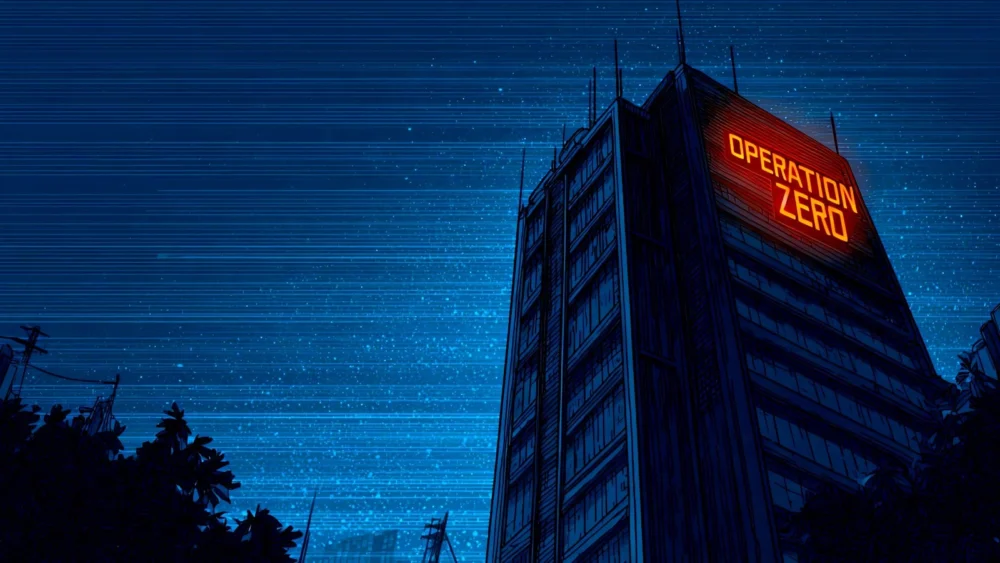
The recent imposition of sanctions by the U.S. Department of the Treasury marks a significant escalation in the ongoing effort to disrupt the illicit global trade of sophisticated cyber weaponry. Specifically targeting Matrix LLC, known publicly as Operation Zero, and its proprietor, Sergey Sergeyevich Zelenyuk, the action signals a determined push to curtail the flow of compromised intellectual property that underpins modern offensive cyber capabilities. This coordinated regulatory action, executed through the Office of Foreign Assets Control (OFAC), is noteworthy not only for the entities designated but also for the legal framework utilized: the Protecting American Intellectual Property Act (PAIPA). This marks the inaugural application of PAIPA since its enactment, underscoring the severity with which the U.S. government views the theft and subsequent monetization of proprietary cyber tools.
Operation Zero, purportedly headquartered in St. Petersburg, Russia, functions as a nexus for the acquisition and redistribution of zero-day exploits—previously unknown software vulnerabilities that offer attackers a direct path to compromise systems. The sanctions also swept up five associated individuals and several affiliated corporate entities, illustrating a strategy aimed at dismantling the entire operational structure, rather than just the primary figurehead. This enforcement action did not occur in a vacuum; it coincided almost precisely with the judicial conclusion of a related domestic case, where Peter Williams, a former executive at L3Harris Technologies’ cybersecurity subsidiary, Trenchant, received his sentencing.
The narrative linking these two events is one of profound corporate espionage and betrayal. Williams, an Australian national formerly managing Trenchant—a firm specializing in developing zero-day exploits and surveillance technologies explicitly for U.S. governmental and allied intelligence consumption—was sentenced to 87 months in federal prison. His downfall followed a guilty plea in October, admitting to the theft of at least eight highly sensitive, proprietary zero-day exploits. These tools, designed for high-level state operations, were illicitly sold to Operation Zero for a reported sum of approximately $1.3 million, paid out in cryptocurrency—a common tactic used by illicit actors to obscure financial trails.
The Ecosystem of Exploitation: Operation Zero’s Business Model
To fully grasp the implications of these sanctions, one must understand the role Operation Zero plays in the adversarial cyber landscape. Zero-day exploits are among the most valuable commodities in the cyber underground, often commanding prices in the millions of dollars, depending on the target software’s ubiquity and the exploit’s reliability. Operation Zero positions itself as a high-end broker, actively soliciting these tools. Their public-facing marketing often advertises bounties—potentially reaching millions—for exploits targeting widely used software, including major operating systems developed in the U.S. and end-to-end encrypted communication platforms.
While Operation Zero publicly asserts that its sales are restricted exclusively to Russian private sector entities and government organizations, the nature of the stolen assets—tools developed for U.S. defense contractors—suggests a direct pipeline for state-sponsored cyber operations against Western interests. The Treasury Department explicitly noted that the exploits acquired from Williams were created for the "exclusive use of the U.S. government and select allies," and that Operation Zero subsequently distributed these stolen tools to at least one unauthorized recipient, thereby amplifying the initial security breach.
The inclusion of Oleg Vyacheslavovich Kucherov, an individual previously identified by Europol in connection with the Trickbot cybercrime gang, among the sanctioned parties, further cements the connection between high-level corporate theft and established transnational cybercriminal networks. The network’s geographical footprint is also extensive, involving entities like Special Technology Services LLC, based in the United Arab Emirates (UAE), and Advance Security Solutions, operating across the UAE and Uzbekistan. This use of intermediary jurisdictions highlights the sophisticated obfuscation tactics employed by groups seeking to insulate their leadership and assets from direct Western regulatory oversight.

Industry Implications: Erosion of Trust and Intellectual Property Defense
The immediate consequence of this enforcement action is the freezing of all U.S.-held assets belonging to the designated parties. Furthermore, the sanctions impose a risk of secondary sanctions on any American businesses or individuals engaging in transactions with these sanctioned networks. For the defense and cybersecurity industry, the implications are profound, touching upon supply chain integrity, internal security protocols, and the valuation of cyber intellectual property.
Firstly, the case exposes a critical vulnerability in the defense industrial base: insider threat coupled with the monetization of state-level technology by former employees. Defense contractors like L3Harris invest immense resources into developing offensive and defensive cyber capabilities, often protected by rigorous security protocols. When an executive-level manager can circumvent these controls to siphon off proprietary exploit code, it suggests systemic failures in access control and insider threat monitoring, particularly within specialized units like Trenchant.
Secondly, the successful prosecution and sentencing of Williams, alongside the immediate sanctioning of the buyer, sends a strong deterrent signal. It demonstrates that the U.S. government is prepared to utilize both criminal prosecution and financial warfare tools to counter the acquisition of stolen national security assets, irrespective of where the ultimate buyer resides. This dual approach—legal penalty for the perpetrator and financial isolation for the recipient—is a cornerstone of modern economic statecraft against cyber threats.
From an industry perspective, the incident demands a comprehensive reassessment of how sensitive cyber IP is handled. The use of cryptocurrency for the transaction ($1.3 million) highlights the continued difficulty in tracking illicit finance, even when the underlying crime is exposed. Cybersecurity firms are now under increased pressure to develop advanced transaction monitoring tools capable of flagging significant cryptocurrency movements tied to known threat actors or entities under investigation.
Expert Analysis: The Geopolitics of Zero-Days
Experts specializing in cyber espionage view this action as a necessary defensive maneuver against Russian intelligence efforts. Zero-day exploits are rarely used solely for financial gain; their ultimate utility often lies in geopolitical leverage, surveillance, or pre-positioning for potential kinetic conflict. When a broker like Operation Zero acquires tools designed for U.S. government use, these exploits are either reverse-engineered to develop countermeasures or, more alarmingly, sold to state actors who might employ them against allied infrastructure.
The decision to deploy PAIPA is particularly telling. Unlike sanctions levied under broader authorities targeting terrorism or proliferation, PAIPA is specifically tailored to combat economic espionage targeting American innovation. Its activation suggests that the administration views the theft of these cyber tools not merely as a crime, but as a direct act of economic aggression against U.S. technological superiority.
The involvement of individuals with known ties to established malware operations, such as Kucherov, suggests that Operation Zero functions as a bridge—a professional intermediary that cleanses stolen, high-value tools (like those from L3Harris) and feeds them into a broader, more chaotic cybercrime ecosystem, which ultimately benefits state intelligence agencies by diversifying their attack vectors and obscuring attribution.

Furthermore, the designation of front companies in jurisdictions like the UAE points to the critical role of financial facilitators in enabling sophisticated cyber theft. The UAE has increasingly become a hub for various transnational illicit finance schemes. By sanctioning entities there, the U.S. Treasury is signaling its intent to pressure host nations to enhance their financial oversight or face the consequences of secondary sanctions, thereby tightening the financial net around groups like Operation Zero.
Future Impact and Emerging Trends in Cyber Countermeasures
This event sets a precedent for future regulatory responses to intellectual property theft involving dual-use cyber capabilities. We can anticipate several immediate trends stemming from this action:
1. Increased Scrutiny of Cyber Talent Mobility: Defense and intelligence contractors will likely implement far stricter controls on departing employees, especially those with high-level access to exploit development pipelines. Background checks and post-employment restrictions regarding engagement with foreign entities will become significantly more stringent.
2. Evolution of Exploit Market Dynamics: The success of this takedown may cause a temporary chilling effect on the mainstream exploit brokerage market, driving prices down or forcing brokers to operate with even greater degrees of operational security (OPSEC) and deeper layers of financial obfuscation. However, the fundamental demand for zero-days remains high, suggesting that new, less visible brokers will inevitably emerge.
3. Regulatory Precedents Under PAIPA: The successful application of PAIPA will encourage its use in future cases involving significant economic damage resulting from IP theft. This establishes a clearer legal pathway for targeting the purchasers and facilitators of stolen technology, moving beyond solely prosecuting the initial thief. Future enforcement actions are likely to target the financial infrastructure supporting these transactions more aggressively, potentially including cryptocurrency exchanges that facilitate large, suspicious transfers.
4. Focus on Attribution and Supply Chain Mapping: The government’s ability to link a specific theft at a U.S. defense contractor to a specific Russian broker, and then to associated criminal elements across multiple jurisdictions, demonstrates maturing capabilities in cyber attribution and supply chain mapping. Future defense against this type of espionage will rely heavily on proactive monitoring of the digital trails left by both stolen assets and the illicit financial networks supporting their trade.
The comprehensive action against Operation Zero and its associates is more than a punitive measure; it represents a strategic investment in securing the nation’s most valuable digital assets against actors who seek to weaponize stolen American innovation. The deployment of PAIPA and the simultaneous incarceration of the insider threat underscore a unified, whole-of-government approach to combating sophisticated, state-aligned economic espionage. The long-term effect will be a hardening of the defense sector’s digital perimeter and a recalibration of international expectations regarding the accountability of those who facilitate the trade in stolen cyber weaponry.