

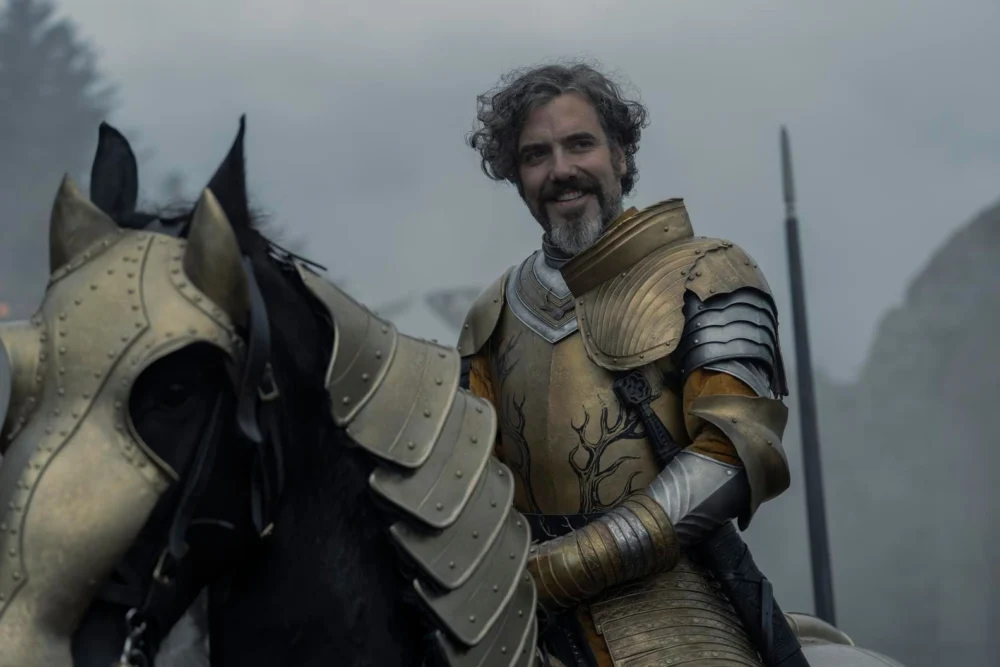
The expansion of George R.R. Martin’s sprawling "A Song of Ice and Fire" universe has reached a critical juncture with the release of the fifth episode of "A Knight of the Seven Kingdoms." Titled "In the Name of the Mother," the penultimate installment of the season has ignited a firestorm of discourse among fans and television critics alike. While the episode currently enjoys a stellar 9.8/10 rating on major review aggregators, the vocal minority of dissenters highlights a fascinating tension between traditional television spectacle and the intimate, character-driven storytelling that defines the "Tales of Dunk and Egg" novellas. As HBO pivots from the grand-scale draconic warfare of "House of the Dragon" to the more grounded, chivalric struggles of Ser Duncan the Tall, the creative choices made in this episode offer a roadmap for the future of the franchise.

The central conflict of the episode revolves around the Trial of the Seven at Ashford Meadow, a brutal and rare form of judicial combat that pits two teams of seven knights against one another. It is the climax that the entire season has meticulously built toward, yet its execution has become a lightning rod for criticism. The primary point of contention involves the visual presentation of the melee. Directorially, the choice was made to shroud the battlefield in a thick, cloying fog, punctuated by the spray of mud and the muffled clatter of steel. Some critics have argued that this "fog of war" is a regression to the controversial cinematography of "The Long Night" in "Game of Thrones" or the dimly lit sequences in the first season of "House of the Dragon."
However, an expert-level analysis of the cinematography suggests a more intentional artistic aim. Unlike the "Battle of Winterfell," where the darkness arguably obscured strategic movements, the fog in Ashford Meadow serves a psychological purpose. It tethers the audience to the perspective of Ser Duncan the Tall (played with a weary stoicism by Peter Claffey). In the original text, Dunk’s experience of the trial is one of sensory deprivation and chaotic isolation. His visor is clogged with mud; his breath is heavy and restricted. By using atmospheric obscuration, the showrunners have successfully translated the internal monologue of a novella into a visual medium. We see what Dunk sees: a terrifying, narrow world where the only thing that matters is the immediate threat of Prince Aerion Targaryen’s blade.

This leads to the second major critique: the perceived lack of coverage regarding the other combatants. Fans of the lore were eager to see more of Baelor "Breakspear" Targaryen (Bertie Carvel) and the "Laughing Storm," Lyonel Baratheon (Daniel Ings), in full martial glory. The episode, however, keeps these legends largely on the periphery, offering only fleeting glimpses of their prowess. While this may feel like a missed opportunity for "fan service" spectacle, it is a disciplined adherence to the source material’s focus. "A Knight of the Seven Kingdoms" is not an ensemble war drama; it is a picaresque journey of a man and his squire. To turn the Trial of the Seven into a sprawling, multi-perspective battle would be to betray the intimacy that makes this specific prequel unique. The creative choice to center the action on Dunk’s desperate struggle against Aerion (Finn Bennett) underscores the theme of the "small man" caught in the gears of royal ego.
Perhaps the most daring structural choice in "In the Name of the Mother" is the insertion of a twenty-minute flashback sequence in the middle of the battle. As Dunk lies dazed in the mud, the narrative transports us back to his childhood in the gutters of Flea Bottom and his formative years with Ser Arlan of Pennytree (Danny Webb). This departure from the chronological pacing of the book has been labeled by some as a momentum-killer. Yet, from a narrative architecture standpoint, the flashback is the episode’s emotional anchor. It provides the necessary context for Dunk’s resilience. The mirroring of Ser Arlan’s command to "Get up!" with the present-day cries of his squire, Egg (Dexter Sol Ansell), creates a poignant bridge between Dunk’s past and his future. It illustrates that Dunk isn’t just fighting for his life; he is fighting for the legacy of the man who gave him a life.

If there is a valid critique to be leveled at the flashback, it is perhaps a missed opportunity to emphasize Dunk’s "street-fighting" roots. The episode establishes his bond with Ser Arlan beautifully, but it could have leaned harder into the contrast between Dunk’s brawling instincts and Aerion’s polished, aristocratic training. Showing a young Dunk surviving the cutthroat alleys of King’s Landing would have provided a more visceral setup for the moment he abandons knightly decorum to tackle Aerion into the mud. In Westeros, the "true knight" is an ideal, but survival often requires the pragmatism of a gutter-born fighter.
The realism of the combat itself has also come under the microscope, specifically a moment where Dunk is wounded by a dagger through his chainmail. Purists have argued that mail is designed to stop such thrusts, but historical metallurgy and martial arts experts would disagree. While chainmail is exceptionally effective against slashing motions, it is vulnerable to pointed thrusts from weapons like rondel daggers or stiletto-type blades, which were specifically designed to penetrate the links or find the gaps in armor. Furthermore, the episode subtly highlights the dangers of ill-fitting gear. Baelor Targaryen’s decision to wear his son’s armor because he lacked his own at Ashford Meadow is a detail that carries massive thematic weight. In the world of George R.R. Martin, the smallest logistical oversight—a loose strap, a thin gambeson, or a borrowed helmet—can alter the course of dynasties.

Looking toward the broader industry implications, "A Knight of the Seven Kingdoms" represents a significant shift in HBO’s strategy for the "Game of Thrones" brand. After the divisive conclusion of the original series, there was a fear that the "Martin-verse" would become a factory for CGI-heavy spectacles. This series proves that there is a hunger for "Prestige TV" that prioritizes character over carnage. By taking a controversial approach to a major battle, the showrunners are signaling that they are more interested in the "why" of a fight than the "how." This approach is likely to influence upcoming spin-offs, such as the rumored Aegon’s Conquest or the Ten Thousand Ships project, by proving that the audience is willing to follow unconventional narrative structures if the emotional core remains intact.
The future of the franchise depends on this willingness to experiment. As we move into the season finale and beyond, the "Dunk and Egg" stories will only become more complex, eventually touching upon the tragedy of Summerhall and the deeper mysteries of the Targaryen bloodline. If "In the Name of the Mother" teaches us anything, it is that the "Westeros" brand is resilient enough to withstand stylistic risks. The division among fans isn’t a sign of failure; it’s a sign of engagement. In an era of "safe" franchise filmmaking, a show that sparks heated debates over cinematography and narrative pacing is a rare and valuable commodity.

Ultimately, the controversy surrounding the episode serves to highlight the impossible task of adapting a beloved literary work. To the "purists," any deviation is a sacrilege; to the "casuals," any lack of high-octane action is a bore. Between these two extremes lies the reality of "A Knight of the Seven Kingdoms"—a show that is trying to find the humanity within the legend. Ser Duncan the Tall is not a superhero, and his battles are not clean. They are muddy, confusing, and deeply personal. By embracing the fog and the flashbacks, HBO has delivered an episode that feels less like a television show and more like a memory—fragmented, painful, and ultimately triumphant. As the dust (and fog) settles on Ashford Meadow, the path forward for the Seven Kingdoms has never looked more uncertain, or more compelling.