

The trajectory of global air freight emissions presents a critical paradox for the logistics industry: while operational efficiency and modern fleet upgrades continue to yield marginal gains, the sector’s overall carbon footprint is escalating rapidly. Driven primarily by shifts in consumer behavior and the global supply chain adjustments necessitated by the 2020 pandemic, air freight emissions have seen a startling 25% surge since 2019. This expansion, largely fueled by the massive deployment of dedicated cargo-only fleets to satisfy soaring demand for rapid e-commerce delivery and secure global supply routes, has resulted in an alarming annual addition of nearly 20 million tons of carbon dioxide, pushing the sector’s total contribution past 93 million metric tonnes.
This steep ascent undermines the ambitious, long-term decarbonization goals set by international aviation bodies. Although incremental improvements—such as lighter aircraft materials, optimized flight paths, and enhanced ground operations—are ongoing, they are insufficient to counteract the sheer volume of growth. Consequently, the industry has universally coalesced around Sustainable Aviation Fuel (SAF) as the single most viable pathway to achieving meaningful, near-term emissions reductions.
The SAF Imperative and the Economic Barrier
Sustainable Aviation Fuel, derived from sources ranging from used cooking oil and agricultural waste to synthetic hydrocarbons (Power-to-Liquids), is chemically identical to conventional Jet A or Jet A-1 fuel. This "drop-in" capability is revolutionary, allowing SAF to be blended directly into existing fuel infrastructure and utilized by current aircraft engines without modification. When used in its purest form, SAF offers the potential to slash lifecycle greenhouse gas (GHG) emissions by up to 80% compared to traditional fossil fuels. This significant reduction potential is why leading industry groups, including the International Air Transport Association (IATA), project that SAF must account for approximately 65% of the total necessary emissions reduction required for aviation to achieve net-zero targets.
Industry experts emphasize that SAF is not merely a solution, but the "main pathway" for decarbonization across both passenger and cargo aviation. Its scalability is inherently flexible; because it can be blended in varying percentages, adoption can start small and accelerate alongside supply growth. This scaling, proponents argue, is essential to addressing the primary inhibitor to widespread adoption: cost. Currently, SAF trades at a significant premium, often two to five times the price of conventional jet fuel, placing immense financial pressure on operators, especially those managing high-volume, low-margin freight routes.
However, cost is intertwined with a deeper, more complex infrastructure hurdle: the severe concentration and scarcity of physical SAF supply points. Despite significant capital investment and production ramp-up, the physical distribution network remains nascent. As of early 2024, only a minuscule fraction of the world’s 40,000-plus airports offer verified SAF outlets. While the number of available supply points has increased from under 20 in 2021 to over 100 recently, this remains geographically restrictive. The majority of SAF production facilities are concentrated near raw material sources or existing refinery hubs, often located far from major air freight transit centers.
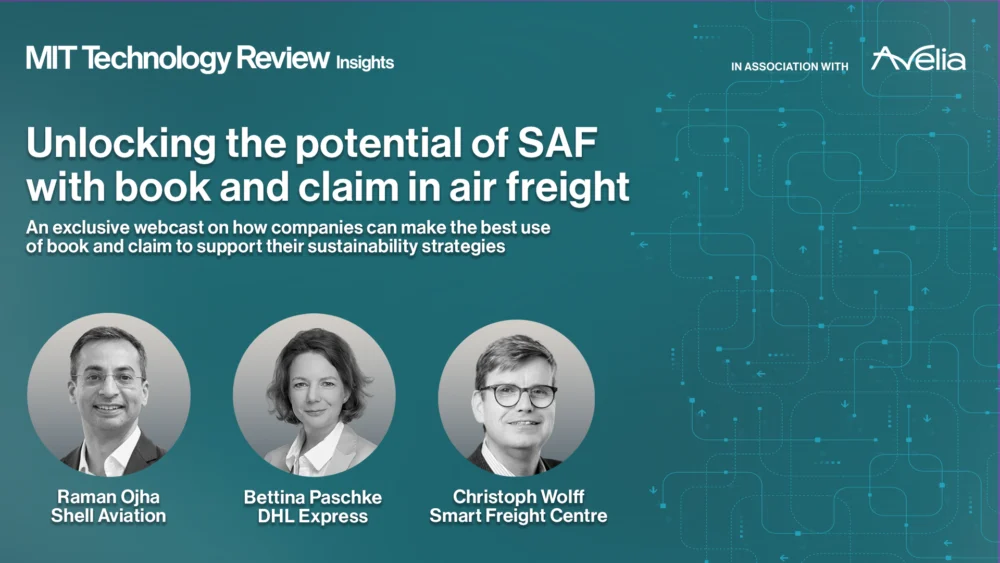
Raman Ojha, President of Shell Aviation, notes that while production capacity itself is growing, the actual "adoption and penetration of SAF hasn’t really picked up massively." The logistical gap between concentrated supply and global, distributed demand creates an intractable problem for large multinational carriers and freight forwarders committed to decarbonization.
Decoupling the Attribute from the Molecule
The traditional logistics model—the physical transport of a product from point A to point B—is fundamentally challenged by SAF’s limited distribution. If a major corporate shipper or logistics provider, aiming to meet stringent science-based climate targets (SBTs), requires physical SAF at a specific non-supply-point airport, the fuel would need to be transported thousands of miles via complex, often intermodal, supply chains. This process is not only prohibitively expensive and logistically nightmarish, but it is also environmentally counterproductive, as the emissions generated by transporting the fuel would offset, or potentially negate, the lifecycle benefits derived from its eventual use.
The solution to this logistical impasse is the introduction of the Book and Claim (B&C) chain of custody model. Defined by standards like ISO 22095:2020, B&C is an administrative framework where the flow of environmental attributes (the carbon reduction benefit) is intentionally decoupled from the physical flow of the product (the fuel molecule).
In the B&C system, a SAF producer injects a verified volume of sustainable fuel into the conventional jet fuel supply system at a point of production (e.g., a major hub like Amsterdam or Singapore). The environmental attributes associated with that volume—the quantifiable reduction in lifecycle GHG emissions—are then digitized, recorded, and transferred to a buyer (an airline or freight forwarder) located elsewhere in the world, perhaps in Dallas or Hong Kong, where SAF is physically unavailable. The buyer then claims the environmental benefit against their own fuel consumption, while the actual physical fuel is consumed by an aircraft operating at the injection point.
For companies striving to meet rigorous short-term science-based targets, this mechanism is deemed essential. Bettina Paschke, Vice President of ESG Accounting, Reporting, and Controlling at DHL Express, asserts that without B&C, achieving these ambitious short-term goals would be virtually impossible. B&C allows air freight operators to unlock the environmental benefits of SAF immediately, injecting crucial demand into the system without waiting years for global distribution infrastructure to mature.
The Role of Digital Ledger Technology
The credibility of the Book and Claim model hinges entirely on robust transparency and auditability. Since the environmental attribute is a digital asset, the system must prevent double counting—the scenario where two separate entities claim the same batch of emissions reduction. This necessity has driven the adoption of advanced digital solutions, particularly blockchain technology, to establish a secure and immutable ledger for tracking these attributes.
Platforms utilizing blockchain provide a secure chain of custody, verifying that a specific volume of SAF was physically injected, consumed, and that its associated environmental attributes are tracked through the digital system until they are "retired" against a customer’s emissions reporting. This process gives end-users—whether corporate clients, freight forwarders, or airlines—the assurance that the SAF volume they purchased has a corresponding physical basis and that the carbon reduction claims are verifiable and unique. This transparency is critical for managing reputational risk and ensuring that the claimed reductions stand up to scrutiny.
For major logistics players like DHL, B&C systems are foundational to their sustainability strategies, allowing them to support customer decarbonization goals and ensure verifiable emission claims across the complex logistics value chain. The adoption of such solutions signals a move beyond simple offset purchases and toward genuine, measurable investment in lower-carbon fuels.
Standardization and the Quest for Regulatory Acceptance
Despite its operational necessity and increasing industry adoption, the Book and Claim model faces a significant hurdle: formal recognition from leading global climate accounting and reporting standards. Currently, the Greenhouse Gas (GHG) Protocol and the Science Based Targets initiative (SBTi) have not yet fully accepted B&C as a recognized mechanism for corporate GHG emissions reduction claims, particularly for market-based scope 3 emissions (which represent the majority of air freight’s impact).
This regulatory skepticism stems primarily from the spatial separation between the physical fuel use and the emissions claim. To overcome this, the industry must demonstrate robust, standardized, and auditable governance. The push for industrializing B&C delivery systems is paramount to achieving this credibility.
Industry associations, such as the Smart Freight Centre, are leading efforts to build consensus and standardization. This involves creating a unified "ecosystem play," where early adopters, solution providers, and regulatory bodies collaborate. Through technical working groups, stakeholders are developing and refining key principles and best practices for B&C models. These principles aim to ensure system compatibility, establish common definitions, and provide a transparent repository of transactions that allows the wider industry to learn and adopt credible standards.
Christoph Wolff, CEO of the Smart Freight Centre, stresses that this cooperative effort is designed to build the framework necessary for authoritative bodies to recognize B&C. The goal is to establish a pathway where, in addition to tracking physical inventory, companies can confidently pursue market-based inventories for their decarbonization efforts. This evolving regulatory landscape suggests that while formal acceptance is pending, the technical groundwork is being laid to integrate high-integrity digital systems into future climate accounting standards.
Strategic Imperatives for Acceleration
The window for passive observation is closing. The pressure from regulators, investors, and corporate customers demanding sustainable logistics solutions requires immediate, proactive investment in SAF and B&C mechanisms.
Industry leaders urge companies not to delay action while waiting for regulatory perfection or complete infrastructural alignment. The solution exists, and upfront investments by large operators are vital signals that help scale the entire SAF industry, which, in turn, promises to drive down the cost premium over time.
For air freight operators contemplating their decarbonization strategy, the approach must be multifaceted and collaborative:
- Act Now, Learn by Doing: Waiting for regulatory certainty or complete standardization means sacrificing valuable time and market advantage. Operators must begin engaging with B&C platforms immediately to understand the practical challenges and benefits.
- Embrace Collaboration: Decarbonization cannot be achieved in silos. Companies should join industry coalitions and partnerships—the "ecosystem play"—to share best practices and drive joint advocacy for policy change and standardization.
- Utilize Credible Digital Platforms: Leveraging existing, auditable registries and digital solutions (often powered by blockchain) is essential. These platforms eliminate the need for individual companies to establish complex auditability and transparency mechanisms from scratch, ensuring claims are robust and secure.
- Adopt a Strategic View of Exposure Management: SAF purchasing via B&C should not be viewed merely as a mechanism for acquiring an environmental certificate. It is a strategic tool for exposure management—mitigating future carbon costs, meeting mandatory blending requirements (as seen in the EU), and maintaining competitiveness in a market increasingly sensitive to sustainability performance.
The air freight sector stands at a critical juncture. The steep upward trend in emissions demands innovative solutions that circumvent immediate physical limitations. The Book and Claim model, supported by high-integrity digital platforms, provides the necessary market mechanism to aggregate demand, stimulate production investment, and begin bending the emissions curve downward today. By embracing this virtual approach, the industry can bridge the gap between aspirational targets and practical reality, accelerating the transition toward a truly sustainable global supply chain.