

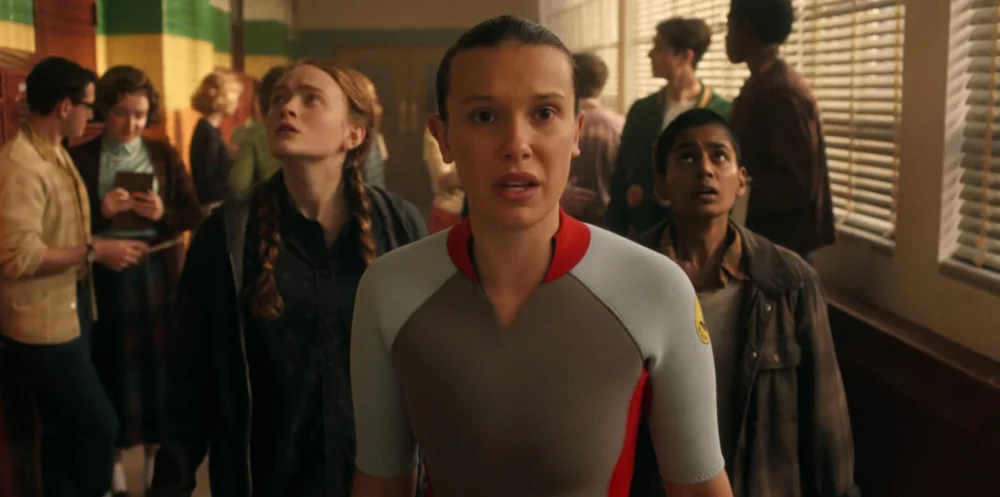
In the summer of 2016, a sleeper hit emerged from the burgeoning library of Netflix originals that would redefine the cultural zeitgeist of the decade. Stranger Things began as an intimate, masterfully paced homage to the Amblin Entertainment era of the 1980s, channeling the spirits of Steven Spielberg, John Carpenter, and Stephen King. It was a story rooted in the simplicity of a small Indiana town, a missing boy, and a group of friends on bicycles. However, as the series progressed toward its penultimate and final chapters, the very elements that fueled its initial success—mystery, isolation, and high-stakes character work—began to erode under the weight of what industry analysts call "narrative feature creep." The introduction of Vecna, or Henry Creel, served as the catalyst for this transformation, shifting the show from a grounded exercise in cosmic horror to a convoluted dark fantasy that arguably compromised its own legacy.
To understand the decline, one must first revisit the structural integrity of the first season. The narrative was "pure," a term often used by the cast and creators to describe the initial eight-episode run. The threat was the Demogorgon, an eldritch predator whose motivations were as inscrutable as they were terrifying. It was a creature of instinct, a shark in the dark, operating within the Upside Down—a dimension that felt like a nightmarish reflection of our own reality rather than a structured kingdom. The stakes were personal: a mother’s grief, a sheriff’s redemption, and the bond of four outcasts. By keeping the cast small and the monster in the shadows, the Duffer Brothers utilized the "Jaws" effect, where the audience’s imagination filled in the terrifying blanks.
As the show transitioned into a global phenomenon, the pressures of the streaming era began to manifest. Netflix, facing an increasingly competitive landscape, required Stranger Things to evolve from a limited-series feel into a sprawling franchise. This demand led to an explosion in cast size. While additions like Max Mayfield and Robin Buckley were initially welcomed for the fresh dynamics they brought, the ensemble eventually became unwieldy. By Season 4 and the lead-up to the final act, the show struggled to provide meaningful arcs for its original protagonists. The "feature creep" wasn’t just limited to characters; it extended to the mythology itself. The Demogorgon was replaced by Demodogs, then the Mind Flayer, and finally, the humanized personification of evil: Vecna.
The introduction of Vecna (aka 001 or Henry Creel) represented a fundamental shift in the show’s DNA. In the early seasons, the Upside Down was an accidental discovery—a cosmic rift opened by the sheer force of Eleven’s trauma and power. It was an environmental horror. By retconning the entire history of the dimension to be the playground of a disgruntled former lab patient, the show traded cosmic horror for a "Big Bad" trope reminiscent of Voldemort or Freddy Krueger. While Jamie Campbell Bower’s performance was widely praised, the writing behind the character stripped the Upside Down of its mystery. Suddenly, every terrifying event from 1983 onward was not the result of a scientific mishap or a collision of worlds, but the calculated machinations of a single man.
This narrative choice necessitated a series of complex and often jarring retcons. The show’s writers had to bridge the gap between the instinctive horror of the Demogorgon and the strategic villainy of Vecna. In doing so, the "Abyss"—as the show later termed the origin of the Upside Down—became a place of space rocks and briefcase-toting victims, a far cry from the atmospheric dread of Season 1’s sensory deprivation tank scenes. The elegance of Eleven’s origin story was replaced by a convoluted genealogy of blood and psychic echoes. For many purists, this felt like "worldbuilding gone wild," where the need to explain every detail eventually suffocated the story’s emotional core.

From an industry perspective, the trajectory of Stranger Things reflects a broader trend in high-budget streaming content: the "Marvelization" of television. In this model, success dictates that a story cannot simply end; it must expand into a "universe." This often results in a loss of tension. When Jim Hopper was seemingly killed at the end of Season 3, it was a moment of profound emotional resonance. His "miraculous" survival in a Russian gulag, while providing some entertaining action sequences, effectively signaled to the audience that the core "legacy" characters were protected by thick layers of plot armor. This lack of consequence reduced the stakes of the final seasons, making the eventual showdown with Vecna feel more like a choreographed superhero battle than a desperate fight for survival.
Furthermore, the technical evolution of the show mirrors its narrative bloat. While the budget for Stranger Things grew exponentially—reportedly reaching $30 million per episode in Season 4—the visual language shifted. The tactile, grainy, practical-effects-heavy aesthetic of the first season gave way to heavy CGI and "epic" set pieces. While visually impressive, these sequences often lacked the visceral impact of the earlier, more intimate scares. The cinematography became glossy and cinematic in a way that sometimes clashed with the gritty, 80s-horror roots the show initially championed.
The future impact of this narrative shift is significant for the legacy of the series. As the show concludes, it will likely be remembered as two distinct eras: the "Hawkins Mystery" era (Seasons 1-2) and the "Vecna Saga" (Seasons 4-5). While the latter has been a commercial juggernaut, driving record-breaking viewership for Netflix, it has also sparked a debate about the sustainability of long-form storytelling in the age of the algorithm. When a show becomes "too big to fail," the creative choices often prioritize lore-building and spectacle over character-driven simplicity.
The "Vecna Paradox" suggests that by giving a face to the darkness, the creators made the world of Stranger Things feel smaller, not larger. By tying every thread back to a single human antagonist, the vast, terrifying unknown of the Upside Down was tamed. The show moved from the realm of the "weird" and the "unexplained"—the very things that made it a cultural phenomenon—into the realm of the "explained" and the "predictable." The final seasons, burdened by the need to resolve the complex web of Henry Creel’s origins, often felt like they were running in place, waiting for the inevitable final confrontation.
Despite these critiques, the cultural footprint of Stranger Things remains undeniable. It paved the way for a new era of prestige genre television and proved that nostalgia, when executed with precision, is a powerful narrative tool. However, as the series approaches its endgame, the sentiment among a growing segment of the audience is one of exhaustion rather than anticipation. The pragmatist might argue that the show should have concluded as an anthology or ended after the defeat of the Mind Flayer in Season 3. Instead, it became a sprawling epic that, in its pursuit of being everything to everyone, lost the "purity" that once made it the most essential show on television.
In the end, Vecna may not be the villain who destroyed Hawkins, but he is the character who fundamentally altered the texture of Stranger Things. He represents the transition from a story about children facing the inexplicable to a story about superheroes facing a dark lord. As the industry looks toward the next big "hit," the lesson of Stranger Things serves as a cautionary tale: bigger is not always better, and sometimes, the most terrifying monsters are the ones we never truly understand. The legacy of the show will forever be a tug-of-war between its brilliant, humble beginnings and its complicated, maximalist conclusion. While Season 5 aims to tie up every loose end, many will look back at that first bike ride through the woods of Mirkwood and wonder if the mystery was always better than the answer.