

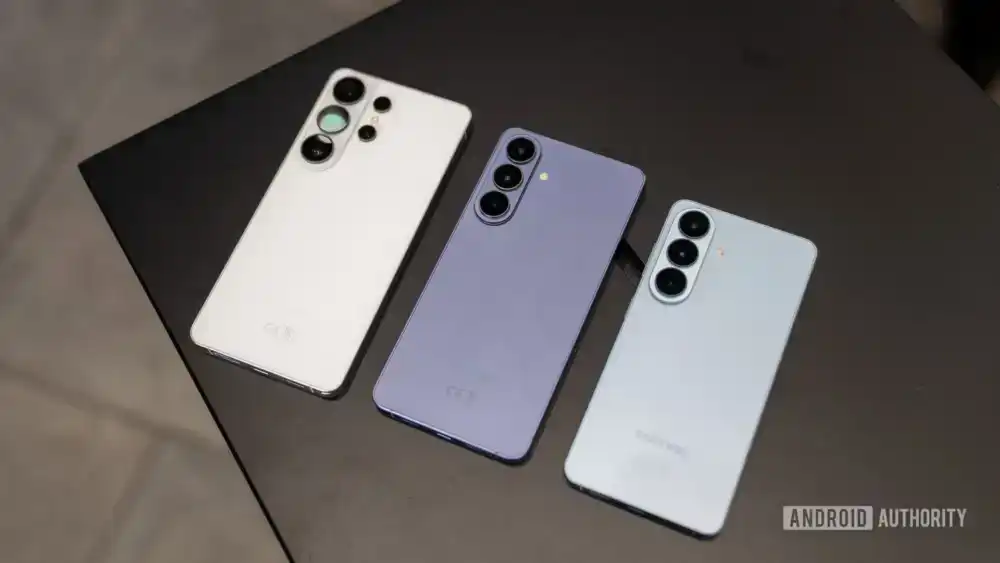
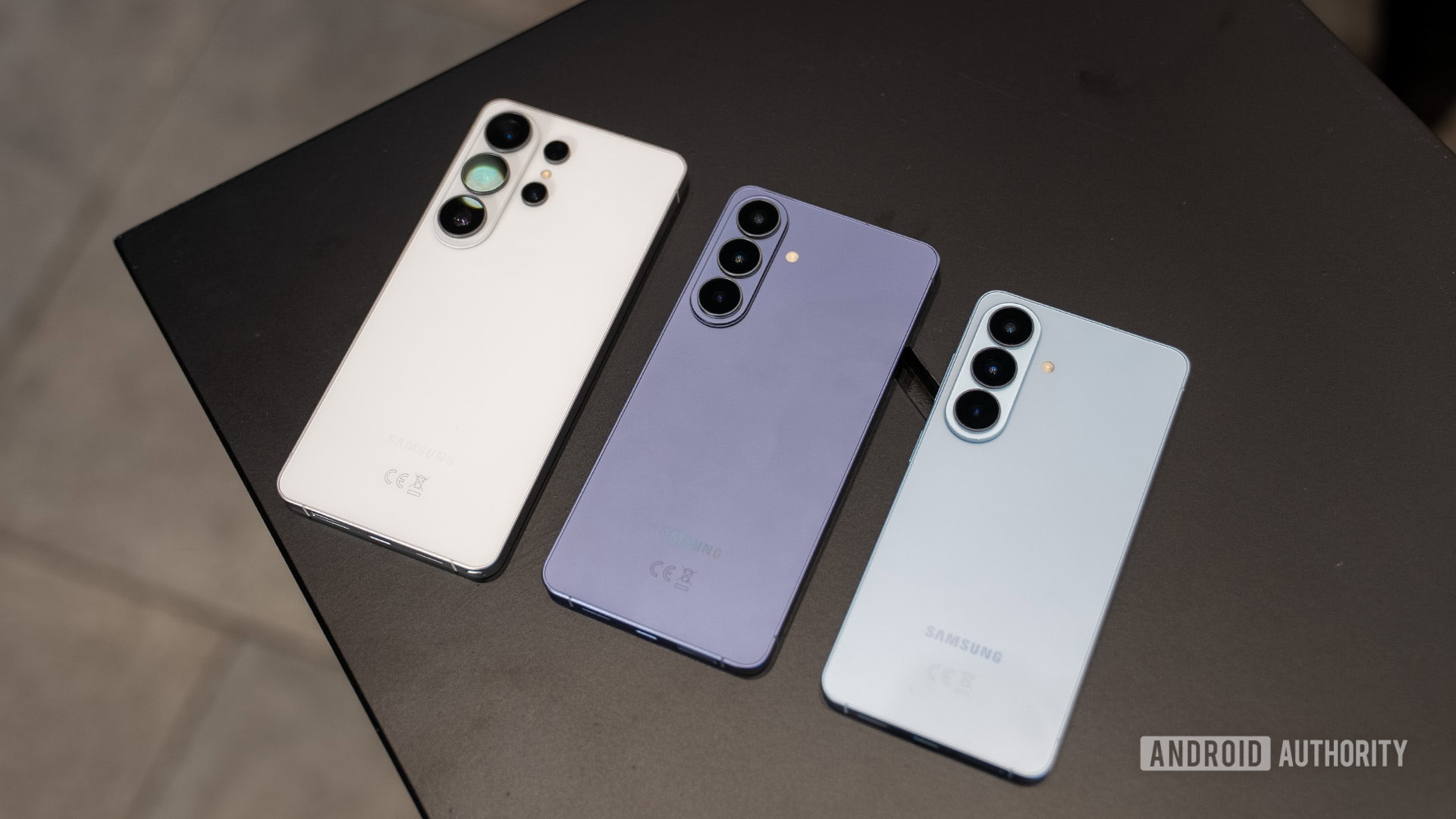
Samsung Electronics has once again underscored the enduring magnetic pull of its flagship Galaxy S series, defying market headwinds that typically challenge premium smartphone launches. Initial pre-order figures emanating from the South Korean domestic market suggest a staggering success, with the Galaxy S26 lineup surpassing previous benchmarks by securing 1.35 million units within its inaugural week of availability. This performance is particularly noteworthy considering the launch was accompanied by an unavoidable increase in the suggested retail price across the portfolio and a last-minute calibration controversy surrounding the display technology specifications.
While the aggregate sales volume signals robust consumer appetite for Samsung’s premier offering, the true strategic revelation lies in the distribution of demand across the tiered models. The Galaxy S26 Ultra, the apex device in the lineup, has not merely contributed to the overall success; it has overwhelmingly driven it. Reports indicate that the Ultra variant commanded an astonishing 70% share of all pre-orders, effectively marginalizing the standard Galaxy S26 and the intermediate S26 Plus models, which together accrued a mere fraction of the total initial commitments.
To contextualize this dramatic skew, one must look back to the preceding generation. The Galaxy S25 Ultra captured approximately 52% of pre-orders in its initial sales window. The current 70% penetration for the S26 Ultra represents a significant intensification of consumer preference for the highest-tier configuration. This trend signals a fundamental shift in consumer calculus within the premium segment: when consumers decide to invest in a generational upgrade, they are increasingly unwilling to compromise on features, explicitly opting for the "kitchen sink" experience, regardless of the associated premium cost. This behavior validates Samsung’s strategy of aggressively differentiating the Ultra line, positioning it not just as an iteration, but as a distinct product category worthy of substantial price elasticity.
The Architecture of Desire: Beyond Incrementalism
The surge in demand for the Ultra cannot be solely attributed to traditional hardware improvements, though notable advancements are present. The integration of the Qualcomm Snapdragon 8 Elite Gen 5 chipset provides a significant performance uplift, especially concerning artificial intelligence workloads. The reported 39% improvement in Neural Processing Unit (NPU) performance is a crucial underpinning for the device’s forward-looking software features, positioning the S26 Ultra as a potent mobile computing platform capable of handling complex, on-device generative AI tasks with efficiency.
However, market analysis suggests that the primary driver of consumer urgency is centered on features that address contemporary digital anxieties and utility gaps. Chief among these is the introduction of the Privacy Display feature. This capability, which dynamically narrows the screen’s viewing angles, effectively acts as a hardware-enforced digital barrier against "shoulder surfing." In an era where mobile device usage is ubiquitous and often involves sensitive personal or professional data, this explicit focus on immediate, tangible privacy control has clearly resonated with the target demographic. It moves the conversation beyond abstract security protocols into a demonstrable, everyday benefit.
Furthermore, Samsung is aggressively pivoting the S-series narrative toward "agentic AI." This concept moves beyond reactive chatbots, emphasizing an assistant capable of understanding complex, multi-step user intentions and autonomously executing actions across disparate applications. This promise of true digital delegation—an AI that acts as a proactive executive assistant—is a compelling proposition for high-value users.
To further embed this ecosystem and secure long-term revenue streams, Samsung launched the Galaxy AI Subscription Club alongside the S26 series. This bundled service, integrating Samsung Care+ and specific theft protection coverage, appears to be a strategic success. Reports indicate that over 30% of initial buyers opted into this subscription tier. This uptake suggests that the perceived value of comprehensive device protection and service continuity outweighs the marginal added monthly cost for a significant portion of the Ultra clientele, indicating a maturation of the premium ownership mindset—where the total cost of ownership is increasingly viewed through a service lens rather than purely a hardware transaction.
Navigating the Turbulence: The Display Dilemma and Industry Ramifications
No launch of this magnitude is entirely seamless, and the S26 series encountered a significant public relations hurdle regarding display fidelity. Early marketing materials strongly implied the inclusion of true 10-bit displays across the entire S26 portfolio. Subsequent technical deep dives revealed that the panels utilize 8-bit technology augmented by Frame Rate Control (FRC) processing to simulate the visual depth of 10-bit color representation.
While this technical distinction might be negligible for the average user, in the hyper-scrutinized environment of flagship comparisons, it invited substantial criticism regarding transparency and perceived value erosion. For a device commanding a top-tier price point, such a discrepancy in specification disclosure fuels skepticism about the manufacturer’s commitment to absolute technical accuracy. This incident serves as a critical case study: in the current market, the perceived integrity of the specifications can sometimes outweigh the actual performance differences, especially when juxtaposed against the inherent excitement generated by new features like agentic AI.
Industry Implications and Future Trajectories
The overwhelming preference for the S26 Ultra has profound implications for the smartphone industry’s future development roadmap and monetization strategies.
Firstly, it solidifies the "Ultra-fication" of the flagship market. Competitors, including Apple and other Android manufacturers, will be compelled to further widen the feature gap between their standard and "Pro Max" or "Ultra" equivalents. The market is segmenting into those willing to pay for the pinnacle experience and those seeking value in the base model. Samsung has effectively demonstrated that the profit margin potential lies almost entirely at the top, as consumers are willing to absorb the cost necessary to secure the latest processor, the most advanced camera module, and the exclusive software/hardware integrations like the Privacy Display.
Secondly, the success validates the focus on non-traditional hardware features. While raw processor speed remains important, the market is clearly prioritizing utility and security enhancements. The Privacy Display, in particular, may force competitors to rapidly develop analogous features, shifting the focus of the next generation of flagship competition away from pure megapixel counts toward ambient security and data sovereignty features.
Thirdly, the high adoption rate of the Galaxy AI Subscription Club indicates a viable pathway toward recurring revenue that is less volatile than pure hardware sales cycles. If Samsung can successfully integrate indispensable services—such as enhanced cloud processing for complex AI tasks or guaranteed access to cutting-edge agentic capabilities—into this subscription, it creates a sticky ecosystem that dramatically increases customer lifetime value (CLV). The initial 30% adoption suggests a strong foundation for this service-oriented future.
Expert Analysis: The Psychology of the High-End Upgrade
From a consumer psychology perspective, the S26 Ultra phenomenon speaks to the concept of "premium anchoring." Once consumers become accustomed to the pinnacle of smartphone technology, incremental upgrades in the base model are often perceived as insufficient justification for an upgrade cycle. The jump to the Ultra model, despite its higher cost, represents a more substantial, psychologically rewarding leap in capability and status. Consumers are investing not just in a communication tool, but in a statement of technological engagement.
The hardware updates—the slimmer chassis, refined cooling, and the enhanced 200MP main sensor with improved zoom capabilities—serve as the necessary foundation, the "table stakes" for a flagship release. But the true magnets are the differentiated software/hardware integrations: the agentic AI framework and the Privacy Display. These are the features that unlock new workflows and address modern societal concerns, providing a demonstrable utility gain that justifies the significant financial outlay.
The global rollout, scheduled for March 11 across 120 territories including major markets like the US, UK, and India, will be the ultimate test of whether this localized success translates internationally. Given the high adoption of digital services and heightened privacy awareness in Western and Asian markets, the core value propositions—AI utility and on-device privacy—are expected to maintain strong momentum.
In conclusion, the Galaxy S26 Ultra is not just selling well; it is dictating the terms of engagement in the premium mobile sector. Samsung has expertly navigated potential pitfalls—including minor specification debates—by anchoring the product narrative around indispensable advancements in personal security and proactive artificial intelligence. The market response is a clear mandate: the future of the flagship smartphone is defined by exclusivity, comprehensive service bundles, and demonstrable privacy features, all concentrated within the most expensive variant. The standard models now risk becoming mere stepping stones for users aspiring to the Ultra experience.