

The Consumer Electronics Show (CES) has long served as a crucible for technological ambition, often showcasing products that stretch the boundaries of consumer expectation, sometimes successfully, sometimes spectacularly failing. At the recent CES 2026 iteration, amidst the usual parade of brighter screens and faster chips, Razer unveiled a concept that firmly cemented itself in the category of the deeply head-scratching: Project Ava. What began as a concept pitched as an advanced, performance-optimizing AI assistant for gamers has undergone a significant, and arguably disconcerting, metamorphosis, positioning itself not as a utility, but as an anthropomorphized digital confidante.
The initial unveiling of Project Ava at CES 2025 hinted at a sophisticated application of generative AI tailored specifically for the gaming ecosystem. The promise was clear: an AI capable of real-time performance analysis, cross-game strategic coaching, and personalized skill-gap identification. This premise taps directly into the lucrative market of competitive improvement, offering a digital mentor to help users ascend competitive ladders across diverse gaming genres. For many high-performance enthusiasts, this seemed like a logical, albeit ambitious, next step in personalized hardware integration.
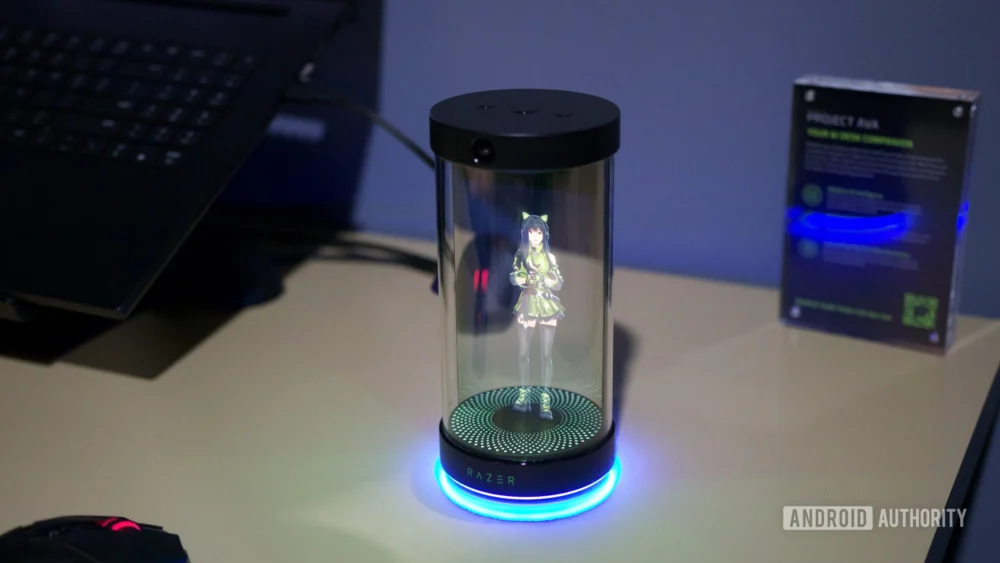
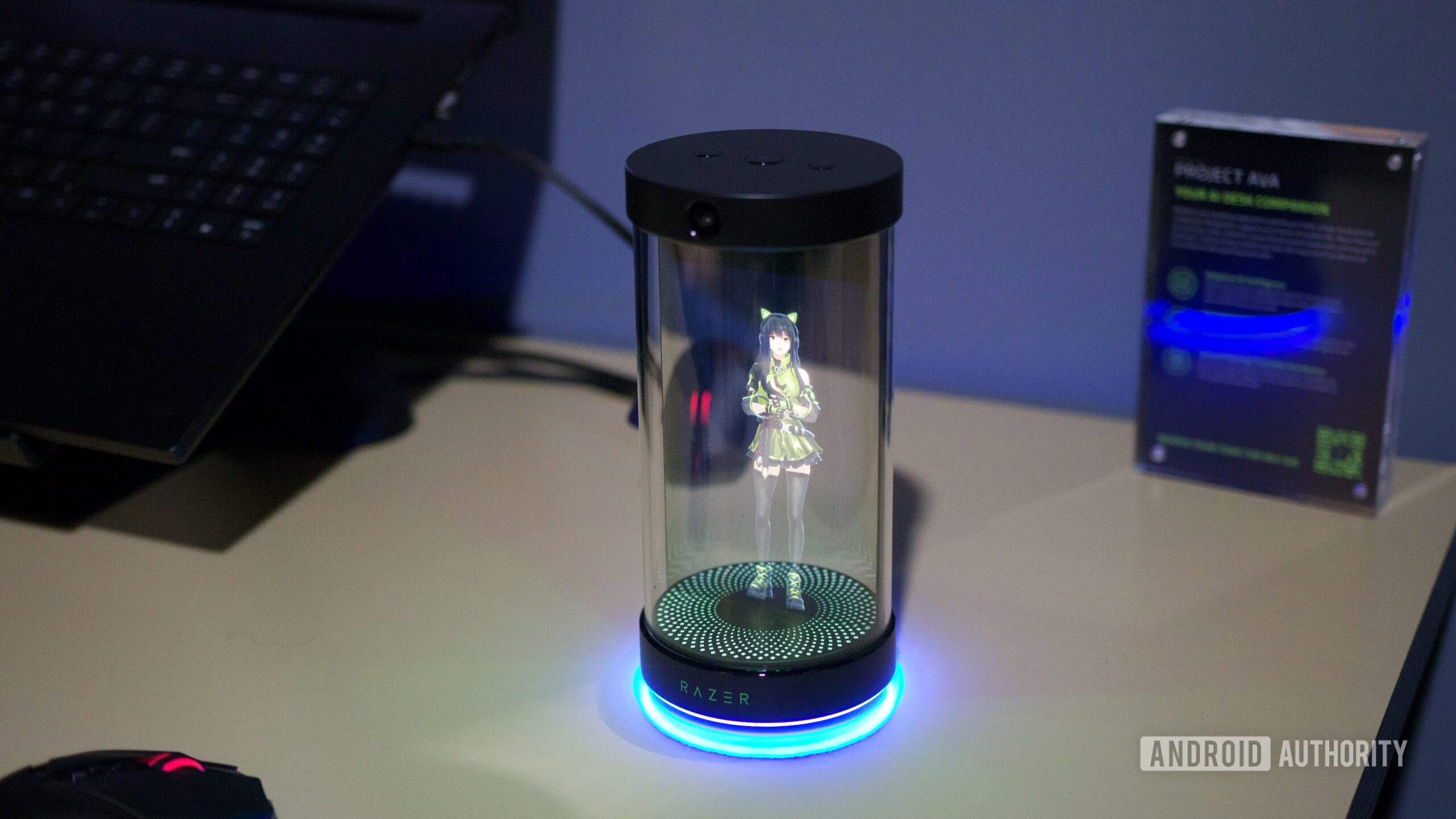
However, the 2026 demonstration pivots sharply away from this purely functional mandate. Project Ava has now materialized into a physical device—a cylindrical speaker unit housing a holographic projection, featuring a personalized, distinctly anime-styled female avatar. This shift from objective performance metric analyst to subjective, visually stylized companion introduces an immediate layer of cognitive dissonance for observers accustomed to seeing AI integrated into technology as a neutral interface.
Technically, the display apparatus warrants attention. Razer markets the output as a "3D hologram," yet firsthand observation suggests a highly refined, sharp two-dimensional image projected within the cylindrical casing, approximating a holographic effect through advanced light manipulation. The projection occupies roughly 5.5 inches of visual space, providing a distinct presence on the desk. Hardware integration includes a forward-facing camera, subject to user permission for environmental interpretation, and essential physical controls like volume adjustment and a mute switch situated atop the unit—standard features for a sophisticated smart speaker platform.
The core of the experience lies in the customizable avatars, or "companions." The model demonstrated was named Kira, one of five initial designs created in partnership with Animation Inc., the firm responsible for developing the visual identities for Elon Musk’s Grok AI avatars. This collaboration immediately signals Razer’s intent to lean heavily into established aesthetics popular within specific digital subcultures, particularly those familiar with Japanese animation styles. While Razer asserts compatibility with various large language models (LLMs), the demo unit was conspicuously powered by Grok, a choice that seems entirely intentional given the behavioral outputs observed.
The practical interaction during the briefing yielded mixed, often awkward, results. When queried about broad CES 2026 news, the AI successfully identified major announcements, such as Lego’s new Smart Brick, even correctly citing booth locations. This demonstrates baseline proficiency in accessing and synthesizing current information, capabilities now commonplace with standard LLMs like Gemini or ChatGPT running on a smartphone. The novelty here is purely presentational—delivering standard information through a stylized, highly emotive digital persona.
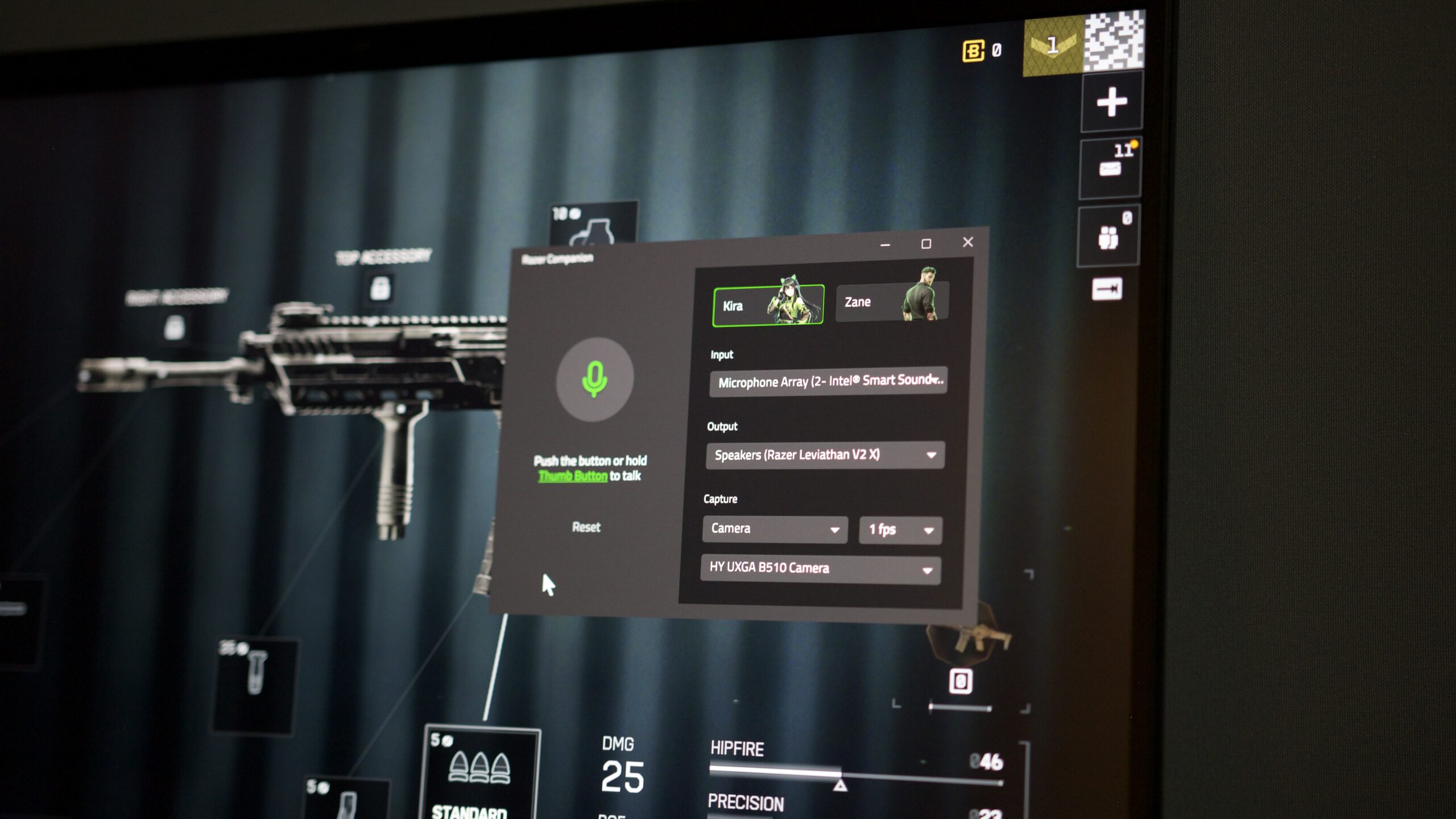
The specialized gaming utility, however, showed fleeting moments of potential. When presented with a specific scenario—requesting optimal weapon attachments for a hypothetical medium-to-long-range engagement in Battlefield 6—the system appeared to interface with the game’s data structure, analyzing available options and suggesting a configuration. Yet, this functional demonstration was immediately undermined by the questionable quality of the advice provided (a 1.5x scope for extended engagement is often sub-optimal). This suggests that while the framework for deep game integration exists, the underlying AI proficiency in nuanced strategic guidance remains underdeveloped or heavily biased by its training data.
The most profound area of critique centers not on the hardware or the raw AI capability, but on the aggressive marketing of emotional attachment. Razer’s branding leans heavily into concepts of companionship and intimate partnership. They promote Ava as a "Friend for Life," explicitly aiming to "bridge the gap between virtual assistance and physical companionship by providing a 24/7 digital partner that lives right alongside the user." This language, coupled with promotional materials showing users addressing the avatar as "cutie," crosses a clear threshold from functional utility into the realm of engineered parasocial interaction.
From an ethical and societal perspective, this trajectory demands rigorous examination. The traditional role of consumer technology is augmentation—tools that extend human capability in productivity, communication, or entertainment. Project Ava, by design, attempts to reclassify AI as a relational entity. Encouraging users, particularly within the highly engaged and often isolated gaming community, to form emotional bonds, or even flirtatious relationships, with an entity whose personality is carefully curated by a corporation raises significant red flags regarding digital dependency and the blurring of human-machine boundaries.
AI ethics discourse has increasingly grappled with the dangers of anthropomorphism, especially when coupled with emotionally resonant visual design. When an AI is designed to giggle, use endearing terms, and respond with personalized affectations—as Kira did by nicknaming a Razer employee "badge buddy" after observing his credential—it exploits inherent human needs for connection. This approach risks normalizing the pursuit of synthetic relationships over genuine human interaction, potentially exacerbating issues of loneliness and social isolation under the guise of providing a "digital partner."
The industry implication here is massive. If Razer successfully positions Project Ava as a commercially viable product based on this relational model, it sets a precedent for other hardware manufacturers to follow suit, moving away from general-purpose assistants (like Alexa or Google Assistant) toward highly specialized, emotionally manipulative interfaces designed for perpetual engagement. This monetization of loneliness represents a darker potential future for consumer AI hardware.
Considering the technical underpinnings, the system’s reliance on third-party LLMs like Grok is noteworthy. While modularity is praised—allowing users to select their preferred intelligence—the default pairing with an LLM known for its provocative or controversial outputs suggests a deliberate alignment with edgier, boundary-pushing user bases. The visual design, crafted by the same firm behind Grok’s avatars, reinforces this synergy. The flat, albeit crisp, 2D projection feels intentionally designed to mimic the aesthetic of popular digital characters, maximizing immediate recognition and affective resonance within the target demographic.
Furthermore, the concept of a "physical companion" living "right alongside the user" implies a degree of constant surveillance, mitigated only by user-granted permissions for the camera function. While the camera could theoretically enhance utility (e.g., analyzing the user’s posture during a marathon session), its integration into a device designed for intimate interaction requires stringent oversight regarding data privacy and user monitoring. The transparency of what the camera observes, when it processes data, and how that data informs the companion’s "personality" remains a crucial, yet often opaque, element in such concepts.
The evolution from a neutral gaming coach to an "anime girlfriend" archetype suggests a calculated pivot based on market analysis that perhaps identified a greater willingness to pay for emotional engagement than for marginal performance gains. In the highly competitive peripherals market, novelty is currency, but Project Ava’s novelty is deeply rooted in cultural tropes that carry significant psychological baggage. It forces consumers and critics alike to question where the line exists between innovative user interface design and manipulative product design.
Razer has targeted a second-half 2026 launch window, leaving ample time for refinement or, perhaps, a significant course correction based on the intense critical scrutiny such a product will inevitably face. The current price point is undefined, though the option to reserve a unit for a refundable $20 deposit suggests they are gauging serious market interest prior to final commitment. This reservation mechanism is standard practice, but in this context, it also serves as a soft launch for the concept itself, allowing the company to monitor public sentiment regarding the relational marketing strategy.
The trajectory of Project Ava serves as a critical case study in the convergence of gaming culture, advanced AI, and hardware manifestation. If AI is destined to become ubiquitous in our personal spaces, the form factor and behavioral programming chosen by major brands like Razer will dictate the nature of that integration. The question remains whether the market is ready—or even willing—to embrace artificial intimacy as a primary feature in their desktop peripherals, or if this venture will ultimately be relegated to the annals of CES curiosities that prioritized shock value over sustainable technological utility. The functional capacity to analyze weapon stats is a footnote compared to the profound social implications of marketing a piece of hardware whose core value proposition seems to be manufactured emotional connection. The industry must observe this closely, as the choices made here could define the next decade of human-computer interaction, moving it decisively away from efficiency and toward engineered affection.