

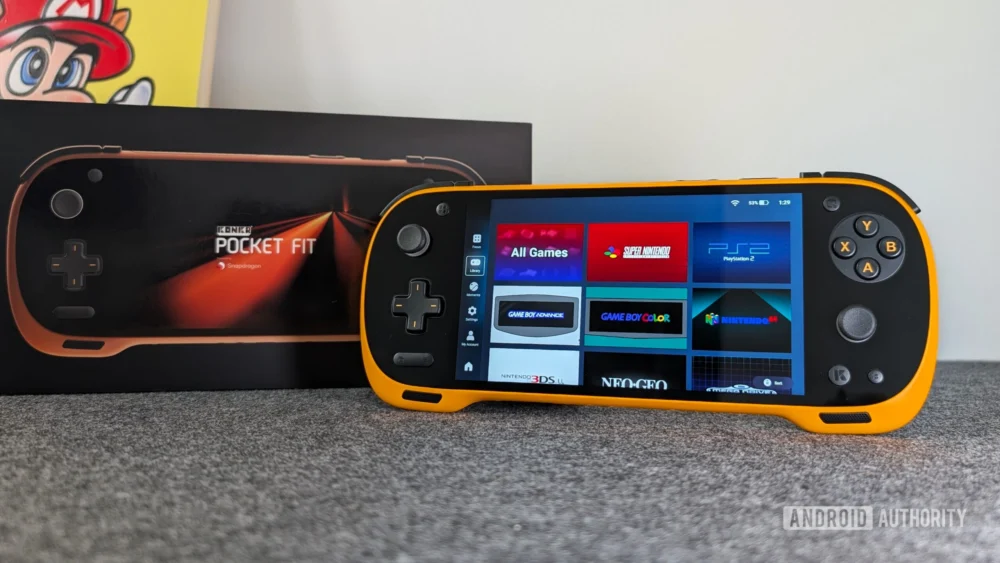
The recent shipping recalibration for the KONKR Pocket FIT Elite, a high-performance Android handheld device, serves as a stark, tangible indicator of a systemic vulnerability plaguing the specialized consumer electronics sector: volatile and escalating memory component pricing. While the updated timeline, pushing Elite shipments into March following the Lunar New Year recess, might appear as a standard logistical hiccup, the underlying explanation provided by the manufacturer, AYANEO, exposes a much deeper crisis concerning Random Access Memory (RAM) procurement. Specifically, the company disclosed that the cost associated with the high-capacity RAM modules required for the Elite variant skyrocketed to nearly three times the initial budgeted figures, transforming the project into an operationally loss-making venture despite the commitment to fulfill all outstanding backer pledges.
This incident is more than an isolated anecdote concerning one crowdfunding campaign; it functions as a critical stress test revealing the fragility of niche hardware development dependent on commoditized, yet highly volatile, semiconductor supplies. The Android gaming handheld market, a segment characterized by rapid iteration and tight margins, is particularly susceptible to such shocks. Unlike major smartphone manufacturers who possess the scale to negotiate long-term, fixed-price contracts or absorb marginal cost increases across billions of units, smaller players operating on thinner margins and lower volumes face an existential threat when commodity prices pivot sharply.
To fully appreciate the gravity of AYANEO’s predicament, one must contextualize the current state of the memory market. DRAM (Dynamic Random-Access Memory) pricing is governed by a complex interplay of global foundry utilization rates, demand from the established PC and server markets, and geopolitical stability impacting upstream fabrication plants. In recent cycles, demand surges in enterprise computing, coupled with inventory corrections that periodically reset supply pipelines, create dramatic price swings. For a device like the Pocket FIT Elite, which targets a premium performance tier, the reliance on cutting-edge or high-density memory—such as the 24GB configurations mentioned—places it squarely in the most volatile segment of the market.
AYANEO’s narrative highlights a crucial failure point in their supply chain management: the cancellation of previously secured orders. The initial procurement strategy involved placing deposits for the necessary high-capacity RAM back in September. However, subsequent market dynamics—likely unforeseen or underappreciated shifts in supplier priorities—led these suppliers to rescind their commitments. This action, often a strategic maneuver by large suppliers prioritizing more lucrative, higher-volume clients, left AYANEO scrambling. When they attempted to re-source the components, they were met with aggressively inflated spot-market pricing, effectively tripling their expected hardware expenditure for that critical element.
The implication here is profound. The manufacturer faced a binary choice: either halt production, cancel the Elite variant entirely, and face the severe reputational damage of abandoning a committed crowdfunding base, or absorb catastrophic financial losses to maintain customer trust. AYANEO opted for the latter, leveraging the $15 store coupon and accessory bundle as symbolic reparations for the delay and inconvenience. This decision underscores a dedication to community relations often prioritized by crowdfunding hardware developers, but it simultaneously exposes the financial tightrope they walk. For every Elite unit shipped, the company is, by their own admission, incurring a net loss on the hardware cost alone.
The market impact is heterogeneous, which further complicates analysis. The fact that the standard Pocket FIT G3 units are nearing the end of their backlog clearance by late January suggests that these configurations utilize more readily available, perhaps lower-capacity, memory modules. These mainstream components are produced at greater scale, offering suppliers less incentive to cancel orders or inflate prices drastically for existing contracts. The Elite model, conversely, represents a higher barrier to entry for component sourcing due to its specialized memory requirement, making it disproportionately vulnerable to supply shocks. This disparity suggests that hardware development strategies must now explicitly account for the scalability and stability of every component, not just the central processing unit (CPU) or screen.
From an industry analyst’s perspective, this event signals a necessary reckoning for the Android handheld ecosystem. These devices, which aim to bridge the gap between mobile gaming convenience and PC-like performance emulation/streaming, rely on squeezing high-end components into compact form factors. They are, by definition, inherently supply-chain sensitive. If a leading innovator like AYANEO cannot insulate itself from a 200% increase in a core memory cost, it suggests that smaller developers relying on similar component ecosystems may face insurmountable hurdles. This could lead to a contraction in market diversity, as only the largest, most financially robust entities can weather these procurement storms.
Furthermore, the delay provided an unexpected, albeit forced, opportunity for refinement. AYANEO utilized the pause to implement "internal tooling and frame refinements" based on initial user feedback from the standard G3 models. While this is presented as a positive outcome—ensuring the Elite arrives slightly improved—it masks the reality that these improvements were financed through operational losses incurred by the memory crisis. In a healthier supply environment, such refinements would be integrated proactively without the catalyst of a component price explosion leading to a production standstill.
Looking ahead, the ramifications extend beyond immediate shipping schedules. This incident forces a strategic reassessment across the sector regarding procurement timelines and risk mitigation. Manufacturers must increasingly move toward dual-sourcing critical components, even if it means accepting marginally higher initial costs from a secondary supplier, to avoid being held hostage by a single source that can unilaterally cancel orders when spot prices surge. The reliance on upfront deposits, as seen in September, proved insufficient when suppliers faced greater profitability elsewhere. Future contracts will likely need to incorporate stricter penalty clauses for cancellations or utilize alternative financial instruments to lock in pricing stability for longer durations.
The long-term trend for Android gaming handhelds must pivot towards resilience. If the cost of achieving parity with, say, a baseline Steam Deck specification requires a RAM configuration so rare that its price can triple overnight, the entire value proposition is threatened. Consumers, having experienced delays and cost volatility, may become hesitant to back future projects, preferring established retail channels where pricing, while higher, is generally more predictable. This undermines the very crowdfunding model that fueled the initial rise of these innovative devices.
Expert commentary suggests that hardware designers may need to engineer flexibility into future product generations. This could involve designing motherboards capable of accommodating different RAM densities or utilizing memory standards that have broader adoption across multiple industrial sectors, thereby insulating them from the hyper-specific demand fluctuations of the high-end handheld niche. The current situation suggests that maximizing performance-per-dollar is being dangerously overshadowed by maximizing supply-chain security.
In conclusion, the KONKR Pocket FIT Elite delay is not merely a scheduling update; it is a critical data point illustrating the precarious nature of high-performance, low-volume hardware manufacturing in the current geopolitical and economic climate. The tripling of RAM costs serves as an alarm bell, signaling that unless supply chain management evolves dramatically to account for extreme component price volatility—especially for specialized, high-density memory—the vibrant innovation seen in the Android handheld space risks being stifled by the cold, hard arithmetic of semiconductor economics. The promise of powerful, affordable portable gaming remains tethered to the stability of global memory fabrication lines, a stability that, as AYANEO’s experience shows, is far from guaranteed. The industry must now prioritize securing the invisible foundations—the RAM chips—before it can confidently build the next generation of visible hardware innovations.