

The proliferation of interconnected devices within the domestic sphere has fundamentally altered how we interact with our living spaces. Once a realm of purely mechanical reliability, the modern home is increasingly governed by algorithms, wireless signals, and integrated software. For many consumers, this shift represents a leap forward in convenience, energy efficiency, and remote management—the ability to remotely adjust climate control or monitor the front door from thousands of miles away is undeniably compelling. However, this dependency on digital infrastructure introduces a new class of failure mode that traditional mechanics simply did not account for: entrapment.
My own journey into the smart home ecosystem has been cautious, bordering on outright Luddite. While I acknowledge the utility of a Wi-Fi-enabled robotic vacuum or a voice assistant dedicated solely to setting precise cooking timers, the integration of these technologies into core safety and access systems has always struck me as premature. My skepticism has historically centered on the common anxieties: connectivity loss rendering a device useless, or the inherent security risks associated with opening a physical barrier to the digital domain. These are valid concerns, certainly, but a recent, deeply unsettling personal experience has revealed a far more insidious threat—the risk of being sealed inside one’s own residence by a malfunctioning smart lock.
This shift in perspective from external vulnerability (being locked out) to internal jeopardy (being locked in) represents a critical inflection point in the evaluation of smart home adoption, particularly concerning access control hardware.
The Rental Nightmare: A Case Study in Critical Failure
The incident occurred during a stay at a short-term rental property, secured via a digital access system managed through a third-party application. The convenience was initially appealing: a time-sensitive PIN code provided immediate, keyless entry. This model, widely adopted by property managers seeking streamlined turnover and remote oversight, hinges entirely on the flawless operation of the underlying hardware and software.
The system failed not through a breach of code or a network outage, but through a catastrophic mechanical failure within the smart lock mechanism itself. The internal motorized component, responsible for translating the digital command (the successful PIN entry) into the physical action of retracting the deadbolt, ceased to function. Crucially, the motor lost its grip on the bolt mechanism. This meant that while the software registered a successful unlock command, the physical door remained obstinately sealed.
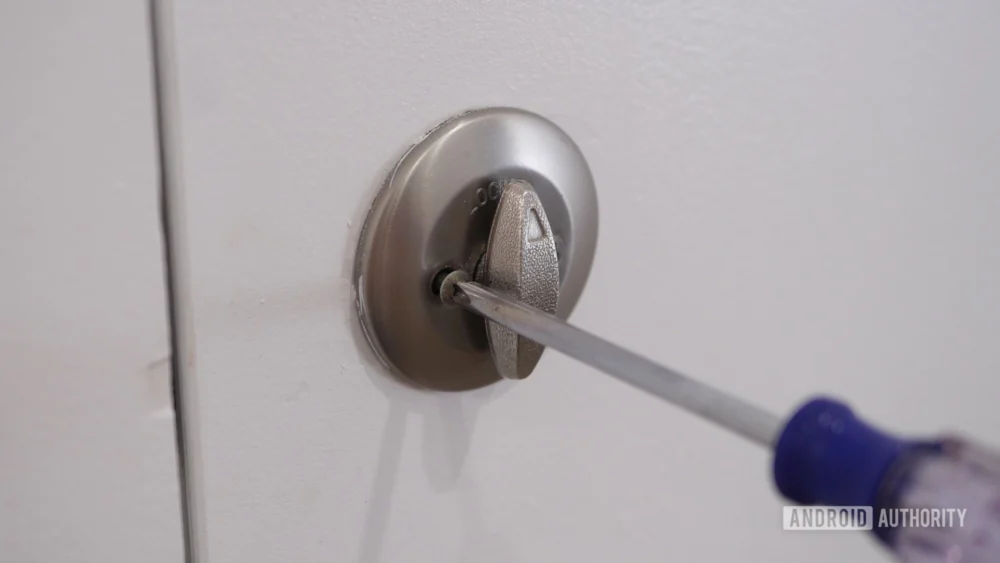
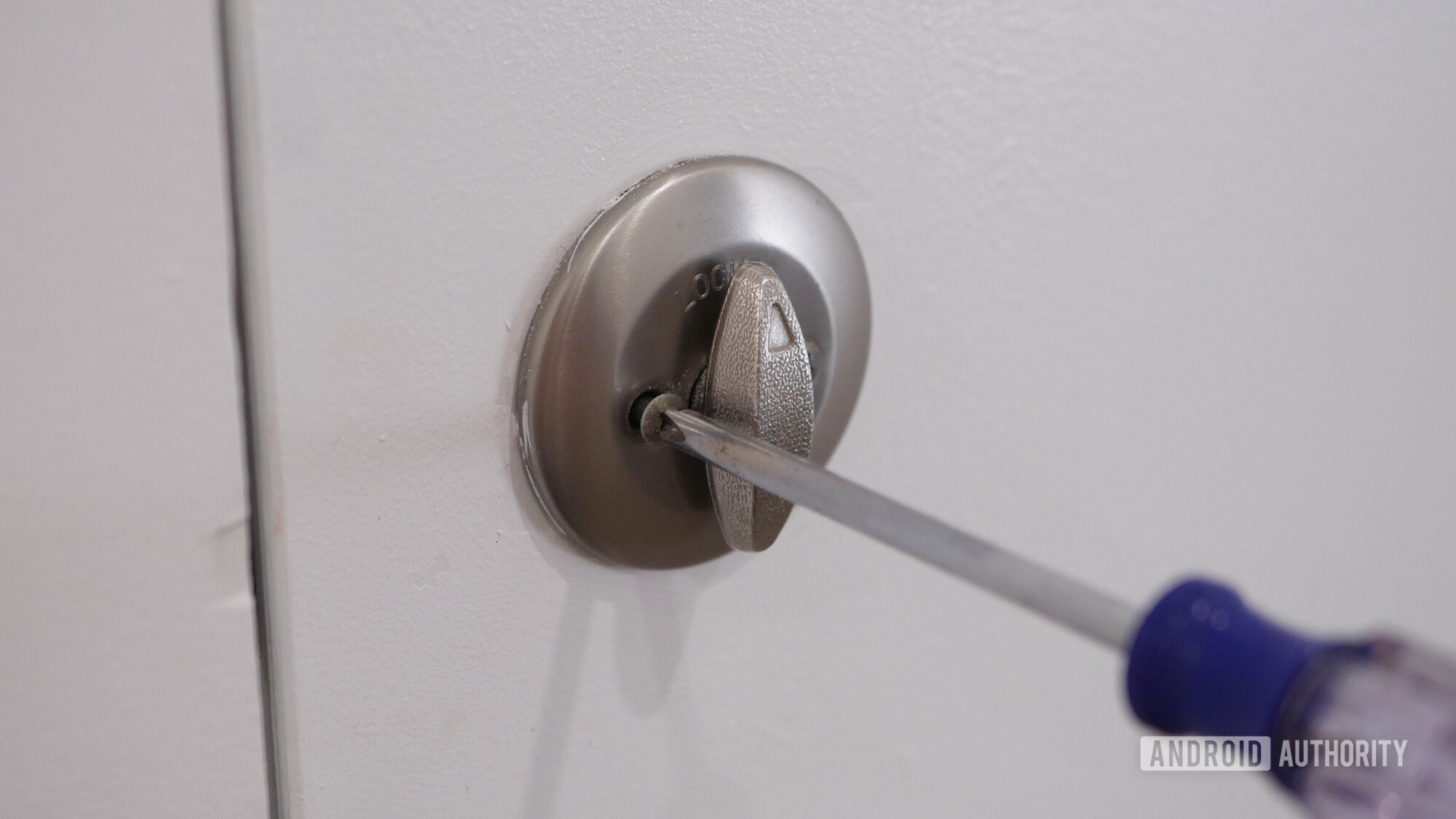
What makes this scenario uniquely terrifying is the subsequent lack of redundancy. In a traditional lock, even if the key mechanism jams, there is almost always a physical override—a knob, a thumb-turn, or an internal lever that allows manual manipulation of the bolt. This particular smart lock, seemingly designed only for its digital function, lacked any effective mechanical bypass. Attempting to manipulate the internal components yielded no result; the motorized lock had effectively seized the egress path.
The realization that my ability to leave the premises was entirely dependent on a failed piece of automated hardware was profoundly alarming. We were confined to the ground floor, which mitigated the immediate danger of a high-rise entrapment, but the fundamental principle remained: an electronic failure had stripped us of our basic right to exit.
The ensuing logistical nightmare compounded the fear. As temporary occupants, our recourse was limited to contacting the property owner. The response time, unfortunately, stretched beyond 24 hours as the owner grappled with the implications of the failure, eventually necessitating a physical intervention involving specialized tools or, potentially, forced entry if the delay had been prolonged. This extended period of forced occupancy underscored the severity of the risk. In a genuine emergency—a fire, a medical crisis, or even a time-sensitive professional obligation—such a delay is unacceptable.
Industry Implications: The Ethics of Access Control Design
This isolated incident casts a harsh light on the engineering philosophy pervading much of the consumer smart home sector. The drive toward sleek aesthetics and streamlined digital interfaces often appears to supersede robust, safety-critical design principles.
For devices that govern entry and exit, the hierarchy of operational requirements must be inverted. While connectivity, battery life, and app integration are desirable features, the primary, non-negotiable function is unimpeded manual egress. This is where the concept of "fail-safe" versus "fail-secure" design becomes paramount. A standard high-security door lock is designed to be "fail-secure"—if power is cut or the mechanism jams, it remains locked, protecting against intrusion. However, in a residential context, this must be balanced by an immediate, user-accessible "fail-open" or manual override capability for internal occupants.
The failure observed suggests a design that prioritized the automated closing mechanism over mechanical fallback. Manufacturers, often seeking cost efficiencies or simpler installation profiles, might omit traditional physical linkages or ensure that the motorized deadbolt cannot be easily overridden by internal hardware when the motor fails. This omission transforms a modern convenience into a liability.
Expert analysis in building safety standards consistently emphasizes redundancy for life-safety systems. While smoke detectors have battery backups and fire suppression systems rely on non-electronic triggers, smart locks have become a glaring exception, relying almost entirely on continuous, perfect operation of complex electromechanical parts. The market appears to be segmenting itself into two tiers: premium solutions that retain full mechanical functionality alongside digital control (such as the Nuki Ultra, which often includes physical key compatibility or robust manual turners), and budget or rental-specific models that trade this essential redundancy for simplicity or lower unit cost.
The implications for property management and insurance are significant. If a device can render a structure temporarily inaccessible from the inside, liability models must adjust. Furthermore, the consumer must shoulder a disproportionate burden of due diligence, researching not just features, but the specific failure scenarios engineered (or neglected) by the manufacturer.
Beyond the Lock: Systemic Vulnerabilities in the Automated Home
The fear of being locked in is not strictly limited to door mechanisms; it extends to any critical utility controlled solely by smart technology. Consider the smart furnace controller or the centralized smart breaker panel. While my personal aversion to overly complex smart ecosystems has kept my thermostat on a semi-offline schedule (retaining manual control and offline memory), this proactive defense is not universally applied.
If a smart thermostat, relying on cloud services or proprietary firmware, suffers a bug or a server outage during a severe winter storm, the result is not mere inconvenience; it is a genuine threat to health. Being unable to manually override the system to trigger emergency heating, or worse, being unable to force the system into a manual boost mode, introduces a dangerous dependency on external digital infrastructure for basic habitability.

This leads to a critical examination of the "smart home platform dependency." Early smart home adoption focused on peripheral devices—lights, speakers, plugs. These failures are inconvenient. Access control and climate management, however, are foundational utilities. Their digital failure translates directly into risks concerning safety, security, and welfare.
The industry trend toward greater integration—where the lock talks to the alarm, which talks to the lights, all managed by a single hub—amplifies this risk exponentially. A single point of failure, whether software-based or hardware-related, can cascade, affecting multiple critical functions simultaneously. A corrupted update pushed to a central hub could, theoretically, disable security functions, environmental controls, and communication pathways all at once.
Future Trends and the Mandate for "Dumb" Backups
The trajectory of smart home technology suggests increasing automation, leaning heavily into Artificial Intelligence for predictive maintenance and autonomous operation. While this promises efficiency, it simultaneously deepens the reliance on uninterrupted digital performance. To counter the growing risk of technological entrapment, several industry shifts are necessary:
1. Standardization of Mechanical Failsafes: Regulatory bodies and industry consortiums must establish mandatory engineering standards for any device controlling ingress/egress. These standards must mandate a simple, intuitive, non-powered, and always-accessible mechanical override that functions independently of the electronic components. For smart locks, this means ensuring the internal thumb-turn or emergency key cylinder remains fully functional even if the motor, battery, or processor fails entirely.
2. Enhanced Local Operation Protocols: Manufacturers must prioritize local processing and control over mandatory cloud reliance. Devices should default to a fully functional "dumb" mode when internet connectivity is lost, retaining essential schedules and manual controls locally on the device itself, rather than requiring a mobile application or server handshake for basic operation. The aforementioned Tado offline schedule beta is an example of acknowledging this need, but implementation across the sector remains inconsistent.
3. Clearer Risk Disclosure: Consumers need transparent documentation detailing failure modes. Instead of marketing materials focusing exclusively on remote access benefits, product specifications must clearly articulate the device’s behavior during power loss, network outage, and internal mechanical failure. Terms like "No External Key Override" or "Motorized Bolt Lock Only" should be prominently displayed, allowing consumers to weigh the convenience against the potential for entrapment.
For those currently integrating advanced security hardware, the lesson derived from this experience is clear: the convenience offered by connectivity must never supersede the absolute necessity of manual, physical control. The digital layer must function as an enhancement, not a dependency. Until the industry standardizes robust, easily understood fail-safe mechanisms across all critical infrastructure devices, the cautious approach—favoring the proven, simple mechanics of a traditional deadbolt for the front door—remains the most prudent safeguard against the very real, and newly illuminated, danger of being sealed inside one’s own automated sanctuary. The ultimate security measure is retaining the ability to walk out the door, regardless of how sophisticated the technology attempting to manage that door proves to be.