

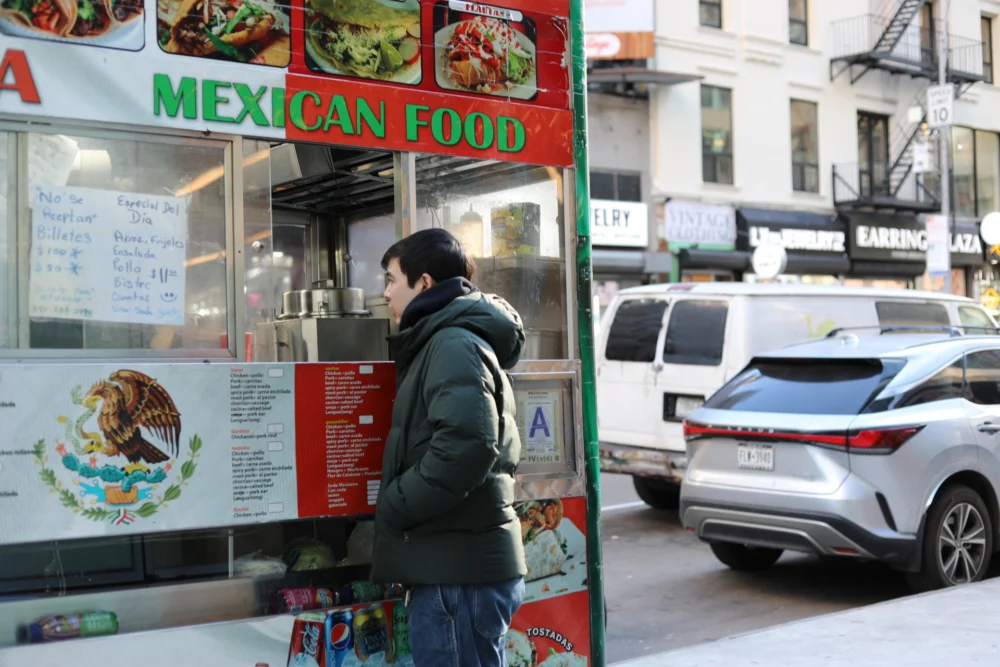
New York City’s street food ecosystem is a globally recognized culinary institution, defined by the vibrant presence of thousands of carts dispensing everything from regional specialties like dosa and halal to classic American hot dogs. Yet, this essential urban tapestry is shadowed by a persistent, noxious element: the pervasive noise and choking fumes generated by portable gasoline generators. These combustion engines, necessary to power refrigeration, lighting, and ancillary electric equipment, degrade air quality, disrupt pedestrian environments, and actively threaten the health of both vendors and customers. A Brooklyn-based technology startup, PopWheels, is currently piloting a solution that leverages an unexpected asset—the standardized battery packs designed for its e-bike delivery network—to initiate a fundamental shift away from fossil fuels in the high-density vending sector.
The inaugural trial of this innovative energy solution took place recently in Manhattan, where La Chona Mexican, located near the busy intersection of 30th Street and Broadway, operated for a full day exclusively on swappable electric power. This move represents more than just a technological upgrade; it signifies the repurposing of micro-mobility infrastructure into a decentralized, urban energy grid capable of supporting commercial operations.
David Hammer, co-founder and CEO of PopWheels, characterizes the genesis of the food cart project as an opportunistic experiment. Drawing on experience as an early-stage Google alumnus, Hammer likened the initial exploration to a classic "20% project"—an internally driven effort to explore tangential opportunities. The company’s primary business revolves around managing a dense network of safe, standardized battery-swapping cabinets essential for the city’s vast fleet of food delivery e-bikes. The realization that these high-turnover, modular energy sources could be scaled up to power stationary carts was a pivotal moment.
Hammer emphasizes that the technical specifics of the battery chemistry, while important, are secondary to solving the logistical nightmare of urban power distribution. "Are e-bike packs the perfect energy type to be powering food carts? Maybe, maybe not," he noted. "What matters is, can you solve distribution and charging?" The core competency of PopWheels—efficiently managing a distributed network of charged batteries—is proving to be highly transferable to the static vending environment.
The Foundation: Powering the Gig Economy
To understand the feasibility of the food cart pivot, one must first examine the robust infrastructure PopWheels built for the gig economy. The company currently operates over 30 sophisticated, fire-safe charging cabinets strategically positioned throughout Manhattan. These cabinets cater primarily to gig workers utilizing popular e-bike models like Arrow and Whizz, effectively creating a decentralized, cross-compatible energy fleet.
For delivery workers, the need for reliable, affordable power is critical. Many commute into the central business districts from the city’s outer boroughs, consuming significant charge before their shifts even begin. A typical full workday often requires two complete battery cycles. Historically, this demand created an informal, costly charging ecosystem, with local bodegas often stepping in to offer unregulated charging services. These services typically cost delivery workers around $100 per month. When the inevitable battery degradation and replacement costs are factored in, the total annual expenditure for power can climb close to $2,000 per worker.
PopWheels’ subscription model disrupts this status quo. By offering unlimited access to its swap network for a flat fee of $75 per month, the company provides immediate economic relief while standardizing safety. The cost savings are substantial, and the demand is evidenced by a significant and growing waitlist for the service.
A critical design element of the PopWheels system is safety. Given the alarming rise in lithium-ion battery fires across New York City—a crisis that spurred the company’s initial founding mission—each charging cabinet is engineered to swiftly isolate and extinguish a battery fire should a thermal runaway event occur during charging. Each cabinet can house up to 16 batteries, and the swap sites—often retrofitted small parking lots—are designed to manage electrical load efficiently, drawing power comparable to a standard Level 2 electric vehicle charger.
Expert Analysis: Economic and Technical Viability
The transition from a micro-mobility energy provider to a commercial vendor power source required rigorous technical and economic modeling. The fundamental question was whether small-format batteries could adequately replace a small generator’s output without requiring prohibitively frequent swaps.
A typical food cart requires electricity primarily for low-draw applications: lighting, point-of-sale systems, and, crucially, refrigeration to meet health code standards. High-heat cooking, such as griddles or fryers, generally relies on separate, more efficient propane tanks, meaning the electric demand is manageable. Hammer’s team estimated that a typical cart spends about $10 per day on gasoline to run its generator.
PopWheels determined that a subscription model offering access to four of its standardized battery packs could provide approximately five kilowatt-hours (kWh) of energy. This 5 kWh threshold is sufficient to cover the low-to-mid-range electrical demands of a standard cart during a typical operating shift. Crucially, the economic analysis confirmed that the daily subscription cost for this power supply could be structured to achieve cost parity with, or even undercut, the $10 daily expenditure on gasoline.

The system’s modularity and the existing swap network infrastructure are the keys to its success. If a cart operator experiences a surge in demand or utilizes more power than anticipated, they can execute a mid-day swap at a nearby charging cabinet. This eliminates the need for large, heavy battery banks that require hours of overnight charging, a logistical hurdle that has traditionally plagued stationary battery solutions for vendors. The process is quick, clean, and leverages the same network built for e-bikes, maximizing infrastructure utilization.
Industry Implications and Urban Decarbonization
The implications of successfully repurposing this micro-mobility power infrastructure extend far beyond simple cost savings for vendors. This initiative directly addresses one of New York City’s most intractable urban pollution problems. Gas generators contribute significantly to localized air pollution, including particulate matter (PM2.5), carbon monoxide, and unburned hydrocarbons, creating localized hotspots of poor air quality in dense commercial areas. Furthermore, the relentless, high-decibel noise produced by these units—often operating for 10 to 12 hours a day—is a severe quality-of-life issue for nearby residents and businesses.
The immediate reaction from the street vendor community underscores the urgency of this transition. During the pilot demonstration, Hammer observed vendors approaching the La Chona cart with genuine surprise. “I had multiple food cart owners come up to me and say, ‘Wait, there’s no noise with this cart. What are you guys doing? Can I get this?’” he recounted. The silence itself is a powerful economic and social benefit, improving the working environment for vendors and enhancing the customer experience.
This initiative aligns perfectly with broader municipal efforts to decarbonize the street vending sector. New York City officials have long sought practical alternatives to generators, often hampered by the complexity and cost of retrofitting carts with custom battery systems or attempting to access municipal grid power, which is prohibitively expensive and logistically challenging in temporary locations.
PopWheels has collaborated closely with organizations like the non-profit Street Vendor Project to ensure the solution is practical, affordable, and meets the specific needs of the vendor population. The successful full-day operation of the La Chona cart served as a proof-of-concept for policymakers and the vendor community alike.
The Broader Vision: Distributed Energy Resources and Future Trends
The PopWheels model represents a sophisticated example of infrastructure layering and the creation of distributed energy resources (DERs) in a dense urban setting. Hammer’s underlying thesis has always been that building an "urban-scale, fire-safe battery swapping infrastructure" creates a foundational layer that can support multiple adjacent services. The food cart application is the first major step outside the e-bike sphere, demonstrating the network’s versatility.
Looking forward, the potential for scalability is vast. PopWheels plans an aggressive rollout targeting summer adoption, capitalizing on the high operational season for street vendors. The goal is to make the electric option not just environmentally superior but economically compulsory for cart owners.
Beyond New York, the model is highly replicable in other high-density global cities facing similar generator-related pollution issues—from London to Mexico City. The key is the standardization of the power source. Unlike the electric vehicle (EV) charging sector, which struggles with numerous plug types and charging speeds, micro-mobility battery networks, when standardized across a specific fleet, offer instant interoperability and high utilization rates.
This pivot also hints at a future where these urban battery networks could interact with the main electrical grid. While currently focused on drawing power for charging, these dense aggregations of batteries—if managed intelligently—could eventually function as temporary storage buffers, helping stabilize localized grid segments during peak demand hours, moving closer to a true "Vehicle-to-Everything" (V2X) concept adapted for micro-mobility.
However, challenges remain. Widespread adoption will require a significant initial investment in retrofitting existing food carts with the necessary adapters and wiring to handle the battery input safely. Furthermore, as the network expands, managing the collective charging load across 30+ swap sites will require sophisticated power management systems to prevent overwhelming local transformers, although the current Level 2 draw per cabinet is manageable.
Ultimately, PopWheels is not merely selling batteries; it is selling reliability, safety, and a massive quality-of-life improvement. By achieving cost neutrality compared to polluting fossil fuels while simultaneously eliminating noise and fumes, the startup is poised to lead a quiet revolution in urban commerce, demonstrating how existing technology infrastructure can be creatively repurposed to meet critical environmental and economic goals. This infrastructure pivot provides a tangible pathway for the street food industry to embrace electrification, solidifying the food cart’s place as a sustainable staple of the modern metropolis.