

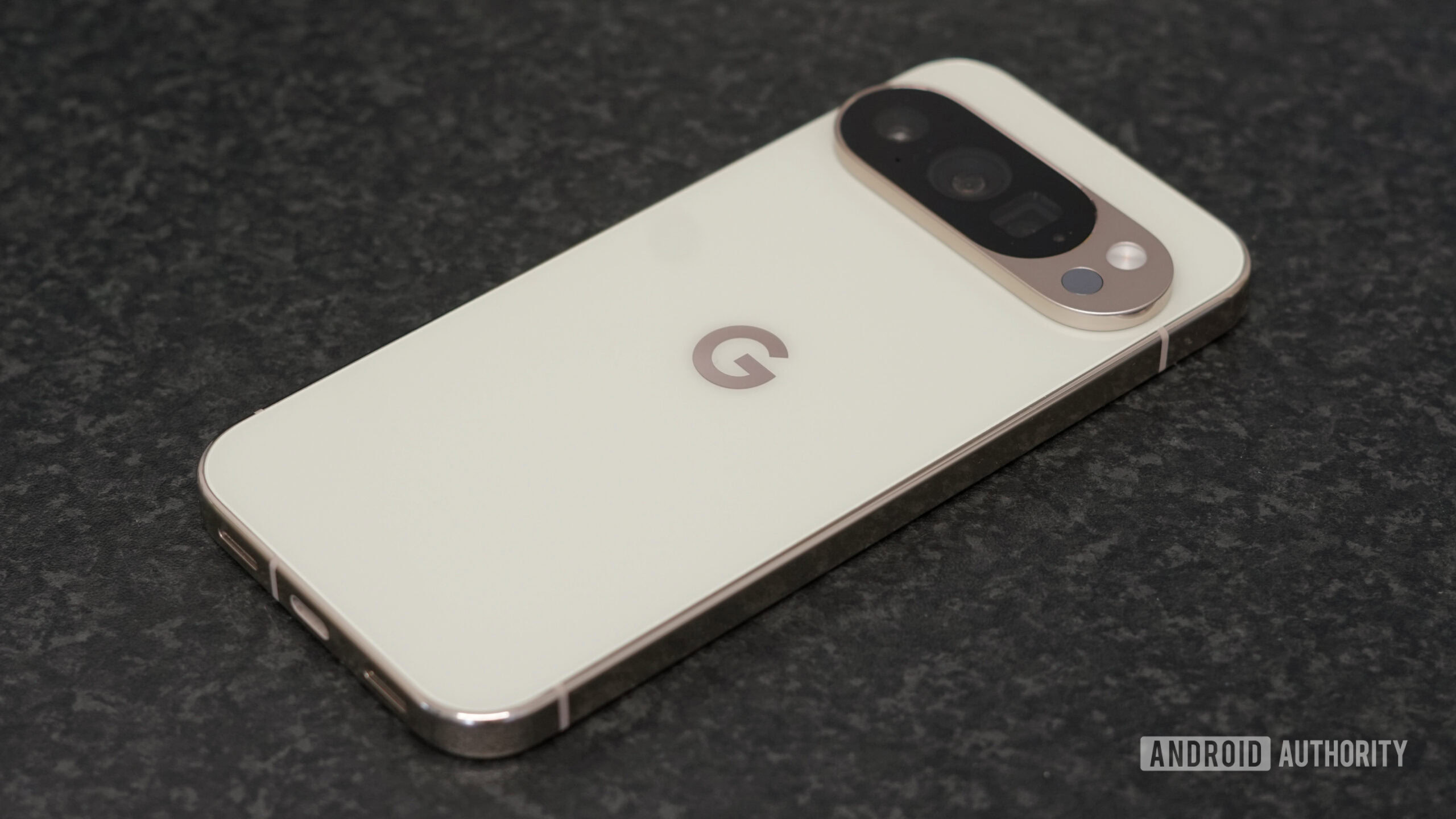
The enduring legacy of the Google Pixel line, stretching back nearly a decade to its inception, has firmly established its imaging capabilities as a primary differentiator in a saturated smartphone market. While the platform’s overall market share may fluctuate, the consistent excellence delivered by its computational photography pipeline remains a compelling reason for consumer migration. This transition, evident in the shift from previous flagships—such as the author’s experience moving away from Samsung’s imaging solutions—underscores the profound impact Google’s software-first approach has had on mobile photography standards. The current iteration, the Pixel 10 Pro, has proven so proficient in capturing everyday moments that it has inadvertently become a highly coveted shared resource within the household, leading to an almost daily appropriation by a spouse specifically for documenting a domestic subject, in this case, a recently acquired feline companion.
This phenomenon of the primary user’s device being commandeered stems directly from the core technological advantages baked into the Pixel experience, particularly the near-elimination of operational friction during image capture. The crucial distinction lies in the near-total absence of shutter lag, a persistent, frustrating artifact that has historically plagued competing platforms, notably those running Samsung’s software overlay on Android hardware. Shutter lag—the delay between pressing the capture button and the actual moment the sensor records the light—is tolerable when documenting static scenes under optimal lighting conditions, such as a broad landscape at midday. However, in dynamic, low-light, or high-motion environments, this temporal gap transforms a potentially perfect memory capture into a blurry disappointment.
The Pixel series, conversely, leverages advanced machine learning models and rapid processing pipelines to minimize this latency to virtually zero. This responsiveness transforms the act of photography from a calculated attempt into an instinctive reaction. The evidence of this utility is quantifiable: over the last six months, nearly 1,500 photographs and video clips of the family pet have been generated, almost entirely via the commandeered Pixel 10 Pro. This dramatic usage disparity illustrates that the device’s imaging fidelity—the ability to reliably freeze motion, regardless of the subject’s activity level—has made it the undisputed default camera for spontaneous, critical captures, even displacing the primary user’s access during routine working hours.
The appeal extends beyond intimate domestic settings. The Pixel 10 Pro’s photographic prowess recently served as the de facto visual documentation tool during a live music event. Accompanying a spouse and her close associate—an individual described as both a dedicated photography enthusiast and a loyal iPhone adherent—the Pixel was pressed into primary service. Within the span of the opening act, the device’s performance under the challenging, dim concert lighting, particularly its ability to handle long-range shots, was sufficient to prompt a significant concession: the abandonment of the latest premium iPhone flagship (the iPhone 16 Pro Max) in favor of the Pixel for the remainder of the evening’s captures.
It is imperative to approach this praise with technical sobriety. A detailed forensic examination of these concert photographs reveals the expected compromises associated with extreme capture scenarios. Noise profiles are visible upon aggressive cropping, and soft focus areas are present, especially toward the periphery of the frame. Yet, the crucial metric here is not absolute technical perfection but contextual utility. The objective of these specific photographs—capturing the ambiance and emotional resonance of the live event—is overwhelmingly achieved. When considering the challenging parameters—extremely high digital zoom ratios exceeding 10x magnification combined with severe ambient light deficits—the resultant images are not merely adequate; they are successful memory anchors. This highlights a critical industry trend: computational photography is shifting the consumer benchmark from raw sensor data quality to the reliability of capturing a good enough memory under any circumstances.
This reliability quotient was further demonstrated during an outing to an annual public light installation. The scenario escalated into a light-hearted contest for control of the device, extending what should have been a brief thirty-minute observation walk into an hour-long session dedicated solely to utilizing the Pixel’s camera system. For the primary user, this recurrence of spontaneous, joyful photography contrasts sharply with the user experience cultivated by previous flagship devices, particularly those from Samsung, where the necessary pre-cautions and post-shot reviews often stifled creative flow.
Industry Implications: The Erosion of Competitive Gaps
The anecdotal evidence regarding the Pixel 10 Pro’s user experience has broader ramifications for the mobile hardware industry. For years, the battleground for flagship dominance centered on three primary pillars: raw sensor resolution, sophisticated optical zoom hardware (periscopes), and display technology. While Google has historically invested heavily in the first two, its most potent weapon has remained the software processing layer, often leveraging Google Tensor’s specialized AI cores.
The competitive implication is that if a smartphone’s camera system introduces workflow friction—such as shutter lag—it effectively nullifies any perceived advantage in hardware specifications. Competitors who prioritize aggressive marketing around megapixel counts or proprietary sensor sizes often fail to account for the psychology of capture. Users are less concerned with whether a photo is 200MP or 50MP; they are concerned with whether the image they intended to take actually materialized as intended. The Pixel’s success in minimizing this gap between intent and outcome is forcing rivals to reallocate R&D focus toward real-time processing latency and advanced motion prediction algorithms, rather than incremental hardware upgrades alone. This elevates the importance of Tensor-like dedicated silicon, emphasizing on-device machine learning execution speed.
Furthermore, the comparison drawn against the contemporary iPhone 16 Pro Max highlights a potential weakness in Apple’s ecosystem narrative: the perceived superiority of its camera hardware versus the instantaneous usability of Google’s computational output. While Apple excels in color science consistency and video capture, the ability of the Pixel to instantly deliver compelling stills in challenging environments—even if technically noisier upon deep inspection—wins the moment-to-moment utility contest for many casual users. This suggests a bifurcation in the market: one segment prioritizing professional-grade video and pristine daylight stills (the traditional Apple stronghold), and another prioritizing reliable, instant, shareable stills across all conditions (the Pixel’s strength).

The Necessary Mitigation: Leveraging Android’s Underutilized Features
The popularity of the Pixel 10 Pro among household members, while a testament to its imaging quality, naturally presents a logistical challenge regarding data management and privacy. A single, shared Google Photos library, accumulating thousands of personal, pet-related, and social event images, quickly becomes unwieldy and compromises the integrity of the primary user’s archival history.
Fortunately, the foundation of the Android operating system provides an elegant, yet frequently overlooked, solution: Multiple User Accounts. This feature, a fundamental component dating back to Android 5.0 Lollipop, allows for the creation of distinct, isolated user profiles on a single device, each with its own home screen, application set, and, critically, its own set of cloud synchronization credentials.
The author’s experience underscores the feature’s value: by enabling the ability to switch profiles directly from the lock screen—a setting often disabled by default or forgotten by users accustomed to single-user paradigms—the spouse can maintain a completely separate digital environment. When she captures the 1,500 cat photos, they are processed, stored, and backed up exclusively to her Google Photos account, completely compartmentalized from the primary user’s existing library of over 50,000 images. This is a feature that has seen inconsistent support across OEM skins; Samsung, for example, has historically relegated this capability primarily to its tablet line, a decision that creates unnecessary friction when sharing high-utility devices within a family unit.
The persistence of this multi-user capability in the Pixel ecosystem is a subtle but powerful argument for the ‘pure’ Android experience. It demonstrates Google’s commitment to core OS functionalities that enhance device sharing and multi-person utility, features that proprietary skins often pare back in favor of simplifying the interface for the singular owner. In this context, a system-level feature transforms from a theoretical utility into a practical necessity for maintaining domestic harmony and data hygiene.
Future Trajectories: Shared Ownership and Ecosystem Design
Looking ahead, the trend exemplified by the Pixel 10 Pro’s popularity suggests several key directions for future smartphone design:
-
The Hyper-Reliable Capture Engine: The industry will increasingly compete on the ‘zero-latency’ promise. Future chip designs, particularly those focused on NPUs (Neural Processing Units), will be judged not just on peak TOPS (Trillions of Operations Per Second) but on how quickly they can execute the entire capture-to-storage pipeline under duress. This moves photography beyond simple image quality metrics and into the realm of real-time performance engineering.
-
Integrated Multi-User Utility: While user accounts exist, they are often clunky to switch between. Future OS iterations may introduce "Guest Profiles" specifically optimized for camera or media consumption, allowing temporary access to core features without exposing the full device profile. Alternatively, hardware manufacturers might invest in biometric separation—a quick fingerprint scan leading directly to the spouse’s profile, bypassing the need for manual account switching altogether.
-
The Personal Archive vs. The Shared Moment: As devices become repositories for critical life documentation, the tension between singular ownership and shared experience will intensify. Cloud services must evolve to better manage merged or partially shared timelines without creating the data dilution observed here. Perhaps AI tagging will allow users to instantly filter out "shared captures" from their main library, even if they reside in the same physical folder structure, effectively creating virtual separation where physical separation is inconvenient.
The experience with the Pixel 10 Pro, though amusingly framed around petty theft of a smartphone, highlights a profound shift in user valuation. Consumers are choosing the device that consistently removes obstacles to capturing ephemeral moments, even if it means sacrificing the device itself temporarily. The computational engine is not just capturing better photos; it is redefining what a successful smartphone camera is—a tool so intuitive that others instinctively reach for it, necessitating robust, built-in solutions for shared digital ownership.