

The global urgency to decarbonize energy systems has catalyzed a renewed focus on nuclear power, positioning advanced reactor technologies—often referred to as Generation IV or Small Modular Reactors (SMRs)—as essential components of a stable, carbon-free grid. While these designs promise enhanced safety features, greater operational flexibility, and reduced physical footprints compared to traditional large-scale light-water reactors (LWRs), the path to commercial viability is obstructed by three interconnected, complex challenges: securing specialized fuel, navigating regulatory modernization without compromising safety, and achieving financial competitiveness against incumbent energy sources.
The Geopolitical Tightrope: Securing HALEU Supply
A fundamental departure from the conventional nuclear infrastructure lies in the specific fuel requirements of many next-generation designs. Legacy LWRs operate primarily on low-enriched uranium (LEU), where the fissile isotope Uranium-235 (U-235) concentration is below 5%. In contrast, a significant portion of advanced reactors, including many SMRs and high-temperature gas reactors, are optimized to run on High-Assay Low-Enriched Uranium, or HALEU.
HALEU is defined by an enrichment level of U-235 ranging from 5% up to 20%. This higher concentration permits reactor designs that are physically smaller, capable of longer operating cycles before refueling, and often achieve higher power density, making them critical for the economic feasibility of SMRs. The technical process for producing HALEU uses the same centrifugation technology employed for LEU, but the geopolitical landscape surrounding its production is fraught with risk.
For decades, the global supply chain for enriched uranium has been dominated by a few key players. Currently, the production capacity for HALEU resides almost exclusively within the Russian state-owned enterprise, Rosatom. This near-monopoly presents an untenable supply security risk for Western nations aiming to deploy advanced nuclear fleets. The weaponization of energy supplies, particularly following geopolitical conflicts, has forced a reckoning in Washington and European capitals.
In a landmark effort to mitigate this strategic vulnerability, the United States enacted measures in 2024 banning the import of Russian nuclear fuel until 2040. While a necessary step for energy independence, this policy immediately amplifies the existing challenge for domestic reactor developers who had, in many cases, planned initial fuel loads based on Russian supply. European counterparts, while similarly focused on decoupling from Russian energy dependence, have not adopted such sweeping bans, illustrating the deep entanglement of the existing nuclear fuel market.
The challenge now facing Western commercial entities is the rapid establishment of an independent, secure, and scalable HALEU supply chain. This presents a classic "chicken-and-egg" dilemma: private enrichers are hesitant to invest the billions required to build new cascade facilities and license them for higher enrichment levels without confirmed, long-term reactor orders. Conversely, advanced reactor developers cannot finalize construction or gain financing without guaranteed fuel contracts.
Government intervention has become essential to bridge this market gap. The U.S. Department of Energy (DOE) has initiated programs to draw down existing stockpiles of HALEU for use in demonstration reactors, providing crucial seed material to kickstart early projects. However, this is a temporary measure. Long-term commercialization hinges on private sector investment in dedicated HALEU production facilities, a process that requires substantial regulatory approval and years of construction before the first kilogram of fuel can be delivered. Analysts estimate that without accelerated governmental support through contracts or guaranteed procurement, the HALEU supply bottleneck could delay the widespread deployment of advanced reactors well into the 2030s.
The Regulatory Tightrope: Balancing Innovation and Safety
The historical safety record of nuclear power—characterized by extremely low rates of injury or death compared to fossil fuel generation—is directly attributable to stringent, often prescriptive, regulatory oversight. However, this oversight framework, largely codified in the 20th century, was designed specifically for large, pressurized water reactors (LWRs). Applying these decades-old regulations to inherently different Generation IV designs—such as molten salt reactors, fast reactors, or micro-reactors utilizing gas coolants—creates bureaucratic friction and regulatory uncertainty that increases project costs and timelines.
Advanced reactor developers highlight that their designs often incorporate fundamentally different safety paradigms, moving away from "active" safety systems (relying on electrical power, pumps, and human intervention) toward "passive" or "inherent" safety features. These systems utilize natural physical laws—like convection, gravity, or inherent material properties (e.g., fuels with extremely high melting points or coolants that operate at atmospheric pressure)—to ensure safe shutdown and cooling, even in the event of total power loss or operator error. The theoretical advantage is the avoidance of meltdown scenarios through guaranteed, automatic shutdown without external power.
Despite these technological advancements, experts caution against regulatory complacency. There is a palpable tension within the industry regarding the balance between streamlining the licensing process—which is vital for achieving cost competitiveness—and maintaining the rigorous safety standards that underpin public trust. Streamlining the regulatory environment in the U.S., particularly within the Nuclear Regulatory Commission (NRC), is critical, yet recent policy trends have drawn scrutiny.
Concerns have been raised by engineering experts, including academics like Koroush Shirvan of MIT, who have observed "disturbing trends" related to the potential for "rubber-stamping" experimental nuclear projects. The core argument is that while new designs offer passive safety benefits, the overall integrity of the nuclear ecosystem remains reliant on meticulous, transparent, and publicly accountable regulatory oversight. The low historical injury rate in nuclear power is not merely a feature of the technology itself, but a direct consequence of a culture of stringent regulation. Any reduction in oversight, whether perceived or actual, risks eroding the decades of trust built since the major incidents at Three Mile Island and Chernobyl.
The future success of advanced nuclear hinges on the NRC’s ability to evolve its framework. This involves developing performance-based, technology-neutral regulations that assess risk based on the specific design characteristics, rather than imposing standards developed for legacy technology. Failing to achieve this balance—either by maintaining overly rigid, outdated rules or by accelerating approval at the expense of comprehensive public scrutiny—will either stifle innovation or jeopardize the industry’s long-term credibility.
The Economics of Scale: Achieving Cost Parity
Perhaps the most persistent hurdle facing nuclear power, regardless of generation, is capital cost. The upfront investment (CAPEX) required to construct a nuclear facility dramatically exceeds that of nearly all competing energy sources, including natural gas, wind, and solar.
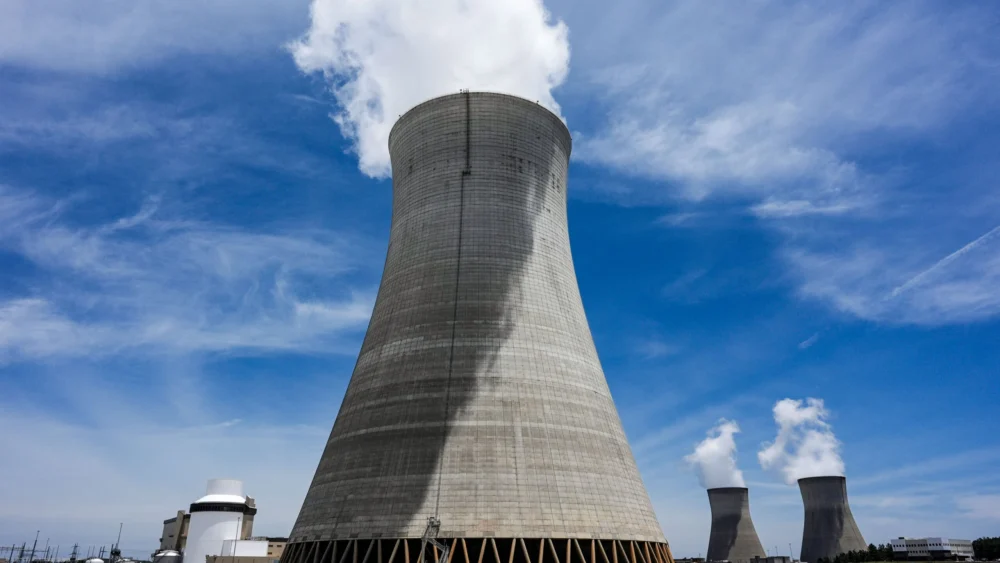
The recent completion of Plant Vogtle Units 3 and 4 in Georgia provides a sobering benchmark for Western nuclear construction. These units, which represent the latest additions to the U.S. fleet, incurred capital expenditures soaring to approximately $15,000 per kilowatt (kW) of installed capacity, adjusted for inflation. This exorbitant figure reflects a combination of "first-of-a-kind" (FOAK) engineering challenges, regulatory changes, and protracted construction delays. This high cost is particularly stark when compared to the efficient construction models utilized by global competitors. For instance, reports indicate that China is capable of deploying large-scale reactors at a capital cost ranging dramatically lower, often between $2,000/kW and $3,000/kW, reflecting standardized designs, state-backed financing, and vertical integration of the supply chain.
For advanced nuclear reactors, the U.S. Department of Energy projects that initial FOAK CAPEX will likely fall between $6,000/kW and $10,000/kW. While significantly lower than the Vogtle experience, this range still necessitates massive capital mobilization. The economic viability of advanced reactors is predicated on a rapid "Nth-of-a-kind" (NOAK) cost reduction—the expectation that subsequent units, benefiting from supply chain standardization, modular factory fabrication, and assembly line production techniques, can reduce costs by 40% or more.
The promise of SMRs lies in their modularity. By moving construction away from traditional, bespoke, stick-built field construction toward standardized factory assembly, developers aim to industrialize nuclear deployment, driving down labor costs, improving quality control, and shortening construction timelines.
However, even with aggressive cost reductions, advanced nuclear must compete with highly optimized and mature technologies. Modern, efficient natural-gas combined-cycle plants can be built for as little as $1,600/kW on the high end. Furthermore, solar and wind installations, when analyzed purely on the Levelized Cost of Energy (LCOE) metric, often present lower costs per megawatt-hour generated, largely due to minimal fuel costs and mature manufacturing ecosystems.
This leads to the crucial financial caveat: while nuclear CAPEX is high, its operational expenses (OPEX) are low, predictable, and stable over a projected lifespan that often exceeds 60 years. Nuclear power offers density, dispatchability, and reliability—attributes that intermittent renewable sources lack. In a future grid demanding resilience and continuous firm power, the higher upfront cost of nuclear is increasingly viewed as a premium paid for grid stability, carbon neutrality, and long-term energy security. The financial competitiveness of advanced nuclear will ultimately be determined not just by its construction cost, but by the market value assigned to its ability to provide uninterrupted, base-load power.
Industry Implications and the Future Trajectory
The interaction of these three challenges—fuel scarcity, regulatory uncertainty, and high CAPEX—defines the critical path for the advanced nuclear industry over the next decade. If the HALEU supply chain is not secured rapidly, deployment timelines will slip, making it impossible to achieve the economies of scale necessary for NOAK cost reduction. If regulatory modernization fails to provide a clear, efficient path to licensing, investors will remain wary of the inherent project risk, further inflating the cost of capital.
The implications extend beyond merely generating electricity. Advanced reactors, particularly those utilizing high-temperature coolants, are uniquely positioned to serve non-electric applications that are critical for deep decarbonization. These include providing high-grade process heat for industrial sectors like cement, steel, and chemical manufacturing, as well as producing large volumes of clean hydrogen. These alternative revenue streams may allow advanced reactors to justify a higher LCOE than they could achieve purely by competing against utility-scale solar farms.
Globally, the race for advanced nuclear deployment is accelerating. Nations like the U.S., Canada, and the UK are actively subsidizing R&D and demonstration projects, recognizing that failure to commercialize these technologies risks ceding global leadership to Russia and China, who are already actively marketing and exporting their reactor designs with state-backed financing and established fuel networks.
For Western nations to maintain relevance and achieve their net-zero targets, a coordinated industrial strategy is mandatory. This strategy must encompass aggressive, federally supported investment in HALEU enrichment facilities; regulatory reform that is swift yet rigorously safety-focused; and the utilization of government power purchase agreements (PPAs) or direct subsidies to absorb the initial FOAK premiums, thereby de-risking the first wave of commercial deployment and paving the way for factory-scale mass production.
Expert analysis suggests that while individual advanced reactor designs may achieve first criticality by the end of the 2020s, true widespread commercial deployment and the realization of major cost reductions will not occur until the latter half of the 2030s. The success of this transition depends entirely on the industry’s and governments’ capacity to effectively manage the complex interplay between fuel geopolitics, safety governance, and manufacturing industrialization. Nuclear power remains a powerful solution to the climate crisis, but its potential cannot be unlocked until these foundational hurdles are systematically overcome.