

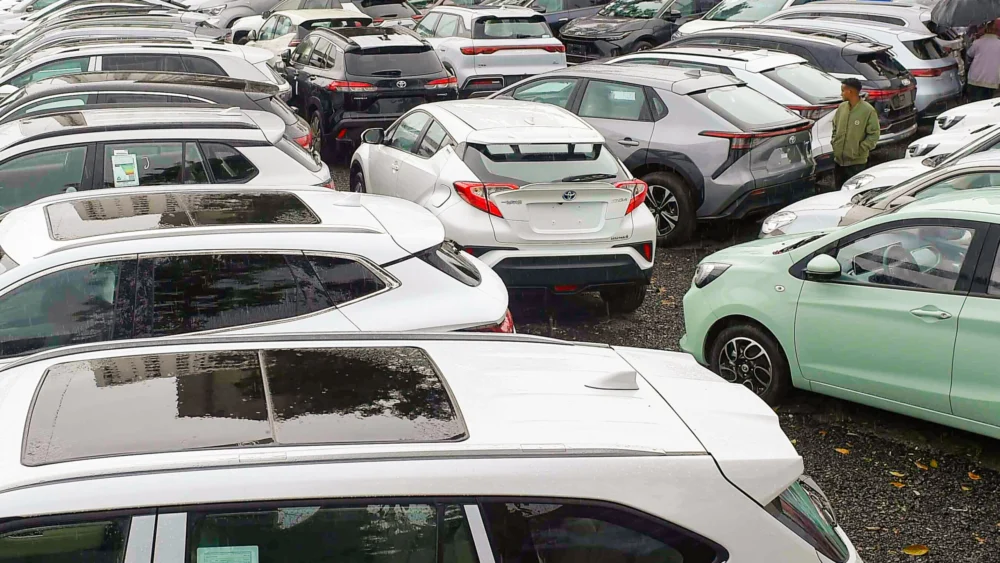
The narrative surrounding the electrification of transport in Africa has long been one of skepticism, often framed by the continent’s significant infrastructure deficits and the perceived high cost of entry for new technologies. However, a seismic shift in the underlying economics of energy and mobility is currently underway. While electric vehicles (EVs) represented a mere 1% of new car sales across the continent as of 2025, a rigorous new analysis suggests that the era of the internal combustion engine (ICE) is approaching its twilight. By 2040, the total cost of owning and operating an electric vehicle in Africa is projected to fall below that of traditional gasoline-powered cars, driven largely by the convergence of falling battery prices and the innovative application of off-grid solar charging solutions.
This transition is not merely a reflection of global trends but a specific response to the unique challenges and opportunities present within the African market. For decades, the primary obstacles to EV adoption have been well-documented: unreliable national power grids, a near-total absence of public charging infrastructure, and a lack of accessible financing for consumers. Historically, these factors led organizations like the International Energy Agency (IEA) to predict that fossil-fuel vehicles would remain the dominant force on African roads until at least 2050. Yet, the pace of technological deflation in the renewables and battery sectors is now outpacing those conservative estimates.
The Shift to Total Cost of Ownership
To understand why the economic argument for EVs is becoming so compelling, one must look beyond the initial "sticker price" and toward the Total Cost of Ownership (TCO). A recent study published in the journal Nature Energy underscores this distinction. The TCO model accounts for the entire lifecycle of the vehicle, including the upfront purchase price, the cost of financing, maintenance requirements, and the ongoing expense of fueling or charging.
When these variables are analyzed through a long-term lens, the advantages of electrification become clear. Unlike gasoline engines, which contain thousands of moving parts subject to wear and tear, electric drivetrains are remarkably simple. This leads to significantly lower maintenance costs over the vehicle’s lifespan. More importantly, as manufacturing scales and battery chemistry improves, the cost of the batteries themselves—the single most expensive component of an EV—continues to plummet.
The Nature Energy researchers, including Bessie Noll, a senior researcher at ETH Zürich, deliberately excluded policy-driven variables such as government subsidies, import duties, and specific taxes. By focusing strictly on the underlying economics of the technology and energy supply, the study revealed that EVs are poised to become the most rational economic choice for African consumers within the next fifteen years. This parity extends not just to passenger cars but also to larger automobiles and the ubiquitous minibuses that form the backbone of urban transit in many African cities.
Leapfrogging the Grid with Solar Off-Grid Charging
Perhaps the most innovative aspect of the projected transition in Africa is the role of decentralized energy. In many Western markets, EV adoption is tethered to the expansion of a centralized, robust national grid. In many African nations, where the grid is either non-existent in rural areas or plagued by "load-shedding" in urban centers, the traditional model of charging is a non-starter.
The solution lies in "leapfrogging"—a phenomenon previously seen in the African telecommunications sector, where many regions bypassed landline infrastructure entirely to adopt mobile technology. In the mobility sector, this leapfrogging will take the form of solar off-grid charging. The analysis suggests that the most viable path forward involves the purchase of a vehicle bundled with a standalone solar system. This setup includes photovoltaic panels, a dedicated battery storage unit, and an inverter to convert solar energy into a form suitable for vehicle charging.
"Mini-grids and standalone solar systems are already becoming a standard feature of the African energy landscape," Noll notes. By integrating these systems with EV ownership, consumers can insulate themselves from both the unreliability of the national grid and the price volatility of imported petroleum. The addition of stationary battery storage allows for "buffer charging," where energy is harvested during peak sunlight hours and stored for use at night, ensuring that the vehicle is ready for use regardless of the time of day or the state of the local utility provider.
The Vanguard of Change: Two-Wheelers
While the 2040 horizon applies to the broader automotive market, certain segments are expected to reach economic parity much sooner. Electric two-wheelers, such as scooters and small motorcycles, are the vanguard of this revolution. These vehicles require much smaller battery packs, which reduces the initial capital outlay and simplifies the charging requirements.
In many East African nations, the "boda boda" (motorcycle taxi) industry is a vital economic driver. For these commercial operators, the switch to electric is not an environmental luxury but a survival strategy. With lower operating costs per kilometer, electric motorcycles allow riders to take home a larger share of their earnings. Experts suggest that for this segment, the economic case will be settled by the end of this decade, leading to a rapid displacement of gasoline-powered bikes in major metropolitan hubs.
Conversely, the small passenger car segment remains one of the most difficult to flip. Christian Moretti, a researcher at ETH Zürich and the Paul Scherrer Institute, points out that the margins on small, affordable cars are razor-thin. For these vehicles to compete with the secondary market of used gasoline cars—which currently dominates African imports—further breakthroughs in battery density and manufacturing efficiency will be required.
The Financing Fortress
Despite the optimistic projections for TCO, a formidable barrier remains: the cost of capital. In many African countries, the "upfront" cost of a vehicle is only half the story. High interest rates, driven by political instability, currency fluctuations, and perceived technological risk, can make financing an EV prohibitively expensive.
In some instances, the total interest paid over the life of a car loan can exceed the original price of the vehicle itself. Because EVs currently have a higher purchase price than their gasoline equivalents, they require larger loans, which in turn attract more interest. Furthermore, many financial institutions in the region view EV technology as a high-risk asset due to concerns over battery longevity and the lack of a mature resale market.
Kelly Carlin, a manager at the Rocky Mountain Institute (RMI), emphasizes that banks often charge a premium for "new" technology. "The risk profile assigned by lenders can significantly delay the point of cost parity," Carlin explains. However, the situation is far from uniform across the continent. Nations with more stable economies and mature financial sectors, such as South Africa, Mauritius, and Botswana, are already nearing the conditions necessary for EV parity. In contrast, countries grappling with internal conflict or severe economic crises, such as Sudan or Ghana, face a much steeper climb. In these high-risk environments, international climate finance and de-risking mechanisms from multilateral development banks will be essential to lower the cost of borrowing.
Industrial Implications and Global Trends
The transition to electric mobility in Africa does not exist in a vacuum. It is part of a global realignment of the automotive industry. As China, Europe, and North America move toward bans on the sale of new ICE vehicles, the global supply chain for fossil-fuel components will begin to atrophy. This will eventually lead to a "reverse price shock," where gasoline vehicles become more expensive to maintain as parts become scarce and fuel subsidies are phased out in favor of green energy investments.
Nelson Nsitem, lead Africa energy transition analyst at BloombergNEF, argues that the shift will be driven by pragmatism. "People will start to pick up these technologies when they’re competitive," Nsitem says. He notes that while solar-based charging solves the energy supply problem, there is still a massive need for physical infrastructure—specifically standardized charging ports and a network of qualified technicians to service the new fleet.
The implications for African sovereignty are also significant. Most African nations are net importers of refined petroleum, which drains foreign exchange reserves and leaves their economies vulnerable to global oil price spikes. By shifting to a mobility model powered by domestic sunshine, these countries can improve their trade balances and enhance their energy security.
A Path Forward
The momentum toward an electric future in Africa is now largely viewed as "unmistakable" by industry analysts. While the challenges of infrastructure and financing are non-trivial, they are being met by a combination of technological innovation and market-driven necessity. The 2040 projection serves as a conservative benchmark; if battery prices continue their current trajectory and if off-grid solar technology continues to scale, the tipping point may arrive even sooner.
The transition will likely be non-linear. We can expect to see "pockets of electrification" in stable, sun-rich nations first, followed by a broader rollout as the technology matures and the financial risks are better understood. Ultimately, the move to EVs in Africa is less about following a global trend and more about harnessing a superior economic model—one that replaces expensive, imported, and polluting fuels with clean, locally generated, and increasingly affordable electricity. As the underlying economics continue to shift, the question is no longer if Africa will go electric, but how quickly the rest of the world can keep up with its unique brand of decentralized innovation.