

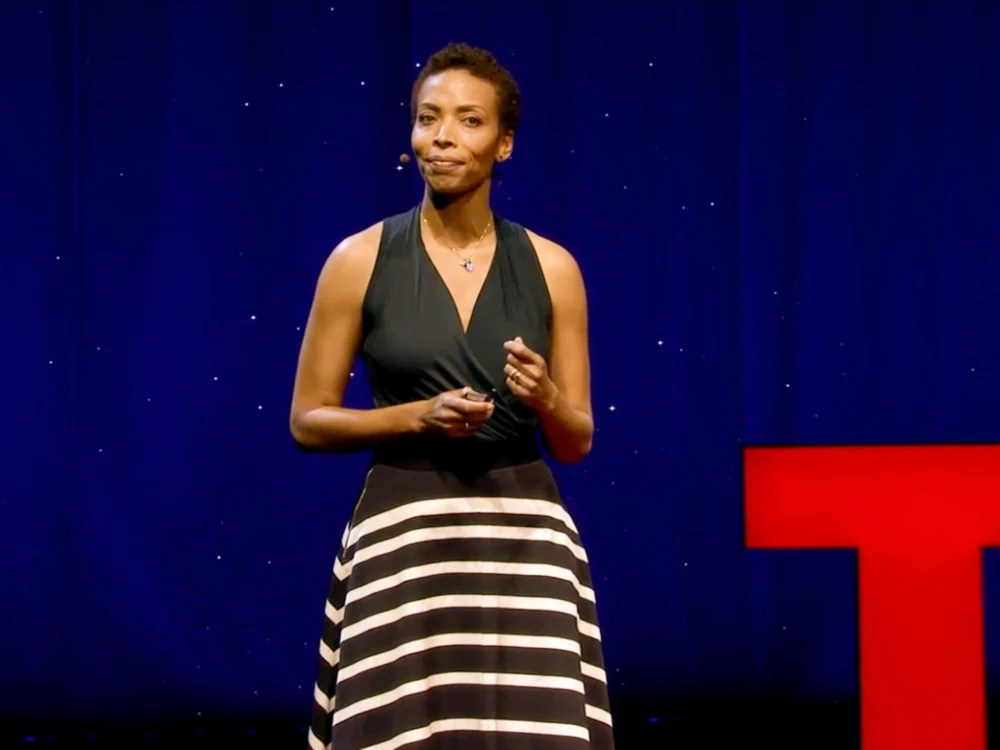
Dr. Aomawa Shields occupies a unique confluence in the academic landscape, simultaneously operating at the forefront of exoplanetary science and leveraging the powerful communicative tools of the classical stage. As an astronomer and astrobiologist, her professional mandate is to address one of humanity’s most profound questions: Are we alone? Yet, her approach to this celestial quest is profoundly informed by a decade spent as a classically trained actor, creating a professional trajectory that merges rigorous scientific inquiry with compelling public engagement.
Currently serving as an associate professor in the Department of Physics and Astronomy at the University of California, Irvine, Dr. Shields leads a sophisticated research program focused on characterizing the conditions of exoplanets—planets orbiting stars beyond our sun. Her laboratory does not rely primarily on physical telescopes, but rather on high-performance computational infrastructure, utilizing complex climate models to simulate the atmospheric and surface environments of these distant worlds. This modeling capability is critical, as observational data from even the most advanced space telescopes remains fundamentally limited in providing a complete picture of a planet’s climate dynamics.
The Interdisciplinary Core of Astrobiology
Astrobiology itself is an inherently interdisciplinary domain, studying the origin, evolution, distribution, and future of life in the universe. This field demands a synthesis of geology, chemistry, oceanography, biology, and astrophysics. As Dr. Shields notes, the beauty of astrobiology lies in its collaborative nature; no single researcher is expected to master all fifteen potential sub-disciplines. Instead, success hinges on the ability to build robust, cross-departmental teams capable of tackling grand scientific challenges.
Dr. Shields’ specific contribution centers on the potential habitability of terrestrial-sized exoplanets. The search is not merely for planets within the conventional "habitable zone"—the orbital distance where a planet could theoretically maintain liquid surface water—but for a detailed understanding of the actual climate stability and atmospheric composition that would permit life as we know it.
Her team employs General Circulation Models (GCMs), the same sophisticated computational tools used on Earth to predict weather and model long-term climate change. By inputting known variables gleaned from observational astronomy—such as the size, mass, orbital period, and the spectral type of the host star—Dr. Shields can explore the vast, unknown parameter space. Since telescopic data often provides only sparse constraints, GCMs allow researchers to test hypotheses about atmospheric composition (e.g., high CO2, methane, or nitrogen levels), surface features (e.g., ocean coverage, ice caps), and orbital mechanics (e.g., eccentricity, axial tilt). The outputs map potential surface temperatures, atmospheric pressure gradients, and water distribution, providing a probabilistic assessment of habitability across the planetary surface.
Technological Trends and the JWST Era
The field of exoplanet discovery has accelerated exponentially since the early 1990s, with over 6,000 confirmed planets identified today. While the sheer number of candidates is staggering, the number of Earth-sized planets residing within the habitable zone remains in the low hundreds. The launch of the James Webb Space Telescope (JWST) in 2021 marked a seismic shift in exoplanetary science, transitioning the field from simple detection to detailed atmospheric characterization.

The next great technological frontier, and the focus of Dr. Shields’ work, is the search for biosignatures—chemical indicators suggesting a biological presence. This might involve detecting specific molecular combinations in an exoplanet’s atmosphere (such as abundant oxygen alongside methane, a combination highly indicative of biological processes on Earth) or even subtle glints of light suggesting liquid water on the surface. These observations are incredibly challenging, requiring the analysis of light filtered through a planet’s atmosphere as it transits its star, often across light-years of distance.
This is where advanced modeling becomes paramount. Before committing billions of dollars and thousands of telescope hours to follow-up observations with JWST or future instruments, researchers must prioritize the most promising targets. Dr. Shields’ GCM simulations provide crucial context, allowing the scientific community to filter candidates and determine which planetary systems are most likely to maintain the stability necessary for life to emerge and thrive. The industry implication here is the fundamental reliance on computational astrophysics to optimize extremely limited, high-value observational resources.
The Circuitous Path to the Stars
Dr. Shields’s dedication to the cosmos was sparked not by the ivory tower, but by Hollywood. Early cinematic inspirations, specifically the 1980s film SpaceCamp and the glamorous, authoritative astrophysicist "Charlie" Blackwood in Top Gun, solidified a childhood dream of space exploration and rigorous science. This initial ambition led her to the Massachusetts Institute of Technology (MIT), recognized globally as a pinnacle of scientific education.
However, the academic path was not linear. At MIT, while maintaining her scientific grounding, she found intellectual refuge in the creative arts, participating in the Burchard Scholars Program and engaging deeply in music and theater. This dual interest presented a profound career dilemma upon graduation: pursue a Master of Fine Arts (MFA) in acting or continue with graduate studies in astronomy?
Initially choosing astronomy, her time at the University of Wisconsin–Madison was cut short by a moment of profound discouragement—a professor suggested she reconsider her career options. This experience, unfortunately common for women and minorities in historically exclusive STEM fields, prompted a decade-long pivot. Shields channeled her energy into the arts, earning an MFA in acting from UCLA.
While pursuing acting, she sustained herself through various jobs, one of which proved to be the accidental bridge back to her first love. Encouraged by an undergraduate mentor, she took a role as a help desk operator for the Caltech-operated Spitzer Space Telescope. This position, which required only a bachelor’s degree, re-exposed her to the burgeoning world of astrophysics talks. Critically, during her time away, the field of exoplanetary research had undergone a revolution.
The final push back into academia was catalyzed by a professional disappointment in the acting world, combined with a crucial piece of counsel. After losing a high-profile science television hosting job, she reached out to renowned astrophysicist and science communicator Neil deGrasse Tyson. His response was unambiguous: to achieve lasting credibility in the public science sphere, especially on television, a Ph.D. was essential. Coupled with a rejection from the NASA astronaut candidate program, these alignments convinced her to return to the classroom, ultimately earning her doctorate in astronomy and astrobiology from the University of Washington in 2014.

Science Communication and Pedagogical Innovation
Dr. Shields realized that her acting training was not a distraction from her scientific career but a potent accelerant for her role as an educator and communicator. The skills honed on stage—voice projection, narrative structure, emotional connection, and commanding presence—are precisely the attributes that translate complex astronomical concepts into accessible, engaging public discourse. Her highly viewed TED Talk exemplifies this, demonstrating how theatrical training can bridge the traditional chasm between specialized research and broad public understanding.
Furthermore, this realization inspired Dr. Shields’ influential educational outreach program, Rising Stargirls. Established during her National Science Foundation postdoctoral fellowship, the program integrates writing, visual art, and theater exercises into astronomy workshops specifically for middle-school girls. Research, including studies published by Dr. Shields and her colleagues, has consistently shown that incorporating creative arts into STEM curricula significantly boosts girls’ confidence in asking and answering scientific questions.
This pedagogical strategy is vital for addressing the persistent lack of diversity in the physical sciences. By creating a “safe space”—a concept she borrowed from her own experience in acting, where creativity and expression are inherently validated—Rising Stargirls encourages participants to view science not as a rigid, intimidating structure, but as a creative, imaginative endeavor. They learn that their personal identity and expressive capabilities are not ancillary to, but pivotal for, the practice of astronomy. This model has profound implications for future STEM recruitment strategies, advocating for holistic education that values the humanities as much as quantitative rigor.
The Survival Skill of Rest in High-Pressure Academia
The intensity of managing a demanding research laboratory, maintaining a high-profile public communications schedule, mentoring students, and navigating the complexities of academic life—particularly for women of color who often shoulder disproportionate service burdens—eventually took a toll on Dr. Shields’ health. This experience led her to adopt and advocate for the concept of rest leadership.
Recognizing the systemic culture of overwork, especially in hyper-competitive academic environments, Dr. Shields embraced the practice of yoga nidra, an ancient form of deeply restorative meditation often described as "yogic sleep." This deliberate commitment to restoration, where 20 minutes can feel metabolically equivalent to hours of sleep, became a non-negotiable component of her routine.
Her training as a certified facilitator in this practice, coupled with her upcoming book on resisting the temptation to overcommit, frames rest not as a luxury but as a necessary survival skill. She highlights a crucial, often unspoken, reality for women of color ascending the academic ladder: the exponential increase in requests for service, mentorship, and representation. Learning to decline invitations—to graciously say no—is not merely an exercise in time management; it is a critical boundary-setting mechanism required for sustainable mental and physical health in a system that constantly counts on the inability to refuse. This advocacy for rest challenges the deeply ingrained culture of academic hustle and promotes a more humane, sustainable professional environment.
Ultimately, Dr. Shields’ integrated life philosophy rests on the recognition that her seemingly disparate passions are unified by a common thread: storytelling. The actor’s job is to convey the arc and evolution of a character’s narrative. The astrobiologist’s job is to unveil the stories of celestial bodies—their births, evolutions, and deaths—and to discover the most compelling narrative of all: the presence of life beyond our terrestrial sphere. In merging the art of performance with the science of the cosmos, Dr. Shields is not only advancing the search for other habitable worlds but is powerfully communicating that universal story to the world.