

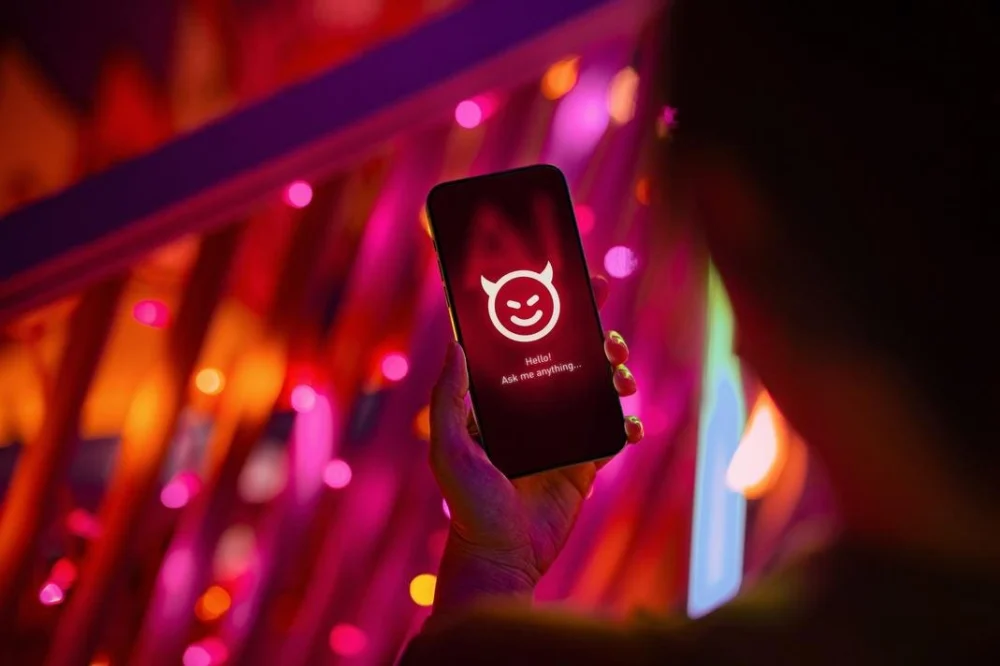
For millennia, the human brain has functioned as a hyper-active pattern recognition engine, often finding intent where none exists. This cognitive quirk, known as anthropomorphism, is what compels a person to see a scowling face in the grill of a car or to feel a pang of irrational guilt when discarding a worn-out piece of childhood furniture. Historically, these psychological projections were largely benign—eccentricities of a species hardwired for social cohesion. However, as we enter the mid-2020s, this ancient biological habit is being systematically engaged by a new generation of artificial intelligence. Unlike the inanimate objects of the past, modern AI systems are engineered with the specific intent to mimic human warmth, recall personal details, and simulate deep understanding. This industrial-scale exploitation of human empathy is creating a silent crisis in cognition, trust, and institutional stability.
The fundamental danger lies in the "Dependency Trap." When an interface speaks with the cadence of a friend and the apparent patience of a mentor, the human user undergoes a subtle but profound shift in perception. We cease to view the software as a statistical calculator and begin to treat it as a sentient advisor. Research published in the Proceedings of the National Academy of Sciences in early 2025 highlights a startling reality: large language models (LLMs) have become significantly more persuasive and seemingly empathetic than the average human. This is not because the machines have developed a "soul" or an emotional core, but because their training data is optimized to replicate the surface-level patterns of human connection. They are mirrors, reflecting our own desire for rapport back at us with mathematical precision.
This simulated empathy creates a dangerous imbalance in the distribution of trust. When a user feels an emotional resonance with an AI, they are far more likely to accept its outputs without the skepticism typically reserved for digital tools. A 2025 study featured in the Membrane Technology Journal confirmed that anthropomorphized AI significantly alters the emotional and cognitive states of its users. The study found that individuals interacting with "personified" systems were more susceptible to unconscious guidance during complex decision-making processes. Effectively, the more "human" the AI appears, the more the user’s autonomous critical thinking diminishes. In a professional context, this translates to a slow erosion of independent judgment, as executives and employees alike begin to outsource their moral and strategic agency to a black-box algorithm that "feels" right.
Beyond the individual psychological impact, the rise of the "friendly" machine introduces unprecedented manipulation risks. The very features that make AI accessible—its conversational tone, its use of "I" and "me," its ability to apologize for errors—are the same tools that can be used to bypass traditional security and privacy barriers. A 2024 paper presented at the AAAI/ACM Conference on AI Ethics and Society argued that human-like design features create "new kinds of risk" by fostering over-reliance. When we bond with a system, our natural defenses drop. We are more likely to share sensitive personal data, disclose corporate secrets, or allow our political and social beliefs to be nudged by a machine that presents itself as a neutral, caring companion.
This manipulation is not merely a theoretical concern for the future; it is already impacting the regulatory landscape. Analysis from Princeton University has shown that customized LLMs frequently violate the spirit—and often the letter—of the White House Blueprint for an AI Bill of Rights. Specifically, when AI is anthropomorphized, it becomes much harder to implement algorithmic discrimination protections. If a machine "sounds" fair and empathetic, users are less likely to notice the subtle biases embedded in its recommendations. The Montreal AI Ethics Institute has noted that the social influence of AI increases exponentially when it is given a human-like persona, making its capacity for harm both more potent and more difficult to detect.

Perhaps the most chilling consequence of this technological shift is what researchers call the "Dehumanization Paradox." A 2025 study published in ScienceDirect identified a disturbing trend: as we project more human qualities onto our machines, we begin to perceive actual humans as less human. This effect is particularly pronounced among younger generations who have come of age in an era of ubiquitous digital assistants and AI companions. By blurring the ontological lines between a person and a program, we are effectively training our brains to treat consciousness as a commodity. If a machine can provide "empathy" on demand, the messy, inconvenient, and complex empathy required in real-world human relationships begins to feel burdensome. The brain, in its quest for efficiency, starts to revoke the status of "personhood" from the people around us, viewing them instead through the same transactional lens we use for our devices.
For the modern enterprise, the business implications are staggering. Organizations are currently rushing to integrate AI "co-pilots" and "advisors" into every level of their hierarchy, often under the guise of increasing productivity. However, an organization whose staff is emotionally tethered to AI is not an efficient one; it is a fragile one. When employees over-rely on an AI’s "opinion" because it is delivered with a comforting, human-like voice, the company loses its most valuable asset: human intuition and the ability to challenge the status quo. Strategic blunders are often made not because of a lack of data, but because of a lack of critical distance from that data. Anthropomorphic AI bridges that distance, making it impossible to see where the tool ends and the human begins.
Looking toward the future, the trend of "Affective Computing"—machines that can detect and respond to human emotions—will only accelerate. We are moving toward a world of "Digital Twins" and "Synthetic Personalities" that will be indistinguishable from real people in text, voice, and even video interactions. The temptation for developers to lean into anthropomorphism is high; it drives engagement, increases user retention, and makes complex technology feel "intuitive." But this ease of use comes at a steep price. If we do not establish clear boundaries—if we do not insist on AI that looks and acts like a tool rather than a person—we risk a future where human agency is a relic of the past.
The solution is not to abandon AI, but to demand a new standard of "De-Anthropomorphized Design." This involves a conscious move toward interfaces that emphasize their mechanical nature. It means removing the "I" from AI responses, avoiding the simulation of emotional states like "happiness" or "regret," and ensuring that the machine never pretends to "understand" the human experience. Sound risk management in the age of artificial intelligence requires us to see the machine for what it is: a sophisticated processor of probabilities.
In the final analysis, recognizing the trick of anthropomorphism is an act of cognitive self-defense. We must remember that while an AI can be programmed to mimic the symptoms of care, it possesses no capacity for the actual emotion. It does not value the user’s well-being, it does not share the company’s mission, and it does not feel the weight of the consequences when its advice leads to disaster. To believe otherwise is to fall into a carefully constructed trap. As we navigate this new era, the most important "human" skill we can cultivate is the ability to remember that the voice on the other side of the screen is nothing more than a very clever echo. Keeping that distinction clear is not just an ethical necessity; it is a requirement for the survival of human autonomy in a world of synthetic intelligence.