

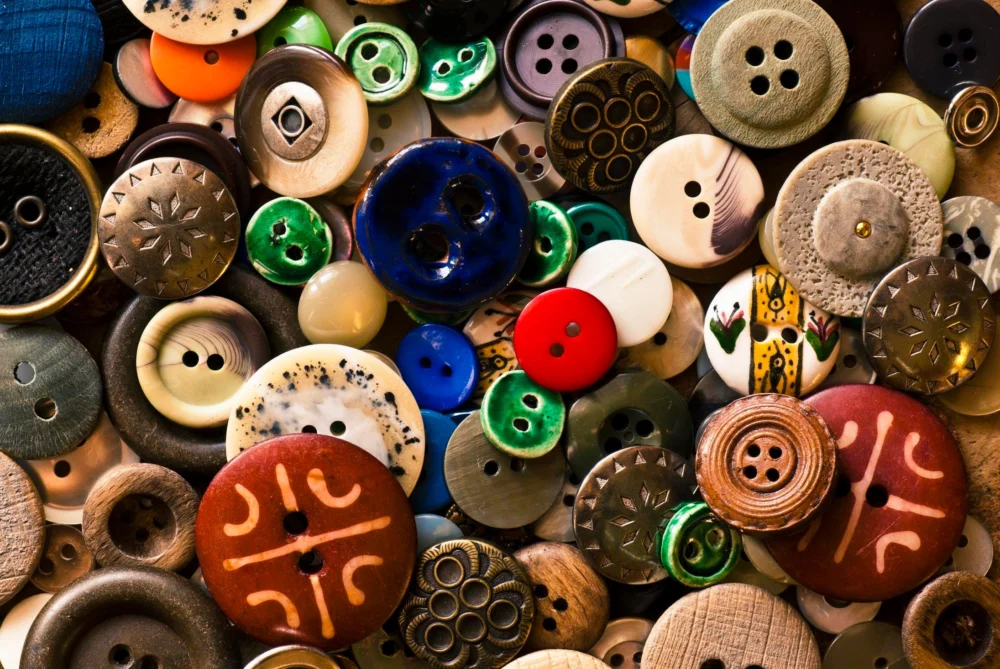
In the hyper-accelerated landscape of 2026, where every action is often curated for maximum engagement and every "life hack" is dissected into a ten-part tutorial, a peculiar and profoundly quiet movement has taken root. It began not with a high-production video or a celebrity endorsement, but with a single, cryptic comment on a TikTok video. The "365 Buttons" meme has rapidly evolved from a niche interaction into a widespread cultural manifesto, marking a significant turning point in how social media users perceive the intersection of private meaning and public performance. At its core, the trend is less about the physical act of collecting sewing notions and more about a radical reclamation of personal autonomy in an era of forced transparency.
The genesis of this movement can be traced back to a late-December interaction on the profile of a TikTok user named Tamara, who posts under the handle @flylikeadove. On a video discussing "rebranding" for the new year—a common trope in the self-improvement niche of social media—Tamara left a comment that initially baffled onlookers: “I’m getting 365 buttons, one for each day, because I want to do more stuff and I’m scared of time, so I want to be more conscious of it.” The statement was a raw, unfiltered admission of "chronophobia"—the fear of time’s passage—and a desire to anchor the ephemeral nature of the digital experience to something tactile.
However, the true viral moment occurred not when Tamara proposed the idea, but when she refused to over-explain it. As the TikTok community did what it does best—demanding clarity, tutorials, and "aesthetic" justifications—Tamara faced a barrage of questions. Users asked if the buttons were to be worn, if they were color-coded, or if there was a specific brand to purchase. In a move that subverted the very DNA of "influencer culture," Tamara set a firm boundary. Her subsequent response became the rallying cry for a new generation of digital citizens: “Hey, it only has to make sense to me for me to do it and I don’t feel like explaining it to anyone else.”
This refusal to perform for the audience’s comprehension has struck a chord that resonates far beyond the hobbyist community. It represents a pivot away from the "explainability" requirement of the modern internet. For years, social media has functioned on the premise that for an action to have value, it must be understood, liked, and replicated by the masses. Tamara’s "365 Buttons" philosophy suggests the opposite: that the most profound meanings are those held in private, requiring no external validation or pedagogical breakdown.
From a psychological perspective, the "365 Buttons" trend highlights a growing exhaustion with "Optimization Culture." In the early 2020s, productivity trends like "Atomic Habits" or "The 5 AM Club" dominated the zeitgeist, focusing on measurable outputs and standardized success. By contrast, the button trend is intentionally nonsensical to the outsider. It is a "haptic token"—a physical object used to ground the user in the present moment. By filling a jar with buttons or stringing them across a room, users are creating a visual and tactile representation of time that belongs solely to them. It is mindfulness stripped of its commercialized "wellness" packaging.
The industry implications of this shift are already beginning to manifest. We are witnessing the rise of "Internalized Viralism," where a trend’s popularity is driven by the feeling it evokes rather than a specific action it demands. This poses a unique challenge for digital marketers and brand strategists. Traditionally, brands jump on memes by providing "how-to" guides or selling the necessary equipment. However, when the "365 Buttons" meme reached the ears of corporate entities, the response was tellingly different. The Philadelphia Eagles, for instance, participated by showcasing a box of team-branded buttons with a caption that essentially asked, "What now?" The answer, according to the meme’s logic, is nothing. There is no "now what." The value is in the possession and the personal intent, not in a secondary consumerist action.

This trend also signals a significant evolution in the "Tenderism" movement that gained traction in 2025. While Tenderism focused on emotional vulnerability and soft aesthetics, the "365 Buttons" era adds a layer of "Digital Stoicism." It is the practice of being present in the digital space without being subservient to its demands for content. It is the realization that one can participate in a global conversation while maintaining a private sanctuary of meaning.
The linguistic impact of the meme cannot be overstated. "365 Buttons" has entered the digital lexicon as a shorthand for setting boundaries. It is now common to see users respond to intrusive questions or unsolicited advice with a simple reference to "their buttons." This shared language allows for a polite but firm dismissal of the internet’s voyeuristic tendencies. Even the music industry has felt the ripple effect, with folk and bluegrass artists like Karma Creak transposing the sentiment into lyrics that celebrate the "unexplained life." This cross-platform migration—from a comment section to a song—demonstrates the meme’s narrative power.
Looking toward the future, the "365 Buttons" phenomenon likely heralds a broader "Analog Renaissance" within the tech sphere. As AI-generated content and virtual realities become increasingly indistinguishable from the physical world, the value of "dumb" objects—buttons, stones, ribbons, paper—increases. These objects cannot be hacked, they do not require an algorithm to function, and their "metadata" exists only in the mind of the owner. We are likely to see a surge in "Low-Tech Rituals" where users leverage technology to share the fact that they are doing something offline, without sharing the details of the activity itself.
Furthermore, this movement reflects a sophisticated understanding of "Algorithmic Resistance." By creating content that is intentionally cryptic or resistant to categorization, users are essentially throwing sand in the gears of the recommendation engines. An algorithm can categorize a "fitness journey" or a "cooking tutorial," but it struggles to monetize a "personal button ritual" that refuses to be a tutorial. This creates a "dead zone" for data harvesting, providing users with a rare sense of privacy in a public forum.
The "365 Buttons" motto—it only needs to make sense to me—is perhaps the most important digital literacy lesson of the decade. It encourages a healthy detachment from the "quantified self." In a world where smartwatches track our sleep and apps track our focus, the button represents a metric that cannot be graphed. It is a measurement of a day’s worth, defined by the individual, and stored in a glass jar rather than a cloud server.
As we move deeper into 2026, the legacy of Tamara and her buttons will likely be found in the quiet corners of the internet. It will be seen in the users who start projects they never finish, the creators who post without captions, and the individuals who find joy in rituals that would look "boring" on a curated feed. The viral success of this meme proves that there is a deep, collective hunger for mystery and personal sovereignty.
Ultimately, the "365 Buttons" trend reminds us that time is the only currency that truly matters, and how we choose to "spend" it—or mark its passage—does not require a public audit. Whether one chooses to collect buttons, zippers, or simply moments of silence, the power lies in the choice itself. In the end, we are all seeking a way to be more conscious of the days as they pass, to "do more stuff," and to navigate our fears of the future with a small, tangible piece of the present in our hands. The buttons are not just a meme; they are a shield against the relentless demand for explanation, a small but mighty "no" to the world’s "why."