

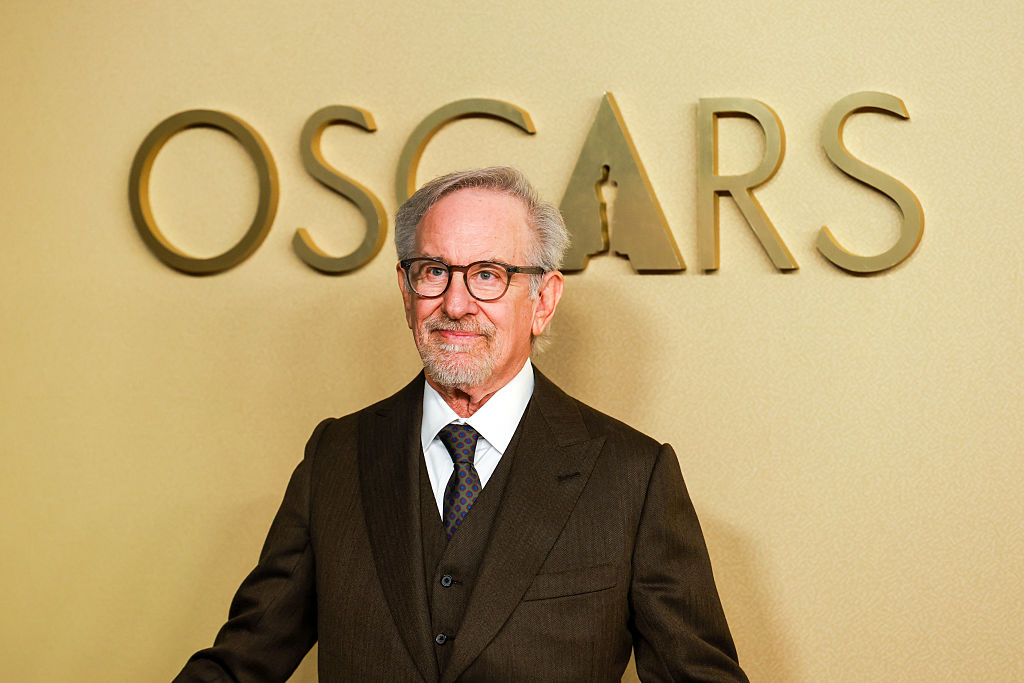
The intersection of technology and art has always been a volatile frontier, but few voices carry as much weight in that conversation as Steven Spielberg. At the recent SXSW conference in Austin, the legendary director, producer, and screenwriter took a definitive stand that resonated far beyond the walls of the convention center. When asked about the burgeoning role of artificial intelligence in the cinematic process, Spielberg’s response was both succinct and profound: "I’ve never used AI on any of my films yet." The statement was met with a visceral reaction—an explosion of cheers and applause from an audience clearly hungry for a defense of the human element in storytelling.
Spielberg’s position is particularly noteworthy because he is far from a Luddite. Throughout a career spanning over half a century, he has consistently sat at the vanguard of technological innovation. From the mechanical shark that terrified a generation in Jaws to the groundbreaking digital creatures of Jurassic Park, Spielberg has never shied away from using the latest tools to expand the boundaries of the possible. His filmography is, in many ways, a love letter to the future and its potential complications. In Minority Report, he explored the ethics of predictive data; in Ready Player One, he visualized the total immersion of the metaverse; and in the aptly titled A.I. Artificial Intelligence, he tackled the philosophical soul of synthetic life.
Yet, for Spielberg, there is a clear and inviolable line between technology as a tool for visual enhancement and technology as a surrogate for the creative spirit. During his appearance at SXSW 2026, he was careful to avoid a luddite rant, acknowledging that AI has utility across "many disciplines." However, when the conversation shifted to the sanctity of the writers’ room and the foundational stages of production, his tone sharpened. He noted that in his own productions, whether in feature films or television, there is "not an empty chair with a laptop in front of it." This metaphor serves as a powerful rejection of the idea that creativity can—or should—be outsourced to a machine.
This stance places Spielberg at the center of a brewing ideological war within Hollywood. On one side stands the traditionalist guard, which views storytelling as an inherently human endeavor fueled by lived experience, empathy, and intuition. On the other side is a massive corporate and venture-capital-backed push to integrate generative AI into every facet of the "content" pipeline. The tension is no longer theoretical; it is a matter of multi-million-dollar investments and shifting industry standards.
While Spielberg maintains his human-centric approach, the broader industry is moving in the opposite direction at breakneck speed. The landscape of 2026 is one where AI startups are aggressively courting independent filmmakers, promising a future where high-concept cinema can be produced "faster, cheaper, and more efficiently." For the resource-constrained indie director, the allure of AI-generated storyboards, automated color grading, or even synthetic background actors is immense. However, critics argue that this efficiency comes at the cost of the "happy accidents" and collaborative friction that often define great art.
The giants of the streaming era are also placing their bets. Amazon has recently begun public testing of AI-driven production tools, aiming to streamline the logistics of television and film creation. Even more telling is Netflix’s recent acquisition of a specialized AI filmmaking firm—a company founded by Ben Affleck—for a staggering $600 million. These are not merely experimental side projects; they represent a fundamental shift in how the world’s largest entertainment platforms view the future of production. When a company like Netflix invests over half a billion dollars into AI infrastructure, it signals an intent to normalize the use of algorithms in the creative process.
Spielberg’s refusal to engage with these tools "yet" highlights a deeper philosophical divide regarding what constitutes a "creative individual." For the director of Schindler’s List and The Fabelmans, the "soul" of a film is derived from the human perspective—the ability of a writer or director to draw upon their own history, pain, and joy to connect with an audience. An AI, no matter how sophisticated its Large Language Model (LLM) or generative capabilities, does not "feel" the themes it processes. It predicts the next most likely word or pixel based on a vast database of existing human work. To Spielberg, replacing a human in that chair with a laptop is not just a change in workflow; it is an abandonment of the very essence of the craft.
The industry implications of this debate are far-reaching. As AI becomes more integrated into the Hollywood ecosystem, we are likely to see a tiered system of production. At the top, "prestige" cinema—helmed by figures like Spielberg, Christopher Nolan, or Martin Scorsese—will likely continue to market its "human-made" status as a mark of quality and authenticity. In this scenario, the absence of AI becomes a luxury brand, a guarantee of artistic integrity. Conversely, the mid-budget and "content" tiers of the industry may become increasingly automated, leading to a saturation of the market with films that are technically proficient but perhaps narratively derivative.
Furthermore, the labor implications are profound. The cheers Spielberg received at SXSW reflect the anxieties of thousands of industry professionals—writers, concept artists, editors, and VFX supervisors—who fear their roles are being devalued. If a studio can use an algorithm to generate a first draft of a script or to design a character, the leverage of the human worker is significantly diminished. Spielberg’s insistence that he is "not for AI if it replaces a creative individual" is a rallying cry for labor rights in an age of automation. It suggests that the value of a creative worker is not just in the "output" they produce, but in the unique perspective they bring to the table.
Looking toward the future, the "yet" in Spielberg’s statement remains the most intriguing word. It suggests a recognition that the technological tide is rising and that even he cannot predict how these tools might evolve. Will there ever be an AI tool that Spielberg finds acceptable? Perhaps one that handles the drudgery of administrative logistics or the most repetitive aspects of digital cleanup without touching the narrative core? Or will the technology eventually become so sophisticated that the line between "tool" and "creator" becomes indistinguishably blurred?
For now, the legendary director’s stance serves as a necessary friction against the total "algorithmification" of cinema. By maintaining a writers’ room where every chair is occupied by a person, he preserves the collaborative spirit that has defined the medium since its inception. The filmmaking process is, at its best, a chaotic, emotional, and deeply social experience. It involves arguments over a character’s motivation, the shared exhaustion of a night shoot, and the collective spark of inspiration that happens when two people build on each other’s ideas.
Spielberg’s presence at SXSW 2026 serves as a reminder that while technology can simulate the appearance of art, it cannot yet simulate the intent of the artist. The applause he received in Austin wasn’t just for his filmography; it was for his commitment to the idea that stories should be told by people, for people. As the industry continues to grapple with the $600 million acquisitions and the allure of "faster and cheaper," the "Spielberg Model" stands as a testament to the enduring power of the human voice. In an era where machines are being taught to dream, the world’s most famous dreamer is reminding us that the most important part of the dream is the dreamer themselves.
As we move deeper into this decade, the tension between the efficiency of the machine and the messiness of the human will likely define the next era of entertainment. Whether other filmmakers follow Spielberg’s lead or succumb to the pressures of corporate efficiency remains to be seen. However, one thing is certain: the battle for the soul of the screen is only just beginning, and the industry’s elder statesman has made it clear which side of the line he occupies. By refusing to let a laptop take a seat at his table, Spielberg isn’t just protecting his films—he’s protecting the very definition of what it means to be a creator.