

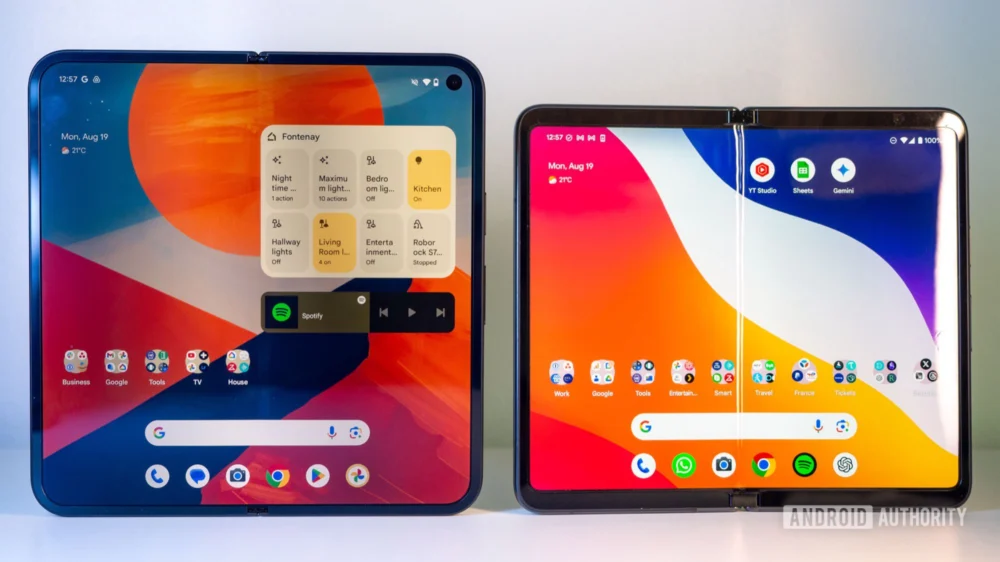
The foldable smartphone market, a segment defined by relentless hardware innovation, has long been constrained by a peculiar software paradox. For years, the dominant form factor—the "tall fold," which opens into a near-square internal display reminiscent of a paperback book—became the industry standard, largely sidelining the "wide fold" aesthetic pioneered by devices like the Microsoft Surface Duo and the first Google Pixel Fold. This shift was not purely driven by consumer preference or hinge technology; it was fundamentally orchestrated by the evolution, or perhaps the misapplication, of Android’s large-screen compatibility features, which inadvertently penalized the wider aspect ratio. Now, however, a confluence of operating system maturity and emerging hardware trends suggests that the landscape-oriented foldable is not merely returning, but is poised to become a viable, perhaps even preferred, alternative.
The Initial Bet on Landscape and the Software Backlash
When foldable devices first entered the mainstream, there was a genuine exploration of form factors. The wide fold, exemplified by the original Pixel Fold and OPPO’s Find N series, offered a display that was immediately familiar to users accustomed to landscape tablet use or optimized dual-screen productivity setups. This configuration provided excellent real estate for split-screen multitasking, mimicking a miniature laptop when opened flat.
The crux of the problem arose not from the hardware itself, but from Google’s efforts to standardize the experience across the burgeoning ecosystem of large-screen devices, including tablets and foldables. Introduced with Android 12L, compatibility modes were intended as a necessary bridge. Prior to 12L, Android often resorted to aggressively stretching unoptimized applications across any available screen space, resulting in unusable layouts, misplaced UI elements, and broken aesthetic integrity. Android 12L introduced a more cautious approach: if an application hadn’t declared support for large screens or specific aspect ratios, the system would "letterbox" it—displaying the app within its intended portrait bounds, flanked by distracting black bars.
Google’s intention was clear: use this visual penalty as a strong motivator for developers. The theory held that seeing their apps rendered poorly (either stretched or letterboxed) on premium devices would compel them to invest the engineering resources necessary to properly adapt their code using modern Jetpack Compose or XML layouts designed for resizability.
The reality, as documented by early adopters of the Pixel Fold, was far less motivating for developers. Major applications—from retail and travel platforms like Booking.com and Deliveroo to social media giants like Instagram—resisted updating. For the user holding a wide foldable, this created a frustrating dichotomy. In portrait orientation (closed), the experience was standard. When unfolded into the wide landscape canvas, many essential applications would default to the letterboxed portrait view, occupying perhaps only half the available screen area.
Crucially, the user could often "trick" the system. Rotating the device in a way that the software interpreted the wide screen as a "portrait" environment—or simply opening the device to a slightly less conventional angle—could sometimes force an app to stretch and fill the entire display width, albeit with potential UI compromises. This "orientation joker" led to an inconsistent and often irritating user experience. Users desired a consistent, immersive landscape canvas, but were constantly forced to manage software limitations through physical device manipulation. This friction ultimately contributed to the lukewarm reception of the initial wide-form Android foldables.
The Pivot: Square-ification as a Temporary Truce
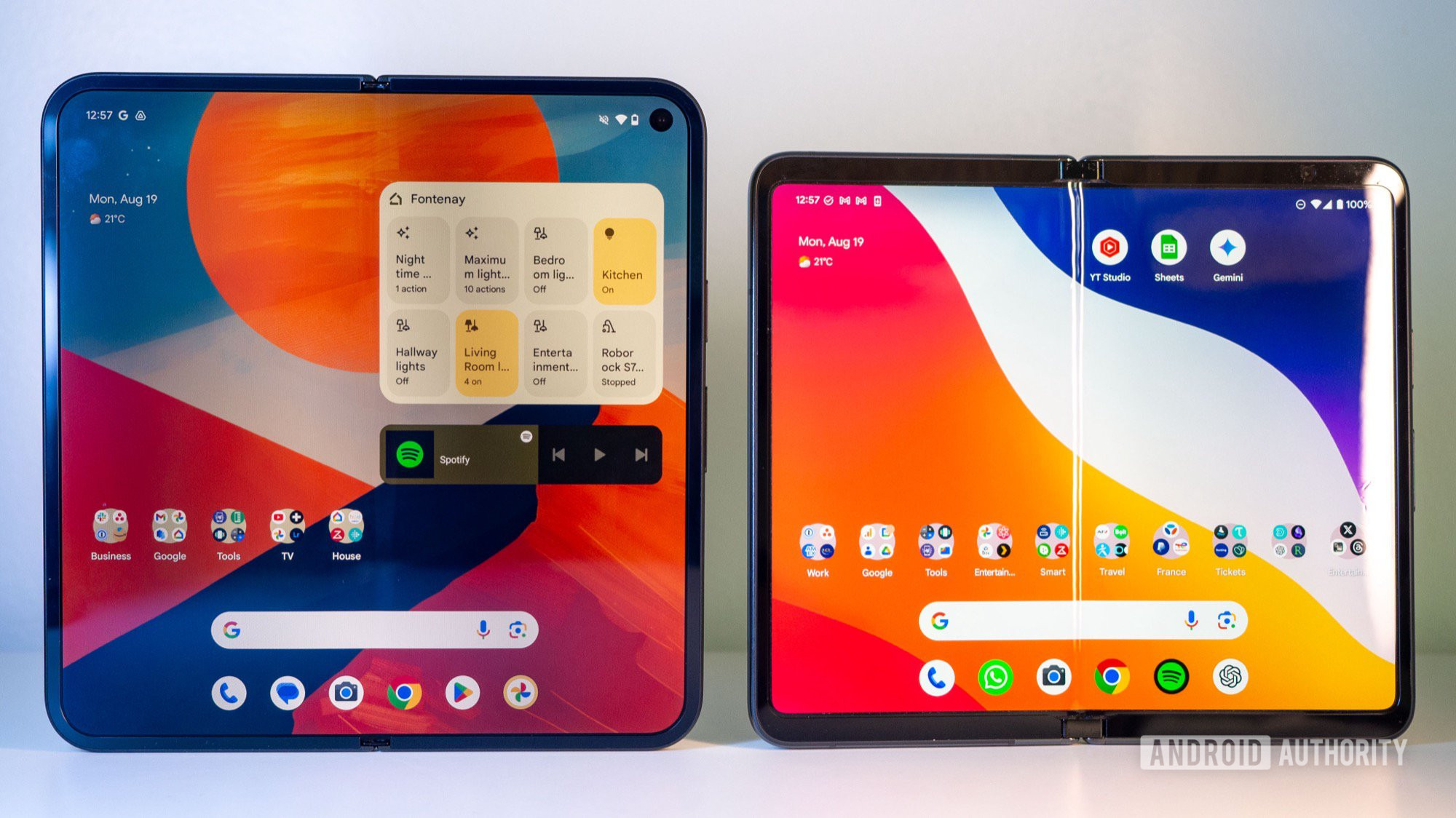
Faced with the widespread failure of developers to adopt the intended large-screen standards universally, hardware manufacturers, including Google itself with the subsequent Pixel 9 Pro Fold, opted for a strategic retreat. They shifted the internal display aspect ratio toward a squarer profile, closer to a 6:5 or 7:6 ratio rather than the distinctly wide 16:10 or 4:3 ratios seen previously.
This pivot was an implicit admission that the software environment was not yet mature enough to support the wide fold consistently. A squarer display confuses the operating system’s detection mechanism. Since the screen is closer to being equally wide and tall when open, many portrait-first applications interpret this orientation as "portrait mode" and immediately expand to fill the available width, effectively mitigating the letterboxing issue without requiring developer intervention. This maneuver allowed manufacturers to market a "fully utilized" screen, even if the stretching inherent in filling that space was sometimes imperfect. The wider form factor was effectively suppressed by moving the hardware geometry toward the safer, portrait-friendly standard.
Android’s Systematic Resurrection of Landscape Utility
The narrative surrounding wide foldables hitting a dead end was premature. While hardware manufacturers paused their experimentation, Google continued its quiet, methodical work on the underlying operating system to enforce the adaptability it initially hoped to incentivize. This slow burn of OS development is now reaching a critical mass, making 2026 the ideal inflection point for the return of the landscape foldable.
The first significant corrective measure arrived with Android 14 QPR1. This update introduced user-facing controls to override the developer’s default aspect ratio settings for unoptimized applications. Within the App Info settings, users gained access to toggles like "Full screen," "App default," and "Half screen." More importantly for immediate usability, a floating system icon appeared on letterboxed apps, allowing a single tap to force the application into a full-screen mode, stretching it across the entire landscape canvas.
For users of devices like the Pixel Fold, this was transformative. If Booking.com insisted on letterboxing, a quick tap forced it into a usable, wide format. While this sometimes involved slight stretching, the analysis shows that for many modern apps built with inherently responsive frameworks (even if they lack explicit large-screen manifest declarations), the stretching is minimal, and the content reflows gracefully. The user preference—the ability to hold the device open like a book and utilize the whole screen—was finally restored, bypassing the developer inertia.
The commitment to this landscape utility is now being cemented in subsequent OS releases, moving from an optional user fix to a mandatory system requirement. Android 16 subtly tightened the screws. It began to ignore the app’s declared preference on large screens (tablets and foldables), effectively prioritizing the system’s ability to utilize available real estate. Crucially, developers retained a temporary "opt-out" mechanism.
The final nail in the coffin for app-side resistance is Android 17 (targeting API Level 37). This version removes the developer opt-out entirely. Applications targeting this API level are mandated to be fully resizable and must robustly support any aspect ratio the system dictates. This is not a suggestion; it is a hard requirement for new application builds or updates targeting the latest SDK.
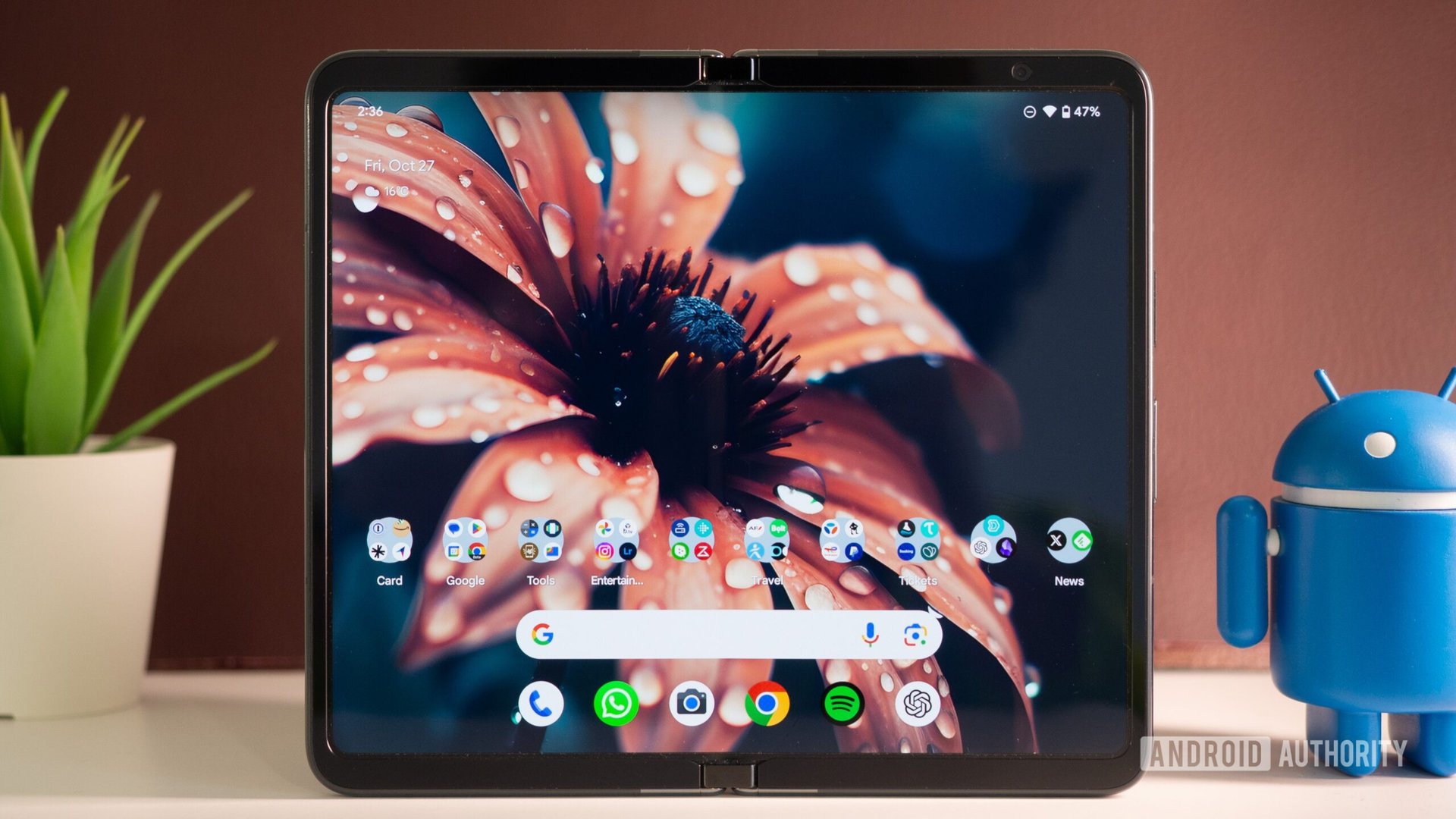
This evolution transforms the equation for wide foldables. The primary software impediment—the reliance on developers to manually support a landscape view—has been systematically dismantled by platform mandates. A device launched in 2026 featuring a wide aspect ratio will no longer be haunted by apps that refuse to fill the screen. The user experience is now resilient; a single, persistent setting (or the default behavior for new apps) guarantees full screen utilization, making the landscape form factor logically superior for productivity-focused multitasking where two full-width windows are desirable side-by-side.
Industry Implications: A Reassessment of Foldable Design
This software maturity has profound implications for hardware strategy across the mobile industry. The temporary truce favoring the square fold is likely to end.
- Samsung’s Strategic Maneuver: Rumors suggesting Samsung is developing a "wide" Galaxy Z Fold variant gain significant weight in this context. Samsung, the market leader, has historically prioritized the vertical form factor that closely mimics a traditional phone when closed. Reintroducing a wider screen would allow them to directly challenge the productivity niche carved out by the Surface Duo lineage, but now with the backing of a fully mature Android landscape environment. They can offer a genuine productivity tablet experience that doesn’t compromise app usability.
- The Productivity Value Proposition: Wide foldables inherently offer a better canvas for traditional productivity tasks—document editing, complex spreadsheet interaction, and professional media consumption—because the screen proportions align more closely with established desktop and laptop workflows. The narrower square fold, while excellent for reading vertically stacked content, often feels too cramped when attempting true side-by-side multitasking.
- The Apple Effect: The persistent speculation surrounding a potential Apple foldable device, often rumored to adopt a wider, book-style orientation, acts as an additional catalyst. When a major platform competitor signals a preference for a specific hardware direction, it often validates that path for the rest of the industry, particularly for manufacturers seeking to differentiate themselves in a competitive space. If Apple enters the market with a wide fold, it immediately legitimizes that design choice for the Android ecosystem to aggressively pursue.
Future Impact and Expert Analysis
The transition from the narrow, square foldable to the wide, landscape foldable marks a crucial inflection point in the foldable narrative—a shift from novelty hardware to mature computing platforms.
From an expert standpoint, the issue was never truly the hardware’s fault; it was a platform fragmentation problem exacerbated by developer complacency. Google’s initial strategy of "punishment" (letterboxing) failed because the immediate user pain was directed at the device manufacturer (Google, Samsung, OPPO), not the indifferent app developer. The later strategy of "empowerment" (user override in Android 14, followed by mandatory resizing in Android 17) succeeds because it transfers the final decision back to the end-user, instantly resolving the UX debt associated with legacy apps.
The future trend will likely see a bifurcation in the foldable market, mirroring traditional tablet segmentation:
- The "Tall Fold" (e.g., current Galaxy Fold/Pixel Fold style): Optimized for pocketability when closed and media consumption when opened. It functions as an enlarged smartphone first.
- The "Wide Fold" (e.g., Surface Duo/Pixel Fold 1 style): Optimized for genuine multitasking and productivity workflows when opened. It functions as a compact tablet first.
Manufacturers adopting the wide form factor will need to ensure their external cover screens are also reasonably usable, addressing the historical complaint that wide inner screens necessitated clumsy cover screens. However, with the internal display now guaranteed to run all applications flawlessly in landscape mode, the engineering focus can shift back to hinge refinement, durability, and overall device thickness, rather than compensating for software shortcomings.
In conclusion, Android did not intentionally "kill" the wide foldable; rather, its initial large-screen software strategy inadvertently made the form factor temporarily untenable by exposing the fragility of non-responsive third-party applications. By implementing robust, mandatory system-level resizing protocols culminating in Android 17, the operating system has now engineered the necessary environment for the wide, landscape foldable to flourish, potentially ushering in an era where productivity dictates hardware design once more.