

The landscape of interactive entertainment underwent a seismic shift in 2025, a year defined not just by the iterative refinement of existing genres, but by a fundamental reimagining of how players connect in digital spaces. While the industry has long chased the "metaverse" ideal, 2025 saw a pivot back to the core of social gaming: meaningful, mechanically driven cooperation and competition. This evolution was catalyzed by the arrival of the Nintendo Switch 2, a piece of hardware that bridged the gap between portable convenience and high-fidelity performance, but the ripple effects were felt across PC and high-end consoles alike. As we analyze the twelve titles that defined this banner year, we see a clear trend toward narrative depth in co-op, the maturation of the extraction shooter, and a revitalized interest in local "couch" experiences that utilize modern netcode to feel seamless across the globe.
Central to this narrative is Hazelight Studios, a developer that has effectively monopolized the "mandatory co-op" niche. Their 2025 magnum opus, Split Fiction, represents a pinnacle of narrative architecture. Published by EA, the title doesn’t merely ask two people to play together; it requires them to inhabit a synchronized psychological space. Following the groundwork laid by It Takes Two, Split Fiction utilizes a dynamic screen-splitting mechanic that constantly subverts player expectations. By telling two distinct yet interwoven stories simultaneously, Hazelight challenges the traditional linear progression of adventure games. The technical execution—maintaining a "zen-like flow" while shifting camera angles and platforming tropes—is a masterclass in game design. Furthermore, the game’s final hour has been cited by critics as a transformative moment in gaming history, using satisfying puzzles as a metaphor for emotional reconciliation, thereby strengthening the real-world bond between the participants.
While Split Fiction focused on emotional resonance, the indie sector leaned into the emergent comedy of physics-based chaos. Peak, a collaboration between Aggro Crab and Landfall, became a viral sensation by embracing the inherent unpredictability of multiplayer survival. Set on a treacherous desert island, Peak tasks players with a singular goal: reach the summit. However, the path is fraught with a sophisticated physics engine that turns every movement into a potential disaster. Whether it is a player accidentally launching a teammate out of a cannon or the desperate struggle to manage stamina while hanging from a tree, Peak thrives on "watercooler moments." From an industry perspective, Peak demonstrates that high-fidelity graphics are secondary to dependable, "low-chug" performance and location-specific audio that enhances immersion. Its success on PC suggests a looming, highly anticipated migration to consoles, where its brand of slapstick survival is expected to find a permanent home.
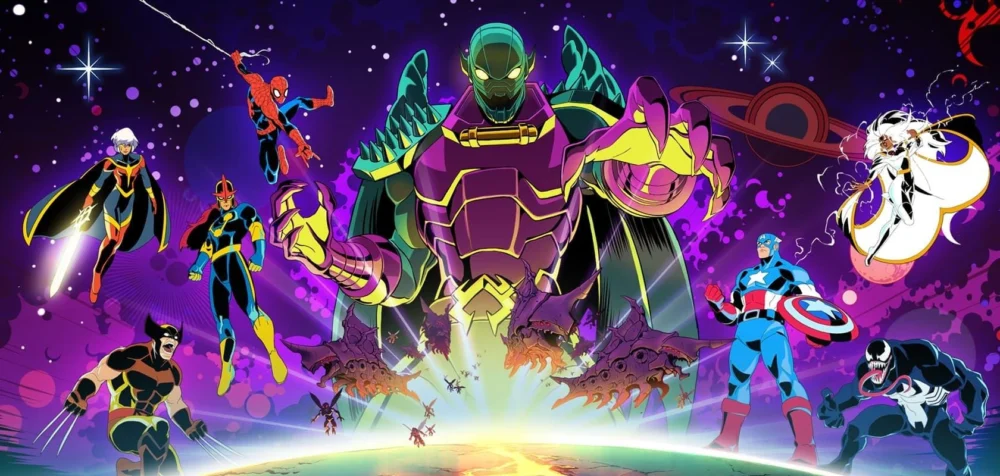
The year also marked a significant "16-bit renaissance," led by the publisher Dotemu and the developers at Tribute Games. Marvel Cosmic Invasion is perhaps the most polished example of this trend. By tapping into the aesthetic of 90s-era X-Men and Marvel comics, the game delivers a retro beat ‘em up experience that feels contemporary rather than dated. The pixel art is arguably the most detailed the genre has ever seen, with characters like Venom exhibiting a level of animation fluidity that justifies the modern hardware. Mechanically, the game encourages strategic pairing; airborne heroes like Storm must coordinate with groundwork specialists like Black Panther to manage complex boss patterns. It is a testament to the idea that "simple" mechanics, when executed with impeccable soundtrack design and responsive controls, can provide more longevity than over-encumbered AAA titles.

Dotemu’s secondary 2025 hit, Absolum, targeted a different demographic: the "thinking man’s" brawler. Developed by Guard Crush Games (of Streets of Rage 4 fame) and Supamonks, Absolum integrates roguelite elements—randomized levels, upgradeable character classes, and branching side quests—into the beat ’em up framework. Unlike the arcade-style accessibility of Cosmic Invasion, Absolum demands mastery of parrying and defensive positioning. It represents the industry’s successful attempt to merge high-speed action with the tactical depth usually reserved for RPGs, proving that the multiplayer combat genre has significant room for mechanical growth.
In the AAA space, Gearbox Software’s Borderlands 4 arrived as a surprising exercise in brand evolution. For years, the franchise was criticized for a specific brand of "cringe-inducing" humor and over-reliance on Claptrap’s antics. While the fourth entry retains the series’ DNA, it signals a "maturation" of the formula. The itemization is fairer, the character development is more grounded, and the humor has shifted toward a darker, more sophisticated irony. Technically, the refined UI and layout addressed long-standing player fatigue, allowing the core looter-shooter mechanics to shine. By moving away from the puerile tone of its predecessors, Borderlands 4 successfully recaptured the veteran audience while remaining an accessible entry point for newcomers, solidifying its place as a staple of cooperative play.
The racing genre saw its most competitive year in a decade, sparked by a three-way rivalry between Nintendo, Sega, and Shin’en Multimedia. The Nintendo Switch 2’s launch was bolstered by Mario Kart World, a title that, while controversial for its lack of traditional lap-based circuits in certain modes, introduced the "Knockout Tour." This online-centric experience redefined the stakes of kart racing, though it occasionally struggled with the social dynamics of couch co-op when lower-skilled players were eliminated early. However, its integration with the legacy of Mario Kart 8 ensured that purists still had a "masterpiece" to fall back on while the new title experimented with its live-service identity.
Contrasting Nintendo’s approach was Sega’s Sonic Racing: CrossWorlds. Developed by Sonic Team, this title was widely regarded as the "true" karting superstar of 2025. It rejected the "rubber-banding" mechanics often found in its competitors, opting instead for a high-skill ceiling and tight handling. The "everything" approach to its roster—featuring characters from Super Monkey Ball, Pac-Man, and even Minecraft—initially felt like a marketing gimmick but was redeemed by the sheer quality of its three-lap circuit designs. For players seeking a rewarding, perfection-driven racing experience, CrossWorlds became the gold standard.
Between these two giants sat Shin’en Multimedia’s Fast Fusion. As a digital-only Switch 2 exclusive, it served as a technical showcase for 4K, 60fps anti-gravity racing. Its "fusion" mechanic, allowing players to hybridize different crafts to optimize specs, offered a level of customization that Sony’s dormant Wipeout series once pioneered. Fast Fusion proved that a smaller, focused development team could deliver a premier visual and mechanical experience at a fraction of the price of a standard AAA release.

The extraction shooter genre, often seen as a volatile market, found its footing with Embark Studios’ ARC Raiders. Moving away from the hyper-militaristic tone of its peers, ARC Raiders leans into a sci-fi survivalist aesthetic set in the year 2180. The game’s brilliance lies in its "risk vs. reward" loop; players must scavenge an Earth overrun by ARC robots, with the constant threat of other players lurking in the shadows. The tension of the extraction—the frantic run for an elevator or shaft as the timer ticks down—created a shared sense of "joint misery" and triumph that few other genres can replicate. It successfully transitioned the extraction shooter from a niche interest into a mainstream multiplayer powerhouse.
For families and younger audiences, LEGO Voyagers provided a much-needed win for the LEGO gaming brand. Published by Annapurna Interactive, the game avoided the pitfalls of previous "party" titles by focusing on a sweet, fun co-op adventure that stayed true to the tactile nature of the bricks. By bringing Annapurna’s "seal of approval" for quality storytelling to a family-friendly franchise, LEGO Voyagers proved that licensed games could be both commercially successful and artistically valid.
Nintendo’s second major contribution to the year’s multiplayer success was Kirby Air Riders, a collaborative effort between Bandai Namco and Sora Ltd. While its unconventional control scheme and heavy reliance on experimentation polarized some, it became a cult favorite among the Switch 2’s early adopters. The focus on craft customization and stunning, imaginative tracks suggested a long-tail success, likely to be remembered as one of the console’s most daring first-year exclusives.
Finally, Deep Field Games’ Abiotic Factor served as a reminder of the power of nostalgia when paired with innovative survival mechanics. Drawing heavy inspiration from the original Half-Life, the game traps players in a 90s-style underground lab. Its "lo-fi" aesthetic is a deliberate choice, masking a deep action-RPG system and a punishing learning curve. As a multiplayer experience, Abiotic Factor thrives on the shared struggle of defending a base with rudimentary weapons against alien incursions. It is a game that celebrates the "joint misery" of survival, a theme that resonated deeply with the gaming community in 2025.
As we look toward 2026, the impact of these twelve titles is undeniable. They have set new benchmarks for cross-platform play, technical fidelity on handheld hardware, and the integration of narrative into social spaces. The year 2025 will be remembered as the moment the industry stopped asking if we should play together and started showing us exactly how much more meaningful those shared experiences could be. Whether through the emotional depth of a split-screen story or the chaotic laughter of a shared survival run, these games ensured that 2025 was a year where no player was truly left behind.