

The landscape of personal computing is undergoing its most significant transformation since the introduction of the smartphone. As the industry moves beyond the limitations of the glass slab, a new paradigm is emerging—one defined by the convergence of multimodal artificial intelligence and spatial hardware. This week’s flurry of high-stakes partnerships, massive funding rounds, and strategic corporate retreats signals a definitive pivot in how the world’s largest technology companies envision our digital future. At the center of this storm is a landmark alliance between Apple and Google, a restructuring of Meta’s ambitious Reality Labs, and a surge of capital into the hardware and software startups vying to own the space between our eyes and the world.
For over a decade, Siri has occupied a precarious position in the Apple ecosystem. While it was a pioneer in voice-activated assistance, it eventually became a symbol of the limitations of pre-generative AI, often relegated to setting timers or checking the weather while competitors advanced in natural language processing. That era has officially ended. Apple’s decision to integrate Google’s Gemini models into the iPhone and Apple TV ecosystems represents a rare admission that, in the race for foundational AI supremacy, speed and scale are more critical than total vertical integration.
The multi-year deal establishes Gemini as a cornerstone of Apple’s "Foundation Models." This is not merely a software update; it is a fundamental retooling of the user interface. By leveraging Gemini’s semantic understanding of the world, Apple aims to transform Siri from a basic command-and-control system into a true personal agent. This agent will possess the ability to interpret geolocation, analyze live feeds from outward-facing cameras, and maintain a continuous, context-aware connection to the internet. The goal is to finally deliver on the "intelligent assistant" promise that was marketed over a decade ago—an agent that doesn’t just hear words but understands intent and environment.
The strategic implications for Google are equally profound. By securing a presence on billions of iPhones, Google ensures that Gemini becomes the default intelligence for the mobile generation, mirroring the dominant position its search engine has held for twenty years. However, this alliance also serves as a defensive wall against emerging threats. The tech world is buzzing with the potential of a "definitive AI wearable" currently being developed by legendary designer Jony Ive and OpenAI’s Sam Altman. Should that project succeed in creating a device that bypasses the smartphone entirely, the Apple-Google partnership ensures that both incumbents remain relevant in a post-app economy where voice and vision are the primary inputs.
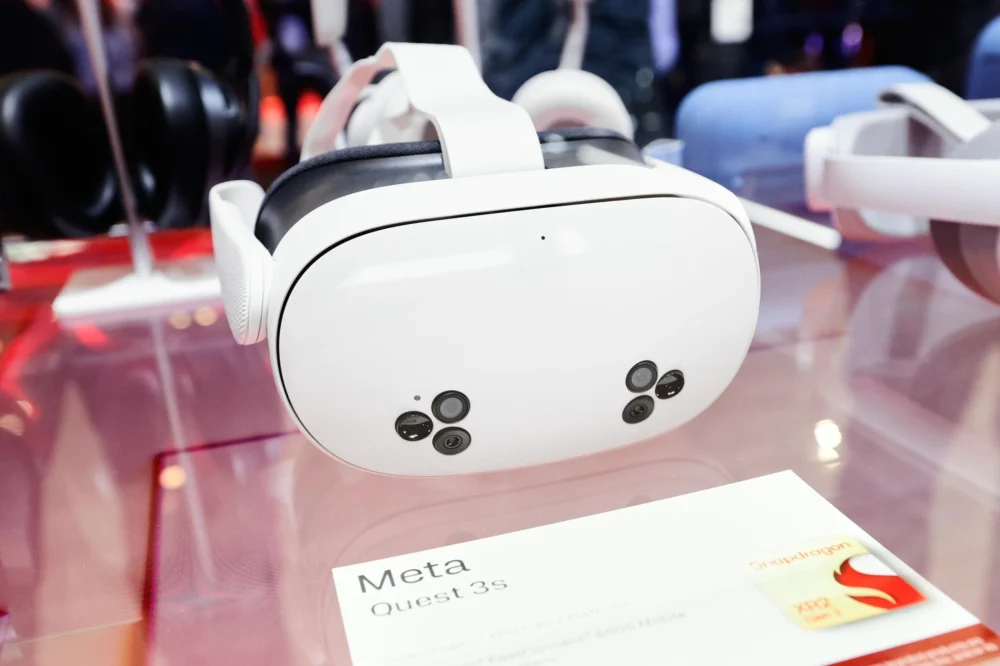
While Apple and Google consolidate their lead in AI, Meta is undergoing a painful "reality check." The news that Meta is laying off 10% of its Reality Labs team—specifically targeting content and owned developer studios—marks a retreat from the "metaverse" as a purely virtual, immersive playground. The dream of Horizon Worlds and VR-exclusive fitness apps like Supernatural appears to be cooling. Instead, Meta is shifting its focus toward wearables that integrate with our daily lives rather than replacing them.
The industry analysis of this shift is clear: Virtual Reality (VR) remains a niche market. While gamers remain loyal to high-fidelity consoles and younger demographics prefer the privacy and portability of the smartphone, the "killer app" for VR has yet to materialize for the general public. Outside of a global pandemic that forces people indoors, VR’s most successful applications have remained tethered to professional training and industrial simulations. Meta’s pivot suggests a realization that the future of spatial computing looks less like a closed headset and more like a pair of glasses. In the hierarchy of hardware, Meta currently finds itself in a position reminiscent of the Sega Genesis—a powerful, innovative platform that nevertheless risks being an also-ran if it cannot capture the mass-market appeal of more versatile ecosystems.
This hardware vacuum is being filled by a new generation of AR specialists. Xreal, a long-standing player in the augmented reality space, recently secured $100 million in new funding from supply chain partners and undisclosed investors. This brings the company’s total outside funding to $433 million, pushing its valuation above the $1 billion mark. Xreal’s pole position is further solidified by its partnership with Google to develop "Aura," the first wave of glasses running on the AndroidXR platform.

The "Aura" project, which was kept under literal wraps at the most recent Consumer Electronics Show (CES), represents Google’s attempt to create a standardized operating system for the face, much as Android did for the pocket. However, Xreal faces significant hurdles. The company relies heavily on "birdbath" optics—a display technology that, while effective for media consumption, remains bulky and has struggled to break into the mainstream. The question for Xreal is whether its early-mover advantage and Google partnership will be enough to stave off the eventual entry of Apple’s more refined AR spectacles.
The funding landscape for these technologies reveals a fascinating disparity between hardware and software valuations. While Xreal, a hardware veteran of nearly a decade, sits at a $1 billion valuation, the AI video startup Higgsfield recently closed an $80 million Series A extension, bringing its total financing to $130 million and its valuation to a staggering $1.3 billion. Higgsfield, led by former Snap AI head Alex Masharbov, is only three years old.
The massive capital injection into Higgsfield underscores the market’s belief that generative AI is the new "marketing infrastructure." As XR hardware becomes more prevalent, the demand for high-quality, AI-generated cinematic content will explode. Higgsfield’s foundation model for cinematography, which allows for precise camera control and special effects through text and voice prompts, is the software engine that will power the visual experiences on devices made by Meta, Xreal, and Apple. The fact that a three-year-old software company is valued higher than a decade-old hardware pioneer speaks to the immense scalability and lower capital expenditure of AI models compared to physical manufacturing.
On the consumer-ready front, companies like Rokid are proving that the race for the face is not just for the tech giants. Rokid’s presence at CES was impossible to ignore, headlined by a display of smartglasses that prioritize lightweight design and core utility over high-end immersive graphics. Their latest offering, the "Style" glasses, represents a direct challenge to the Meta-Ray-Ban collaboration. At a $300 price point and a weight of just 38.5 grams, the Style glasses are display-free, focusing instead on a "voice-first" experience.
What makes Rokid’s approach notable is its refusal to be tied to a single AI ecosystem. The Style glasses support multiple AI engines, including ChatGPT and DeepSeek, and integrate seamlessly with Google Maps and Microsoft’s translation services. By using a dual-chip architecture to achieve a 12-hour battery life, Rokid is targeting the "everyday carry" market—users who want AI assistance without the social friction or physical discomfort of a bulky headset. This "lightweight AI" category is likely where the most significant consumer adoption will occur over the next 24 months.
As we look toward the end of the decade, the trajectory of personal technology is clear. We are moving toward a world where the "operating system" is no longer a grid of icons on a screen, but a persistent, intelligent voice in our ear and a subtle overlay on our vision. The Apple-Google partnership provides the intelligence; Meta’s restructuring provides the cautionary tale of over-extending into virtual worlds; and startups like Xreal, Higgsfield, and Rokid provide the hardware and content diversity that will define the market.
The ultimate winner of this era will be the company that best manages the transition from "tools we use" to "agents that represent us." If Apple can successfully marry its design prowess with Google’s data-driven intelligence, it may once again reclaim its title as the world’s most valuable entity, even in the face of Nvidia’s semiconductor dominance. However, in a landscape where software can be updated overnight and hardware is being commoditized by agile newcomers, no incumbent is safe. The definitive AI wearable is still up for grabs, and the battle for the next platform has only just begun.