

The global luxury market is currently besieged by a crisis of authenticity that threatens the very foundations of brand equity and consumer trust. As the secondary market for high-end goods balloons into a $210 billion behemoth, the proliferation of "superfakes"—counterfeit items so meticulously crafted they can deceive even seasoned boutique authenticators—has created a multi-billion dollar blind spot. Traditional methods of verification, ranging from holographic stickers to embossed serial numbers, have proven woefully inadequate against a sophisticated underground industry that mirrors the supply chains of the brands they mimic. Into this high-stakes environment steps Veritas, a startup founded by former Tesla product manager Luci Holland, which aims to move the goalposts of authenticity from the physical realm to the cryptographic one.
The scale of the problem is difficult to overstate. Recent industry data suggests that luxury houses lose upwards of $30 billion annually to the counterfeit trade. However, the financial loss is only one facet of the damage. For a heritage brand whose value is built on exclusivity and craftsmanship, the dilution of the brand by high-quality fakes represents an existential threat. Meanwhile, the booming resale economy—fueled by platforms like The RealReal, Vestiaire Collective, and eBay—relies entirely on the ability to prove a product’s provenance. Without a definitive, tamper-proof method of verification, the liquidity of the luxury resale market remains hampered by the persistent "lemon problem," where buyers are hesitant to pay premium prices for fear of acquiring a sophisticated imitation.
Luci Holland’s approach to solving this dilemma is informed by a unique professional duality. Before her tenure at Tesla, where she navigated the complex intersection of hardware and software as a technical product manager, Holland was an artist, working in mediums as diverse as metal sculpture and mixed-media painting. This background allows her to view a luxury handbag or a high-end watch not just as a consumer product, but as a piece of design heritage that requires a specific kind of protection. Her experience in the Silicon Valley ecosystem, particularly at a company like Tesla that prioritizes vertically integrated security and proprietary hardware, has been translated into the DNA of Veritas.
At the heart of the Veritas solution is a custom-engineered microchip, roughly the size of a small gemstone, designed to be integrated seamlessly into the manufacturing process of luxury goods. Unlike the generic, off-the-shelf Near Field Communication (NFC) tags that some brands have experimented with in the past, the Veritas chip is built to be "hack-proof." This distinction is critical in an era where tools like the Flipper Zero—a portable, multi-tool for hackers—have made it relatively easy to clone or bypass standard wireless protocols. Holland’s team has focused on creating a hardware-level defense that resists the common tampering methods used by counterfeiters to "spoof" digital IDs.

The technical architecture of the Veritas chip includes a proprietary custom coil and a specialized bridge structure. These physical components serve as a "kill switch" for the chip’s data. If a counterfeiter or a curious hacker attempts to physically tamper with the product to extract or replicate the chip, the internal structure is compromised, causing the chip to go dormant. In this state, the sensitive cryptographic codes associated with the product’s identity are effectively erased or hidden, rendering the fake item "silent" when scanned. This creates a binary state of authenticity: a product either has a functioning, verifiable Veritas pulse, or it is a brick.
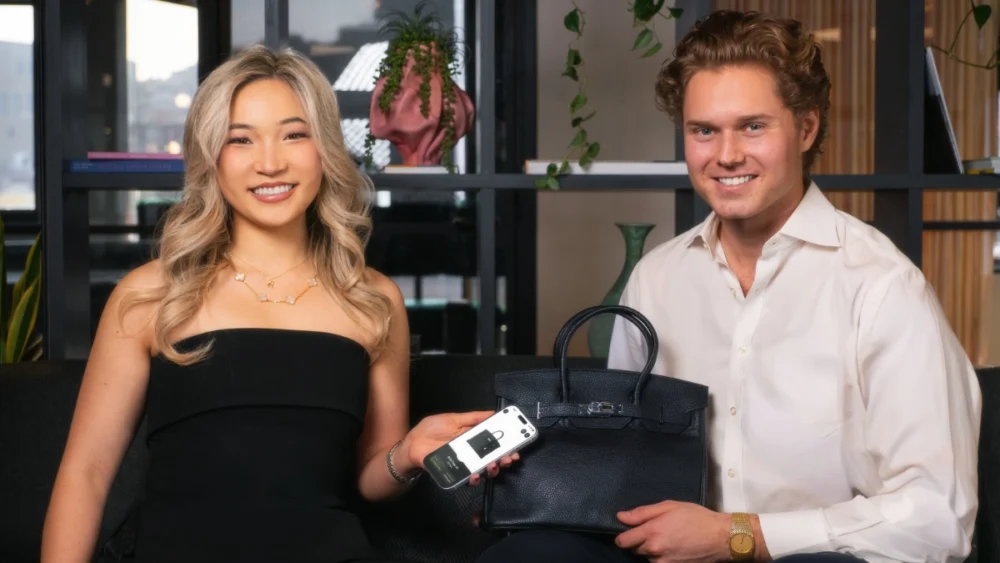
From a consumer perspective, the interaction remains elegant and low-friction. By simply tapping a smartphone against the item—utilizing the same NFC technology that powers Apple Pay or Google Wallet—a buyer or owner can instantly trigger a secure handshake with the Veritas backend. This interaction does more than just display a "genuine" checkmark; it unlocks the entire digital history of the item. This "digital birth certificate" is anchored to a blockchain, ensuring that the record of ownership and provenance is immutable and cannot be altered by a central authority or a malicious actor.
This move toward digital-physical integration aligns with broader shifts in global regulation, most notably the European Union’s impending Digital Product Passport (DPP) requirements. As regulators move to mandate transparency in supply chains and encourage the circular economy, brands will soon be required to provide detailed information about a product’s materials, origin, and repairability. Veritas is positioning itself as the infrastructure for this new era of transparency. By embedding a secure digital identity at the point of creation, brands can track a product throughout its entire lifecycle—from the factory floor to the first owner, and through multiple subsequent transactions in the resale market.
The implications for the resale market are profound. Currently, third-party authenticators spend millions of dollars on labor and technology to verify goods, yet errors remain common. If a product carries a Veritas chip, the need for subjective human judgment is largely eliminated. The "digital twin" of the product, stored on the blockchain, acts as a permanent ledger of its existence. This technology also opens up new revenue streams for luxury houses, which have traditionally been cut out of the secondary market. Through the Veritas software suite, brands can maintain a relationship with the second or third owner of a product, offering them exclusive services, invitations to events, or early access to new collections, thereby reclaiming the "customer journey" long after the initial sale.
Furthermore, the creation of a blockchain-based digital clone allows for the luxury item to exist in digital spaces. As the boundaries between the physical and virtual worlds continue to blur, owners of chipped luxury goods could potentially showcase their verified possessions in digital art galleries or use them as assets within metaverse environments. This adds a layer of "digital utility" to a physical purchase, increasing its value proposition to a younger, tech-savvy demographic that views digital identity as being as important as physical appearance.

The venture capital community has taken note of this convergence of luxury and deep tech. Veritas recently announced a $1.75 million pre-seed funding round, a significant sum for a two-person team, led by Alexis Ohanian’s Seven Seven Six. The round also saw participation from DoorDash co-founder Stanley Tang and former TechCrunch editor Josh Constine, among others. Ohanian, who has long been a proponent of the intersection between community and technology, noted that the fight against counterfeiting is an "arms race" that luxury brands are currently losing. He highlighted Holland’s rare combination of "design taste and technology expertise" as the key differentiator in a field often populated by purely technical solutions that fail to understand the aesthetic requirements of high fashion.
However, the road ahead for Veritas is not without challenges. The primary hurdle is the "education gap" within the luxury industry itself. Many legacy brands are notoriously slow to adopt new technologies, fearing that digital elements might "cheapen" the tactile experience of a handmade leather good or a mechanical timepiece. Holland has addressed this by working closely with designers to ensure the hardware is "minimally disruptive." The chip is designed to be tucked into a seam, hidden behind a logo, or embedded within the structure of a handbag, ensuring that the "soul" of the product remains untouched while its digital armor is bolstered.
Moreover, there is the issue of scale. For a solution like Veritas to become the industry standard, it must achieve a network effect. If only a handful of brands adopt the technology, the secondary market remains fragmented. However, the pressure from "superfakes" may force the hand of the major conglomerates like LVMH, Kering, and Richemont. When some flagship boutiques are forced to stop authenticating their own goods because the fakes have become indistinguishable from the originals—a reality Holland says she encountered during her research—the industry has reached a tipping point where technological intervention is no longer optional.
As Veritas expands its team and begins rolling out its software suite to partner brands, the focus will likely shift to the data insights provided by the platform. For the first time, luxury houses will have real-time data on how their products are moving through the world. They will see where scans are happening, which could provide early warning signs of counterfeit "hotspots" or reveal untapped geographic markets where their products are gaining popularity.
In the long term, the vision for Veritas extends beyond just handbags and watches. Any high-value physical asset that suffers from a lack of verifiable provenance—from fine wine and rare sneakers to industrial components and pharmaceutical packaging—could benefit from a hack-proof silicon seal. By bridging the gap between the physical object and its digital identity, Luci Holland is not just protecting designs; she is building a new protocol for trust in the global economy. In a world where you can no longer believe your eyes, Veritas is betting that you can, at the very least, believe in the chip.