

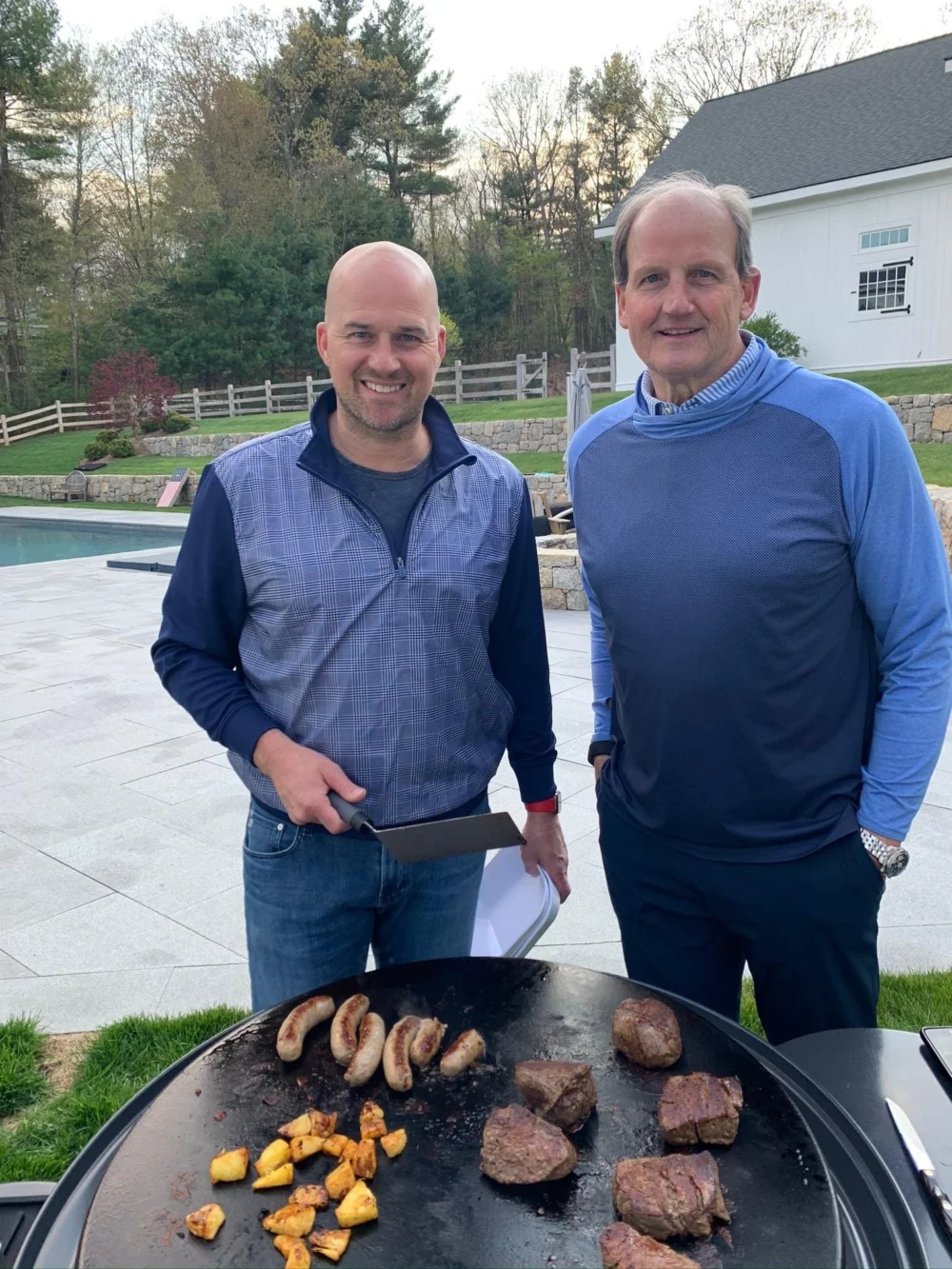
The upcoming Super Bowl LX matchup between the New England Patriots and the Seattle Seahawks is framed by more than just championship stakes; for the Hasselbeck family, it represents a poignant intersection of professional legacy and a private medical wake-up call. While fans prepare for a tactical showdown on the field, former three-time Pro Bowl quarterback Matt Hasselbeck is utilizing the platform to highlight a far more critical competition: the battle against "invisible" cardiovascular risks. The narrative of the elite athlete as an invincible specimen is being dismantled by Hasselbeck’s own experience, proving that even a lifetime of high-performance conditioning cannot override the silent dictates of genetic predisposition.
For Matt Hasselbeck, the Seahawks and Patriots represent the twin pillars of his family’s NFL history. His father, Don Hasselbeck, was a formidable tight end who spent the bulk of his career with the Patriots from 1977 to 1983, eventually winning a Super Bowl with the Raiders. Matt, conversely, became the face of the Seahawks franchise, leading them to their first-ever Super Bowl appearance in 2006. However, the symmetry of their careers was shattered in April 2025 when Don Hasselbeck passed away suddenly from cardiac arrest. The elder Hasselbeck was, by all external metrics, a paragon of health—a fit, active individual who continued to lift weights and maintain an athletic physique well into his senior years. His sudden collapse while preparing to mow his lawn sent shockwaves through the family and the broader athletic community, serving as a grim reminder that cardiovascular health is not always reflected in physical fitness.
In the wake of this tragedy, Matt Hasselbeck’s mother urged her sons to undergo comprehensive cardiovascular screening. Initially, Matt—who retired from the NFL in 2016 after an 18-season career that saw him starting games at the age of 40—was skeptical. His self-perception was rooted in his ability to outperform men a decade his junior on the Peloton and maintain a "clean" diet. Yet, the diagnostic data told a different story. Screening revealed that Hasselbeck had significantly elevated levels of low-density lipoprotein (LDL) cholesterol, placing him at a heightened risk for the same type of catastrophic event that claimed his father. This revelation has turned Hasselbeck into a vocal advocate for the Family Heart Foundation’s "Tackle Cholesterol" campaign, shifting his focus from passing yards to "LDL Safe Zones."
The Biochemistry of the "Invisible" Opponent
To understand the gravity of Hasselbeck’s warning, one must look at the sophisticated biochemistry of the human cardiovascular system. The medical community often refers to high cholesterol as a "silent killer" because it lacks symptomatic indicators until a major event occurs. LDL, the primary culprit in this narrative, is a type of lipoprotein—a complex of lipids and proteins that transports cholesterol through the bloodstream. While the body requires cholesterol for essential functions such as building cell membranes and synthesizing hormones, an excess of LDL leads to the formation of arterial plaques.

In the context of an elite athlete, the danger is often masked. High-performance training strengthens the heart muscle and improves oxygen efficiency, but it does not necessarily clear the "sludge" of LDL from the arterial walls if there is a genetic malfunction in how the body processes these lipids. When these plaques rupture or grow large enough to impede blood flow, they trigger heart attacks or strokes. For someone like Hasselbeck, the discovery was a humbling reminder that his "internal stats" were disconnected from his "external performance."
Clinical guidelines typically suggest maintaining LDL levels below 100 milligrams per deciliter (mg/dL) for the general population, with even stricter targets (below 70 mg/dL) for those with a family history of heart disease or existing atherosclerosis. Hasselbeck’s transition from an athlete who ignored these numbers to an advocate who monitors them represents a broader shift in sports medicine toward preventive cardiology.
The Athletic Paradox: Fitness vs. Health
Hasselbeck’s situation highlights what cardiologists call the "Athletic Paradox." There is a common misconception that intense physical activity grants total immunity from lifestyle and genetic diseases. However, the industry is seeing an increase in "over-fit but under-healthy" individuals. Professional athletes often push their bodies to extremes, which can lead to structural changes in the heart, such as left ventricular hypertrophy. While often benign, these changes can complicate the diagnosis of underlying genetic conditions like Familial Hypercholesterolemia (FH).
The industry implication for professional sports is significant. Teams are increasingly moving beyond standard EKGs and stress tests, incorporating advanced imaging like Coronary Artery Calcium (CAC) scores and genetic testing into their wellness programs. A CAC score uses a specialized CT scan to detect the presence of calcified plaque, providing a far more accurate assessment of risk than a simple blood pressure check. For the retired athlete, the transition from being monitored by a team of trainers to self-monitoring is a dangerous gap that Hasselbeck is attempting to bridge. His advocacy suggests that "retirement" from the game should mark the "start" of a more rigorous internal health regimen.
The Role of Genetics and the "Zone 2" Strategy
One of the most critical aspects of Hasselbeck’s message is the acknowledgement of genetic limitations. Despite his elite status, he conceded that lifestyle modifications—such as his "clean" eating and rigorous exercise—could only do so much. "Some of this can just be genetic," he noted, highlighting that even triathletes and active parents can be blindsided by their DNA. This is where the intersection of technology and biology becomes vital.

In response to his diagnosis, Hasselbeck has modified his training to include more "Zone 2" cardio. This involves low-to-moderate intensity exercise where the heart rate remains between 60% and 70% of its maximum. Unlike the high-intensity interval training (HIIT) that many former athletes favor, Zone 2 exercise is specifically lauded by longevity experts for improving mitochondrial function and the body’s ability to utilize fats and glucose efficiently. It is a strategic shift from "training for power" to "training for metabolic health."
However, if these lifestyle pivots do not lower his LDL levels within a six-month window, the next step involves pharmacological intervention. The evolution of cholesterol management has moved beyond early-generation statins to include more targeted therapies like bempedoic acid and PCSK9 inhibitors. These technologies represent the cutting edge of preventive medicine, offering hope for those whose cholesterol levels are resistant to diet and exercise due to genetic factors.
Future Trends: AI and Wearable Diagnostics
As a technology-forward journalist would observe, the future of heart health for people like Hasselbeck lies in the democratization of diagnostic data. We are entering an era where wearable technology will move beyond tracking steps to monitoring real-time biomarkers. Future iterations of smartwatches and rings may soon be able to estimate lipid profiles or detect the early physiological signs of arterial inflammation through advanced photoplethysmography (PPG) and AI-driven algorithms.
Furthermore, the rise of "precision medicine" means that individuals will no longer be treated based on population averages. Genetic screening for variants associated with high LDL will likely become a standard part of early adulthood checkups. By identifying these risks in one’s 20s, the "silent blitz" that Hasselbeck describes can be intercepted decades before it becomes life-threatening. The integration of AI in analyzing CT scans also allows for the detection of "soft plaque," which is often more dangerous than calcified plaque because it is more prone to rupture.
A Legacy Beyond the Scoreboard
As Matt Hasselbeck prepares to watch the Patriots and Seahawks face off, his focus remains split between the game he loves and the mission he has inherited. His involvement in high school coaching and sports media keeps him tethered to the football world, but his partnership with the Family Heart Foundation defines his current legacy. He is no longer just a quarterback managing a huddle; he is a health ambassador managing a public health crisis.

The tragedy of Don Hasselbeck’s passing has been transmuted into a life-saving directive for others. By "rolling his eyes" initially, Matt Hasselbeck humanized the resistance many men feel toward clinical screening. By following through and sharing his high LDL results, he has provided a roadmap for others to follow. The message is clear: the most important play in a man’s life isn’t a game-winning drive in the Super Bowl; it is the decision to walk into a doctor’s office and demand a full cardiovascular workup.
In the high-stakes environment of professional sports, where the emphasis is often on playing through pain and projecting strength, Hasselbeck’s vulnerability is his greatest strength. He is proving that while you cannot change your genetic playbook, you can certainly change your defensive strategy. As Super Bowl LX approaches, the blue and green of the Seahawks and the red and blue of the Patriots serve as a backdrop to a much more universal story—one of family, loss, and the relentless pursuit of a healthy heart. Regardless of who lifts the Lombardi Trophy this Sunday, Hasselbeck has already secured a more enduring victory by ensuring that his family’s heart warning is heard by millions.