

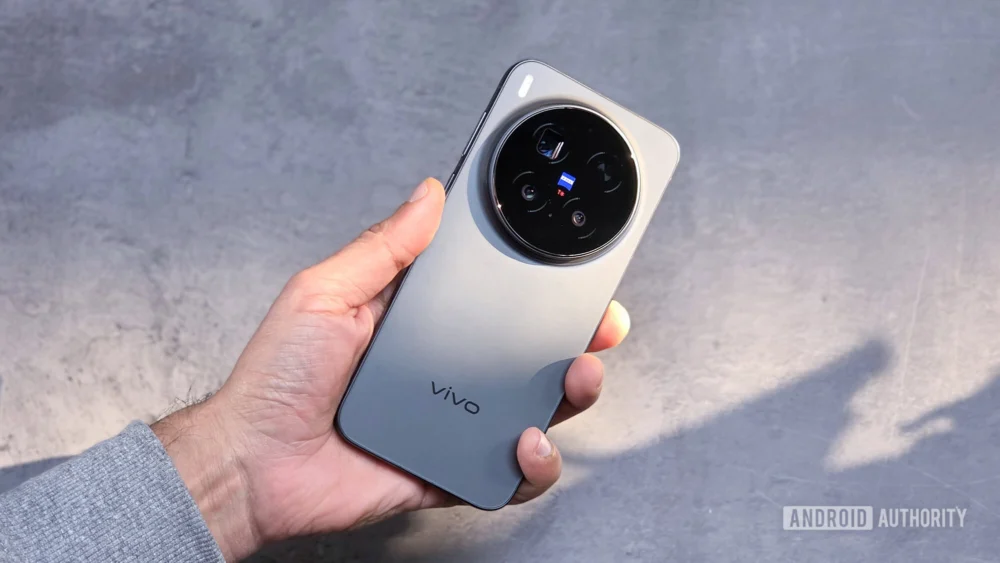
For nearly a decade and a half, the conversation surrounding mobile videography has been dominated by a singular voice: Apple. The iPhone has historically served as the undisputed gold standard, a device whose computational photography and video pipelines consistently outperformed the competition within the Android ecosystem. This hegemony was not unearned; from early iterations, Apple established a benchmark for consistency, dynamic range, and ease of use that most rivals struggled to meet. However, the landscape is undergoing a tectonic shift, driven by the aggressive premiumization strategies of leading Chinese manufacturers. At the forefront of this challenge is the vivo X300 Pro, a device leveraging the prestige of ZEISS optics and proprietary silicon to genuinely threaten the established order. Having already demonstrated formidable still photography prowess, the X300 Pro’s video capabilities have proven to be its most surprising and disruptive asset, compelling a direct, rigorous confrontation with the latest iPhone 17 Pro.
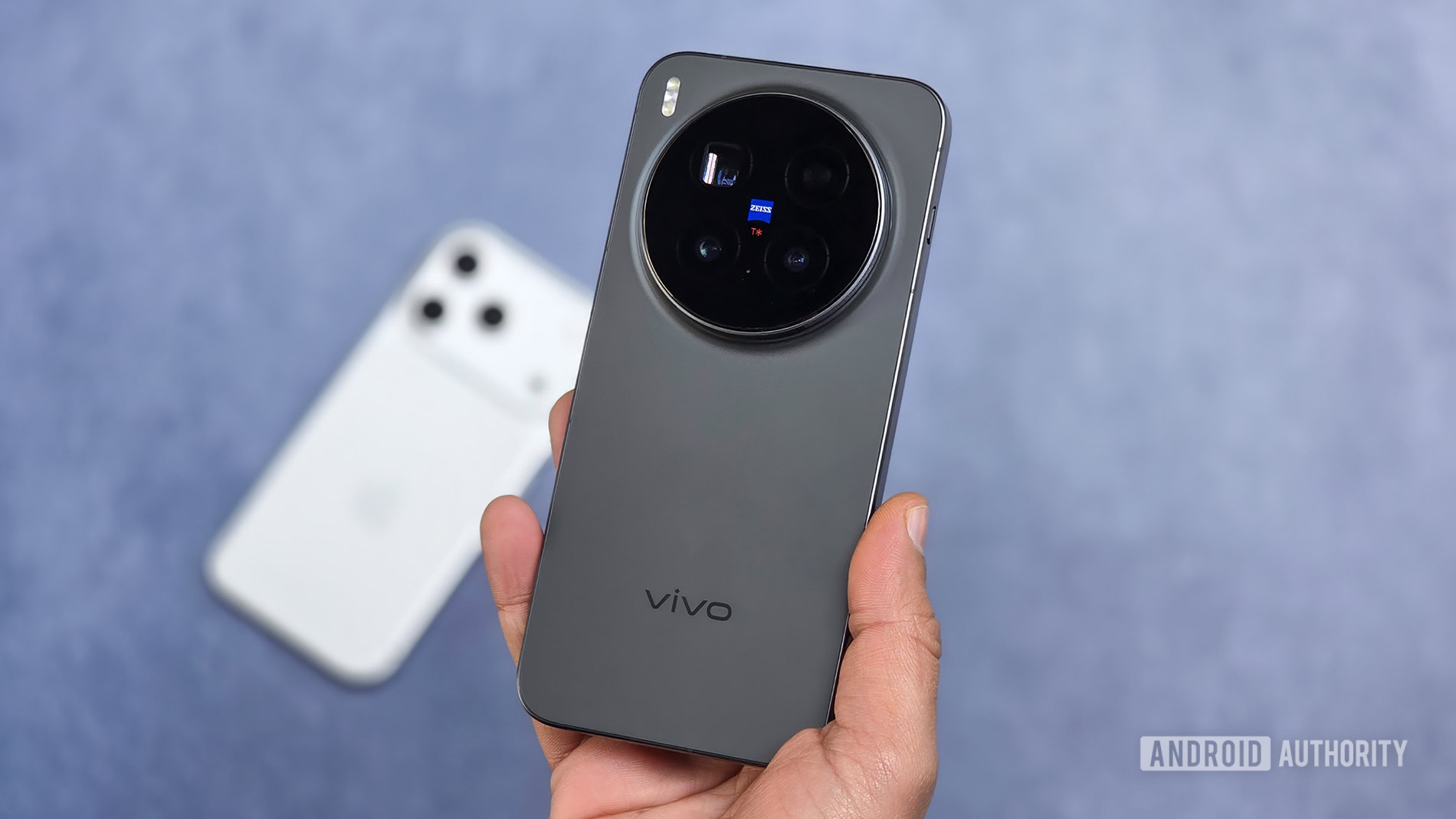
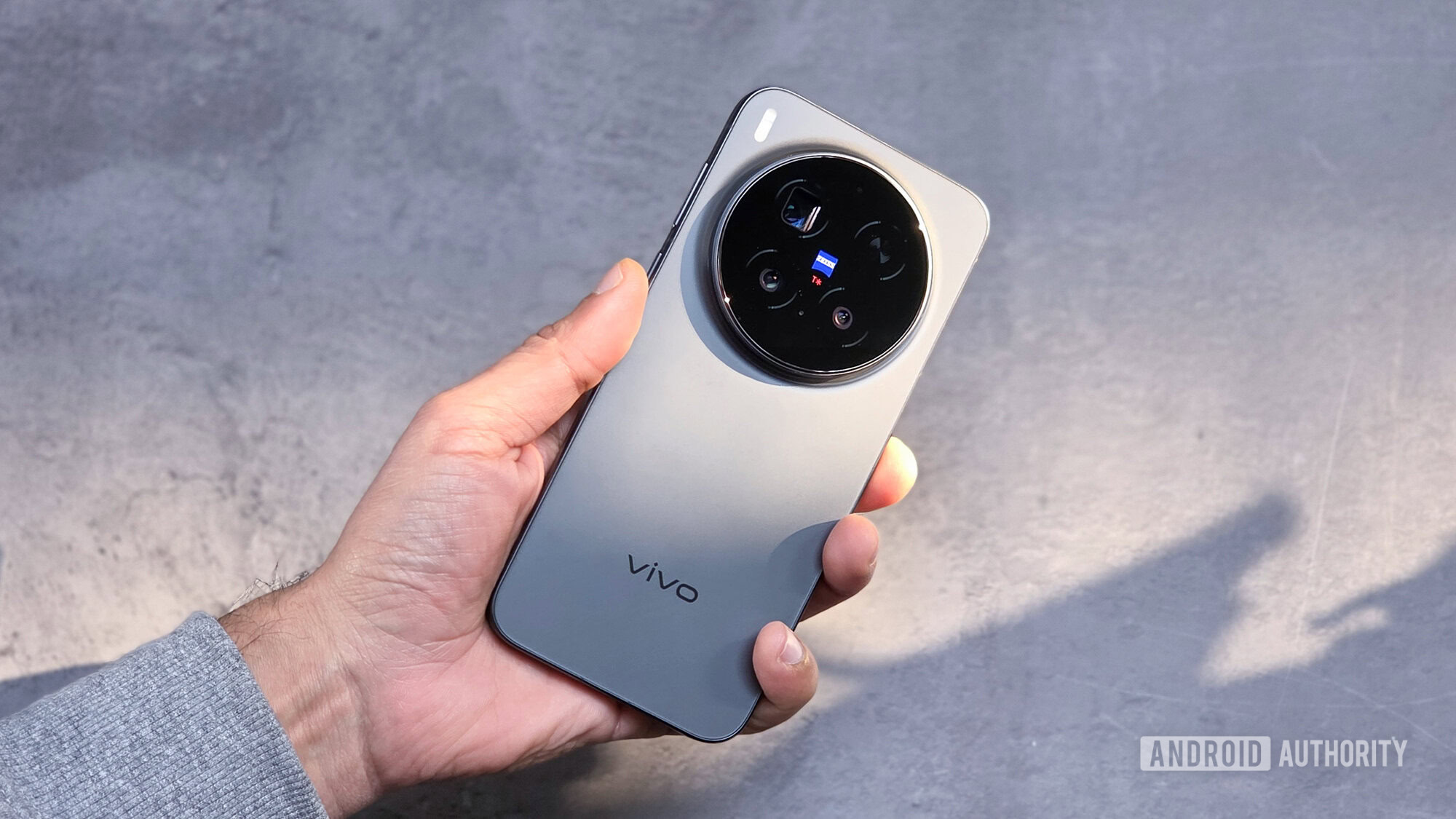
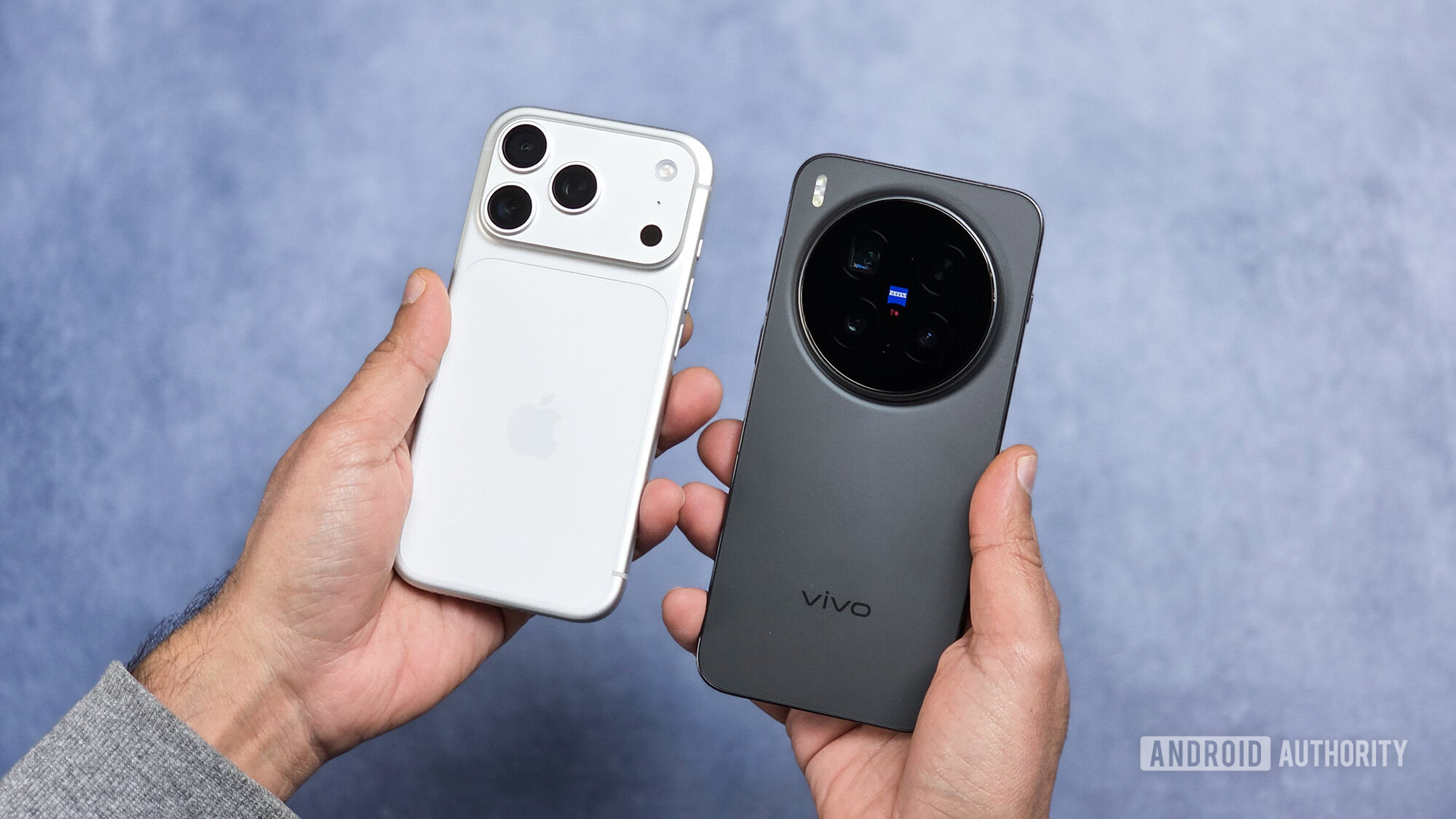
The core of this competitive tension lies in the hardware parity, yet divergence in execution. Both flagship devices feature primary sensors approaching a 1/1.28-inch class, sharing a similar 24mm focal length equivalent. Both boast the ability to capture 4K video at a maximum of 120 frames per second (fps) in standard capture modes. Yet, vivo integrates specialized ZEISS T* anti-reflection coatings on its lens array and utilizes a custom V3+ co-processor, touted to enhance portrait video processing, image crispness, and overall rendering speed. While the X300 Pro’s photographic merits have been extensively documented, this analysis pivots exclusively to its moving-image performance, focusing on the subjective yet crucial "Cinematic" mode—a term Apple uses for its software-driven background blur effect, which we will treat interchangeably with "portrait video."
The Daylight Dynamic: Contrast vs. Calibration
The initial testing phase involved capturing Cinematic videos under bright daylight conditions. This setting, often the easiest for any modern sensor, reveals underlying processing philosophies. In a comparative shot featuring a subject against a background of dense, sunlit foliage—mustard bushes in the context of a recent excursion to Rajasthan—the divergence in color science and sharpness became immediately apparent.
The vivo X300 Pro’s output possesses an immediate visual impact: superior contrast ratios and a noticeable edge in overall sharpness. The image feels "punchy," a characteristic often associated with advanced sensor processing prioritizing texture preservation. Conversely, the iPhone 17 Pro opts for a softer approach to subject contrast, an algorithmic decision seemingly intended to augment the natural appearance of the background bokeh simulation. While this might contribute to a more subdued, filmic look in some scenarios, in this bright, high-detail setting, the result appears somewhat flattened and less engaging than the vivo’s rendering.
Low-Light Scrutiny: Detail Retention and Color Accuracy
The dynamic flips when ambient light diminishes, moving into twilight and deep indoor scenarios. This is historically where Apple’s computational video engine has demonstrated its resilience, often prioritizing noise reduction and exposure stability over absolute detail.
In a low-light shot captured at dusk, the iPhone 17 Pro managed to retain marginally more discernable detail on the subject’s facial features. This suggests a more aggressive noise suppression algorithm, smoothing out micro-details in the process. The vivo X300 Pro, while struggling to pull equivalent detail from the shadows, maintained a more accurate chromatic profile. Even when the clip was objectively lacking in shadow detail, particularly noticeable on darker garments, the colors presented were truer to the scene’s ambient light.
The simulated background blur (bokeh) remained comparable in both devices under these conditions, though arguably insufficient due to the inherent limitations of using short focal lengths for portrait video. However, in terms of edge separation—the critical factor in any portrait mode—the iPhone maintained a marginal lead in rendering the complex transition between the subject and the blurred background.
This trend solidified in extremely low-light indoor environments, such as an alleyway illuminated by sparse artificial light sources. The iPhone’s output consistently rendered both the subject and the background elements (like antique furniture) marginally brighter than the X300 Pro. While the bokeh intensity appeared consistent and naturally evolving as the subject moved closer to the camera in both recordings, the vivo’s darker overall exposure in these specific tests placed it at a disadvantage.
The HDR Discrepancy: A Critical Software Oversight
A significant factor tilting the balance in favor of the iPhone 17 Pro in challenging light was the implementation of High Dynamic Range (HDR) capture. In a specific indoor test, the iPhone recorded utilizing its 10-bit Dolby Vision capabilities, resulting in superior highlight retention and lifted shadows. Crucially, the iPhone’s HDR implementation appears to be either intelligently applied or tied to a user-accessible setting in the standard video interface.
The vivo X300 Pro, in the same portrait video scenario, defaulted to an SDR or non-HDR capture. This lack of control—the inability to manually force HDR in portrait mode—is a significant operational flaw. The author noted that this automated decision-making places the X300 Pro in an unnecessary deficit against the iPhone when battling high-contrast, low-light situations. If this manual override were available, the hardware advantages might have compensated, but as it stands, this software limitation hands the win to Apple in these controlled tests.
Where Android Retakes the Lead: Frame Rates and Optical Flexibility
Despite the low-light shortcomings, the narrative pivots sharply back in favor of the vivo X300 Pro due to feature sets that Apple appears to have willfully neglected in its "Pro" video offering.
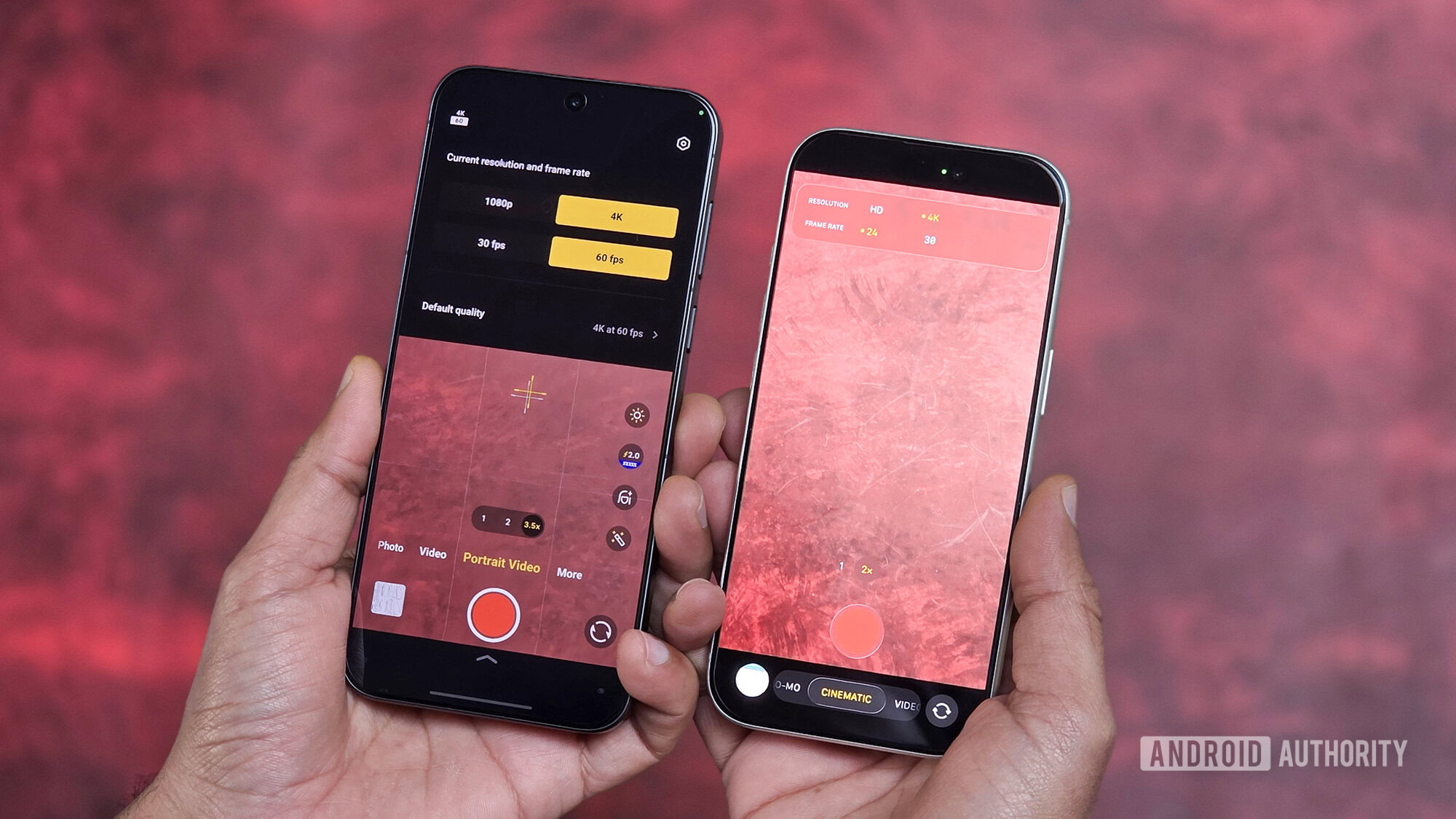
The first significant advantage is the vivo’s native support for 60fps capture within its Cinematic/Portrait mode. The iPhone 17 Pro is restricted to 24fps or 30fps for this feature. When directly juxtaposed, the 60fps footage from the X300 Pro exhibits dramatically smoother motion. This higher frame rate is not merely an aesthetic preference; it offers superior temporal fidelity, making panning shots and subject movement appear far more natural and fluid. For creators targeting high-delivery social media platforms or looking for footage that allows for post-production speed adjustments without severe choppiness, 60fps portrait video is a major functional upgrade.
The second, and arguably more decisive, advantage lies in optical flexibility. The vivo X300 Pro permits Cinematic video recording utilizing its dedicated telephoto lens—a 3.5x optical zoom (approximately 85mm equivalent). In contrast, the iPhone 17 Pro caps its Cinematic mode exclusively to the primary wide lens, offering only a 2x digital crop/zoom approximation.
This difference is fundamentally important for professional-grade aesthetics. Telephoto lenses inherently provide a shallower depth of field (DoF) at equivalent subject distances compared to wider lenses. By utilizing the 3.5x optical zoom, the vivo achieves a more naturally compressed background perspective, which, when combined with the software-enhanced bokeh, creates a significantly more striking and professional-looking separation. Furthermore, the X300 Pro’s telephoto module is backed by a massive 200MP sensor, dwarfing the iPhone’s 48MP sensor in resolution potential, which translates to superior light-gathering capability even when cropping or zooming. For any project requiring shallow DoF simulation without relying solely on computational trickery, the vivo X300 Pro seizes an undeniable victory in the portrait video category due to optical reach.
Standard Video Capture: 4K 120fps and Subjective Grading
When moving away from the stylized portrait mode to standard video capture, the competitive gap narrows considerably. Both devices are capable of recording at 4K resolution at 120fps. While mainstream platforms often cap delivery at 30fps or 60fps, shooting at 120fps offers significant flexibility for creating high-quality, smooth slow-motion segments in post-production, circumventing the choppy artifacts often associated with native slow-motion modes (which often render at 30fps output despite high input rates).
When these 4K 120fps clips were slowed down to 60fps for comparison, the results were nearly indistinguishable in terms of technical quality. The iPhone exhibited a slightly warmer color grade, which some users find aesthetically pleasing, while the vivo maintained its characteristic sharpness. The trade-off here becomes subjective preference: the iPhone’s warmth versus the vivo’s clarity.
In subsequent dusk comparisons of standard video, the iPhone again leaned into warmer tones and marginally better overall exposure, perhaps benefiting from its superior low-light processing consistency across standard modes. However, the vivo X300 Pro counters this by including a manual toggle for Dolby Vision in its standard recording modes—a feature conspicuously absent in the iPhone’s portrait implementation—allowing users to actively mitigate dynamic range issues in challenging scenes.
The Software Ecosystem Advantage: Post-Capture Control
The most compelling argument for the vivo X300 Pro surpassing the iPhone 17 Pro in overall video utility is not found in the sensor hardware, but in the native software ecosystem provided for creators.
The X300 Pro integrates sophisticated, built-in post-capture editing tools specifically tailored for portrait videos, accessible directly within the native gallery application (Albums). The iPhone user, in contrast, is largely reliant on the captured file or must immediately transition to third-party professional applications like FiLMiC Pro or Blackmagic Camera for advanced control during capture, or rely on external subscription software like LumaFusion or Filmora for deep editing.
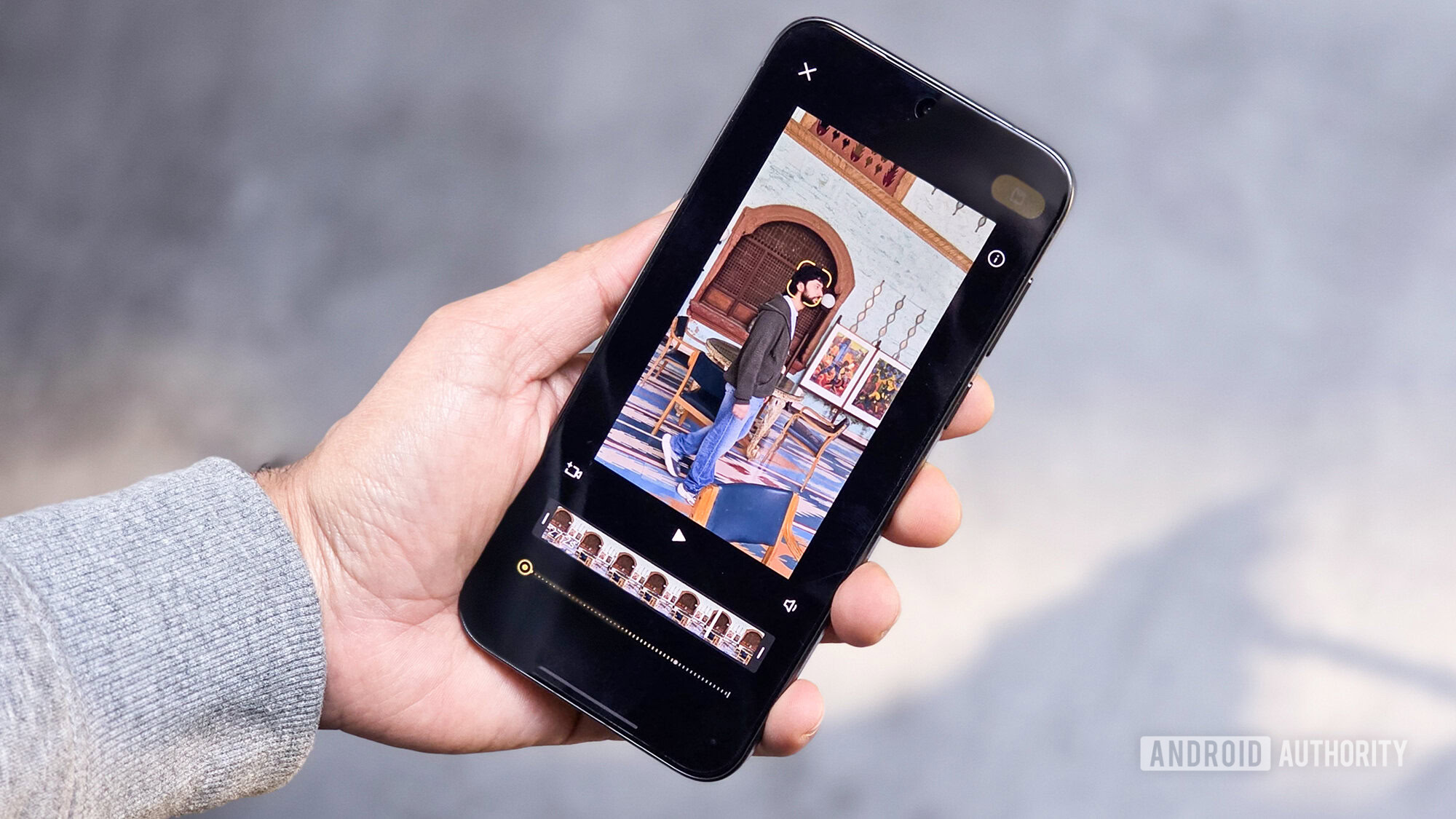
Vivo offers users the ability to non-destructively alter key cinematic parameters after the fact. This includes the capacity to entirely reassign the subject of focus post-recording. While face tracking is reliable, the ability to select a different object within the frame as the focus point later provides unparalleled creative latitude.
Even more profound is the control over the ZEISS-inspired Look Up Tables (LUTs)—predefined color grading profiles inspired by specific ZEISS lens characteristics. The X300 Pro allows users to apply these LUTs during capture. The genius, however, lies in the post-edit suite: users can later modify or completely remove these applied LUTs. Furthermore, the software allows for differential intensity application—setting distinct LUT strengths for the subject versus the background. This granular control over visual style, baked directly into the operating system, elevates the X300 Pro from a mere camera to a portable, comprehensive color grading suite. This seamless workflow is a significant boon for efficiency, reducing the friction between capture and final delivery.
Industry Implications and Future Trajectories
The performance comparison between the vivo X300 Pro and the iPhone 17 Pro signals a critical inflection point in the smartphone industry. For years, Apple maintained its lead through reliable, predictable computational consistency. Android manufacturers, particularly those collaborating closely with established optics giants like ZEISS, are now weaponizing sensor technology and bespoke processing units (like the V3+ chip) to offer features that fundamentally challenge Apple’s creative limitations.
The industry implication is clear: the focus is shifting from merely matching resolution and basic dynamic range to offering superior creative flexibility at the point of capture and in immediate post-production. The vivo’s superior 60fps portrait mode and mandatory telephoto support for this mode demonstrate a manufacturer prioritizing advanced filmmaking techniques over conservative defaults.
This forces Apple to reassess its often-cautious approach to feature rollout. The reluctance to allow Cinematic video capture across all lenses, especially when a superior optical path (the 4x telephoto) exists, suggests a prioritization of simplicity over ultimate capability. If consumers, particularly in high-growth markets like APAC and EMEA where vivo holds strong influence, begin to favor the X300 Pro’s feature set—especially the integrated LUT editing and telephoto bokeh—Apple risks alienating the prosumer segment that values granular creative control.
The future of mobile video will likely see this feature parity rapidly erode. We anticipate further specialization in co-processors dedicated solely to video latency, advanced optical stabilization (OIS), and, most importantly, deeper integration of professional color science tools directly into the native OS, following the precedent set by vivo’s sophisticated post-capture LUT manipulation.
Conclusion: A Challenger Claims the Crown in Specific Metrics
The vivo X300 Pro is not merely a strong contender; in several key areas, it demonstrably surpasses the iPhone 17 Pro in video capture and utility. In daylight, its contrast and sharpness are preferable. Crucially, its superior frame rate options (60fps in portrait mode) and the ability to leverage a true optical telephoto lens for Cinematic video provide a tangible, creative advantage that Apple currently cannot match natively. The robust, non-destructive editing suite, particularly the control over ZEISS LUTs, solidifies the X300 Pro’s position as the more powerful tool for ambitious mobile videographers.
While the iPhone retains the edge in low-light consistency and its automated HDR application in portrait mode, these are arguably solvable software issues. The hardware restrictions imposed by Apple—the 30fps cap and telephoto exclusion in Cinematic mode—appear more fundamental and harder to overcome without a paradigm shift in their design philosophy.
For users prioritizing creative freedom, optical versatility, and high-frame-rate subject isolation, the vivo X300 Pro establishes itself as the new benchmark, signaling that the long-standing dominance of the iPhone in mobile video is officially under siege, if not already broken in specific, professional workflows. The primary hurdles for prospective buyers remain geographical availability, particularly concerning US carrier support, and the localized differences in battery specifications often found in global variants. Nevertheless, for those operating within APAC or EMAE regions and seeking a device that bridges the gap between smartphone convenience and professional video aesthetics, the X300 Pro warrants serious, immediate consideration.