

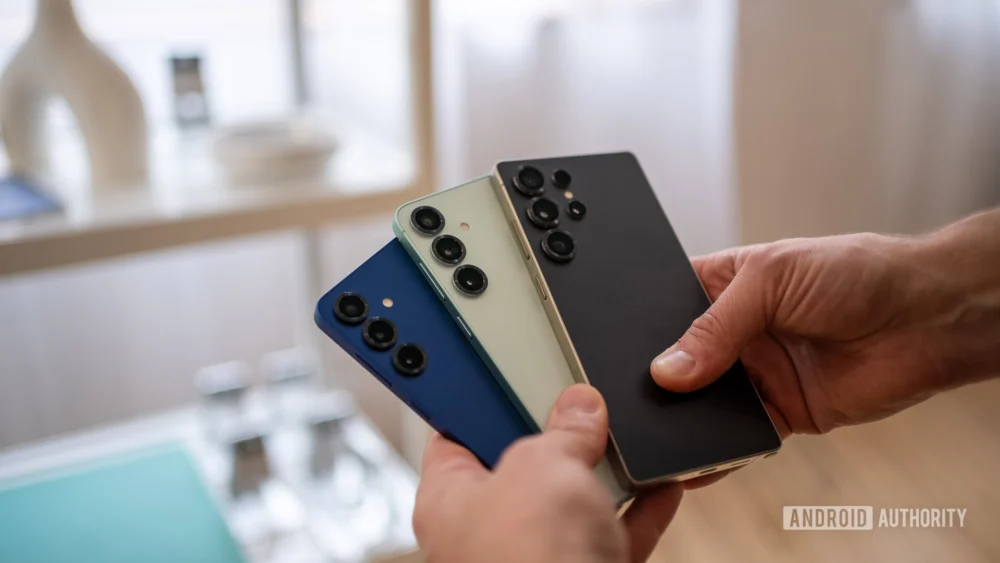
As the global technology sector braces for the imminent Galaxy Unpacked event, the air is thick with anticipation surrounding the official unveiling of the Samsung Galaxy S26 lineup, encompassing the base S26, the S26 Plus, and the flagship S26 Ultra. Following months of iterative leaks and component speculation, the core architecture of the series is largely crystallized for industry observers. Key anticipated features include the much-hyped Privacy Display integrated into the Ultra variant, the continuation of the dual-chipset strategy—differentiating regional performance via the Snapdragon and Exynos processors—and subtle aesthetic refreshes across the color palette. This predictable pattern suggests a launch mirroring previous years, characterized by aggressive pre-order incentives designed to catalyze immediate sales velocity. With the order books poised to open immediately following the keynote address, an informal readership poll conducted recently sought to gauge the immediate purchase intent of the engaged consumer base regarding these upcoming devices. The resultant data offers a compelling, if somewhat polarizing, snapshot of consumer calculus leading into the flagship release cycle.
The survey methodology was deliberately focused, aiming not to validate or dispute contemporary advice cautioning against upgrading from the preceding S25 generation immediately before the S26 launch, but rather to establish a baseline of early adopter commitment. The question posed was straightforward: Will you be placing a pre-order for any of the new Galaxy S26 models upon availability? The collected responses, however, painted a picture far from the balanced adoption curve often assumed for multi-tiered product releases. The audience decisively polarized into two commanding factions, effectively sidelining the intermediate options. Specifically, the premium Galaxy S26 Ultra garnered an overwhelming 41% of all expressed intentions to pre-order. In stark contrast, the largest single segment—accounting for 40% of respondents—indicated a complete lack of intent to pre-order any of the three devices whatsoever. The standard Galaxy S26 and the mid-tier S26 Plus languished significantly behind, capturing only 12% and a mere 6% of the pre-order vote, respectively.
This bifurcation reveals a significant shift in the high-end Android market dynamics. Historically, the "Plus" model has often occupied a sweet spot, representing a perceived value proposition—offering near-Ultra specifications without the absolute highest price tag. For a long-time observer familiar with the historical appeal of these middle-tier devices, this poll result is genuinely surprising. It suggests that for the segment of the audience motivated enough to commit capital immediately upon launch, the traditional middle ground has lost its gravitational pull.
Deconstructing the Bimodal Response: Ultra Enthusiasm vs. Wait-and-See Pragmatism
The industry implications of this data point toward a stark differentiation in perceived product value within the flagship hierarchy. The massive favoring of the S26 Ultra (41%) suggests that when consumers are compelled to upgrade within the first few weeks of release, they are prioritizing maximum feature parity and perceived technological superiority. This cohort likely consists of power users, brand loyalists, and those whose current devices are critically due for replacement, for whom the marginal cost increase for the top-tier model is negligible compared to the feature gains—especially concerning exclusive hardware like the rumored advanced camera systems or the bespoke Privacy Display. For this segment, the pre-order calculus is simple: if you are buying new flagship technology now, you buy the best version available.
Conversely, the nearly equal 40% abstention rate speaks volumes about the market’s current sentiment regarding incremental updates. The expectation that the S26 series will deliver revolutionary, rather than evolutionary, changes appears low among this large group. For consumers prioritizing fiscal prudence or those whose current devices (perhaps the S24 or even the S25) still perform adequately, the incentive to jump on immediate pre-order deals—which typically sweeten the pot with free accessories or trade-in bonuses—is insufficient to justify the expense of a brand-new flagship.
This group is likely composed of two sub-segments: the value-conscious buyers who will wait for the inevitable post-launch price erosion or significant seasonal sales events (Black Friday, mid-cycle promotions) to purchase a discounted S26 or potentially a heavily reduced S25; and the segment planning to extend the lifespan of their existing hardware for another year, viewing the S26 as offering insufficient differentiation to warrant the immediate financial outlay.
Expert Analysis: The Erosion of the Mid-Tier Appeal
From an expert perspective, the near-total rejection of the S26 Plus (6%) and the marginalized performance of the standard S26 (12%) in the pre-order context highlight a growing challenge for OEMs in segmenting their premium offerings effectively. When the gap between the base model and the Ultra is perceived as too wide—particularly when the Ultra receives exclusive, headline-grabbing features—the middle tier becomes a "no-man’s-land."
Samsung has often walked a tightrope with its processor segmentation. The expectation of a regional Exynos/Snapdragon split in the S26 lineup further complicates the value equation for the base and Plus models. If performance differentiation is baked into the silicon across regions, consumers who are willing to pay a premium for the Ultra are essentially buying guaranteed top-tier performance across the board, whereas those opting for the base models might be subject to chipset lottery outcomes that further devalue their purchase in the context of the flagship family.
The Ultra, being the most expensive device, inherently benefits the most from pre-order incentives. A $100 credit or a free storage upgrade translates to a smaller percentage hit on the overall cost of the Ultra than it does on the base model, making the "deal" feel more substantial for those already leaning toward the high end. This suggests that Samsung’s incentive structure, perhaps unintentionally, disproportionately rewards the purchase of the most expensive SKU.
Industry Implications and Future Trends in Flagship Strategy
The polarization seen in this pre-launch data has significant implications for Samsung’s supply chain management and marketing strategy for the coming fiscal quarter. If this trend mirrors actual sales, Samsung must ensure its production lines are heavily skewed toward the S26 Ultra. Underestimating Ultra demand could lead to prolonged backorders, frustrating the most eager customers and potentially pushing them toward competitive offerings from Apple or Chinese manufacturers in the interim. Conversely, overproducing the S26 and S26 Plus risks ballooning inventory, necessitating aggressive discounting later in the product cycle, which erodes overall margin potential.
This trend also feeds into a broader industry observation: the commoditization of "good enough" performance. Modern mid-range smartphones already offer superb daily functionality. Consequently, for a consumer to step up to a premium tier device, the upgrade must offer a tangible, non-negotiable leap—a feature that cannot be ignored. In the S26 series, the Privacy Display, coupled with superior camera hardware typically reserved for the Ultra, appears to be that non-negotiable differentiator. The standard and Plus models, lacking these headline features, struggle to justify their premium pricing over high-end alternatives in other ecosystems or even over last year’s deeply discounted flagships.
This leads to a future trend where flagship lines might become increasingly dichotomous: either the "halo" product designed to capture the enthusiast dollar through exclusive technology, or the mass-market device that fades quickly into the background noise, waiting for price cuts to move volume. The traditional "middle child" strategy, exemplified by the S26 Plus, is becoming increasingly difficult to sustain when technological innovation is concentrated at the apex of the pyramid.
Deep Dive into the Ultra’s Allure
The S26 Ultra’s outsized appeal (41%) is not merely about status; it’s a calculated risk assessment by the technologically inclined consumer. The rumored inclusion of advanced, perhaps even experimental, AI features integrated deeply into the hardware—especially those related to security and data handling, perhaps leveraging the new Privacy Display technology—would cement the Ultra as the only true pathway to the "next generation" of mobile computing promised by Samsung.
The chipset disparity further reinforces this. If the Ultra is the only model guaranteed to receive the absolute highest-binned version of the processor, or if certain high-demand software features are hardware-gated exclusively to the Ultra’s specialized components, then the decision becomes less about preference and more about access. The consumer votes with their wallet, and in this instance, the vote is cast decisively for exclusivity and comprehensive feature implementation.
The lack of significant, universally appealing upgrades across the entire S26 range—apart from expected iterative processor bumps—means that only the most transformative features, which are invariably siloed into the Ultra, can motivate immediate, full-price commitment. The 40% holding back suggests a collective skepticism regarding the value proposition of the standard models in the current economic climate, demanding a more compelling reason than minor camera or design tweaks to disrupt their current usage patterns. Samsung’s success in the immediate post-launch window will depend heavily on how effectively they can fulfill the high expectations set for their most premium offering, as the appetite for the rest of the lineup, at least pre-order wise, appears decidedly lukewarm. The market is clearly signaling that if Samsung wants immediate revenue, they must deliver the Ultra experience, or risk waiting for the market correction that follows any incremental update.