

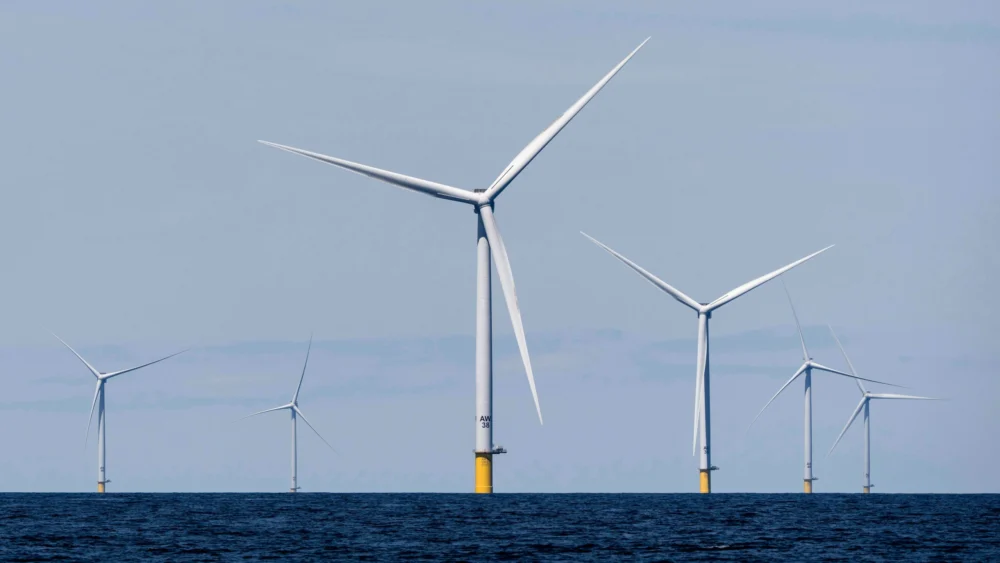
The burgeoning U.S. offshore wind sector, a critical pillar of the nation’s clean energy transition, has been brought to an abrupt and costly halt by a sweeping executive action citing classified national security risks. This regulatory reversal, which immediately paused construction and development across five major East Coast projects representing $25 billion in private investment, centers on a decades-old technical challenge: radar interference caused by rotating turbine blades. While developers and governmental defense agencies have collaborated for years to mitigate this known issue, the recent imposition of a mandatory stop order—backed by undisclosed intelligence findings—has triggered an immediate and aggressive legal confrontation, threatening to shatter investor confidence and permanently reshape the trajectory of American offshore energy development.
The projects affected are central to the U.S. renewable portfolio: Vineyard Wind 1 off Massachusetts, Revolution Wind spanning Rhode Island, Sunrise Wind and Empire Wind situated near New York, and Coastal Virginia Offshore Wind. Collectively, these five installations were slated to inject significant power capacity into the grid, sufficient to energize over 2.5 million homes and businesses while generating approximately 10,000 skilled jobs across the supply chain, from manufacturing to installation and maintenance. The sudden imposition of the pause, announced by the Department of the Interior (DOI), justified the action by referencing "recently completed classified reports" detailing risks that turbines could compromise crucial defense and surveillance radar systems. The official stance suggests the pause is necessary to allow the government time to fully assess and integrate mitigation strategies with developers.
The Contradiction of Classified Risk vs. Established Practice
The justification for the administrative stop order is immediately contentious because the issue of radar interference is not novel; it is a fundamental challenge addressed routinely during the multi-year federal permitting process. Large wind farms, particularly those deployed offshore where military and civilian surveillance is critical, pose a tangible technical hurdle. The massive, rotating blades of contemporary utility-scale turbines act as complex moving reflectors, generating radar echoes known as "clutter." This clutter can obscure legitimate targets, complicate air traffic control, disrupt weather forecasting, and critically, interfere with sensitive military detection systems.
However, the permitting process for these specific projects—some of which are over 80% complete—included extensive interagency review precisely to resolve these concerns. Major developers, including Orsted and Equinor, responsible for Revolution Wind and Empire Wind respectively, have publicly stated that their lengthy federal application processes involved detailed consultation with the Department of Defense (DoD) and the Federal Aviation Administration (FAA), resulting in site-specific mitigation agreements. The developers assert that the national security issues cited by the administration were previously addressed, neutralized, or deemed acceptable within the operational parameters of nearby radar facilities.
This assertion is supported by previous, non-classified government assessments. A 2024 report from the Department of Energy (DOE) and a 2025 analysis by the Government Accountability Office (GAO), an independent government watchdog, both acknowledged the technical challenges posed by wind farms to radar systems. While the DOE report noted that "no mitigation technology has been able to fully restore the technical performance of impacted radars" entirely, both reports emphasized that the most effective and widely adopted solution is strategic collaboration. By working closely with defense and civilian agencies on wind farm siting, layout, and operational parameters, developers can minimize interference zones. Crucially, the 2025 GAO report concluded that government officials, researchers, and offshore wind companies were already collaborating effectively, ensuring that radar concerns were raised and resolved during the permitting cycle.
The sudden elevation of these known technical challenges to a critical national security emergency requiring the immediate cessation of permitted construction activities raises serious questions about the administrative transparency and the underlying political motivation of the ruling. This is viewed by industry experts less as a sudden discovery of technical risk and more as the latest political strike against the offshore wind sector, echoing previous attempts by the same administration to freeze leasing and permitting activity upon taking office.
The Immediate Legal and Economic Fallout
The industry response has been swift and aggressive. Three of the primary developers have initiated lawsuits, seeking preliminary injunctions to override the stop orders and allow construction to resume. Their legal strategy rests heavily on the concept of regulatory estoppel—arguing that the government cannot arbitrarily reverse course after developers have committed billions of dollars in reliance on finalized federal permits and reviews. The financial stakes are staggering, involving not just the $25 billion in sunk costs and contracted obligations but also the massive potential liability for delayed grid connection and failure to meet state-mandated power delivery deadlines.
The economics of halting near-completion projects are particularly devastating. Revolution Wind, for instance, has installed nearly all its foundations and 58 of 65 turbines, claiming completion levels exceeding 87%. Empire Wind is over 60% complete and was scheduled to begin delivering power within the next year. Stopping projects at this stage generates immense stranded costs, requires costly demobilization of highly specialized construction fleets (vessels that command astronomical day rates), and risks damaging complex components already installed in the harsh marine environment.
Beyond the immediate financial damage, this regulatory instability has profoundly altered the industry’s long-term investment horizon. Prior to this administration’s shift in policy focus, forecasts from energy consultancy firms like BloombergNEF projected the U.S. could deploy up to 39 gigawatts (GW) of offshore wind capacity by 2035. Following years of regulatory friction and now this sweeping legal challenge, those projections have plummeted to a mere 6 GW. This massive reduction in expected capacity illustrates the market’s deep concern over regulatory unpredictability.
The Chilling Effect on Capital and Supply Chain
For an industry that relies heavily on foreign direct investment (FDI) and large-scale, long-term infrastructure financing, stability is paramount. The current environment is the antithesis of stability. Global investors, particularly European developers who possess the technical expertise and capital necessary to scale the US market, are now forced to factor in a substantial "political risk premium" when evaluating US projects. If a finalized federal permit can be unilaterally revoked or paused based on classified, non-reviewable reports, the entire investment thesis collapses. Capital is inherently mobile and will naturally flow toward jurisdictions with transparent, predictable regulatory frameworks, such as the established markets in the North Sea.
Furthermore, the domestic supply chain, which the U.S. is struggling to build from scratch, is highly vulnerable to these delays. Manufacturing facilities for foundational components, specialized port infrastructure, and a nascent workforce trained for turbine installation depend on a steady, predictable pipeline of projects. The pause creates immediate uncertainty, jeopardizing long-term contracts for steel, cables, and specialized vessels, and undermining the creation of the 10,000 projected jobs.
Grid Reliability and the Counter-Cyclical Benefit
The legal battles also carry significant consequences for grid reliability and consumer costs, particularly in the energy-constrained Northeast. Offshore wind offers a critical counter-cyclical benefit to the regional power supply. Unlike solar or conventional onshore wind, offshore winds along the Eastern Seaboard are typically strongest during the winter months, aligning perfectly with the region’s peak heating demand.
During deep winter cold snaps, New England and Mid-Atlantic states often face tight supplies of natural gas and spiking energy prices. Offshore wind projects were specifically designed to buffer this vulnerability. A 2025 study analyzing the potential impact of major offshore wind installations projected that if just 3.5 GW of capacity—roughly the combined size of the paused Revolution Wind and Vineyard Wind projects, plus two other pipeline developments—had been operational during the severe 2024-2025 winter, it would have lowered regional energy prices by approximately 11%. This reduction translates into an estimated $400 million in savings for ratepayers.
By halting these projects, the administration is effectively delaying a crucial buffer against volatile fossil fuel prices and maintaining the grid’s vulnerability during its greatest time of need. The argument that national security requires a halt to infrastructure that simultaneously enhances energy security creates a deeply paradoxical situation.
Technical Mitigation: Moving Beyond Clutter
While the government’s stated concern is radar interference, the industry has long been engaged in developing sophisticated mitigation technologies. The fundamental techniques involve shifting from reactive avoidance to proactive technological solutions.
One area of focus is advanced software filtering. This involves deploying complex algorithms designed to analyze radar returns and intelligently distinguish the signature of a massive, slowly rotating turbine from the signature of a high-speed aircraft or a naval vessel. While akin to digital noise cancellation, the complexity is immense, requiring real-time processing and integration into highly sensitive defense systems. Another approach involves modifying the turbines themselves—using specialized radar-absorbing materials on the blades or altering blade geometry to minimize reflection.
More promising, however, is the development of specific "gap filler" radar systems. Instead of trying to eliminate the clutter, new radar infrastructure can be strategically placed to cover areas where the primary radar systems are compromised by the wind farm. The cost of deploying such dedicated, complementary systems must be weighed against the economic and energy security benefits provided by the wind farms themselves. The fact that the DOI move came despite ongoing, multi-agency efforts to implement these very mitigation strategies suggests that the regulatory decision may have overridden technical feasibility considerations.
The Path Forward: Litigation and Precedent
The immediate fate of the $25 billion investment now rests with the federal courts. Developers are seeking preliminary injunctions based on the irreparable harm caused by the pause, a strategy that previously succeeded in overturning a similar, earlier stop-work order issued against Revolution Wind. In that prior case, a federal judge lifted the restriction after the developer successfully demonstrated the high financial stakes and produced evidence showing that government agencies had previously cleared the project of national security issues.
Should the courts uphold the administrative stop order, it would establish a chilling legal precedent: the executive branch can, at any point, utilize vague or classified national security claims to halt or reverse projects that have undergone exhaustive public permitting processes. This would fundamentally destabilize not just the offshore wind sector, but potentially any large-scale infrastructure project—from transmission lines to new port developments—that could conceivably interact with sensitive defense operations.
The long-term impact is clear. Even if the current political environment changes and regulatory hurdles are cleared, the specter of "unpredictability" will remain. Offshore wind requires immense, patient capital and regulatory certainty spanning decades. The recent events have taught the global energy market that the US is currently incapable of providing that certainty. Until regulatory stability is restored, either through successful legal challenges or a dramatic shift in administrative policy, the ambitious US goals for offshore wind capacity will remain severely curtailed, leaving the nation dependent on less reliable and more price-volatile energy sources, precisely when a transition is most urgent.