

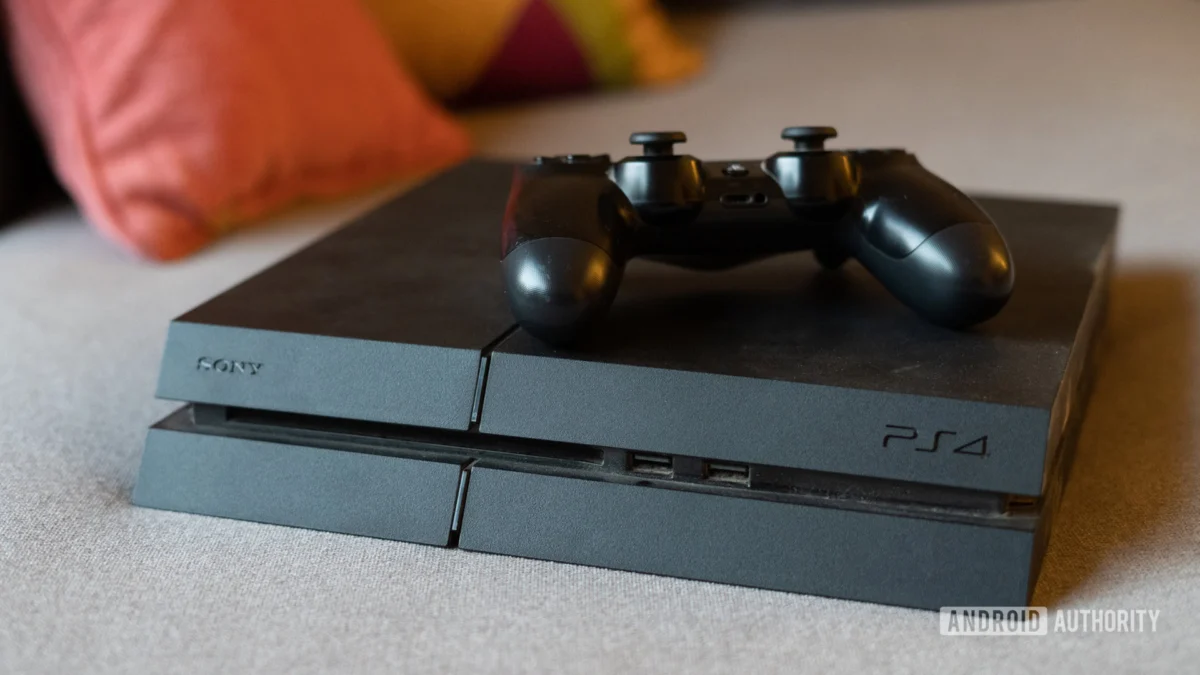
The landscape of video game emulation is undergoing a profound transformation, marked by the accelerating progress of projects targeting contemporary hardware. Central to this evolution is the continued development of the shadPS4 emulator, which is not merely inching forward but demonstrating significant, almost exponential, growth in its ability to render and run complex PlayStation 4 titles. This surge in capability is forcing a re-evaluation of how quickly legacy emulation targets can be conquered, especially when dealing with architectures as sophisticated as the PS4’s custom AMD "Jaguar" CPU and integrated GCN GPU.
To fully appreciate the significance of the recent milestones achieved by shadPS4, one must first understand the sheer difficulty inherent in emulating the PS4. Unlike previous generations, which often relied on more straightforward, off-the-shelf components, the PlayStation 4 utilized a highly customized x86-64 system-on-a-chip (SoC). While the x86 architecture theoretically simplifies CPU emulation compared to the PowerPC or MIPS designs of older consoles, the tight integration, specialized memory access patterns, and the proprietary nature of the Graphics Core Next (GCN) implementation present formidable barriers. Emulators must not only translate the PS4’s low-level GPU commands into instructions usable by modern NVIDIA or AMD graphics drivers but also accurately model the unique memory management unit (MMU) and system calls that games rely upon for performance and synchronization. Many developers previously predicted that full, stable emulation of the PS4 would require five to ten years post-console retirement; shadPS4 is challenging that timeline aggressively.
The release of the v0.15.0 iteration serves as a critical marker in this journey. While the technical changelogs might appear esoteric to the casual observer—details concerning global input configuration updates and refined signal emulation—these are the foundational mechanics that unlock stability for demanding titles. Signal emulation, for instance, is crucial for correctly handling inter-process communication and hardware interrupts, areas where even minor inaccuracies can lead to crashes or desynchronization in complex game logic. The developer’s explicit advisory for users to stabilize on this version before the upcoming v0.15.1, which promises breaking architectural changes, underscores the rapid, iterative nature of this development cycle. It implies that fundamental subsystems are being rebuilt or heavily optimized, a hallmark of a project moving from proof-of-concept toward functional maturity.
The quantitative evidence of this growth is perhaps the most compelling aspect. Tracking the compatibility lists over time reveals a trajectory that defies typical emulation progress curves. Where benchmarks from just a year prior might have listed only a handful of titles capable of booting or reaching minor milestones, the current compatibility index showcases a substantial library expansion. The jump to over 109 games now classified as "playable"—a status implying significant playtime without fatal errors—is a monumental leap from the dozens reported previously. Furthermore, the "in-game" category, covering games that load and execute core mechanics but may still suffer from graphical glitches or occasional instability, has similarly ballooned, now encompassing nearly 181 titles. This demonstrates that the core rendering pipeline and resource management systems are maturing rapidly enough to handle a wider variety of proprietary engine implementations.
Platform parity, or the lack thereof, also offers insight into the emulator’s current focus. The robust performance on Windows, which benefits from mature DirectX/Vulkan drivers and developer tooling, is expected. However, the significantly higher number of playable titles on Linux (119) suggests that the development team is prioritizing open-source graphics APIs like Vulkan early in the process, which is a strategic move for long-term cross-platform viability. Conversely, the lagging state on macOS (only 11 titles) highlights the ongoing challenges of targeting Apple’s proprietary Metal API, which often requires a completely different approach to shader compilation and hardware abstraction compared to Vulkan or DX12. The speculation regarding an Android port, while currently unsubstantiated, speaks to the ultimate ambition of emulation projects: making these vast libraries accessible on diverse hardware ecosystems.
The concept of a "gold standard" title within an emulation project is a powerful indicator of success. For shadPS4, Bloodborne has emerged in this role. This title, notoriously demanding and aesthetically rich, often serves as a stress test for any PS4 emulation effort due to its complex rendering techniques and reliance on high frame rates for optimal experience. Reports suggesting near-perfect 60 frames per second (fps) performance on high-end contemporary hardware, such as an RTX 4060, when augmented with community-developed stability mods, suggests that the emulator has effectively tackled the most intensive GPU workloads. When the most challenging titles begin to stabilize, it provides a solid foundation for less demanding games to follow suit.
Specific improvements tied to version 0.15.0 directly benefit these flagship titles. Enhanced readback handling addresses visual anomalies, which often manifest as incorrect texture data being returned from the GPU memory space to the CPU for processing—a common source of visual corruption in hardware emulation. For The Last Guardian, improvements to game mechanics suggest that timing-sensitive physics or AI routines, often reliant on precise system clock emulation, are now better synchronized. Similarly, refinements to color grading and rendering stability in Driveclub point toward improved fidelity in shader execution and post-processing effects, areas where early emulators usually struggle to match the console’s native pipeline. The achievement of "playable" status for a title like Lara Croft and the Temple of Osiris on Windows further broadens the accessible library, signaling success against different engine architectures.
The necessity of user-side configuration trade-offs—specifically the "Readback Mode" selection between "Precise" and "Relaxed"—is a crucial area for expert analysis. This choice encapsulates the fundamental tension in emulation: performance versus accuracy. The "Precise" mode forces stricter adherence to the timing and structure of the original GPU data transfers, minimizing visual glitches but imposing a massive overhead on the host CPU, often leading to reduced frame rates. Conversely, "Relaxed" mode prioritizes throughput by allowing more lenient interpretation of data flow, yielding higher FPS but risking classic emulation artifacts like texture flickering or missing geometry due to incorrect synchronization flags. This duality confirms that the emulation is deep enough to interact with low-level hardware behaviors that are not immediately apparent in simple program execution.
The performance burden itself cannot be overstated. Emulating the PS4’s GPU—a tailored GCN unit—on a general-purpose PC GPU requires significant computational resources, primarily from the CPU, to manage the translation layer and maintain timing accuracy. This intensive CPU requirement means that while the emulator is functionally advancing, the barrier to entry for achieving a smooth, artifact-free experience remains high, reserving true playability for those equipped with modern, high single-core performance processors.
Industry Implications and The Preservation Imperative
The rapid advancement of projects like shadPS4 carries substantial implications for the video game industry and digital preservation efforts. Historically, console manufacturers have enjoyed a comfortable buffer between the end of a console’s active lifecycle and the widespread availability of stable emulation. This gap allows them time to transition consumers to the next generation, often locking access to older catalogs through subscription services or digital storefronts that rely on proprietary virtualization layers.
The acceleration of PS4 emulation disrupts this timeline. As more major titles become genuinely playable outside of Sony’s controlled environment, the conversation shifts from "if" to "when" these games will be fully accessible via third-party software. This places pressure on platform holders regarding backward compatibility strategies. If a dedicated, free emulator can deliver a superior or equivalent experience to an official streaming service—especially one burdened by latency—it undermines the value proposition of those services.
From a preservation standpoint, this progress is invaluable. Emulation serves as the ultimate archival mechanism, ensuring that software remains executable long after the original hardware fails or proprietary online infrastructure is decommissioned. High-fidelity emulation of the PS4 means that complex, artistically significant titles that might otherwise become inaccessible—either through planned obsolescence or corporate decisions—gain a renewable lease on life. The detailed tracking of game states and system calls within the emulator’s code base effectively documents the underlying operational characteristics of the original console hardware, a critical contribution to digital archaeology.
Expert Analysis: Architectural Hurdles and Future Trajectories
The success in rendering titles like Bloodborne suggests that the shadPS4 developers have achieved a high degree of accuracy in the GCN shader compilation stage. Modern PC GPUs utilize similar foundational architectures, but the way the PS4 exposed those capabilities through its low-level APIs (like GNM) is unique. A breakthrough here implies sophisticated runtime translation or highly accurate static recompilation of the PS4’s shader code.
Looking forward, the primary bottlenecks will likely shift from raw GPU translation to precise CPU and memory modeling, particularly concerning asynchronous compute tasks and custom hardware accelerators that the PS4 employed. The upcoming v0.15.1 update, noted for its breaking changes, is likely targeting these deeper architectural dependencies. Improving signal handling and potentially refining the emulation of the PS4’s custom southbridge or I/O controllers will be necessary to stabilize the remaining 50% of the compatibility list, specifically those games that crash during loading sequences or exhibit intermittent save corruption.
The development trajectory also suggests an increasing reliance on community contributions and open-source methodologies. The public nature of the compatibility list and the rapid iteration cycles are characteristic of open-source emulation efforts, allowing developers to pool knowledge regarding specific game bugs and workarounds far more efficiently than proprietary teams operating in isolation.
Future Impact and Emerging Trends
The trajectory set by shadPS4 signals a broader trend in emulation: the shrinking time gap between console release and functional emulation. For the PlayStation 5, which shares the x86-64 lineage, the lessons learned from PS4 emulation—particularly concerning the intricacies of AMD’s RDNA architecture utilized in the PS5—will dramatically accelerate its own emulation timeline. We may see functional, albeit unstable, PS5 emulation efforts emerge years sooner than anticipated based on previous console generations.
Furthermore, the community focus on performance mods for titles like Bloodborne highlights a shift in user expectation. Modern users are often less concerned with a pixel-perfect 1:1 replica of the original hardware experience and more interested in an enhanced experience—higher frame rates, better resolutions, and improved loading times—provided the core gameplay integrity is maintained. This creates a symbiotic relationship where the emulator provides the baseline, and the community refines the user experience, pushing the boundaries of what the original hardware could achieve.
In summary, the consistent, aggressive progress of the shadPS4 emulator is more than just an update to a niche piece of software; it is a data point indicating a maturation of reverse engineering techniques applied to contemporary console hardware. The expanding library of playable games serves as a tangible metric of success, signaling that the next generation of console preservation is already well underway, fundamentally altering the relationship between consumers, game libraries, and platform exclusivity in the digital age. The path forward involves tackling the remaining, deeply embedded system synchronization issues, but the foundational work to render the PS4 library executable on commodity hardware is undeniably being laid at an impressive rate.