

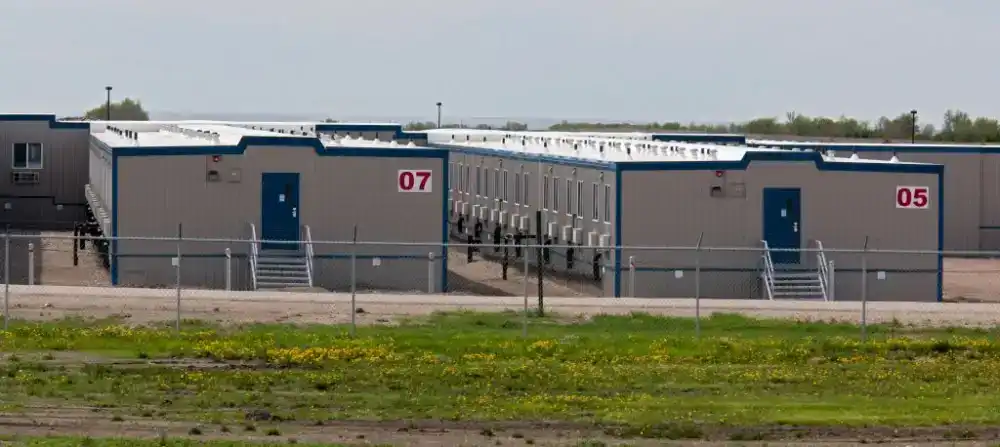
The meteoric rise of generative artificial intelligence has often been framed through the lens of silicon breakthroughs and algorithmic sophistication. However, beneath the layer of virtual intelligence lies a massive, physical reality composed of concrete, steel, and a colossal requirement for human labor. As technology giants race to construct the next generation of 1.6-gigawatt data centers, the infrastructure required to support the workforce behind these projects is undergoing a radical transformation. Nowhere is this more evident than in Dickens County, Texas, where a former Bitcoin mining facility is being reimagined as a centerpiece of the AI revolution, supported by a burgeoning industry of modular workforce housing.
This shift has brought a long-standing industrial model—the "man camp"—into the heart of the technology sector. Historically associated with remote oil fields and mining operations, these temporary modular villages are now being deployed to house the thousands of specialized workers required to build the high-density power and cooling systems that AI demands. Leading this charge is Target Hospitality, a company that has secured multiple contracts totaling $132 million to establish and manage these sprawling residential complexes. While the move highlights the logistical ingenuity required to meet the demands of the $700 billion data center boom, it also brings to the forefront the complex corporate histories of the entities building the backbone of the digital age.
The Pivot from Extraction to Computation
The concept of workforce housing is not new to the American landscape. During the fracking boom of the 2010s, "man camps" became a ubiquitous sight across the Permian Basin and the Bakken formation. These facilities were designed for rapid deployment in areas where local housing markets were nonexistent or unable to absorb a sudden influx of thousands of laborers. As the oil and gas sector stabilized and shifted toward more automated or permanent operations, the providers of these modular cities began seeking new markets.
The emergence of AI as a primary driver of global infrastructure investment has provided a perfect transition. Data centers, once relatively modest buildings, have evolved into "gigascale" campuses. These projects require a massive surge of electricians, HVAC specialists, and structural engineers, often in rural locations where land is cheap and power is accessible, but where the local population is too small to provide a sufficient workforce. In Dickens County, the conversion of a legacy Bitcoin facility into a 1.6-gigawatt AI hub represents this evolution. The sheer scale of the power requirement—enough to fuel over a million homes—necessitates a construction force that the surrounding rural communities simply cannot house.
The Economics of Specialized Hospitality
For companies like Target Hospitality, the data center boom represents a "once-in-a-generation" market opportunity. Troy Schrenk, the company’s chief commercial officer, has characterized the current pipeline of data center construction as the most actionable and significant in his career. The $132 million in contracts for the Dickens County project is likely just the beginning of a broader trend where tech-related infrastructure becomes the primary revenue driver for modular housing firms.
The Dickens County camp is a far cry from the rugged, makeshift barracks of past industrial eras. To attract and retain the highly skilled labor necessary for sensitive data center construction, these facilities offer a suite of amenities designed to simulate a high-standard of living in remote environments. The Dickens County site features modern housing units, comprehensive laundry facilities, fitness centers, and game rooms. Perhaps most notably, the dining facilities are designed to compete with commercial restaurants, offering on-demand services such as high-quality steaks to ensure worker morale remains high during long construction cycles.
From a developer’s perspective, these camps are a strategic necessity. The timeline for AI deployment is aggressive; companies like Microsoft, Google, and Amazon are in a race to secure "first-mover" advantages in compute capacity. Any delay in housing for the workforce translates directly into a delay in the facility’s online date, which in the current market, can result in millions of dollars in lost opportunity. By outsourcing the "human infrastructure" to specialized firms, data center developers can focus on the technical complexities of fiber optics and liquid cooling.
The Shadow of Institutional Management
While the expansion into the tech sector marks a profitable new chapter for workforce housing providers, it also invites closer scrutiny of their broader operational portfolios. Target Hospitality, for instance, does not only operate in the realm of industrial housing. The company is also the owner and operator of the Dilley Immigration Processing Center in Texas, a facility used by Immigration and Customs Enforcement (ICE) to hold migrant families.

The conditions at the Dilley facility have been the subject of significant legal and humanitarian concern. Court filings and investigative reports have alleged a range of systemic failures, including the presence of mold and pests in food supplies, and a lack of adequate medical or dietary accommodations for children and individuals with special needs. This creates a stark, uncomfortable contrast in the corporate profile of the companies building the AI future: on one hand, providing "luxury" temporary housing with high-end dining for the tech workforce, and on the other, managing detention facilities that have been criticized for failing to meet basic standards of care.
For the technology industry, which often projects an image of progressive values and ethical innovation, the reliance on contractors with controversial ties to the carceral system presents a potential reputational risk. As ESG (Environmental, Social, and Governance) criteria become more integrated into investment decisions, the supply chain of AI—extending from the cobalt mines in the Congo to the modular housing in Texas—is being viewed with increasing criticality.
Regional Impacts and the "Boomtown" Dynamic
The arrival of a 1,000-person man camp in a rural county has profound implications for local economies. While these facilities are largely self-contained, they do interact with local infrastructure. The influx of workers can strain local emergency services, roads, and water supplies, even if the camp provides its own housing and food.
However, for many rural areas that have seen their populations dwindle as traditional agriculture or mining declined, the AI boom is viewed as a lifeline. The tax revenue generated by a 1.6-gigawatt data center is transformative for local school districts and county governments. The man camps serve as a buffer, allowing the county to reap the benefits of the construction boom without the long-term burden of building permanent housing that might become vacant once the facility is completed and the workforce scales down to a smaller operational team.
The Future of Modular Infrastructure
Looking ahead, the "man camp" model is likely to become a permanent fixture of the technology landscape. The geographic requirements for AI data centers are shifting. As power grids in traditional hubs like Northern Virginia reach their limits, developers are looking toward the "interstitial spaces" of the American Midwest and Southwest. These remote locations offer the space and the renewable energy potential required for AI, but they lack the human density to support massive construction projects.
We are seeing the emergence of a "plug-and-play" infrastructure model. Just as data centers themselves are becoming more modular—with pre-fabricated power rooms and cooling units—the human element of the build-out is being commoditized. The ability to drop a fully functioning city for 1,000 people into the middle of a desert or a prairie within months is a logistical feat that is now as essential to the tech industry as the supply of H100 GPUs.
However, this industrialization of the workforce experience also raises questions about the long-term sustainability of the AI build-out. The reliance on a transient, "cump-based" workforce may solve the immediate labor shortage, but it does little to build local capacity or provide long-term stability for the workers themselves. Furthermore, as the lines between different types of institutional housing—industrial, correctional, and humanitarian—continue to blur through the portfolios of companies like Target Hospitality, the ethical landscape of the AI revolution will only become more complex.
The steak-on-demand cafeterias of Dickens County are a symbol of a new era of American industry. They represent the point where the high-flying aspirations of artificial intelligence meet the grounded, gritty realities of large-scale construction. As the AI boom continues to accelerate, the "man camp" will remain a vital, if controversial, engine of progress, housing the hands that build the brains of the future.