

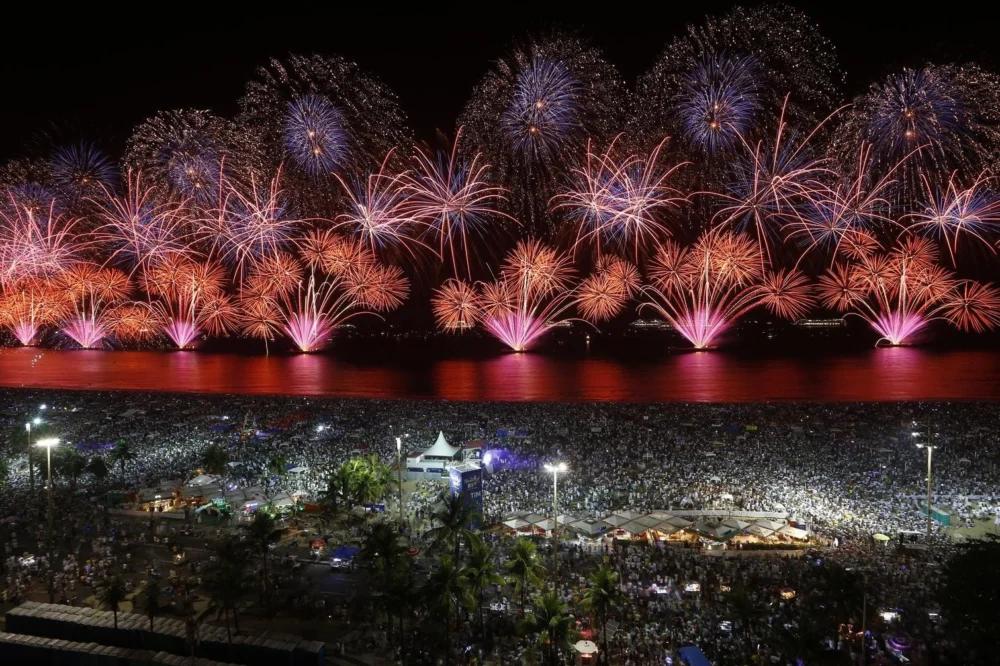
For centuries, the arrival of the New Year has been synonymous with the thunderous boom and kaleidoscopic brilliance of fireworks. From the grand harbors of Sydney and Rio de Janeiro to the neighborhood streets of small-town America, pyrotechnics have served as the ultimate punctuation mark for human celebration. However, as the global community becomes increasingly attuned to the nuances of environmental health and ecological stability, the "hidden costs" of these displays are coming into sharp focus. What was once viewed as a harmless tradition is now being re-examined through the lens of atmospheric chemistry, toxicology, and animal behavioral science. This shift in perspective is driving a technological renaissance, where drone swarms and laser projections are poised to retire the era of gunpowder-based spectacle.

The scale of global firework consumption is staggering and represents a significant anthropogenic pulse of pollution. In the United States alone, data from the American Pyrotechnics Association indicates that consumption reached approximately 428.8 million pounds in 2021. While individual displays may seem ephemeral, the cumulative effect of thousands of simultaneous events across a continent creates what scientists call a "concentrated pollution event." Unlike industrial emissions, which are often regulated and geographically isolated, firework pollution is released at ground level or in the low atmosphere, directly within densely populated urban centers.
At the heart of the public health concern is the dramatic spike in PM2.5—fine particulate matter with a diameter of 2.5 micrometers or less. To put this in perspective, these particles are roughly 30 times smaller than the width of a human hair, a size that allows them to bypass the body’s natural respiratory filters. When inhaled, PM2.5 penetrates deep into the alveolar regions of the lungs and can even enter the systemic circulation. Peer-reviewed air-quality monitoring consistently reveals that New Year’s Eve celebrations trigger overnight PM2.5 concentrations that soar 30% to 60% above typical winter background levels. For individuals with pre-existing conditions such as asthma, chronic obstructive pulmonary disease (COPD), or cardiovascular sensitivities, these "celebratory" spikes can be life-threatening, correlating with increased emergency room admissions for heart failure and respiratory distress in the hours following the displays.

The aesthetic appeal of fireworks—the vivid crimson, electric blue, and brilliant green—is a product of heavy metal chemistry. To produce these colors, manufacturers incorporate various metal salts into pyrotechnic formulations: strontium for red, barium for green, and copper compounds for blue. When the firework detonates, these metals are aerosolized. Toxicological research suggests that these metal-laden aerosols are not merely inert dust; they exhibit measurable cellular toxicity. Once the smoke clears, these metals do not vanish. They settle onto the soil and into local waterways, where they can persist for years. The "legacy contamination" of fireworks was notably documented by the U.S. Geological Survey at Mount Rushmore, where perchlorate and firework-related metals were detected in the environment long after the aerial displays had been discontinued, proving that the environmental "hangover" of a fifteen-minute show can last for decades.
Beyond the visible smoke and metallic fallout lies a more insidious chemical: perchlorate. Used as a powerful oxidizer to provide the oxygen necessary for the rapid combustion of gunpowder, perchlorate is highly soluble in water and remarkably stable in the environment. Its primary health risk involves the human endocrine system; perchlorate interferes with the thyroid gland’s ability to utilize iodine, which is essential for the production of hormones that regulate metabolism and development. Monitoring research has shown that perchlorate levels in bodies of water near display sites can jump from negligible background levels to over 500 micrograms per liter immediately following a show—an increase of more than 1,000 times. This poses a particular risk to local ecosystems and potentially to municipal water supplies that rely on surface water.

While the chemical impact on humans is significant, the ecological disruption caused by pyrotechnics is even more profound. For domestic pets, the unpredictable and high-decibel nature of fireworks is a source of acute psychological trauma. Organizations like the American Veterinary Medical Association report a predictable surge in panic-related behaviors every New Year, including escape attempts that lead to injuries or lost animals. However, the impact on wildlife is perhaps more devastating because it occurs on a population-wide scale.
Modern tracking technologies, including weather radar and GPS tagging, have allowed scientists to visualize the "mass panic" that fireworks induce in avian populations. Research published in the Proceedings of the Royal Society B used weather radar to observe thousands of birds taking flight simultaneously at the stroke of midnight. These birds were forced into sudden, high-altitude flights in total darkness—conditions they are not biologically equipped to navigate. These flights are energetically costly, especially during the winter months when caloric reserves are low. The resulting disorientation leads to mass collisions with buildings and power lines, or simply death by exhaustion.

In response to these mounting concerns, a technological pivot is underway. The event industry is increasingly embracing drone light shows as the sustainable successor to the firework display. Unlike the "one-and-done" nature of pyrotechnics, drone shows utilize fleets of sophisticated, LED-equipped Unmanned Aerial Vehicles (UAVs) that can be reused hundreds of times. These shows represent a triumph of modern engineering, relying on Real-Time Kinematic (RTK) GPS and mesh networking to synchronize hundreds, or even thousands, of drones with centimeter-level precision.
From a creative standpoint, drones offer a canvas that fireworks cannot match. While a firework is limited to a radial burst of light, a drone swarm can form three-dimensional shapes, intricate logos, and moving animations that tell a narrative story. From a logistical perspective, the advantages are equally compelling. Drone shows produce zero direct air pollution, no chemical fallout, and significantly lower noise levels. This "quiet" spectacle allows cities to host celebrations in sensitive ecological areas or near hospitals and residential zones where traditional fireworks would be prohibited.

Laser projection mapping and high-intensity light shows offer another layer of the "green" celebration kit. By using the architecture of a city or the natural contours of a landscape as a projection surface, organizers can create immersive visual experiences without the need for explosive materials. These technologies are also highly scalable; a laser show can be as small as a single building or as large as a city skyline, all controlled via software that allows for real-time adjustments.
The transition, however, is not without its hurdles. The initial capital investment for a fleet of high-end performance drones and the specialized labor required to program them currently exceeds the cost of a standard firework display. Furthermore, regulatory environments for drone flight in congested urban areas are still evolving. However, the economic calculus is changing. As insurance premiums for pyrotechnic events rise due to fire risks—especially in drought-prone regions—and as municipal governments face stricter air quality mandates, the long-term ROI of reusable technology becomes undeniable.

Looking toward the future, the "spectacle economy" is likely to become a hybrid of physical and digital experiences. We are already seeing the emergence of Augmented Reality (AR) celebrations, where attendees can view digital pyrotechnics through their smartphones or AR glasses, layered perfectly over the physical sky. This allows for a completely personalized, zero-impact celebration that can be shared globally in real-time.
The evolution of New Year’s celebrations from gunpowder to gimbals reflects a broader societal maturation. It represents a move away from "disposable" entertainment toward a model of celebration that respects the biological and chemical integrity of our environment. While the nostalgic "boom" of a firework may hold a sentimental place in our culture, the data suggests that the cost of that nostalgia has become too high. As we usher in future years, the most significant "spark" will not be the one that leaves a cloud of toxic smoke, but the one that ignites a new era of clean, technological wonder. The sky, once a repository for our chemical waste, is reclaiming its role as a clear, silent witness to our progress.