

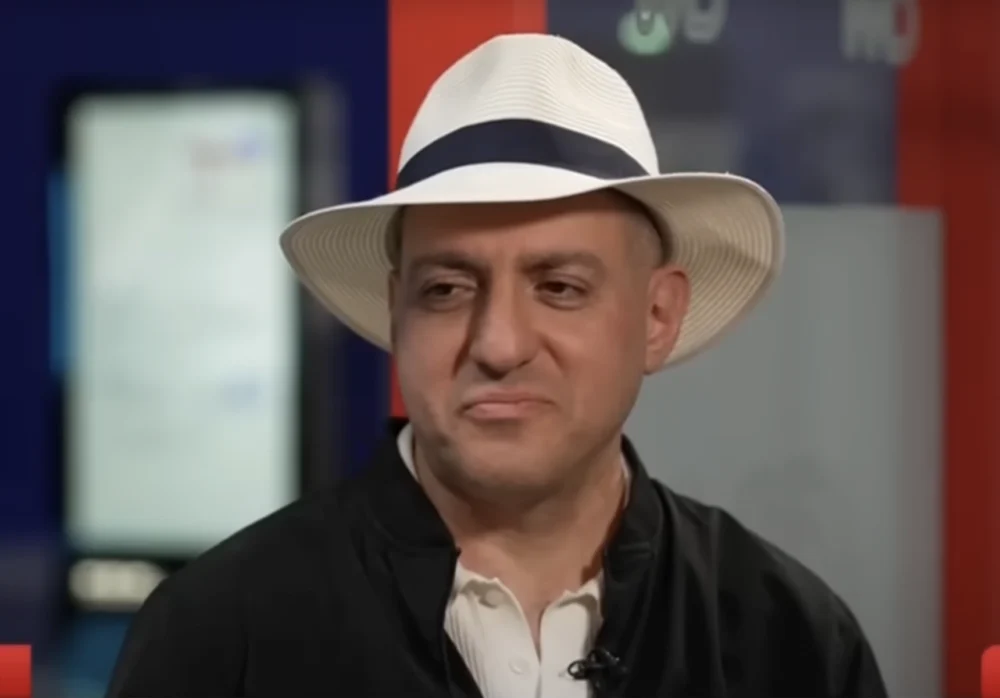
The high-flying world of deep technology, particularly the intersection of artificial intelligence and quantum computing, is currently witnessing a high-stakes legal confrontation that threatens to publicly unravel the internal workings of one of Silicon Valley’s most prominent, billionaire-backed startups: SandboxAQ. The company, a highly publicized spinout from Google parent company Alphabet’s X "moonshot factory," is locked in a fierce dispute with a former top executive whose wrongful termination lawsuit levels severe allegations of corporate malfeasance, financial deception, and misuse of company resources against its famed CEO, Jack Hidary.
Filed in mid-December by Robert Bender, the former Chief of Staff to Hidary, the complaint asserts that his termination in July 2025 was a retaliatory measure. Bender claims he was dismissed shortly after raising internal alarms regarding a series of alleged ethical and legal breaches, which reportedly encompassed misleading financial representations made to prospective investors and egregious personal use of corporate assets, including instances involving alleged "sexual encounters" and the solicitation of companions.
In a blistering legal countermove filed last Friday, SandboxAQ’s legal team launched a full-scale assault on the plaintiff’s credibility. The company’s response vehemently denies every allegation, labeling the former employee a "serial liar" and asserting that the lawsuit constitutes "false claims for improper and extortionate purposes." Orin Snyder, a renowned litigation partner at the influential white-shoe law firm Gibson Dunn, representing SandboxAQ, delivered a sharp public statement: "This case is a complete fabrication. We look forward to debunking these baseless allegations and exposing the lawsuit—as detailed in our answer—for what it is—an opportunistic and extortionate abuse of the judicial process."
The case is not merely a standard employment dispute; it serves as a rare, public window into the typically opaque internal dynamics of hyper-valued, pre-IPO tech unicorns. Silicon Valley employment agreements frequently mandate private arbitration, keeping corporate disagreements shielded from public scrutiny. This lawsuit, however, has pierced that veil, offering the public a glimpse of the "dirty laundry" being aired in the courts.
The Allegations: Financial and Ethical Misconduct
Robert Bender served as Chief of Staff to CEO Jack Hidary from August 2024 through July 2025. His complaint details a pattern of behavior that, if proven true, would constitute a profound failure of corporate governance and fiduciary duty.
One of the most damaging claims relates to financial reporting during a critical fundraising period. Bender alleges that the revenue figures presented internally to the company’s board of directors were substantially lower—specifically 50% lower—than the inflated figures presented to prospective external investors. This alleged disparity occurred around the time Hidary executed a tender offer, selling "tens of millions of dollars" worth of his personal stock at a premium price, a sale Bender contends was based on these misleading financial projections. SandboxAQ’s lawyers categorically deny any fraudulent disclosures regarding tender offers or otherwise.
Beyond the financial claims, the lawsuit describes the misuse of company funds for personal and illicit purposes. The unredacted portions of the suit generally allege that Hidary utilized corporate resources and investor capital to "solicit, transport, and entertain female companions." An exhibit attached to the complaint, specifically a text message from Bender, reportedly mentions "prostitutes."
The Strategic Use of Redactions
Adding a layer of complexity and potential strategic maneuvering to the case is the unusual decision by the plaintiff, Bender, to redact the most sensitive and salacious details of his own complaint. Bender’s attorneys confirmed in court filings that the obscured sections "describe sexual encounters and the physical condition of non-party individuals observed by Plaintiff during business travel."
In litigation, it is typically the defendant (the party being sued) who seeks redactions to protect corporate secrets, privileged information, or the privacy of individuals. The plaintiff choosing to hide damaging information is highly atypical. Legal analysts suggest this tactic operates on two main possibilities. The first is a genuine effort to protect innocent, non-party third individuals from public exposure. The second, more cynical interpretation, is a calculated "shakedown strategy." By publicly filing a complaint with clear, yet obscured, references to extremely damaging material, the plaintiff signals to the defendants that these details could emerge if a satisfactory settlement is not reached, effectively maximizing leverage in negotiations.
Bender, for his part, claims his lawsuit was only initiated after his termination was followed by a "malicious scorched earth campaign to destroy his reputation." This mutual assertion of reputational warfare underscores the toxic atmosphere surrounding the litigation.
The Pedigree of a Quantum Unicorn
The significance of this legal battle is magnified by the pedigree and valuation of SandboxAQ, as well as the list of Silicon Valley heavy hitters tied to the firm.
SandboxAQ focuses on the critical technologies bridging classical computing with quantum capabilities, specifically developing AI solutions for enterprise security and preparing organizations for the post-quantum cryptography (PQC) transition—a massive undertaking driven by the imminent threat of quantum computers breaking current encryption standards.
The company was originally formed as a secretive, internal project within Alphabet’s X division, led by Jack Hidary, who is also known for his long-standing involvement with the X Prize Foundation. In March 2022, SandboxAQ spun out as an independent entity, immediately attracting extraordinary investor interest.
The cap table reads like a who’s who of global tech and finance elite. Investors include billionaire and former Google CEO Eric Schmidt, who also serves as the company’s chairman; Salesforce CEO Marc Benioff; venture capitalist Jim Breyer; and Bridgewater Associates founder Ray Dalio. The confidence these figures placed in SandboxAQ translated into staggering fundraising results. Despite the nascent nature of the quantum industry, the company closed a Series E funding round last April, raising over $450 million from giants like Ray Dalio, Horizon Kinetics, BNP Paribas, Google, and Nvidia. In addition to a reported $90 million secondary sale, the company has raised approximately $1 billion in total funding and is estimated by PitchBook to hold a valuation of $5.75 billion.
The involvement of such influential figures ensures that the court proceedings, regardless of the eventual outcome, will be closely watched by institutional investors and corporate governance experts worldwide.
Industry Implications: Governance in Hyper-Growth Startups
This lawsuit spotlights the unique vulnerabilities inherent in venture-fueled hyper-growth models, particularly in deep-tech sectors like quantum computing, where valuations often outpace tangible revenue generation. The allegations of widely divergent financial figures presented to the board versus investors raise profound questions about corporate transparency and governance in privately held "unicorn" companies.
When a company secures a $5.75 billion valuation based largely on future potential and specialized intellectual property (IP), the integrity of its leadership and financial reporting becomes paramount. The alleged 50% revenue discrepancy suggests a significant disconnect between operational reality and investor presentation—a classic red flag in rapidly scaling, privately funded ventures that are not subject to the rigorous disclosures mandated by public markets.
Expert analysis suggests that in the pursuit of maintaining momentum and securing ever-larger funding rounds, ethical boundaries can become blurred. The pressure on CEOs of deep-tech moonshots to meet or exceed aggressive growth narratives to justify multi-billion-dollar valuations often necessitates high-stakes presentations to secure continued capital. If the plaintiff’s allegations hold weight, the case could reveal a serious lapse in fiduciary oversight, challenging the governance practices implemented by SandboxAQ’s highly experienced board, chaired by Eric Schmidt.
Furthermore, the recurrence of certain allegations—specifically the lavish spending and weak growth narratives—echoes an investigative report published in July by The Information. That report detailed claims that Hidary used corporate jets to transport women he was dating and noted that company revenues were lagging projections. While Bender references this article in his complaint, he denies being a source for the investigative piece, a denial SandboxAQ’s legal team claims is false. The confluence of these public reports and the formal lawsuit strengthens the narrative that governance issues may have been present long before the current litigation commenced.
The Legal Framework: Arbitration and Public Accountability
The ability of this case to emerge into the public domain underscores the growing tension between standard Silicon Valley employment practices and the desire for public accountability. While many employee disputes are shunted into confidential arbitration, cases involving whistleblowing or statutory claims related to securities fraud or wrongful termination sometimes find their way into public courts.
The legal strategy employed by SandboxAQ is equally aggressive, focusing not just on denying the facts but on dismantling the plaintiff’s character and motive. By deploying the term "extortionate," the company seeks to frame the entire lawsuit as a cynical attempt to profit from manufactured scandal, rather than a genuine pursuit of justice for wrongful termination. This strategy aims to shift the focus from the veracity of the claims (financial fraud, misuse of funds) to the alleged malice and opportunistic intent of the accuser.
This defensive maneuver is common in high-profile corporate litigation, but the gravity of the counter-allegations—accusing a former executive of being a "serial liar"—ensures that the discovery phase, should the case proceed that far, will be intensely contested and potentially explosive.
Future Impact and Trends
Regardless of the eventual legal outcome, the SandboxAQ scandal carries significant implications for the deep-tech sector and investor confidence.
First, it serves as a crucial reminder to investors, particularly those pouring hundreds of millions into pre-revenue or early-revenue deep-tech firms, that the governance standards must be commensurate with the valuation. The promise of PQC and AI innovation is enormous, but this promise cannot insulate companies from basic checks and balances regarding executive conduct and financial transparency.
Second, the controversy may dampen enthusiasm for spinouts from major corporate labs like Alphabet’s X. These ventures are often given a privileged status due to their pedigree, but if they are perceived as operating outside the bounds of responsible corporate behavior, that halo effect will diminish, potentially impacting future corporate venturing efforts.
Finally, the public airing of alleged misuse of investor capital for personal benefit, coupled with claims of financial manipulation, reinforces a critical trend toward heightened scrutiny of CEO conduct in the tech industry, a movement fueled by recent high-profile failures and governance scandals. For a company at the forefront of national security-critical technology, like SandboxAQ, maintaining absolute trust and ethical standing is paramount. The current legal cloud poses an existential threat to that trust, potentially jeopardizing future contracts with government and major enterprise clients who demand unimpeachable integrity in their PQC and AI partners. The saga is set to become a defining case study in the challenges of scaling moonshot technology under the immense pressure of billion-dollar valuations.