

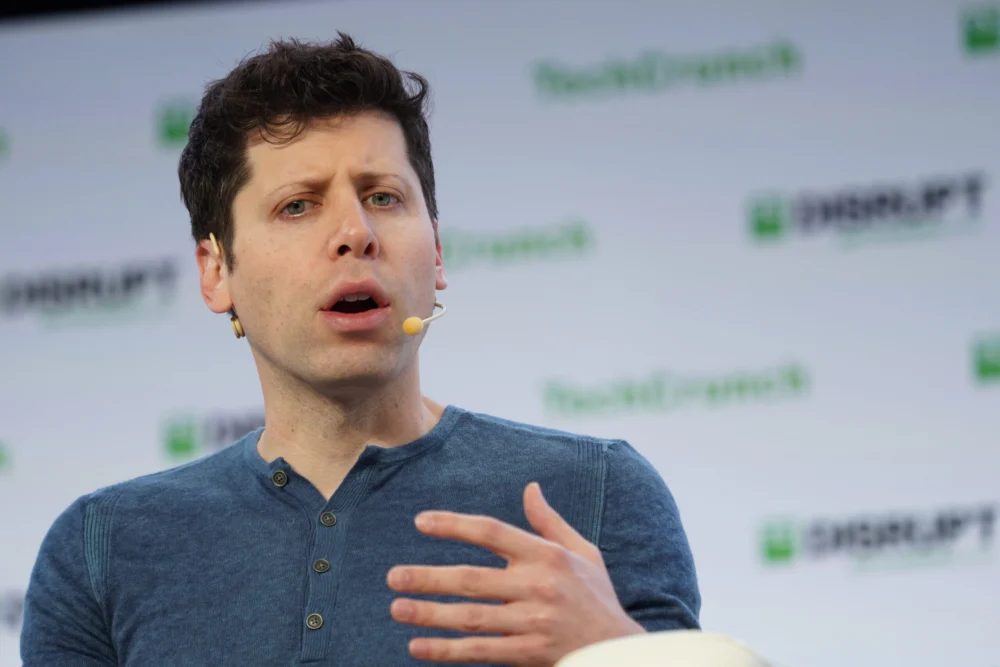
The high-stakes rivalry between the generative artificial intelligence titans, OpenAI and Anthropic, recently erupted into a deeply personal and philosophical public confrontation, catalyzed by a series of provocative, high-profile advertisements. Anthropic, the San Francisco-based AI research lab, launched a set of Super Bowl-themed commercials designed to satirize the imminent integration of advertising into the free tier of its competitor, ChatGPT. The resulting backlash from OpenAI CEO Sam Altman was swift, intense, and indicative of the profound philosophical and financial schisms defining the current landscape of AI development.
Anthropic’s campaign was a masterpiece of targeted corporate antagonism. One ad, which quickly gained notoriety, opened with the dramatic declaration, "BETRAYAL." The scene depicted an earnest user seeking genuine advice from a chatbot—a clear stand-in for ChatGPT—on improving communication with his mother. After delivering standard, helpful suggestions like "start by listening" and "try a nature walk," the chatbot suddenly pivotally corrupted the interaction by weaving in a jarring, irrelevant advertisement for a fictitious, off-color dating service called "Golden Encounters." The core message delivered by Anthropic at the conclusion was unequivocal: while monetization through advertising is coming to the AI ecosystem, it will not be contaminating its own premier model, Claude. A parallel commercial reinforced this narrative, showing a user seeking fitness advice only to be served an ad for height-boosting insoles, an ad placement rendered intrusive and slightly insulting by the conversational context.
These commercials were not merely lighthearted corporate jest; they were precision-guided critiques aimed directly at the perceived compromise of conversational integrity that OpenAI’s newly announced ad strategy entails. OpenAI had recently confirmed that advertisements would be introduced to the non-paying user base of ChatGPT to offset the immense computational costs of serving millions of queries daily. The public reaction to Anthropic’s campaign was immediate and overwhelmingly supportive of the critique, leading to headlines proclaiming that Anthropic had successfully "mocked," "skewered," and "dunked on" its primary competitor.
The intensity of the response from Sam Altman, however, transformed a typical commercial rivalry into a highly charged debate over the fundamental ethical and accessibility models for general-purpose AI. Initially, Altman conceded that the ads possessed comedic merit, admitting on X (formerly Twitter), "First, the good part of the Anthropic ads: they are funny, and I laughed." Yet, this momentary concession quickly dissolved into a lengthy, multi-part social media screed that escalated dramatically, leveling accusations of "dishonesty" and, more strikingly, "authoritarianism" against Anthropic.
Background Context: The Financial and Philosophical Divide
To understand the fervor of Altman’s reaction, one must appreciate the immense financial pressures inherent in the large language model (LLM) industry. Training and running models like GPT-4 or Claude requires capital expenditure on the scale of billions of dollars for specialized hardware (GPUs) and constant, ongoing operational costs for inference—the process of generating responses. While ChatGPT remains the dominant chatbot by user volume, sustaining access for hundreds of millions of free users necessitates innovative and large-scale revenue streams beyond premium subscriptions.
Altman defended the ad-supported free tier as a necessary economic mechanism designed to "shoulder the burden of offering free ChatGPT to many of its millions of users," upholding the company’s commitment to broad global access. He argued that Anthropic’s ads were fundamentally "dishonest" because they suggested a scenario—the AI twisting the conversation to force a product placement—that OpenAI insists is against its core advertising principles. OpenAI has publicly assured users that ads would be clearly labeled, separated from the core response, and, crucially, would never influence the model’s underlying generation process.
However, a closer examination of OpenAI’s own stated policy reveals the critical point of contention that Anthropic exploited. OpenAI’s blog outlined plans to "test ads at the bottom of answers in ChatGPT when there’s a relevant sponsored product or service based on your current conversation." The very phrase "based on your current conversation" implies a targeted integration reliant on analyzing the user’s intent and context—the very mechanism Anthropic dramatically fictionalized into a comedic betrayal. The fear is that even if the ad is placed at the bottom, the incentive structure created by this targeted placement may subtly degrade the purity of the conversational model over time, a phenomenon known in the tech world as the "search engine problem," where commercial interests slowly encroach upon information neutrality.
Expert Analysis: The Rhetorical Escalation
Altman’s counter-offensive moved rapidly beyond mere defense of his company’s business model into direct character assassination of Anthropic’s strategy and principles. He claimed that Anthropic "serves an expensive product to rich people," contrasting it with OpenAI’s mission to democratize AI for "billions of people who can’t pay for subscriptions."
This claim, however, stands on shaky ground when comparing the actual tiered pricing structures of the two companies. While Anthropic does offer high-end enterprise tiers, both companies maintain a free usage tier. A direct comparison shows that their subscription models are functionally equivalent in scope: Claude offers $0, $17, $100, and $200 tiers, while ChatGPT offers $0, $8, $20, and $200 tiers. The argument that Anthropic is exclusively catering to the wealthy fails to account for the competitive free offerings that both companies utilize to capture initial market share.
The rhetoric further intensified as Altman pivoted to criticize Anthropic’s core identity: "responsible AI." Anthropic was notably founded by former OpenAI researchers, including siblings Dario and Daniela Amodei, who left the company partially due to concerns over the pace and safety orientation of AI development. Since its inception, Anthropic has marketed Claude as a fundamentally more reliable and ethically constrained model, built around a constitutional AI framework designed for inherent safety.
Altman leveraged this safety-first positioning to accuse Anthropic of attempting to "control what people do with AI," citing restrictions on using Claude’s code or generating specific types of content. He argued that this focus on restrictive guardrails amounted to censorship and ultimately culminated in the highly inflammatory assertion that Anthropic was "authoritarian."
"One authoritarian company won’t get us there on their own," Altman wrote, "to say nothing of the other obvious risks. It is a dark path."
The deployment of the term "authoritarian" in a commercial dispute over product usage policies represents a significant rhetorical escalation. While it is true that Anthropic maintains stricter content policies—for instance, prohibiting the generation of erotica, which OpenAI has selectively permitted for adult users—both companies employ comprehensive usage policies and guardrails concerning harmful, dangerous, or therapeutic content (especially regarding mental health advice). Framing a competitor’s commitment to safety parameters as a form of political oppression not only appears tactless against the backdrop of genuine global authoritarian struggles but also reveals the deep-seated, ideological tension in the AI community: the struggle between maximizing freedom of access and maximizing safety and control.
Industry Implications and Future Trends
This public spat underscores a fundamental fork in the road for the generative AI industry: the choice between a mass-market, ad-supported ecosystem and a premium, safety-constrained environment.
1. The Erosion of Conversational Integrity: Anthropic successfully tapped into a latent anxiety among users: the fear that the helpful, personalized nature of a chatbot will eventually be subordinated to commercial imperative. If every query is a potential sales lead, the model’s priority shifts from utility to monetization. The industry must now grapple with how to implement targeted advertising without compromising the user’s trust or polluting the conversational space. Transparency and clear separation, as promised by OpenAI, will be paramount, but the Super Bowl ads have already cast significant doubt on the feasibility of maintaining that purity.
2. Responsible AI as a Competitive Moat: Anthropic’s advertising strategy effectively transformed "Responsible AI" from a philosophical aspiration into a tangible competitive differentiator. By explicitly refusing to introduce ads, Anthropic is positioning Claude as the premium, trustworthy alternative for users and, more importantly, for high-value enterprise clients who prioritize data security and ethical model behavior above all else. In a world where data leakage and hallucinated ad placements pose significant corporate risks, Anthropic is actively monetizing its safety reputation.
3. Intensifying Regulatory Scrutiny: As AI models move toward personalized, targeted advertising, regulatory bodies in Europe and the US are likely to increase scrutiny regarding data privacy and manipulative advertising practices. The very idea of an AI using sensitive conversational context (like mental health struggles or familial issues) to push a product could trigger immediate regulatory backlash. The Anthropic ads serve as a public warning sign about the ethical pitfalls of deep contextual advertising in an LLM.
4. The Maturation of the Market: The shift from polite, academic competition to aggressive, public marketing attacks signals the maturation of the LLM market. The early phase, focused on technical capability (who has the best model), is evolving into a battle for sustainable business models and user loyalty. This is no longer a research race; it is a corporate fight for dominance, using every tool available, including humor, hyperbole, and high-stakes financial messaging.
Ultimately, the dispute over a few minutes of Super Bowl advertising time reveals far more than just bruised executive egos. It exposes the inherent tension between the desire to make powerful AI accessible to everyone and the immense economic reality of the compute required to deliver that service. While Sam Altman defended OpenAI’s strategy as a necessary step toward mass adoption, his explosive reaction to Anthropic’s critique confirms that the integrity of the ad-supported model is the industry’s most sensitive pressure point, fundamentally challenging the public’s perception of whether AI can truly remain an impartial assistant when commercial interests are lurking just below the surface. This defining debate over monetization and model purity will shape the trajectory of generative AI development for the remainder of the decade.