

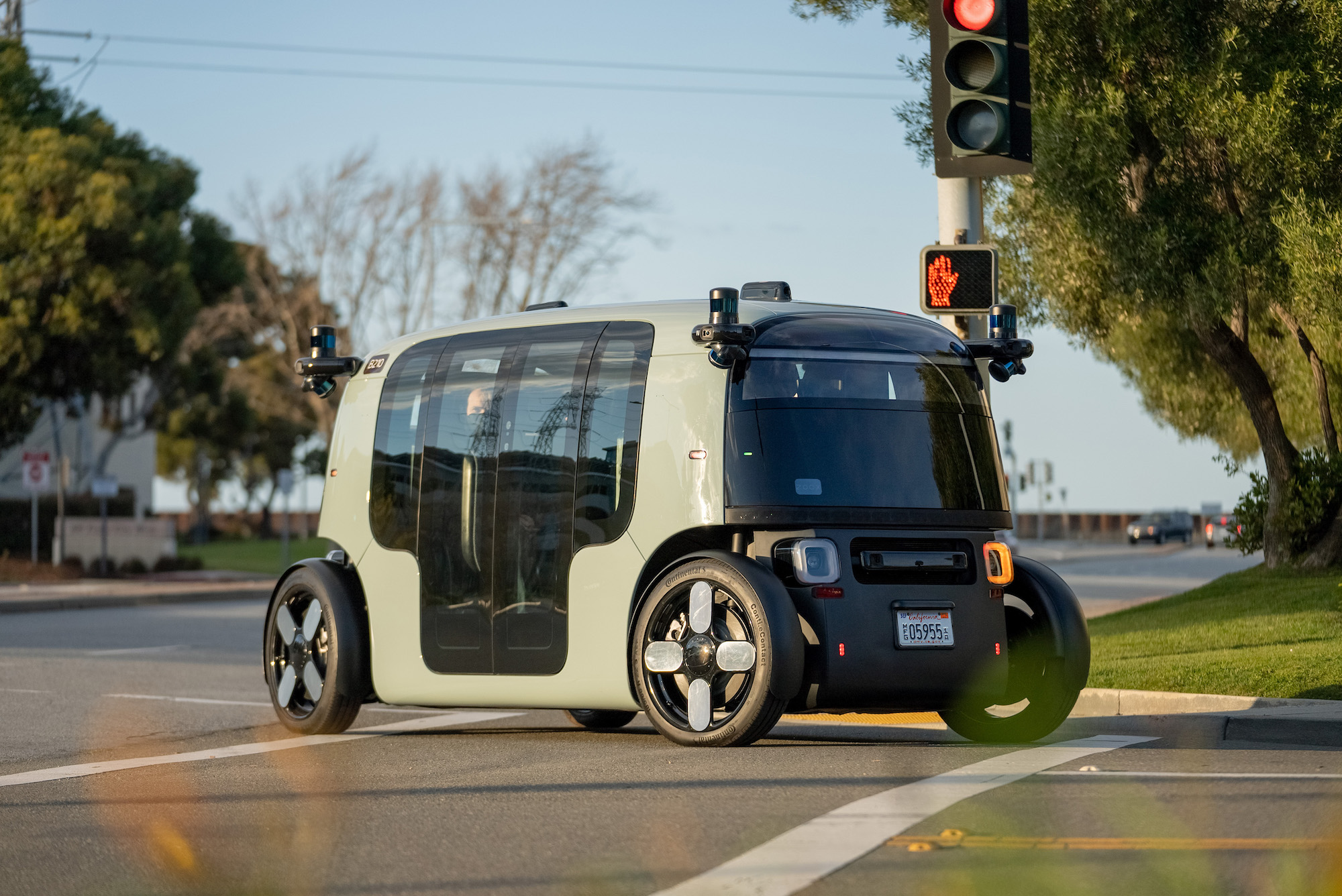
The landscape of urban transportation is currently undergoing its most radical transformation since the transition from horse-drawn carriages to the internal combustion engine. At the center of this shift is a newly solidified alliance between two titans of the digital economy: Amazon-owned Zoox and the global ride-hailing leader, Uber. The companies have announced a multi-year strategic partnership that will see Zoox’s purpose-built robotaxis integrated into the Uber app, beginning in Las Vegas later this year.
This collaboration marks a significant milestone for Zoox, representing its first major third-party platform integration. For Uber, it is another high-profile addition to an increasingly crowded stable of autonomous vehicle (AV) partners. However, the Zoox deal is fundamentally different from the partnerships that preceded it. Unlike the retrofitted SUVs and sedans used by competitors, Zoox’s vehicles are "carriage-style" pods designed from the ground up without steering wheels, pedals, or traditional driver compartments. This radical design brings with it not only a unique passenger experience but also a formidable set of regulatory hurdles that will test the flexibility of federal safety standards.
The Las Vegas Launchpad and the Road to Los Angeles
The rollout strategy for this partnership is calculated and phased. Before a single Uber user in Las Vegas can summon a Zoox vehicle, the autonomous firm intends to launch its own proprietary commercial service. This "Zoox-first" approach allows the company to maintain tight control over the initial user experience and iron out operational kinks in the high-traffic, high-complexity environment of the Las Vegas Strip and surrounding areas.
Once the independent service is established, the integration with Uber will commence. This move provides Zoox with immediate access to Uber’s massive, established user base, bypassing the slow and expensive process of customer acquisition in a competitive market. Following the Nevada debut, the companies have already set their sights on Southern California, with plans to expand the service to Los Angeles in 2027.
To prepare for this scaling, Zoox has been aggressively expanding its geographic footprint. While it currently offers free demonstration rides in San Francisco and Las Vegas, the company recently began mapping and establishing infrastructure in eight additional U.S. cities, including Dallas and Phoenix. This expansion signals that Amazon’s ambition for Zoox extends far beyond boutique pilot programs; it is a bid for a national, and eventually global, autonomous transit network.
The Regulatory Labyrinth: FMVSS and the NHTSA
The primary obstacle standing between Zoox and its commercial ambitions is not the technology itself, but the legal framework governing what constitutes a "motor vehicle." Because the Zoox robotaxi lacks manual controls, it does not comply with several long-standing Federal Motor Vehicle Safety Standards (FMVSS). These standards were written with the assumption that a human driver would always be present to operate the vehicle.
Specifically, Zoox is seeking exemptions from eight different federal standards. Some of these are seemingly mundane but legally significant, such as requirements for windshield defrosting systems and physical windshield wipers—components that are largely redundant for a vehicle guided by a suite of LiDAR, radar, and cameras rather than a human looking through a pane of glass.
The National Highway Traffic Safety Administration (NHTSA) recently opened a 30-day window for public comment on Zoox’s application for these exemptions. This is a critical juncture. While Zoox currently holds an exemption for "demonstration" purposes, a commercial exemption would signal a paradigm shift in how the federal government views non-traditional vehicle architectures.
The timing coincides with a shift in rhetoric from federal regulators. Jonathan Morrison, the chief of the NHTSA, recently emphasized that the agency is moving past the "hand-waving and hype" of the early autonomous era. Morrison’s stance suggests that the government is finally ready to perform the "hard policy work" required to provide robust oversight while removing the "unintended barriers to innovation" that have stifled the industry. For Zoox, this regulatory urgency is a double-edged sword: it promises a clearer path to market, but also ensures that the scrutiny regarding safety and reliability will be more intense than ever.
Uber’s Asset-Light Autonomy Strategy
For Uber, the partnership with Zoox is a key piece of a much larger puzzle. After selling off its own internal self-driving division, Advanced Technologies Group (ATG), in late 2020, Uber pivoted to an "asset-light" strategy. Rather than bearing the immense R&D costs and liability of developing the "driver" itself, Uber has positioned itself as the indispensable marketplace where autonomous fleets meet consumer demand.
Uber now boasts partnerships with more than 25 autonomous vehicle companies globally. This includes a high-profile deal with Alphabet’s Waymo in Austin and Atlanta, a partnership with Baidu for testing in London, and collaborations with Volkswagen, May Mobility, and Pony AI. By diversifying its partners, Uber ensures that it is not beholden to any single technology provider. It also creates a competitive environment where AV firms must vie for placement on the Uber platform.
To solidify this role, Uber has launched two new divisions: AV Labs and Uber Autonomous Solutions. AV Labs is focused on the data-driven side of the equation, collecting real-world driving data from Uber’s millions of human-driven miles to help reinforce and train the autonomous systems of its partners. Uber Autonomous Solutions, meanwhile, provides the "boots on the ground"—operational, software, and support services that help AV companies manage their fleets efficiently. In essence, Uber is transforming from a ride-hailing company into the operating system for the future of urban mobility.
The "Carriage-Style" Advantage: Rethinking the Passenger Experience
The integration of Zoox into the Uber app represents more than just a change in who (or what) is driving; it represents a change in what it feels like to be a passenger. Most current robotaxis, such as those operated by Waymo, are modified versions of existing consumer vehicles like the Jaguar I-PACE. While impressive, these vehicles still feel like traditional cars, with the empty driver’s seat serving as a constant, slightly eerie reminder of what is missing.
Zoox’s design philosophy is different. By removing the front-facing seats and the dashboard entirely, Zoox has created a "face-to-face" interior layout. This maximizes interior space and treats the vehicle more like a mobile lounge or a private train compartment than a car. For the "night out" crowd in Las Vegas or the business commuters in Los Angeles, this social, spacious environment could become a significant competitive advantage. It moves the conversation away from "safety and tech" toward "comfort and utility."
Industry Implications and the Road Ahead
The Zoox-Uber alliance is a bellwether for the maturation of the autonomous vehicle industry. We are moving out of the era of speculative startups and into the era of industrial-scale deployment. The fact that Amazon is backing Zoox provides the company with a "war chest" that few other AV startups can match, allowing it to weather the long regulatory delays and high capital expenditures inherent in this sector.
Furthermore, the implications for the broader labor market and urban planning cannot be ignored. As robotaxis begin to occupy a larger share of the miles driven on the Uber platform, the traditional "gig economy" model of human drivers will face unprecedented pressure. While the transition will likely take decades, the Las Vegas launch is a definitive step toward a future where the cost per mile of personal transport could drop significantly, potentially reducing the need for private car ownership in dense urban centers.
However, the road to 2027 is fraught with challenges. The NHTSA’s ruling on Zoox’s exemptions will set a precedent for every other "purpose-built" AV company, including Tesla’s proposed Cybercab. If the government is slow to grant these exemptions, or if they come with overly restrictive conditions, the timeline for the Los Angeles rollout could easily slip.
Moreover, the technical challenge of "scaling" remains. Navigating the neon-soaked, pedestrian-heavy streets of the Las Vegas Strip is vastly different from the high-speed merges of Los Angeles freeways or the unpredictable weather patterns of the Midwest. Zoox’s expansion into Dallas and Phoenix suggests they are ready to test their sensors against different climates and road geometries, but the leap from mapping a city to safely operating a commercial fleet of hundreds of vehicles is monumental.
As the public comment period for Zoox’s exemptions closes, the tech and transportation industries will be watching the NHTSA with bated breath. The decision will determine whether the "post-driver paradigm" begins in Las Vegas this year or remains a futuristic vision deferred. For now, the message from Amazon and Uber is clear: the era of the steering wheel is nearing its end, and the Mojave Desert is where the new world begins.