

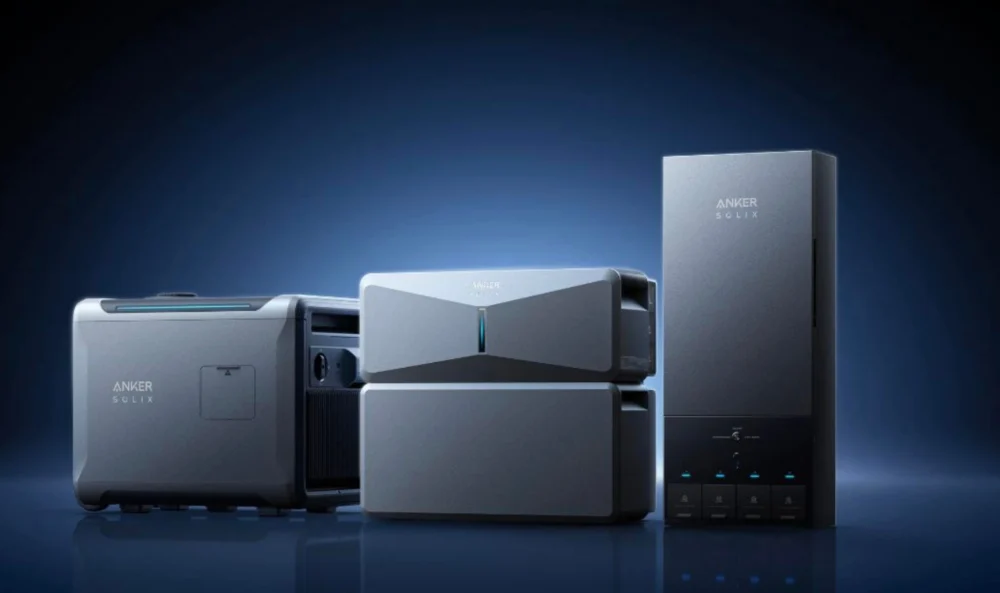
The landscape of residential energy is undergoing a seismic shift, moving away from a total reliance on centralized aging grids toward a more resilient, decentralized model. At the forefront of this transition is the emergence of sophisticated, high-capacity battery ecosystems designed to bridge the gap between portable power stations and permanent industrial-grade installations. Anker, a company that carved its reputation in the consumer electronics sector through high-quality charging peripherals, has now solidified its pivot into the heavy-duty infrastructure market. Following its initial reveal at the most recent Consumer Electronics Show in Las Vegas, the company has officially launched the Solix E10, a whole-home backup system engineered to challenge the dominance of established players like Tesla and EcoFlow.
The Solix E10 represents a strategic departure from "one-size-fits-all" energy solutions. By prioritizing a modular, stackable architecture, Anker is targeting a diverse demographic: from the cautious suburban homeowner seeking basic outage protection to the off-grid enthusiast aiming for total energy autonomy. This modularity is not merely a design aesthetic but a financial strategy, allowing consumers to enter the ecosystem at a relatively accessible price point and scale their capacity as their energy demands—or budgets—expand over time.
The Architecture of Resilience: Technical Specifications
At the heart of the Solix E10 system is a sophisticated 7.68kW inverter paired with a base 6kWh Lithium Iron Phosphate (LFP) battery unit. This entry-level configuration, priced at $4,299, is positioned as a gateway for those looking to maintain essential circuits—such as refrigeration, lighting, and communications—during a blackout. However, the true engineering prowess of the E10 is revealed in its scalability.
The system’s power delivery is characterized by its high continuous output and impressive surge capabilities. While a single inverter provides a steady 7.68kW, it features a specialized "boost" mode that can push output to 10kW for up to 90 minutes. This is a critical feature for handling "heavy loads"—appliances with high initial draw, such as well pumps, central air conditioning units, or electric dryers. As additional battery modules are integrated into the stack, the peak surge capacity scales dramatically. A single-battery setup can handle a 28.8kW peak, but a dual-battery configuration jumps to 37.2kW.
For those demanding maximum performance, the Solix E10 can be expanded into a massive three-system array. In its fully realized form, the setup can support up to 27kW of solar input and store a staggering 90kWh of energy. To put this in perspective, the average American household consumes roughly 29kWh per day. A fully loaded Solix E10 system could, theoretically, power a standard home for three full days without any solar contribution or grid assistance. This level of overhead moves the conversation beyond simple emergency backup and into the realm of true grid independence.
The Hybrid Safety Net: Tri-Fuel Integration
One of the most notable additions to the Solix launch is the Smart Generator 5500. While many battery manufacturers rely solely on solar replenishment, Anker has recognized the inherent limitations of weather-dependent charging. The Smart Generator 5500 is a weather-resistant, tri-fuel unit capable of running on gasoline, propane, or natural gas.
This inclusion addresses the "last mile" of energy security. In scenarios where a multi-day storm prevents solar panels from recharging the batteries, the Smart Generator 5500 acts as an automated safety net. It is designed to integrate seamlessly with the Solix software, triggering automatically when battery levels hit a pre-defined threshold. Furthermore, the generator features an intelligent maintenance tracking system, ensuring that the mechanical components remain operational even after months of dormancy. This hybrid approach—combining the silence and efficiency of LFP batteries with the raw reliability of internal combustion—positions the E10 as a more comprehensive solution than battery-only competitors.
Installation and Ecosystem Integration
Anker has designed the Solix E10 with two distinct paths for installation, catering to different levels of technical comfort and home integration requirements. For users seeking a basic setup, the system offers a degree of "plug-and-play" functionality that avoids the need for a total electrical overhaul. However, for those seeking a professional-grade, seamless transition during power failures, Anker has introduced the Power Dock panel and the Smart Inlet Box.
The Power Dock is the premium choice for whole-home coverage. It supports up to 200 amps and manages 12 critical circuits. Its standout feature is a sub-20-millisecond automatic switchover time. In the event of a grid failure, the transition to battery power is so rapid that sensitive electronics, such as desktop computers or medical equipment, typically remain powered without a reboot.

For a more cost-effective alternative, the Smart Inlet Box provides a manual transfer switch. While it requires a human to flip the switch during a blackout, it remains fully integrated into the Solix monitoring ecosystem. Both the Power Dock and the Smart Inlet Box require professional installation by a licensed electrician, highlighting Anker’s move toward the professional installer market (PRO-market) rather than just the DIY consumer space.
Market Positioning: The Battle for the Home Battery
The Solix E10 enters a market that is increasingly crowded but still dominated by a few key names. Tesla’s Powerwall remains the industry benchmark due to its brand recognition and sleek integration with Tesla’s solar and EV ecosystems. Meanwhile, EcoFlow has made significant inroads with its Delta Pro Ultra series, which also emphasizes modularity and high output.
Anker’s competitive advantage lies in its balance of surge capacity and entry-level pricing. By offering a base system at $4,299, Anker undercuts the initial investment required for many permanent wall-mounted systems. Additionally, the E10’s focus on high surge ratings (up to 66kW in a dual-stack configuration) addresses a common pain point for battery owners: the inability to start high-induction motors in large appliances.
The pricing structure reflects this tiered strategy:
- Base E10 System: $4,299
- E10 with Smart Inlet Box: $4,599
- E10 with Power Dock: $5,799
- The Complete Independence Bundle (E10 + Generator + Power Dock): $7,399
While these figures represent a significant investment, they are competitive when compared to the cost of a traditional standby whole-home gas generator, which lacks the silent operation, solar integration, and daily load-shifting capabilities of a battery system.
Industry Implications and the Prosumer Shift
The launch of the Solix E10 is emblematic of a broader trend in the energy sector: the rise of the "prosumer." Homeowners are no longer just passive consumers of electricity; they are becoming active managers of their own microgrids. This shift is driven by several factors, including the increasing frequency of extreme weather events, a fluctuating regulatory environment for solar net metering, and the rising cost of utility-provided power.
Systems like the E10 allow homeowners to engage in "peak shaving"—using stored battery power during expensive peak-demand hours and recharging from the grid (or solar) during off-peak times. In regions with time-of-use (TOU) pricing, a well-managed Solix system could eventually pay for itself through utility bill savings alone. Furthermore, as utility companies begin to explore Virtual Power Plants (VPPs), owners of high-capacity systems like the E10 may eventually be able to sell their stored energy back to the grid during periods of extreme strain, turning a backup system into a revenue-generating asset.
Future Outlook: The Path to February 4 and Beyond
Preorders for the Solix E10 are currently open in the United States, with general availability scheduled for February 4. Anker is incentivizing early adopters with hardware discounts and solar gear bundles, a move designed to build a user base quickly before the peak storm seasons of spring and summer.
As the residential energy storage market continues to mature, the focus will likely shift from raw capacity to software intelligence. The Solix E10’s ability to manage its own maintenance, coordinate with a tri-fuel generator, and handle ultra-fast switchovers suggests that Anker is prioritizing the "user experience" of energy. In the coming years, we can expect to see even deeper integration with AI-driven weather forecasting and smart home protocols (like Matter), allowing these systems to proactively charge in anticipation of a storm or shed non-essential loads to preserve runtime.
The Anker Solix E10 is more than just a battery; it is a statement of intent. It signals that the era of the "power bank" is evolving into the era of the "power plant," where the technology on the side of a suburban home is just as sophisticated as the grid it is designed to replace. For homeowners eyeing the move toward energy independence, the E10 offers a compelling, flexible, and high-performance path forward.