

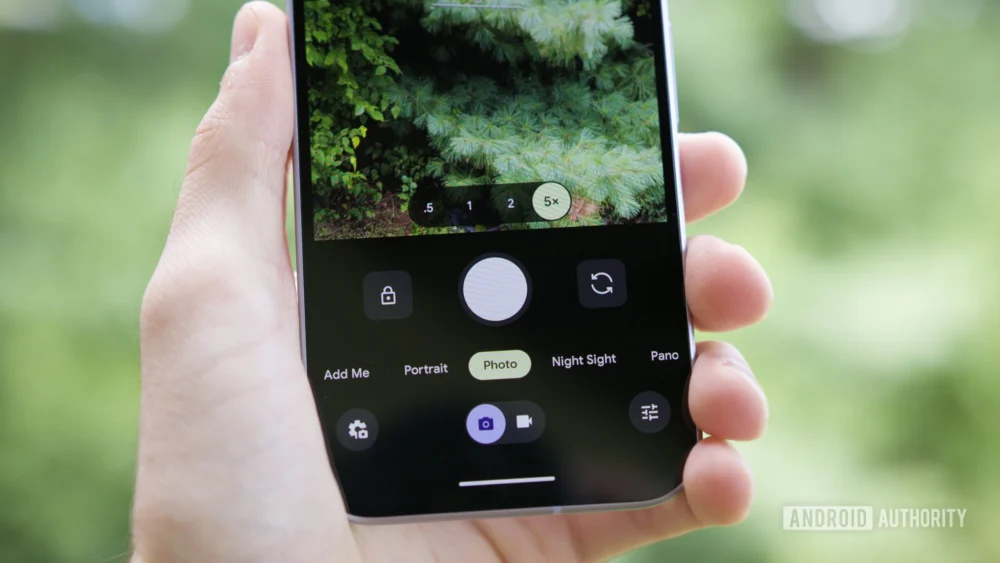
The trajectory of smartphone optics has consistently trended toward greater versatility, an effort to shrink the professional camera bag into a pocketable slab of glass and silicon. Google’s Pixel line, particularly the flagship Pro variants, has long been lauded as the computational photography benchmark. With the recent Pixel 10 series, Google achieved a significant milestone by ensuring that the entire lineup, not just the top-tier model, featured a dedicated telephoto lens. The Pixel 10 Pro, in particular, boasts an impressive 50-megapixel, 5x periscope optical zoom module—a powerful tool for distant subjects. However, as these devices push the boundaries of magnification, a crucial, seemingly contradictory capability remains conspicuously absent: true telephoto-based macro photography. This missing feature represents not merely a convenience gap, but a fundamental limitation in the photographic utility of Google’s premier hardware stack, one that must be rectified in the forthcoming Pixel 11 Pro generation.
To fully appreciate the necessity of this addition, one must first examine Google’s current approach to extreme close-up imaging. Presently, the Pixel ecosystem relies heavily on the ultrawide sensor for macro functionality. While technically functional, this method is inherently compromised. The ultrawide lens, by design, necessitates a very short focal length to capture an expansive field of view. When forcing this lens into a macro role—requiring the user to bring the phone mere centimeters from the subject—the resulting images often suffer from significant optical distortions. The exaggerated perspective inherent in ultrawide optics translates to an unnatural look for small subjects, warping details and making precise composition difficult. Furthermore, the close proximity required often introduces practical issues, such as the user’s own shadow obscuring the delicate lighting conditions necessary for high-quality macro work, or, in the case of live subjects like insects or small fauna, simply frightening them away before focus can be achieved.
The superiority of telephoto-based macro lies in leveraging the inherent characteristics of longer focal lengths to achieve high magnification without proximity. Competitors who have integrated this feature—often utilizing 3x or 3.5x optical zoom modules—demonstrate clear advantages. When the telephoto lens is capable of focusing sharply at distances measured in a few centimeters, the resulting macro image benefits from a naturally compressed perspective, superior depth rendition (bokeh), and crucially, working distance. This working distance is paramount. It allows photographers to capture skittish wildlife or fragile subjects without invasive presence, and prevents the lens barrel from physically interfering with the light path to the subject. For professional applications, such as documenting intricate product details during trade shows or press briefings—a scenario frequently encountered by tech journalists—the ability to frame a tight, detailed shot of a small component or port without needing to physically maneuver around bulky equipment is invaluable.
The technical hurdle is real: achieving a minimal focusing distance (MFD) on high-magnification periscope lenses, typically around 5x optical zoom (equivalent to roughly 120mm focal length), is optically challenging. The inherent physics of long focal lengths dictates a greater MFD compared to wide or standard lenses. However, the rapid evolution of smartphone optics suggests that these challenges are surmountable through dedicated engineering. We have seen manufacturers successfully implement macro capabilities on 3x to 4x zoom lenses. The key differentiator appears to be the optical design of the telephoto module itself, specifically incorporating a floating element or an optimized lens group capable of adjusting its focus plane much closer to the sensor.
For the Pixel 11 Pro, retaining the established 5x optical zoom standard is critical for maintaining its competitive edge in long-range photography. The leap from 5x to higher digital zoom levels, often enhanced by Google’s celebrated computational stacking (like the previous generation’s Pro Res Zoom, despite its reliance on generative elements), relies heavily on the quality of that initial 5x optical capture. Sacrificing the 5x base for a shorter 3x or 4x focal length, solely to facilitate macro, would represent a strategic downgrade in the primary utility of the Pro model’s most distinguishing hardware feature. This is a trade-off that Google should endeavor to avoid.
The industry context supports the pursuit of this dual functionality. The market is currently segmenting into specialized zoom categories. Flagships are expected to deliver exceptional performance across the board: wide, standard, 3x portrait range, and long-range telephoto. Macro photography, once relegated to a niche software feature on the ultrawide lens, is increasingly being integrated into the dedicated telephoto hardware stack by rivals. For instance, flagship devices featuring 3.5x optical zoom often advertise competitive macro modes that outperform the ultrawide-based solutions seen elsewhere. This sets a new expectation for what a "complete" multi-camera system entails.
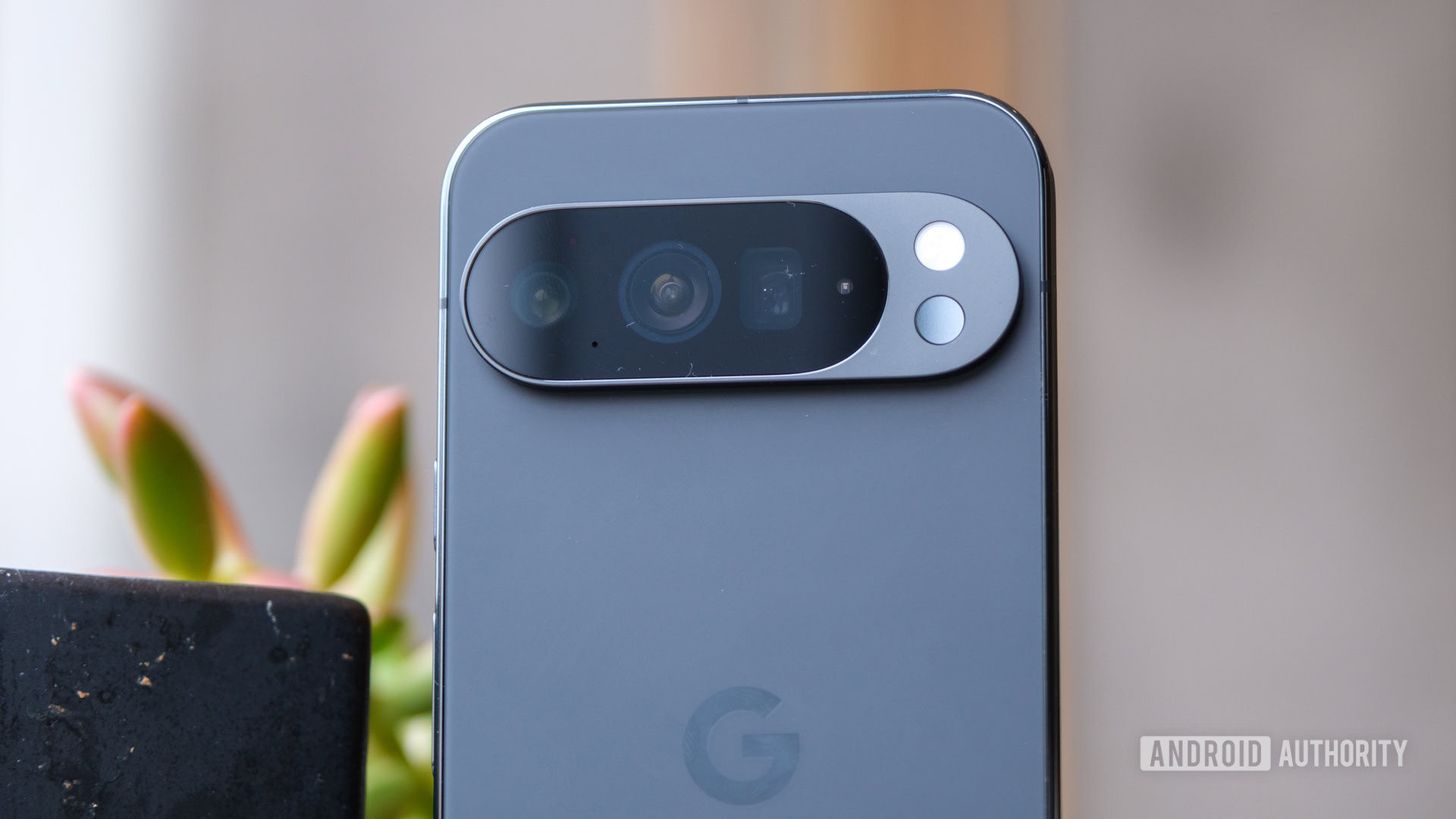
An expert analysis of the situation suggests Google possesses the necessary resources to engineer a solution. The sheer sensor size and resolution found in the Pixel 10 Pro’s 50MP periscope module offer significant headroom. While high resolution is often associated with extreme digital zoom capabilities, it can also be strategically leveraged for macro. By utilizing a smaller, central crop of the high-resolution sensor data, even at 5x optical, Google could potentially map out a viable macro mode that preserves optical quality, provided the lens mechanics allow for a closer focus lock. Alternatively, integrating a micro-actuator or a specific lens element dedicated solely to extremely close focusing, activated only when the camera software detects a near-field subject, presents a hardware-based pathway forward.
Furthermore, the implications for portraiture cannot be ignored. Many professional photographers and enthusiasts have long argued that the 5x focal length (approximately 120mm equivalent) is too long for flattering portraiture, especially in constrained indoor environments. The generally accepted "sweet spot" for headshots and upper-body portraits resides between 85mm and 105mm (roughly 3.5x to 4x optical zoom). If Google were forced to adopt a shorter base zoom (e.g., 4x) to enable telephoto macro, it would inadvertently resolve a long-standing complaint regarding portrait aesthetics on the Pro line. This presents a compelling engineering dilemma: can they achieve macro at 5x, or must they compromise the zoom range to 4x, thereby improving portraits and enabling macro simultaneously? Given the success of 4x telephoto macro implementations seen in other premium Android devices, the latter path is less disruptive than outright abandoning the 5x focal length entirely.
The future trend in mobile photography strongly favors sensor consolidation and functional overlap. Users expect one lens to do many things exceptionally well, rather than relying on software stitching or reliance on sensors optimized for a single, narrow purpose. Telephoto macro achieves precisely this—it enhances the utility of the telephoto lens beyond just distance shooting, transforming it into a dual-purpose instrument for both far-off detail and intricate close-ups. This versatility streamlines the user experience, eliminating the need to constantly switch between the ultrawide macro mode and the telephoto zoom mode.
The current reliance on the ultrawide sensor for macro also poses long-term challenges for consistency in color science and computational processing. While Google’s software excels at unifying disparate image sources, starting with fundamentally different optical characteristics (wide vs. telephoto) introduces complexity. A telephoto macro, leveraging the same sensor pipeline and similar light gathering characteristics as its standard zoom counterpart, offers a more cohesive output, requiring less aggressive post-processing to match color profiles and dynamic range.
To summarize the requirement for the Pixel 11 Pro: the integration of optical macro capabilities directly into the dedicated telephoto module is essential. This moves Google from a workaround solution (ultrawide macro) to a best-in-class feature. If achieving this at the current 5x focal length proves technically infeasible without compromising long-range performance—a valid concern given the optics involved—then a strategic recalibration to a 4x or 4.5x primary telephoto lens, explicitly engineered for close focusing, should be the fallback. This slight reduction in extreme reach would be an acceptable trade-off given the substantial gain in photographic versatility and the concurrent improvement in portrait focal length preferences.
The market leader in computational imaging cannot afford to lag in fundamental hardware feature parity. As competitors weave telephoto macro into their premium offerings, Google’s omission becomes increasingly conspicuous. The Pixel 11 Pro needs a defining hardware enhancement that complements its legendary software processing, and equipping its flagship zoom lens with the power to explore the microscopic world, without the optical compromises of the ultrawide sensor, stands out as the most logical and impactful upgrade path for the next iteration of Google’s mobile imaging prowess. This isn’t just about capturing tiny things; it’s about unlocking a new dimension of creative control that the current Pixel generation—despite its many strengths—simply cannot access with its primary telephoto hardware.