

In a venture capital landscape currently dominated by the dizzying valuations of generative artificial intelligence startups, a significant shift has occurred in the e-commerce sector. Quince, the retail disruptor that first captured consumer attention with its viral price points and direct-to-factory model, has announced the closing of a $500 million Series E funding round. This latest injection of capital propels the company’s valuation to a staggering $10.1 billion, cementing its status as a "decacorn" and signaling a robust investor appetite for vertically integrated retail platforms that can demonstrate both scale and efficiency.
The round was led by Iconiq Capital, a firm that has become increasingly central to Quince’s capital structure. This follows a $200 million Series D round led by Iconiq in early 2025, which at the time valued the company at approximately $4.5 billion. The fact that Quince has more than doubled its valuation in less than a year is a testament to its aggressive growth trajectory and its ability to maintain high-margin operations while expanding its footprint across multiple product categories. Joining Iconiq in this round is a heavyweight syndicate of investors, including Wellington Management, Baillie Gifford, DST Global, Basis Set Ventures, Wndrco, MarcyPen Capital Partners, and Notable Capital.
The Evolution of the M2C Model
Quince’s rise from a niche apparel player to a multi-category powerhouse is rooted in its "Manufacturer-to-Consumer" (M2C) business model. Launched out of beta in 2020, the company set out to eliminate the traditional layers of retail—distributors, wholesalers, and high-street storefronts—that typically drive up the cost of luxury goods. By connecting consumers directly with the factories that produce items for high-end legacy brands, Quince has been able to offer premium materials, such as Grade-A Mongolian cashmere and Italian leather, at prices that undercut traditional competitors by as much as 50% to 80%.
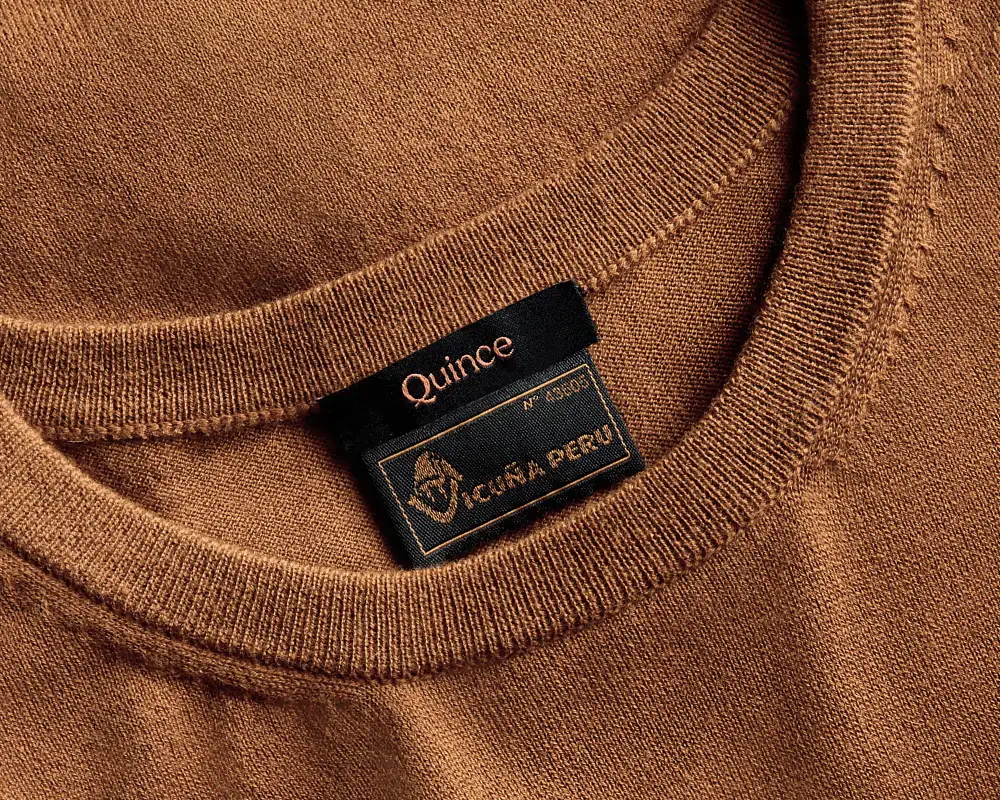
While the company initially found fame on social media platforms like Instagram through its $50 cashmere sweater, it has since diversified its catalog into a comprehensive lifestyle brand. Today, Quince’s offerings span home goods, jewelry, beauty, wellness, and travel accessories. This diversification is not merely an expansion of inventory but a strategic move to increase customer lifetime value and capture a larger share of the household wallet.
At the core of Quince’s success is its proprietary technology stack. Unlike traditional retailers that often struggle with siloed data and disconnected supply chains, Quince owns and operates the digital infrastructure that links consumer demand directly to factory production. According to insights from lead investor Iconiq, this vertical integration allows the company to employ predictive analytics to forecast sales with high precision. The result is a "pull" rather than "push" inventory system, enabling small-batch manufacturing that significantly reduces the environmental and financial waste associated with unsold overstock—a perennial problem for the "fast fashion" industry.
Navigating the "Dupe" Controversy and Intellectual Property
Quince’s meteoric rise has not been without significant legal and ethical scrutiny. The company’s strategy of offering "classic essentials" that bear a striking resemblance to high-end designer products has led to a series of high-profile lawsuits. Critics and competitors have frequently characterized the brand as a "copycat," alleging that it leverages the research, development, and design investments of legacy brands to produce lower-priced "dupes."
Tapestry Inc., the parent company of Coach, has filed suit against Quince alleging trade dress infringement over specific handbag designs. Similarly, home furnishings giant Williams Sonoma has taken legal action, and Deckers Outdoor Corporation—the maker of UGG and Hoka—previously sued over footwear designs. However, Quince recently secured a notable legal victory when a court ruled in its favor in the Deckers case, affirming that the designs in question were "classic" styles rather than protected proprietary copies.
These legal battles highlight a growing tension in the modern retail landscape: the boundary between a "timeless staple" and a "protected design." For Quince, these scuffles appear to be a calculated cost of doing business. The company maintains that it is democratizing access to high-quality goods, arguing that no single brand should have a monopoly on basic silhouettes or high-quality materials. Market data suggests that consumers are largely unphased by these controversies; Quince’s top-line revenue recently surpassed the $1 billion milestone, indicating that the value proposition of "luxury for less" outweighs brand loyalty for a significant segment of the millennial and Gen Z demographic.
Strategic Expansion and Market Implications
The $500 million in new capital is earmarked for further technological development and geographic expansion. In January, Quince made its first major international move by launching in Canada, a market with similar consumer profiles and logistical requirements to the United States. Analysts expect the company to continue its international push, potentially eyeing European or Asian markets where the appetite for affordable luxury remains high.
Furthermore, the investment will likely be used to bolster Quince’s logistics and fulfillment capabilities. As the company moves beyond apparel into heavier categories like home furniture and rugs, the complexity of its supply chain increases. Maintaining the M2C advantage requires sophisticated logistics to ensure that direct shipping from international factories remains cost-effective and timely for the end consumer.
The broader implications for the e-commerce industry are profound. Quince’s $10.1 billion valuation places it in a different league than the struggling direct-to-consumer (DTC) darlings of the mid-2010s, many of which failed to achieve profitability due to skyrocketing customer acquisition costs. By contrast, Quince has focused on high-margin vertical integration and a data-driven approach to inventory that mirrors the efficiency of ultra-fast-fashion giants like Shein or Temu, but with a focus on quality and "quiet luxury" rather than disposable trends.
Analysis: The Decacorn in the Room
Quince’s ability to secure a $10 billion valuation in the current economic climate—characterized by high interest rates and a cooling of consumer spending in some sectors—is a significant outlier. It suggests that institutional investors view the M2C model as the future of retail. If a company can prove that it can deliver high-quality goods at low prices while maintaining a sustainable, low-waste inventory model, it becomes a formidable threat to both traditional department stores and established luxury houses.
The involvement of Baillie Gifford and Wellington Management, firms typically known for their late-stage investments in companies nearing an initial public offering (IPO), suggests that Quince may be eyeing the public markets in the next 18 to 24 months. Achieving a $1 billion revenue run rate is often the unofficial benchmark for a successful tech-enabled IPO, and Quince has already crossed that threshold.
However, the path forward remains complex. As Quince grows, it will inevitably face stiffer competition from Amazon, which has been aggressively expanding its own private-label "essentials" brands, and from the legacy luxury brands that are increasingly protective of their intellectual property. Moreover, as consumer awareness regarding labor practices and supply chain ethics grows, Quince will face increasing pressure to provide transparency into the factories it partners with, ensuring that the low costs passed on to consumers do not come at a hidden human or environmental price.
Future Outlook: A New Standard for Retail
As we look toward the latter half of the decade, Quince’s trajectory will serve as a bellwether for the retail industry. Its success validates the idea that the "brand tax" of the 20th century is evaporating. In an era where information is symmetrical and consumers can easily compare material compositions and manufacturing origins, the value of a logo is being replaced by the value of the product itself.
Quince is betting that the future of consumption is not about "fast" or "slow" fashion, but about "efficient" fashion. By leveraging a lean, tech-first approach to manufacturing and a direct line to the consumer, the company is not just selling sweaters and sheets; it is selling a more streamlined version of the global economy. With $500 million in fresh capital and a $10.1 billion valuation, Quince is now fully equipped to move from a market disruptor to a market leader, potentially redefining what it means to be a global retail powerhouse in the digital age.