

The digital health revolution promised personalized insights, yet for many users grappling with complex physiological realities, the execution has fallen short. Wearable technology, while ubiquitous, often presents data that is numerically comprehensive but clinically superficial. This is particularly true in the realm of sleep tracking, a metric that depends heavily on nuance, consistency, and the ability to differentiate genuine rest from mere inactivity. For years, this reviewer, navigating the persistent challenges of fibromyalgia—a condition characterized by chronic pain and significant sleep fragmentation—found the entire category of consumer-grade trackers unreliable. Devices from established players like Fitbit, Huawei, and previous iterations of Samsung’s own offerings consistently skewed results, tending to inflate total sleep time while failing to account for the qualitative deficit of non-restorative rest.
This historical inaccuracy led to a frustrating cycle: users with genuinely disrupted sleep were paradoxically advised by algorithms to sleep less, based on data that conflated lying still due to pain with actual deep sleep stages. The frustration became so pronounced that the pursuit of accurate sleep metrics was abandoned in favor of using wearables solely for basic activity logging. The industry narrative of personalized health advice often clashes violently with the lived experience of those managing chronic conditions where sleep quality, not just quantity, dictates daily functionality.
The arrival and subsequent testing of the Samsung Galaxy Watch 8 marked a significant departure from this pattern. Despite initial skepticism rooted in prior negative experiences with Samsung’s tracking capabilities, peer recommendations regarding iterative improvements prompted a renewed investigation. With alternative high-end options, such as the Oura Ring 4, facing local accessibility barriers (particularly outside of specific subsidized programs in regions like South Africa), the Watch 8 emerged as the most viable, readily available contender for rigorous scrutiny.
Decoding Disrupted Sleep: Where Previous Trackers Failed
To appreciate the Watch 8’s success, one must understand the failure modes of its predecessors. For an individual managing conditions like fibromyalgia, sleep is not a binary state. It involves prolonged latency (difficulty initiating sleep), frequent, brief awakenings driven by pain signals, and a resulting lack of restorative deep and REM cycles, even when total time in bed approaches 10 to 12 hours.
Traditional trackers, relying primarily on heart rate variability (HRV) and accelerometry, often struggle with this granularity. They tend to use predefined thresholds for movement cessation. This methodology invariably misclassifies periods of wakefulness where the user is consciously still—perhaps waiting for pain medication to take effect, or simply too exhausted to move—as "light sleep." Furthermore, devices like the Huawei Watch GT 4 exhibited problematic behavior in labeling periods of passive activity, such as physical therapy sessions or extended, immobile television viewing, as "naps." This false positive generation skews the overall sleep debt calculation, leading software to suggest that the user is sufficiently rested when, in reality, they are functionally depleted.
The core issue lies in the algorithms’ inability to interpret the context of stillness. True sleep assessment requires sophisticated physiological modeling that accounts for micro-arousals and the body’s autonomic nervous system state, which many wrist-worn devices approximate imperfectly. The consequence for the end-user is a data-driven directive that contradicts their physical reality, undermining trust in the entire tracking ecosystem.
The Galaxy Watch 8’s Algorithmic Edge in Fragmented Sleep
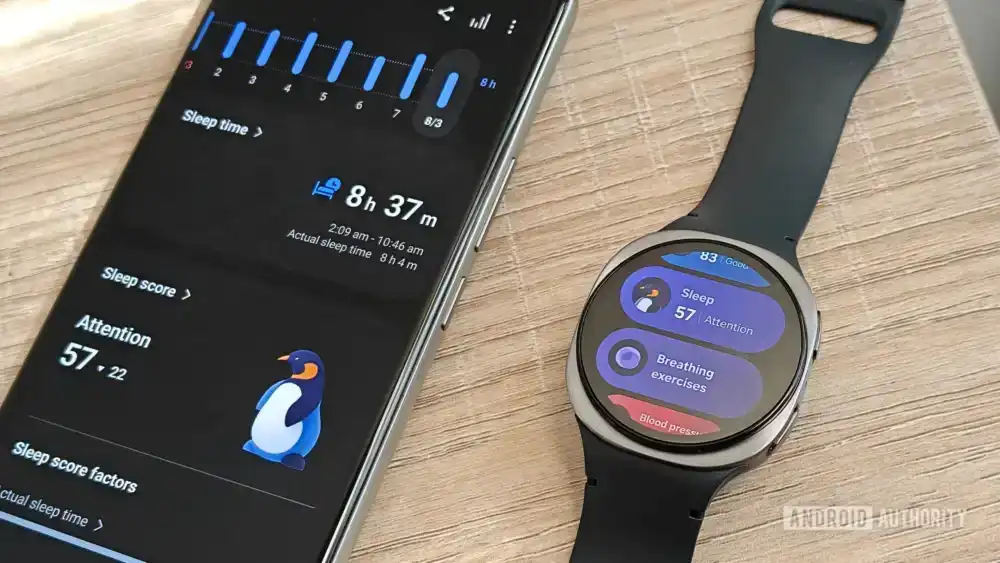
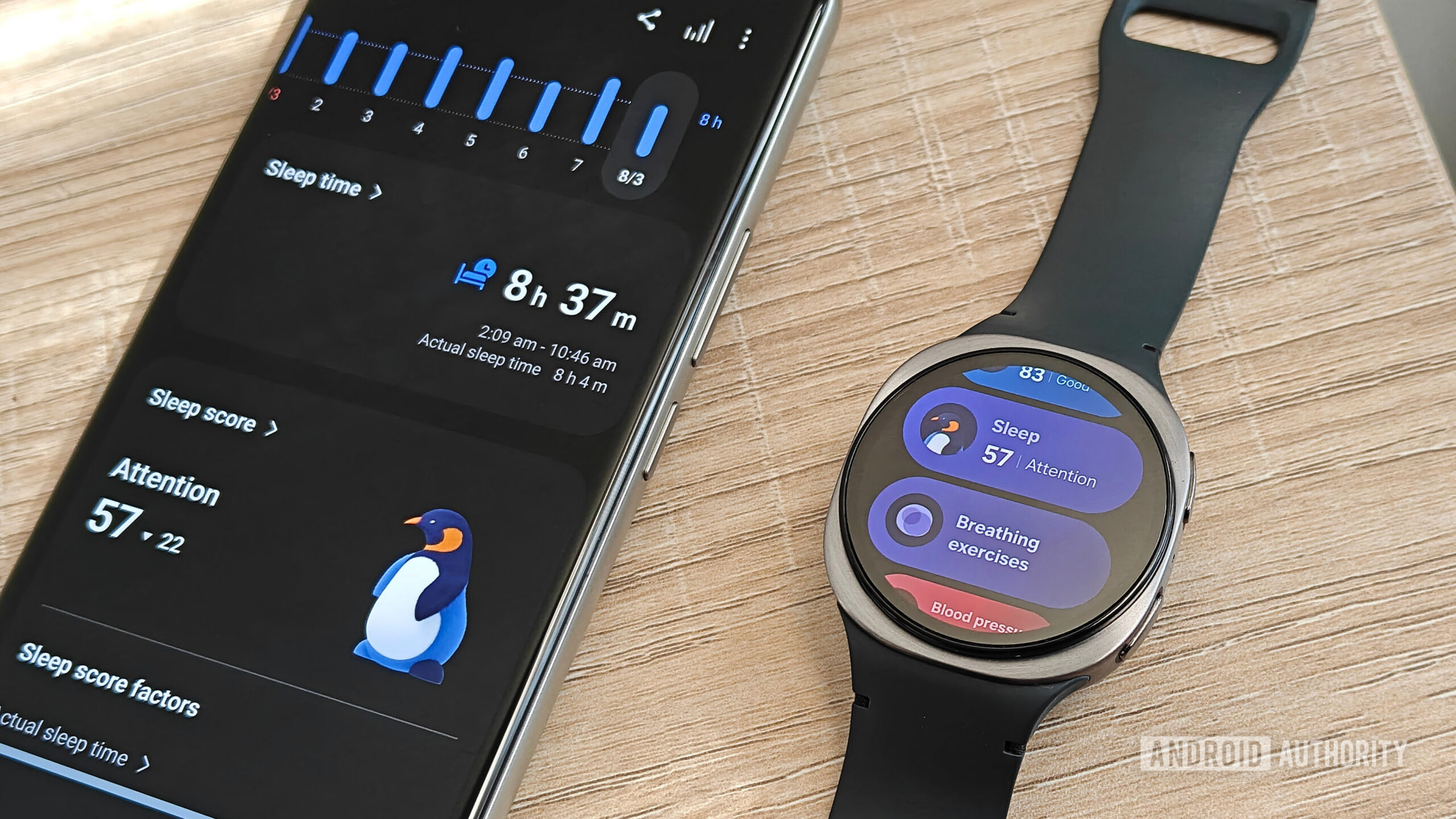
The testing period with the Galaxy Watch 8 revealed a marked improvement in the fidelity of sleep data capture, especially concerning the timing of sleep onset and the frequency of nocturnal awakenings. The device demonstrated a sophisticated ability to register interruptions, a crucial differentiator for users with sleep maintenance insomnia.
Crucially, the Watch 8’s ability to track actual sleep initiation proved robust, even when standard usability features were engaged. For instance, if the user initiates ‘Bedtime Mode’ early in the evening—a common practice for those managing chronic conditions who need to prepare for a long night—the device did not simply assume sleep commenced immediately. It accurately logged the subsequent hours of wakefulness before true sleep inertia set in, a vital distinction that previous wearables overlooked by defaulting to the mode activation time.
The reduction in false positive nap detection is another significant technical victory for this generation of Samsung’s hardware. Periods of therapeutic immobility or passive relaxation, even involving the stationary presence of a pet, were largely ignored by the sleep-stage classification engine. This suggests refinement in the motion and physiological sensing fusion, leading to data that is far more representative of actual restorative periods.
The positive impact of this accuracy is immediate: the software ceases its counterproductive urging to reduce sleep duration. Instead, the insights provided align with the user’s subjective experience, confirming that the 10 hours spent in bed resulted in necessary, albeit frequently interrupted, rest. This validation is psychologically important, shifting the user relationship from one of confrontation with flawed data to one of supportive self-monitoring.
Industry Context and Technological Implications
The struggle to accurately measure sleep is not unique to one manufacturer; it is a fundamental challenge in remote patient monitoring and consumer biometrics. The industry has largely relied on photoplethysmography (PPG) sensors for heart rate and motion sensors (accelerometers/gyroscopes) for movement. Distinguishing between the subtle physiological markers of light sleep and quiet wakefulness requires advanced machine learning models trained on polysomnography (PSG) data—the gold standard—which is expensive and difficult to acquire in large, diverse datasets.
Samsung’s apparent success with the Watch 8 suggests a significant investment in refining the underlying algorithms, potentially leveraging richer data streams, such as advanced HRV metrics captured during periods of low movement, or perhaps incorporating temperature data (if available in that model iteration) more effectively into the staging process.
This development has broad industry implications. If a mainstream, widely available device like the Galaxy Watch 8 can substantially close the gap between consumer tracking and clinical validation for complex sleep patterns, it sets a new benchmark. It signals a necessary pivot away from simply counting hours toward assessing sleep efficiency and disruption frequency with greater precision. This pushes competitors to accelerate their own R&D in motion artifact rejection and contextual physiological analysis.
Furthermore, this success story challenges the dominance of specialized form factors. While the Oura Ring is often cited for its superior comfort and consistent skin contact—both vital for accurate data—the Watch 8 proves that a full-featured smartwatch, worn on the wrist, can achieve high fidelity if the internal processing is sufficiently advanced. This democratizes access to better data, as smartwatches are often more versatile and less niche than smart rings.
Persistent Friction Points: Ecosystem Lock-in and Metric Interpretation
Despite the breakthrough in raw sleep data capture, the Galaxy Watch 8 ecosystem presents notable limitations that temper the overall positive assessment. Battery endurance remains a primary concern, especially when juxtaposed against competitors known for multi-week longevity, such as Huawei. Requiring charging every third day—even with an hour-long recharge cycle—introduces a consistent friction point that can disrupt continuous monitoring if the user forgets to charge overnight.

More significant are the software and hardware dependencies that create an exclusionary experience for non-Samsung users. Features deemed critical for advanced health monitoring, such as ECG and blood pressure measurements, are gated behind the Samsung Health Monitor application, rendering them inaccessible to users pairing the watch with non-Galaxy smartphones, regardless of regional availability. This practice of ecosystem fortification is a strategic choice that limits the utility of the hardware for a broader segment of the Android user base.
A particularly analytical flaw surfaces in the interpretation layer: the Samsung Health application’s "Energy Score." This metric, purportedly derived from sleep data, appears to rely too heavily on long-term averages rather than acute, day-to-day physiological needs. The reviewer noted a scenario where severe sleep deprivation (four hours followed by five hours) resulted in debilitating fatigue, yet the energy score remained deceptively high because the algorithm was anchored to a historical average of significantly longer sleep durations. This highlights a critical gap: excellent raw data collection (what happened) does not guarantee intelligent interpretation (what it means for today).
Moreover, the application often issues contradictory guidance. A notification suggesting necessary rest might be immediately followed by an evening prompt urging the user to meet aggressive daily activity targets. Such internal inconsistencies breed user fatigue with the system itself, forcing the user to become the final, subjective arbiter of the device’s recommendations—a scenario that defeats the purpose of automated health coaching.
The Future Trajectory of Wearable Sleep Science
The trajectory indicated by the Galaxy Watch 8’s performance suggests that the next frontier in consumer wearables will not be the sheer volume of sensors, but the sophistication of their integration and analysis. Future advancements will likely focus on two core areas:

- Contextual AI and Machine Learning: Algorithms must move beyond simple threshold detection. They need to integrate data from multiple sources (HRV, movement, respiration proxies, and even ambient light/temperature readings if the device supports them) to create dynamic, personalized baselines that adapt rapidly to acute changes, such as travel, illness, or short-term stress. The ability to accurately differentiate between ‘sleep’ and ‘intentional rest/recovery’ is paramount for users with chronic fatigue or pain syndromes.
- Hardware Agnosticism and Feature Parity: For platforms like Wear OS to gain broader acceptance against proprietary ecosystems, the restrictive practice of feature-gating based on the paired smartphone brand must diminish. Users invest in the hardware; the software should unlock its full potential irrespective of the host device, provided regional regulatory requirements are met.
Samsung has demonstrated that it possesses the technological capacity to deliver highly accurate sleep staging on a mainstream platform. The next iteration of their health software must focus on translating that granular, accurate data into actionable, non-contradictory, and contextually aware insights regarding daily energy reserves. If Samsung can successfully pair the Watch 8’s demonstrated nocturnal accuracy with a more nuanced energy management model and reduce hardware exclusivity, their wearables could transition from being capable fitness trackers to genuinely indispensable tools for managing complex health profiles, making high-quality, accessible sleep monitoring a reality for a much wider demographic. The focus must remain on the quality of the metric, ensuring that technological progress serves genuine user well-being rather than merely inflating feature counts.