

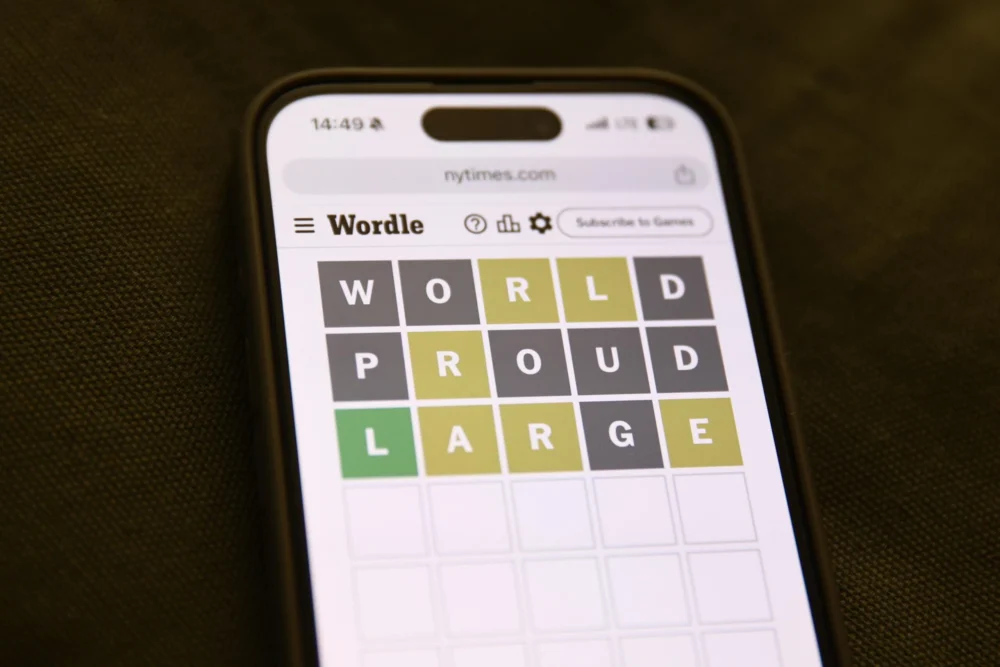
On February 2, a wave of digital déjà vu swept across the global community of puzzle enthusiasts as the New York Times-owned game Wordle unveiled its 1,689th challenge. For many, the solution—CIGAR—felt remarkably familiar. This was not a glitch in the matrix or a failure of the game’s internal logic. Rather, it marked a significant pivot in the lifecycle of the world’s most popular daily word game. By selecting the very word that launched the Wordle phenomenon back in 2021, the New York Times signaled a transition from a finite, linear progression of vocabulary to a curated, cyclical experience. This shift has profound implications for how the game is played, how it is managed as a digital asset, and how it will evolve to maintain its cultural relevance in the years to come.
To understand why the return of "CIGAR" is more than just a nostalgic nod, one must look back at the architectural foundations of the game. When Josh Wardle, a Brooklyn-based software engineer, originally developed Wordle for his partner, he faced a fundamental linguistic challenge. While the English language contains roughly 13,000 five-letter words, the vast majority are obscure, archaic, or specialized jargon that would frustrate the average player. Wardle’s genius lay in his curation. He filtered the massive dictionary down to a "goldilocks" list of approximately 2,300 to 2,500 words—terms that were common enough to be recognizable but varied enough to provide a daily challenge.
At a rate of one word per day, that initial list provided roughly six and a half years of unique content. For a solo developer’s passion project, this was an eternity. However, when the New York Times acquired Wordle for a seven-figure sum in early 2022, the game ceased to be a hobby and became a cornerstone of a massive subscription-based "Games" ecosystem. As the calendar marched toward the mid-2020s, the "burn rate" of that original word list became a strategic concern. The recent decision to reintroduce previously used words is a preemptive strike against the eventual exhaustion of the primary vocabulary pool, ensuring that Wordle remains a permanent fixture of the morning routine rather than a game with a looming expiration date.
The editorial philosophy behind this change was officially articulated by the New York Times in late January. The publication announced that, starting in February, the game would begin integrating past solutions back into the daily rotation. The rationale provided was one of "serendipity." By breaking the "one-and-done" rule, the editors now have the flexibility to align the daily word with real-world events, holidays, or cultural moments. This transforms Wordle from a purely mathematical exercise in deduction into a more atmospheric and contextual experience. If "CHILL" or "SKATE" appears during a cold snap or a winter sporting event, it creates a "magical" overlap between the digital grid and the player’s reality, enhancing the emotional resonance of the daily solve.
From an industry perspective, this move reflects the broader trend of "Games as a Service" (GaaS). In the modern digital economy, longevity is the primary metric of success. By moving away from a finite list, the New York Times is effectively "future-proofing" Wordle. They are transitioning the game from a product with a shelf life into a platform that can be managed indefinitely. This editorial control allows for a more nuanced difficulty curve. The Wordle editor can now balance a week of difficult, obscure words with a "classic" repeat to prevent player burnout. It also allows the publication to maintain the integrity of the game; rather than being forced to use increasingly obscure five-letter words like "XYLYL" or "QAID" just to stay "fresh," they can return to the high-quality, evocative words that made the game a success in the first place.

For the dedicated "Wordler," this policy change necessitates a radical shift in strategy. For the past several years, the most elite players have operated on a process of elimination that extended far beyond the six rows on their screen. Many kept personal spreadsheets or consulted community-maintained lists of "seen" words. If a player knew that "STARE" or "RAISE" had been used in 2022, they could safely eliminate those words as potential solutions in 2024, using them only as tactical "filler" guesses to narrow down letters. That safety net has now vanished. The psychological landscape of the game has shifted from "What hasn’t been used yet?" to "What is the most likely word for today?" This reintroduces a layer of unpredictability that had begun to fade as the game aged.
Expert-level analysis suggests that this change might actually increase the game’s difficulty for long-term players while leveling the playing field for newcomers. A player who started today has no disadvantage compared to someone who has played for 1,000 days, because the "historical knowledge" of past words no longer grants a deductive shortcut. Furthermore, the possibility of repeats forces players to focus more on linguistic patterns and phonics rather than rote memorization of a diminishing list. The "meta-game" has been reset, and the community must now grapple with the fact that any of the 2,500 core words could appear at any time.
The future impact of this decision likely involves a more integrated approach to the New York Times’ editorial calendar. We can anticipate "themed weeks" or subtle nods to major news stories. While the Times has stated they wish to avoid making the game overly political or controversial, the ability to select words that mirror the zeitgeist is a powerful tool for engagement. It also opens the door for more complex data analysis. The Times can now track how players react to a repeated word versus a new one. Does a repeat lead to faster solve times? Does it increase social media sharing due to the "nostalgia factor"? These insights will undoubtedly inform the development of future puzzles and potential Wordle spin-offs.
Moreover, the reintroduction of words like "CIGAR" highlights the importance of the "Wordle Editor" role, currently held by Tracy Bennett. In the early days of the game, the sequence was largely determined by the original code’s chronological list. Today, every word is a deliberate choice. This human touch is what separates the current version of the game from a random number generator. The editor must consider not only the word’s difficulty but its "vibe"—the cultural associations and the phonetic satisfaction of the solve. By allowing repeats, the editor’s palette has been doubled, allowing for a more curated and "hand-crafted" feel to the daily puzzle.
Looking ahead, the "Linguistic Loop" may become the standard for all daily word games. As digital puzzles become more sophisticated, the tension between a finite vocabulary and an infinite timeline will always exist. Wordle’s solution—to embrace its history and treat its best words as "evergreen" content—is a savvy move that prioritizes the player experience over a rigid adherence to novelty. It acknowledges that a good word is a good word, regardless of whether it was guessed three years ago or three minutes ago.
In conclusion, the return of "CIGAR" to the Wordle grid is not a sign of a game running out of ideas, but rather a sign of a game reaching maturity. It marks the end of Wordle as a countdown and the beginning of Wordle as a permanent cultural institution. By breaking the linear progression of the word list, the New York Times has ensured that the game remains dynamic, unpredictable, and deeply connected to the world around it. For the millions of players who log in every morning, the message is clear: the rules have changed, the stakes have been refreshed, and the hunt for those elusive green squares is far from over. Whether you are a veteran of the 2021 "CIGAR" era or a newcomer facing the word for the first time, the challenge remains as elegant and engaging as ever. The loop has closed, but the journey continues.