

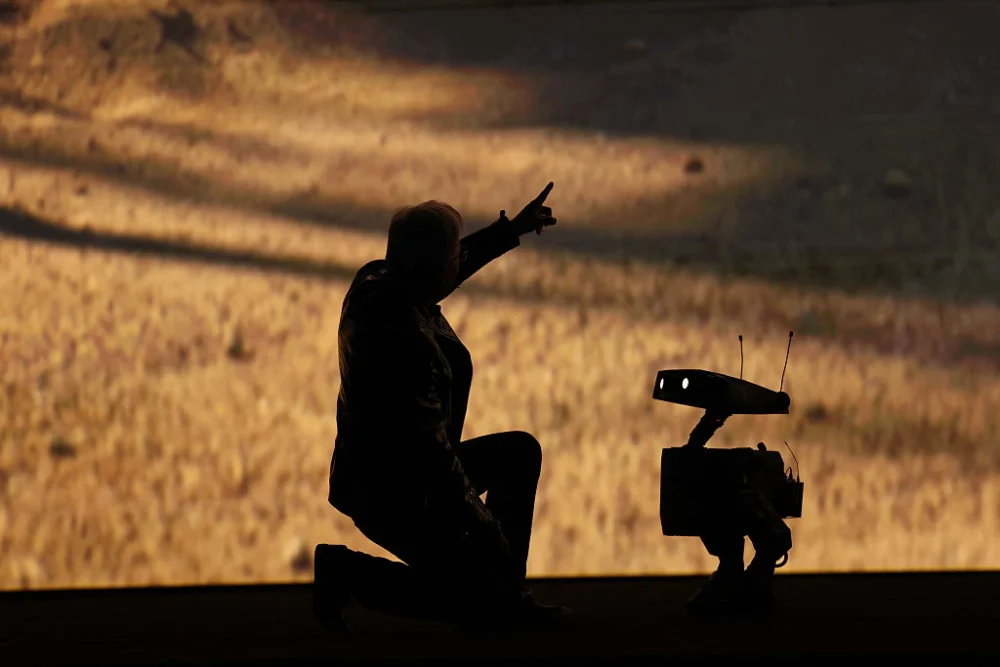
The Consumer Electronics Show (CES) 2026, held annually in the unforgiving glare of Las Vegas, served as the definitive proving ground for the technology narratives shaping the mid-decade. After two years of anticipatory chatter regarding generative AI, this year marked a crucial pivot: the technology is officially moving out of the cloud and into the physical world, demanding specialized hardware at every scale—from massive data centers to pocket-sized wearables. The pervasive theme was not merely the existence of Artificial Intelligence, but its embodiment and decentralization, driven primarily by the world’s leading semiconductor manufacturers, who leveraged their keynotes to dictate the infrastructure of the coming decade.
The New Calculus of Compute: Nvidia and the Rubin Architecture
Nvidia, continuing its uncontested reign over the AI acceleration market, dominated the conversation with the unveiling of the Rubin computing architecture. CEO Jensen Huang, utilizing his presentation as both a celebratory reflection on the company’s recent market triumphs and a roadmap for 2026 and beyond, emphasized that the increasing complexity and scale of large language models (LLMs) necessitate a rapid, generational upgrade cycle.
The Rubin architecture, slated to begin replacing the highly successful Blackwell series in the latter half of the year, represents more than a standard performance bump. It is engineered to fundamentally address the bottlenecks of memory bandwidth and inter-processor communication that plague massive-scale training clusters. Industry analysts suggest Rubin integrates revolutionary advancements in High Bandwidth Memory (HBM) technology and refined NVLink interconnects, crucial for sustaining the exascale computing required for next-generation foundation models. This transition signals Nvidia’s commitment to maintaining its two-year cadence of architectural leaps, ensuring that the supply chain for advanced AI infrastructure remains firmly anchored to its ecosystem.
Beyond the data center, Nvidia explicitly outlined its strategy to become the foundational operating system for generalized robotics. Huang’s vision positions Nvidia’s infrastructure as the “Android for generalist robots,” aiming to provide the comprehensive software stack—from simulation environments like Omniverse to core processing kernels—that allows manufacturers across various sectors to rapidly develop and deploy intelligent, adaptable machines. This strategy was immediately evident in the introduction of the Alpamayo family of open-source AI models, specifically tailored for autonomous vehicle perception and decision-making. Alpamayo is designed to allow AVs to mimic human-like predictive reasoning, moving beyond reactive programming to cognitive navigation. This move solidifies Nvidia’s transition from a chip vendor to a full-stack AI platform provider, leveraging its dominance in training to control the downstream deployment markets.
AMD’s Decentralized AI Push and the Rise of the AI PC
In contrast to Nvidia’s focus on massive cloud infrastructure and industrial scale, AMD, under the leadership of Chair and CEO Lisa Su, sharpened its focus on democratizing AI via the consumer edge. AMD’s keynote, bolstered by high-profile appearances from industry luminaries like OpenAI president Greg Brockman and AI pioneer Fei-Fei Li, centered on the strategic expansion of its Ryzen AI 400 Series processors.
The Ryzen AI 400 Series represents a critical step in establishing the "AI PC" as the new baseline standard for personal computing. By integrating powerful Neural Processing Units (NPUs) directly onto the client silicon, AMD is enabling local execution of AI tasks, dramatically reducing latency and dependence on cloud connectivity for everyday functions—from sophisticated video conferencing enhancements to personalized content generation.

The industry implication of this decentralization is profound. Moving inference workloads (the running of trained models) away from centralized data centers and onto millions of individual devices not only enhances user privacy but also fundamentally shifts the economic model of AI consumption. For AMD, this push is vital for challenging Intel’s historical dominance in the client market and seizing a decisive lead in the emerging NPU segment. The partnerships showcased at CES underscore a collaborative approach: AMD is positioning itself as the hardware enabler for a diverse ecosystem of software developers, ensuring that proprietary AI models can run efficiently on its silicon without sacrificing performance or battery life.
The Cognitive Frontier: Robotics and Industrial Automation
CES 2026 cemented the shift from simple automation to cognitive robotics, highlighted by critical partnerships involving some of the world’s most advanced humanoid machines. Hyundai’s media day offered a glimpse into the future of physical labor and logistics through its collaborations with Boston Dynamics. Crucially, Boston Dynamics revealed a significant partnership with Google’s DeepMind AI research lab to train and operate the next generation of its renowned Atlas robots.
This alliance is a watershed moment, combining Boston Dynamics’ unparalleled mechanical design and stability with DeepMind’s expertise in reinforcement learning and generalized intelligence. Instead of relying on conventional, rules-based programming, the new Atlas iteration will possess "DeepMind DNA," allowing the humanoid robot to learn complex, unstructured tasks through simulation and real-world feedback. This partnership signals an acceleration toward truly versatile, general-purpose robots capable of operating in human environments, potentially transforming industries from manufacturing to elder care faster than previously anticipated.
Concurrently, the application of AI extended deeply into heavy industry. The partnership between Caterpillar and Nvidia showcased the deployment of sophisticated AI systems in rugged environments. The pilot program, dubbed “Cat AI Assistant,” demonstrated how Nvidia’s expertise is being used to automate complex machinery, such as large excavator vehicles. This effort is coupled with the use of Nvidia’s Omniverse simulation platform, allowing construction companies to digitally model and optimize entire projects before breaking ground, enhancing efficiency and safety on a massive scale. The move underscores a macro trend: the most significant economic gains from AI will initially be realized in capital-intensive, high-risk sectors like construction, mining, and logistics.
Automotive Intelligence: Ford’s Measured Approach
The automotive sector at CES 2026 maintained its trajectory toward deeper software integration, though Ford’s announcement regarding its new AI assistant demonstrated the cautious pace of enterprise adoption. Ford is leveraging Google Cloud and off-the-shelf LLMs to build its conversational assistant, launching first within its mobile app before a planned 2027 vehicle integration.
While the partnership utilizes robust cloud infrastructure, the lack of granular detail on the specific in-vehicle functionality raised questions among industry observers. The challenge for automakers remains integrating highly sophisticated, rapidly evolving LLM technology into vehicles subject to rigorous safety standards and long development cycles. Unlike consumer electronics, which iterate annually, in-car systems require years of validation. Ford’s strategy appears to be a pragmatic, iterative deployment, ensuring the stability of the digital assistant experience before embedding it into critical vehicle systems, reflecting the liability concerns inherent in applying generative AI to transportation.
The Eccentric Edge of Consumer Innovation
CES has always been defined by its blend of groundbreaking infrastructure and bizarre, often speculative, consumer gadgets. 2026 was no exception, offering unique glimpses into how companies are attempting to make AI tangible and personal.

Razer, known for its flamboyant concepts, pushed the boundaries of wearable and companion AI. Project Motoko was introduced as a conceptual alternative to smart glasses, aiming to deliver augmented reality functionality—such as real-time information overlay and contextual assistance—without requiring a physical screen or lens structure in front of the user’s eyes. While highly conceptual, it speaks to the industry’s continuous quest for discreet, seamless integration of pervasive computing. Even more unusual was Project AVA, which proposes placing the physical, animated avatar of an AI companion directly on the user’s desk. This concept moves beyond mere voice interaction, exploring the psychological need for a visually represented, embodied AI presence to foster a deeper sense of connection and utility.
In the realm of personal devices, the debut of the Clicks Communicator captured nostalgic attention. This $499 smartphone, along with its $79 accessory keyboard, is a direct nod to the classic BlackBerry form factor, emphasizing the persistent demand for tactile, physical input in an increasingly virtual world. The device’s ergonomic design, refined through extensive prototyping, validates the segment of the market that prioritizes input precision and haptic feedback over screen real estate. The Clicks Communicator stands as a testament to the idea that not all innovation must be purely digital; sometimes, the most effective solution involves reinventing a proven physical interface.
The smart home segment also saw AI integration focused on organizational efficiency. The Skylight Calendar 2 utilizes AI to synchronize disparate family calendars, generate to-do lists from images or messages, and proactively manage reminders. This product exemplifies the trend of applying generative AI not to creative tasks, but to reducing cognitive load in domestic life—a key application for edge AI processing.
Meanwhile, Amazon reinforced its pervasive ecosystem strategy with the launch of Alexa.com for browser-based access to Alexa+, its enhanced, conversational chatbot service. This move, alongside the revamp of Fire TV and the introduction of proprietary Artline televisions, signifies Amazon’s intent to make its AI assistant platform-agnostic while simultaneously deepening hardware integration, particularly through Ring’s expanded capabilities, including third-party app integration and new fire alert systems.
A New Era for Play and Perspective
Perhaps one of the most unexpected, yet significant, CES debuts came from Lego, making its first-ever formal appearance. The company showcased its Smart Play System, featuring "Smart Bricks" and Minifigures embedded with technology that allows them to interact, play sounds, and respond contextually. Launching with a Star Wars theme, this system bridges the gap between traditional, physical play and digital interactivity without forcing the user onto a screen. This innovation suggests that the future of interactive toys lies not in replacing physical objects with digital substitutes, but in augmenting them with embedded intelligence, creating dynamic narrative experiences rooted in tangible interaction.
Finally, the philosophical backdrop of CES 2026 was defined by discussions concerning the rapidly accelerating pace of technological obsolescence. Breakout sessions featuring industry heavyweights underscored the consensus that the "learn once, work forever" paradigm is definitively over. As AI systems like the new architectures from Nvidia and AMD demand constant upskilling and adapt to new modalities (like robotics and autonomous systems), professionals across all sectors must adopt a mindset of continuous learning, recognizing that the foundation of knowledge is shifting almost biannually, mirroring the chip fabrication cycle itself.
Overall, CES 2026 was not a year of conceptual futures, but of commercial realities. The core narrative confirms that the AI revolution is now a hardware revolution, requiring immense computational power (Rubin) and distributed intelligence (Ryzen AI 400), while simultaneously driving a profound, practical transformation in industrial robotics and everyday consumer interaction. The oddities, from desktop avatars to resurrected keyboards, merely serve as the colorful indicators of the wide-ranging, and sometimes strange, paths this new hardware mandate is forging.