

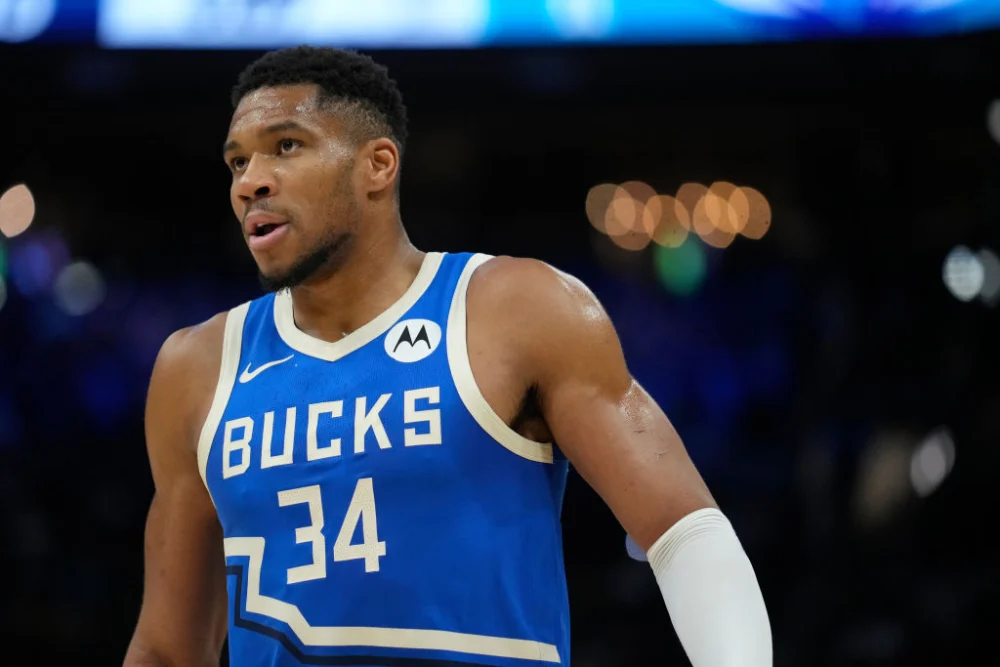
Giannis Antetokounmpo, the towering forward for the Milwaukee Bucks and a two-time NBA Most Valuable Player, has officially entered the volatile landscape of financial technology, announcing his acquisition of a shareholder stake in Kalshi, a regulated events contract exchange. This strategic move, confirmed on Friday, February 7, 2026, marks a significant inflection point, making Antetokounmpo the first active NBA player to take direct equity in a platform operating within the nascent, often controversial, prediction market sector. The investment immediately positions Kalshi—which allows users to wager on the outcomes of future events ranging from political results and economic indicators to weather patterns—in the mainstream spotlight, utilizing the immense visibility and cultural cachet of one of the world’s most recognizable athletes.
Antetokounmpo framed the decision in terms of self-determination and market participation. In a widely disseminated social media post, he stated, "The internet is full of opinions. I decided it was time to make some of my own. Today, I’m joining Kalshi as a shareholder. We all on Kalshi now." This public declaration was not merely an announcement of financial involvement but a clear marketing statement designed to appeal to a demographic increasingly interested in democratized financial tools and the ability to monetize foresight.
The Immediate Regulatory and Ethical Whirlwind
While the partnership represents a major marketing coup for Kalshi, the announcement was met with immediate and vocal skepticism across various digital platforms, particularly within basketball fan communities. The primary concern articulated by critics centered on the potential for an inherent conflict of interest. Users on forums like Reddit questioned the legality and ethics of an active professional athlete holding a stake in a financial platform closely related to the sports wagering ecosystem. Comments ranged from outright descriptions of the situation as "literally a conflict of interest" to harsher characterizations labeling the enterprise as "cancerous," illustrating the deeply ingrained societal concern regarding the integrity of professional sports when intertwined with speculative finance.
This ethical debate forces a critical examination of the National Basketball Association’s evolving stance on gambling and financial market involvement. The league, like all major professional sports organizations, has aggressively pursued partnerships with sports betting operators in recent years, viewing them as crucial revenue streams. However, this normalization of wagering has necessitated strict internal rules to protect competitive integrity. The NBA’s most recent Collective Bargaining Agreement (CBA) directly addresses player involvement in this sphere. Crucially, the CBA permits players to hold minor equity stakes—specifically limiting ownership to less than one percent—in sports betting and adjacent companies. Furthermore, players are allowed to participate in advertising and promotional activities for these entities, provided they strictly refrain from promoting or engaging in wagers related to the NBA, its teams, or its players.
Kalshi has moved preemptively to address the inevitable concerns regarding market manipulation and insider trading. The company confirmed that its partnership with Antetokounmpo will include substantial involvement in marketing campaigns and live promotional events. More importantly, Kalshi explicitly stated that, in strict adherence to its internal terms of service which prohibit insider trading and market manipulation, Antetokounmpo is unequivocally barred from trading on any event contracts related to the National Basketball Association. This contractual firewall is intended to legally and ethically separate his role as an investor and promoter from any possibility of leveraging internal league knowledge for financial gain on the platform.
Prediction Markets vs. Sports Wagering: A Regulatory Distinction
To fully appreciate the gravity of this investment, it is essential to understand the regulatory framework governing Kalshi and the distinction it attempts to draw between itself and traditional sports betting operations. Kalshi is regulated by the Commodity Futures Trading Commission (CFTC) as a designated contract market (DCM), a status typically reserved for exchanges dealing in commodities and futures derivatives. Kalshi’s products are structured as "event contracts"—binary options that settle based on a verifiable, objective future event. This classification as a financial instrument, rather than a traditional sports bet, is fundamental to its operation and legality across the United States.
Traditional sports betting, conversely, is regulated primarily at the state level, with complex licensing and taxation requirements, and is generally classified as gambling. Kalshi’s reliance on the CFTC classification allows it to offer a broader range of contracts—including those related to economic metrics (e.g., "Will the Federal Reserve raise interest rates in Q2?"), geopolitical events, and even entertainment outcomes—that transcend the limitations of state-by-state sports betting licenses.
The controversy surrounding Antetokounmpo’s investment stems from the public’s tendency to conflate these two categories. Although Kalshi’s event contracts are financially structured derivatives, the outcomes they predict often mirror the subjects of popular speculation, blurring the line between financial hedging and recreational wagering in the public eye. For the NBA, however, the CBA’s allowance for minor stakes in "sports betting companies" is implicitly broad enough to cover adjacent fintech entities like Kalshi, provided the critical separation from league-related wagering is maintained. The one percent threshold is a deliberate regulatory measure designed to ensure that the player’s financial incentive remains marginal enough not to compromise their professional integrity or their commitment to the league’s competitive fairness.
Industry Implications: The Fintech Validation Model
The decision by a marquee athlete like Antetokounmpo to invest in Kalshi is far more than a simple personal finance choice; it serves as a powerful validation signal for the entire prediction market sector. Historically, prediction markets have struggled for legitimacy, often facing regulatory pushback (most notably the CFTC’s 2012 shutdown of the platform Intrade) and public perception challenges due to associations with unregulated gambling.

Elite athlete investment acts as a dual mechanism of validation: financial and cultural. Financially, it indicates that high-net-worth individuals and sophisticated financial advisors view these platforms as legitimate, high-growth investment opportunities, worthy of allocation alongside venture capital. Culturally, it lends an air of trustworthiness and mainstream acceptability. Antetokounmpo’s brand—synonymous with hard work, global reach, and financial success—provides an invaluable level of visibility that traditional advertising or institutional funding rounds cannot replicate.
This move mirrors a broader trend where athletes transition from mere endorsers to active investors and founders in the technology sector. Athletes are increasingly leveraging their vast capital and influence to acquire meaningful equity, moving beyond passive sponsorship deals. For a startup like Kalshi, which operates in a niche requiring constant consumer education about its regulatory compliance and product structure, an authentic, high-profile partner capable of bridging the gap between complex finance and mass appeal is crucial. The partnership is expected to significantly boost user acquisition rates, particularly among younger, digitally-native retail investors who are influenced by celebrity endorsement and are actively seeking alternatives to traditional brokerage accounts.
Operational Safeguards and Market Integrity
The structural requirement that Antetokounmpo must not engage in any NBA-related trading necessitates robust compliance mechanisms within Kalshi. While the CBA provides the macro-regulatory framework for the player, Kalshi is responsible for the micro-execution of those safeguards. These mechanisms typically involve:
- Account Monitoring and Geo-Fencing: Ensuring that the athlete’s trading account is specifically flagged and monitored for any attempts to access or trade in NBA-related event contracts. This goes beyond simple self-regulation; it requires automated systems to block transactions.
- Information Control: Kalshi must demonstrate due diligence in ensuring that the athlete is not receiving proprietary, non-public information about the platform’s internal operations or market movements that could influence trading decisions outside of the banned NBA categories.
- Public Transparency: The clear, contractual ban serves as a public relations defense against allegations of impropriety. Should any regulatory body—or the NBA itself—investigate the player’s involvement, Kalshi can immediately produce documented evidence of the restrictive terms of service.
However, the challenge lies in the nature of insider information itself. While Antetokounmpo cannot trade on an event contract titled "Will the Bucks win the 2026 Championship?", his involvement as a player gives him a unique perspective on broader league trends, player health, and team dynamics that could hypothetically influence non-NBA markets (e.g., investments in sportswear companies, broader entertainment contracts, or even political outcomes influenced by league-level decisions). The regulatory burden is therefore not just about banning specific markets, but about ensuring that his position as a primary source of information within the league is completely siloed from his financial activity.
Future Trends and the Gamification of Finance
Antetokounmpo’s investment is a powerful signal of the future direction of fintech: the increasing gamification and democratization of sophisticated financial products. Prediction markets, by their nature, are highly engaging and provide immediate feedback, appealing to a generation accustomed to instant gratification. When coupled with the endorsement of a cultural icon, the platform becomes significantly more attractive to individuals who might otherwise find derivatives trading inaccessible or intimidating.
Looking forward, this partnership sets a precedent for how professional leagues, player associations, and regulatory bodies will handle the accelerating convergence of athlete branding, speculative finance, and technology.
Firstly, we can anticipate a surge in similar investments from other high-profile athletes across various sports. As salary caps rise and investment opportunities outside of traditional real estate and stocks become more common, athletes will continue seeking diversified portfolios, often favoring high-risk, high-reward early-stage technology companies. This creates a regulatory headache for leagues, which must harmonize their integrity rules across an ever-expanding universe of financial instruments—from cryptocurrencies and NFTs to prediction markets and fractionalized ownership platforms.
Secondly, regulators like the CFTC will face renewed pressure to clarify the scope and limitations of event contracts, particularly those that touch on highly visible, culturally significant outcomes. The visibility provided by Antetokounmpo’s involvement inherently draws regulatory attention to Kalshi’s operations, ensuring that its compliance standards remain impeccable. Any misstep, whether perceived or real, could lead to significant legislative or enforcement action that affects the entire industry.
Finally, the ethical debate over the perception of fairness will persist. While the legal compliance hurdles may be cleared through strict CBA adherence and internal policies, the public trust remains fragile. The key challenge for Kalshi and the NBA will be demonstrating that the partnership enhances financial literacy and engagement without eroding the competitive sanctity of the sport. Antetokounmpo’s success in this venture will not only determine his personal financial returns but will also chart the course for how athlete capital is deployed in the complex, rapidly evolving world of regulated contingent markets. This strategic investment is not merely a transaction; it is a crucial test case for the future integration of celebrity influence and high-stakes fintech innovation.