

The annual pilgrimage to the Consumer Electronics Show (CES) in Las Vegas often serves as a proving ground for ambitious concepts that challenge the prevailing smartphone paradigm. While the mainstream narrative at CES 2026 was predictably dominated by incremental processor bumps and refined foldable displays, a quieter, more radical trend emerged: the bifurcation of mobile operating systems and purpose-built hardware. In this landscape, the unveiling of the iKKO MindOne stands out not merely for its unusual aesthetic but for its philosophical approach to managing the increasingly complex demands placed upon a single device.
While attention was understandably captured by devices like the Clicks Communicator—a fascinating hybrid blending classic tactile input with modern biometric security embedded within a spacebar—the MindOne presented a far more esoteric proposition. It is a device that deliberately refuses to commit wholly to either the traditional smartphone experience or the nascent wave of dedicated Artificial Intelligence companions. Instead, it seeks to occupy the liminal space between the two, an endeavor that speaks volumes about the industry’s current state of flux.
Design Philosophy: A Square Peg in a Round Phone World
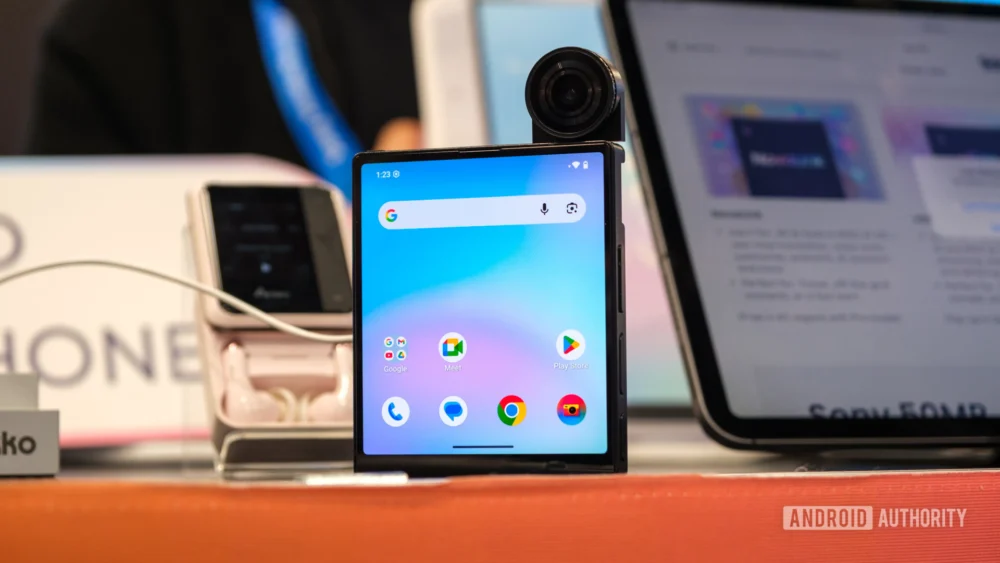
The immediate visual impact of the iKKO MindOne is its near-square aspect ratio. This form factor immediately distances it from the elongated slabs that have defined mobile telephony for over a decade. The design language evokes comparisons to shrunken, modernized interpretations of early PDAs or perhaps a highly stylized, non-folding evolution of the Motorola Razr, stripped of its hinge. It possesses the compact, almost artisanal quality often sought by niche audio manufacturers—a heritage that iKKO, known for its high-fidelity audio equipment, brings into the mobile space.
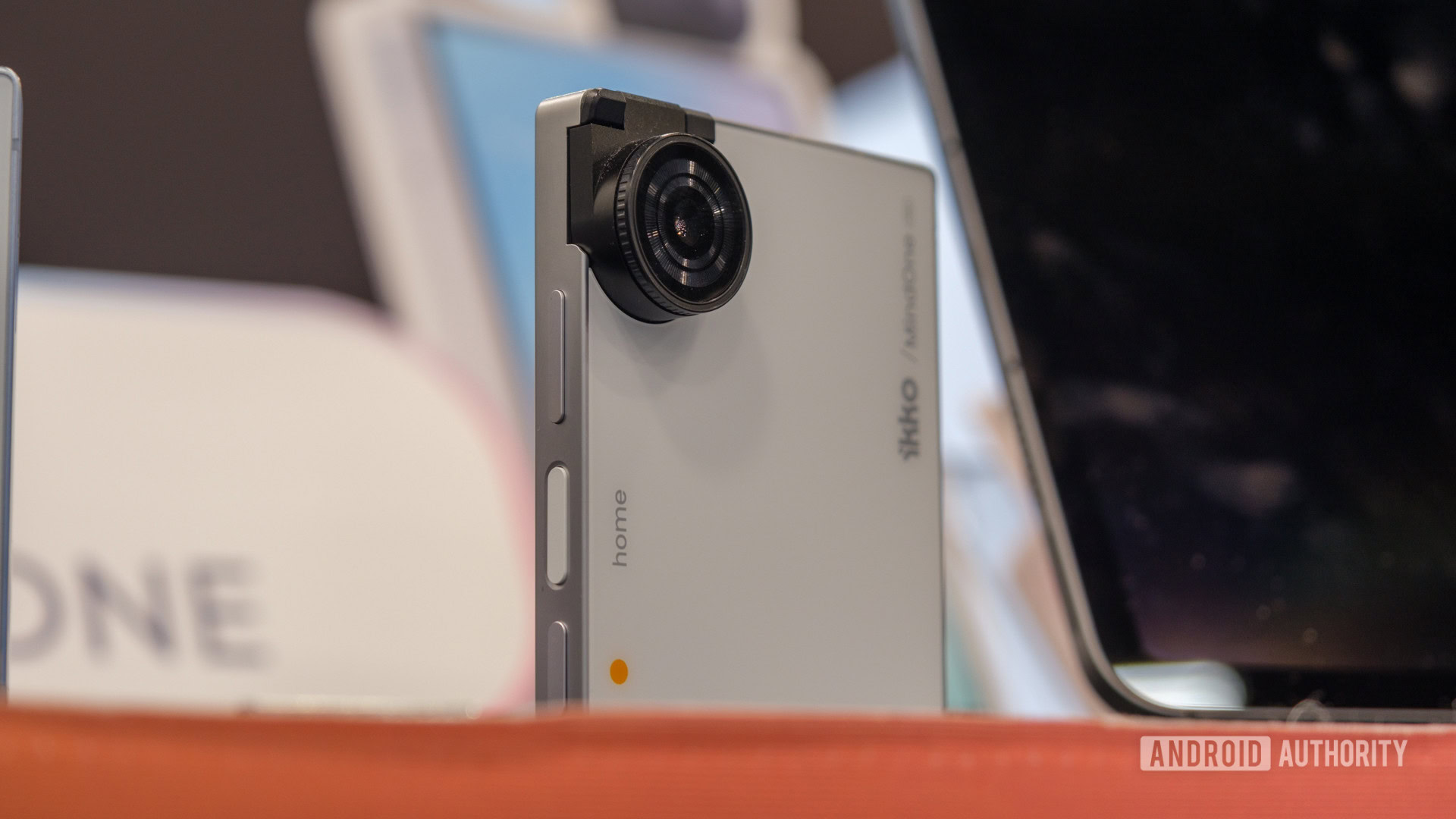
The premium materials noted during initial hands-on demonstrations reinforce this specialized positioning. The device boasts a sapphire glass display, a durability feature typically reserved for flagship devices or high-end wearables, suggesting a commitment to longevity despite its unconventional profile. Measuring under 9mm thick, it manages to maintain a sleek profile, mitigating concerns about bulk that often plague attempts to create non-standard form factors. The physical interface is deliberately minimal, featuring standard volume rockers and a power button housing an integrated fingerprint reader, alongside a dedicated physical trigger button explicitly reserved for activating the AI layer.
Perhaps the most physically engaging feature is the camera module. Utilizing a single 50MP Sony 1/1.56-inch sensor, the hardware choice appears initially counterintuitive for a modern smartphone that typically demands ultra-wide or telephoto versatility. However, iKKO leverages this single lens through mechanical ingenuity: the sensor can articulate 180 degrees. This flip mechanism allows the main camera array to seamlessly double as the front-facing, or "selfie," camera. This solution is simultaneously a practical engineering feat—conserving internal space and potentially improving selfie quality by using the main sensor—and an irresistible tactile element, positioning the MindOne as a potential distraction for users prone to fiddling with their hardware.
The Bifurcated Operating System: Android 15 Meets Ikko AI OS
The core innovation of the MindOne lies beneath the sapphire glass: its dual operating system architecture. The device runs Android 15, albeit in a lean, customized iteration that reportedly borrows design cues from Google’s Pixel UI and Motorola’s clean Hello UX. This ensures baseline compatibility with the vast Android ecosystem, providing users with familiar navigation, app support, and settings management.
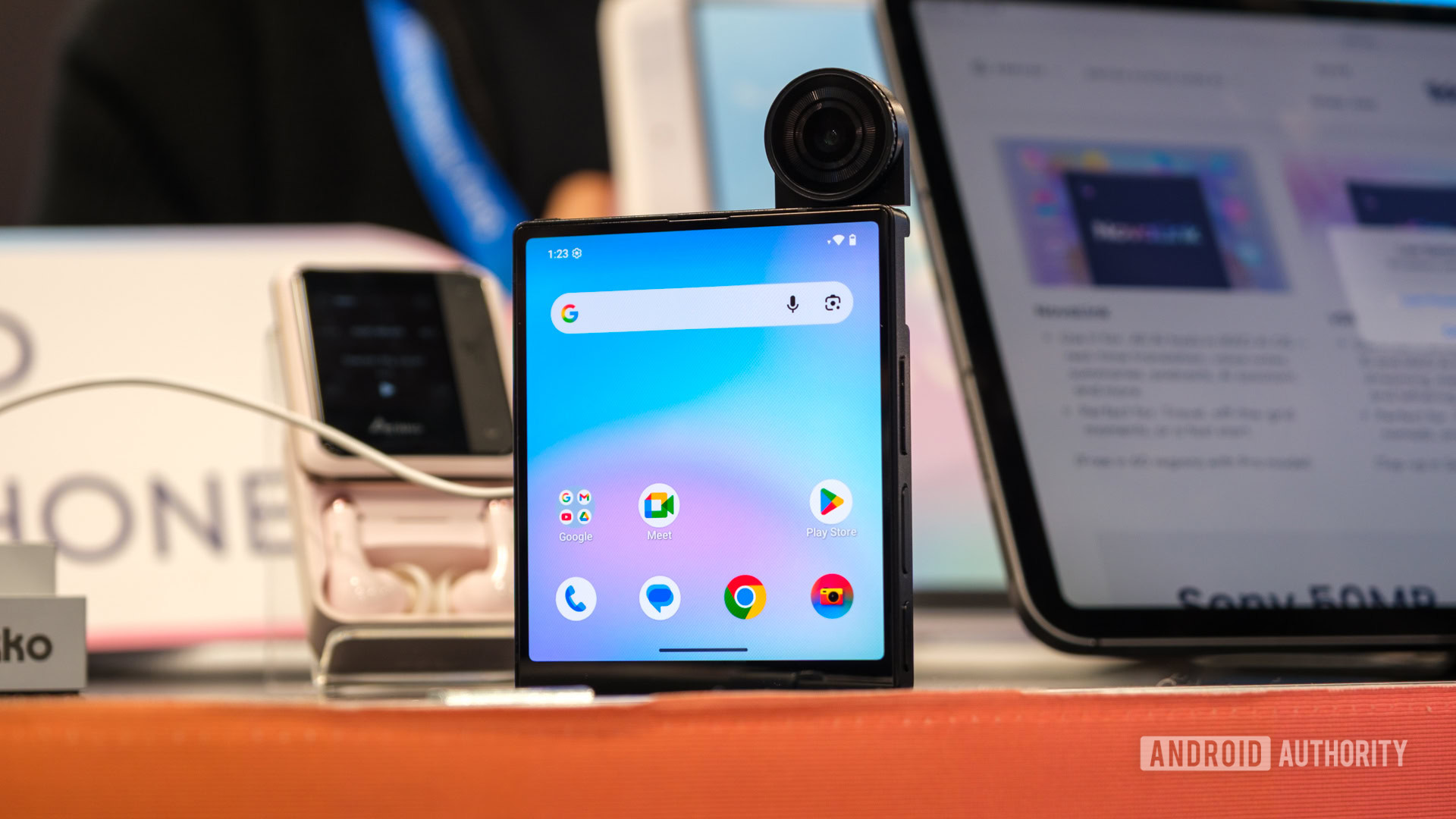
Crucially, this standard OS is paired with the Ikko AI Operating System, accessible via a dedicated virtual toggle or the physical AI trigger button. This secondary environment is designed not to replace Android, but to augment it for specific, high-cognition tasks. Where Android 15 handles communication, media consumption, and standard applications, the Ikko AI OS is optimized for generative tasks: real-time translation, complex note-taking during meetings, educational assistance, and rapid information synthesis. This separation is key; it allows the user to maintain a standard mobile experience while segmenting intensive, perhaps privacy-sensitive, AI processing into a distinct, easily toggled environment.
This architecture addresses a growing tension in the smartphone market. As Large Language Models (LLMs) become integrated into daily workflows, users face a choice: use their primary device for everything, potentially suffering from feature bloat and notification fatigue, or carry a separate, dedicated AI device (like the now-ubiquitous dedicated AI companions). The MindOne attempts to collapse that dichotomy by offering two distinct modes within one chassis.
Industry Implications: Challenging the Monolithic Smartphone
The emergence of devices like the MindOne, alongside the Clicks Communicator, signals a subtle but significant shift away from the pursuit of the "perfect all-in-one slab." For years, manufacturers have strived to add features—better cameras, bigger batteries, specialized processors—into a single form factor, often resulting in compromises in ergonomics or focus.
The MindOne suggests a future where mobile computing might segment based on task intent. If a user is primarily engaging in creative, analytical, or administrative tasks requiring heavy AI assistance, they might default to the AI OS environment. For communication, browsing, and legacy app usage, Android 15 remains the anchor. This challenges the notion that a single, seamless user experience is the ultimate goal; perhaps user efficiency is better served by intentional friction—a deliberate switch to signal a change in cognitive load.
Furthermore, the device’s potential appeal to the audiophile community, evidenced by the optional snap-in keyboard case that restores screen real estate and adds a 3.5mm headphone jack alongside a high-fidelity Digital-to-Analog Converter (DAC), positions it as a "prosumer" niche device. It targets users who demand premium, specialized audio output—a segment largely abandoned by mainstream OEMs—while simultaneously offering cutting-edge AI functionality. This multi-niche strategy is a high-risk, high-reward play in a market saturated by homogeneous flagships.
Deep Dive into the AI Ecosystem and Connectivity
The flexibility of the AI integration is one of the MindOne’s most compelling aspects from a technological standpoint. Unlike many single-purpose AI gadgets that are locked into a proprietary model or a single vendor’s vision, the MindOne appears to offer an open marketplace for generative intelligence. Upon entering the AI Chat application, users are presented with a choice of foundational models, including various iterations of ChatGPT, Claude, DeepSeek, and Google’s Gemini.
This agnostic approach to LLM selection is revolutionary for a handheld device. It empowers the user to select the best model for the specific task—for instance, using Claude for long-form creative writing or Gemini for real-time data analysis gleaned from the camera feed. The technical challenge here lies in the integration layer; ensuring low-latency switching and consistent API access across disparate models requires robust backend engineering. The promise is substantial: users are not tethered to one corporate AI strategy but can curate their own generative assistant suite.
Connectivity is another area where iKKO has made pragmatic decisions for a potentially global, niche product. The device supports both a physical Nano-SIM slot and vSIM functionality, offering redundancy and flexibility across international carriers. More intriguingly, the device touts data access for its AI tools via NovaLink in over 60 countries, suggesting a potential partnership for subsidized or optimized data pathways for AI queries. If this system delivers on its promise of "free data" for certain AI operations, it dramatically lowers the barrier to entry for utilizing these powerful tools frequently, bypassing the constant reliance on personal data plans for basic AI lookups.
Scrutiny and the Road Ahead
Despite the excitement generated by its novelty, the MindOne faces significant hurdles, particularly concerning its ambitious $429 price point. This places it squarely against mid-range conventional smartphones while demanding performance from nascent, dual-OS software and specialized hardware mechanisms like the rotating camera.
Several critical questions remain unanswered pending extended testing. Foremost among these is the durability of the rotating camera mechanism. In the world of fidget-friendly hardware, the mechanical lifespan is paramount. A mechanism designed for 180-degree rotation must withstand tens of thousands of cycles without failure; the exact cycle rating remains a vital piece of data for consumers assessing longevity.
Secondly, the mobile band compatibility must be thoroughly vetted. While the inclusion of vSIM and physical SIM slots suggests broad reach, performance on specific 5G bands in major markets (North America, Europe, Asia) will determine if the MindOne can truly serve as a primary communication device for a segment of the market, or if it is relegated to a sophisticated secondary companion. The promised three Android updates also need verification; long-term software support is crucial for maintaining security and system viability, especially for a device attempting to bridge the gap between legacy OS and future AI interfaces.
The success of the iKKO MindOne hinges on its ability to execute these complex promises—the seamless switching, the multi-model AI access, and the premium tactile experience—all while maintaining a competitive price. It represents a broader industry acknowledgment that the future of mobile computing may not be singular, but modular, task-oriented, and perhaps, wonderfully strange. If iKKO can deliver reliable performance for $429, the MindOne could become the blueprint for specialized, purpose-driven mobile computing devices that exist outside the established ecosystem dominance of the tech giants.